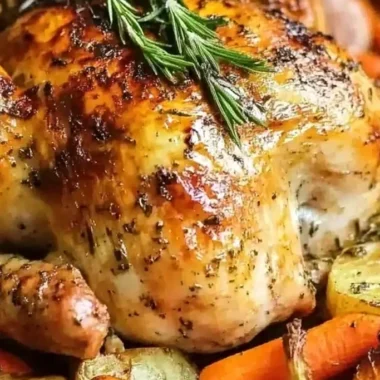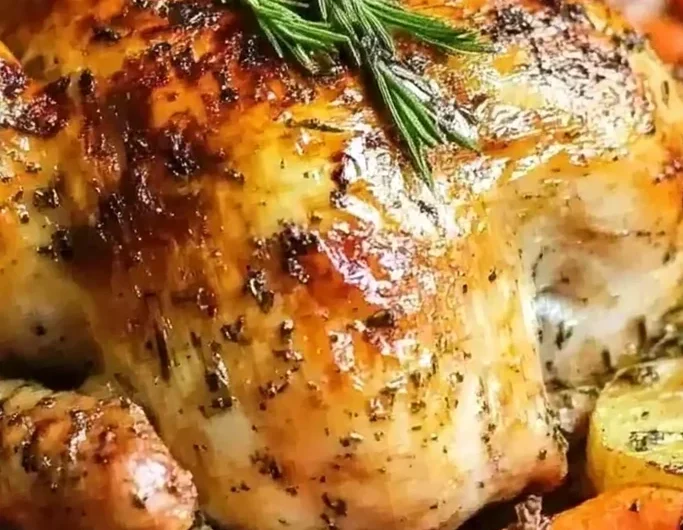
This simple yet elegant roasted chicken dish relies on the timeless combination of aromatic herbs, savory garlic, and hearty root vegetables. By roasting everything together in one pan, the chicken juices naturally season the potatoes and carrots, creating a flavorful and comforting dinner. It is the perfect solution for busy weeknights when you want a nutritious, home-cooked meal without the stress of multiple pots and pans.
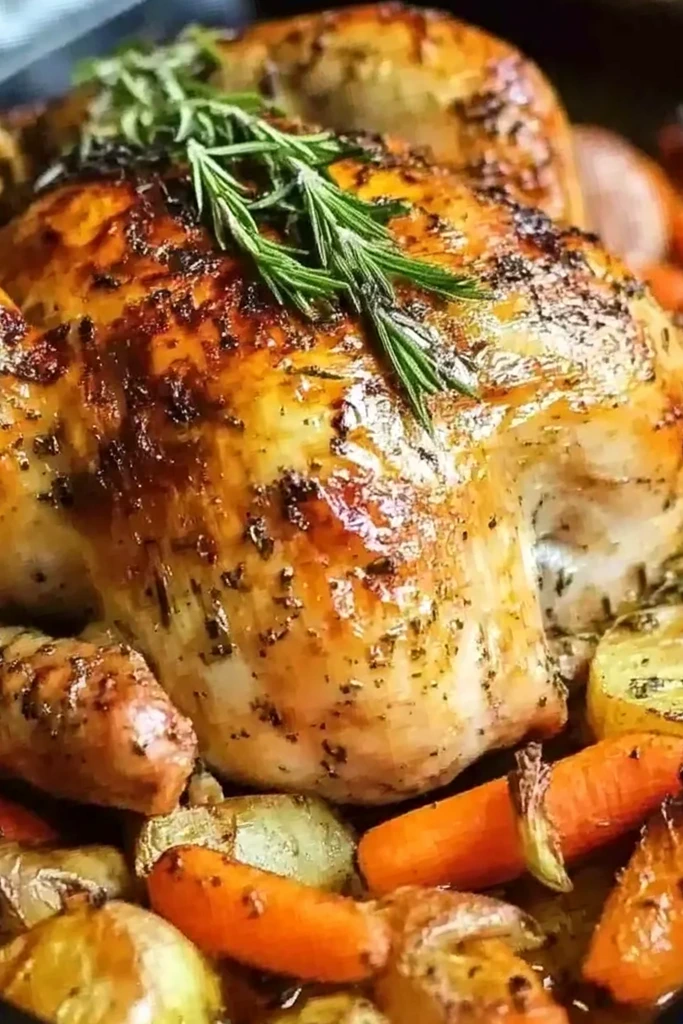
List of ingredients
- 1 whole chicken (3-4 pounds)
- 4 medium potatoes, peeled and cubed
- 4 carrots, peeled and cut into chunks
- 1 onion, quartered
- 4 cloves garlic, minced
- 3 tablespoons olive oil
- 1 tablespoon fresh rosemary, chopped (or 1 teaspoon dried)
- 1 tablespoon fresh thyme, chopped (or 1 teaspoon dried)
- Salt and black pepper, to taste
- 1 lemon, halved
step-by-step instructions
- Step: Preheat your oven to 425°F (220°C).
- Step: Rinse the chicken under cold water and pat it dry with paper towels.
- Step: In a small bowl, mix olive oil, garlic, rosemary, thyme, salt, and pepper. Rub this mixture all over the chicken, both inside and out.
- Step: Squeeze the juice of one lemon half inside the chicken cavity. Place the squeezed lemon halves inside the cavity for extra flavor.
- Step: In a large bowl, toss the cubed potatoes, carrot chunks, and onion with olive oil, salt, and pepper until evenly coated.
- Step: Spread the vegetables in a single layer in a large roasting pan. Place the seasoned chicken on top of the vegetables.
- Step: Place the roasting pan in the preheated oven. Roast for about 1 hour, or until the chicken is golden brown and the juices run clear when pierced.
- Step: Once fully cooked, remove the chicken from the oven and let it rest for 10-15 minutes before carving.
- Step: Carve the chicken and serve it alongside the roasted vegetables, drizzling the pan juices over everything.
Essential Roasting Techniques
Ensuring Even Browning of the Chicken Skin
To achieve that sought-after golden, crispy skin, the most critical step is ensuring the chicken is completely dry before applying any oil or seasoning. If there is residual moisture on the skin, it will steam rather than sear during the first twenty minutes of roasting. Use multiple paper towels to reach into every crevice, ensuring no damp spots remain before the oil mixture is applied.
The Role of Ingredient Sizing for Consistent Results
When preparing your potatoes and carrots, uniformity is your best friend. Aim for chunks that are roughly one to two inches in size to ensure they finish softening at the same time as the chicken. If the vegetable pieces are cut too small, they may turn into a puree, while pieces that are too large will remain firm in the center while the outside is overcooked.
Utilizing the Pan Drippings for Flavor
The bottom of your roasting pan contains a concentrated mixture of chicken fat, lemon juice, herb-infused oil, and vegetable moisture. Before serving, gently scrape the bottom of the pan with a spatula to incorporate these browned bits, often called fond, into the remaining juices. Drizzling this liquid over the plated chicken and vegetables transforms a simple meal into one with professional-grade depth.
Customizing Your One-Pan Meal
Adapting Vegetables Based on Seasonality
While potatoes and carrots are classic, you can easily adapt this recipe to include whatever is freshest at the market. Parsnips offer a sweet, nutty contrast, while butternut squash adds a velvety texture that pairs beautifully with the roasted onion. If you add softer vegetables like zucchini, consider adding them to the pan halfway through the roasting process to prevent them from becoming mushy.
Adding Depth with Different Herb Profiles
While rosemary and thyme are the traditional choices, you can experiment with other aromatics depending on your preference. Sage adds a warm, seasonal quality that works exceptionally well with root vegetables, while a touch of oregano can pull the flavor profile in a more Mediterranean direction. Always add dried herbs at the beginning of the cook, but save delicate fresh herbs like parsley for a garnish just before serving.
Adjusting the Heat Levels
If you prefer a mild kick to your roasted dinner, consider incorporating a teaspoon of smoked paprika into your oil rub to add a subtle, woody heat. Alternatively, adding a few whole, unpeeled cloves of garlic to the pan during the last twenty minutes of roasting creates delicious, creamy roasted garlic cloves that can be spread on crusty bread alongside the chicken.
Efficient Storage and Reheating
Proper Refrigeration of Leftover Components
If you have leftovers, allow the chicken and vegetables to cool completely before transferring them to airtight storage containers. Keeping the vegetables and meat separate from their juices can help maintain their texture; store the pan drippings in a small jar to keep the chicken moist during the reheating process. This meal remains safe and flavorful for up to three to four days in the refrigerator.
Strategies for Reheating Without Drying
When you are ready to enjoy your leftovers, avoid the microwave if possible, as it tends to make the chicken texture rubbery. Instead, place the chicken and vegetables in a baking dish, add a splash of water or broth to the bottom, and cover it tightly with foil. Heat in a 350°F oven until the center is steaming, which helps the dish retain the moisture it had on the first day.
Common Kitchen Questions
How can I verify the chicken is fully cooked without a thermometer?
While a meat thermometer is the most reliable tool, you can check by piercing the thickest part of the thigh with a knife. The juices should run perfectly clear, and the meat should no longer look pink near the bone. If you see any red or cloudy juices, return the pan to the oven for an additional five to ten minutes.
Can I prepare the vegetables ahead of time?
You can peel and cut your potatoes and carrots several hours in advance if you store them in a bowl of cold water in the refrigerator. This prevents them from oxidizing and turning brown. Be sure to drain them thoroughly and pat them dry before tossing them with the oil and seasonings just before you are ready to put them in the oven.
Why is it necessary to let the chicken rest before carving?
Resting is crucial because it allows the muscle fibers of the chicken to relax and reabsorb the juices that are forced to the surface during the high-heat cooking process. If you cut into the chicken immediately upon removing it from the oven, those juices will escape onto your cutting board instead of staying inside the meat. A fifteen-minute rest is the ideal window for maintaining the most tender texture possible.
What is the benefit of placing the chicken on top of the vegetables?
Arranging the chicken directly over the vegetables serves a dual purpose: it creates a rack that lifts the bird for better air circulation, and it allows the savory rendered fats from the chicken skin to drip down and season the vegetables. This layering technique ensures that the vegetables absorb all the complex flavors of the roasting juices as they cook, essentially seasoning them from the top down throughout the hour-long process.
Print
Roasted Chicken with Potatoes and Carrots: A Classic One-Pan Masterpiece
- Total Time: PT1H15M
- Yield: 4–6 servings 1x
- Diet: High Protein
Description
A classic, comforting roasted chicken dish accompanied by tender potatoes and sweet carrots, seasoned with aromatic rosemary and thyme for a perfect family dinner.
Ingredients
- 1 whole chicken (3–4 pounds)
- 4 medium potatoes, peeled and cubed
- 4 carrots, peeled and cut into chunks
- 1 onion, quartered
- 4 cloves garlic, minced
- 3 tablespoons olive oil
- 1 tablespoon fresh rosemary, chopped (or 1 teaspoon dried)
- 1 tablespoon fresh thyme, chopped (or 1 teaspoon dried)
- Salt and black pepper, to taste
- 1 lemon, halved
Instructions
- Step: Preheat your oven to 425°F (220°C).
- Step: Rinse the chicken under cold water and pat it dry with paper towels.
- Step: In a small bowl, mix olive oil, garlic, rosemary, thyme, salt, and pepper. Rub this mixture all over the chicken, both inside and out.
- Step: Squeeze the juice of one lemon half inside the chicken cavity. Place the squeezed lemon halves inside the cavity for extra flavor.
- Step: In a large bowl, toss the cubed potatoes, carrot chunks, and onion with olive oil, salt, and pepper until evenly coated.
- Step: Spread the vegetables in a single layer in a large roasting pan. Place the seasoned chicken on top of the vegetables.
- Step: Place the roasting pan in the preheated oven. Roast for about 1 hour, or until the chicken is golden brown and the juices run clear when pierced.
- Step: Once fully cooked, remove the chicken from the oven and let it rest for 10-15 minutes before carving.
- Step: Carve the chicken and serve it alongside the roasted vegetables, drizzling the pan juices over everything.
Notes
Ensure the chicken reaches an internal temperature of 165°F (74°C). Letting the chicken rest is essential for juiciness.
- Prep Time: PT15M
- Cook Time: PT1H
- Category: Main Course
- Method: Roasting
- Cuisine: American
Nutrition
- Serving Size: 1 serving
- Calories: 450 kcal
- Sugar: 3 g
- Sodium: 480 mg
- Fat: 20 g
- Saturated Fat: 5 g
- Unsaturated Fat: 12 g
- Trans Fat: 0 g
- Carbohydrates: 28 g
- Fiber: 4 g
- Protein: 40 g
- Cholesterol: 110 mg
Keywords: roasted chicken, healthy dinner, potatoes and carrots, comfort food, easy roasting