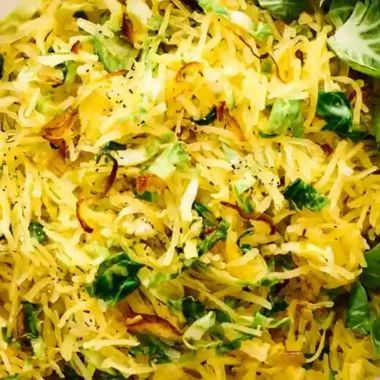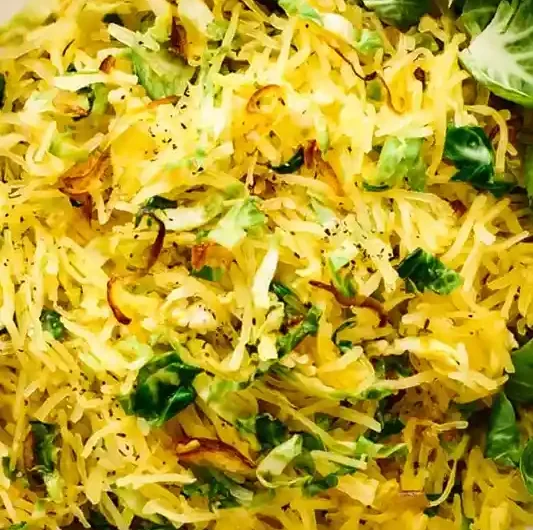
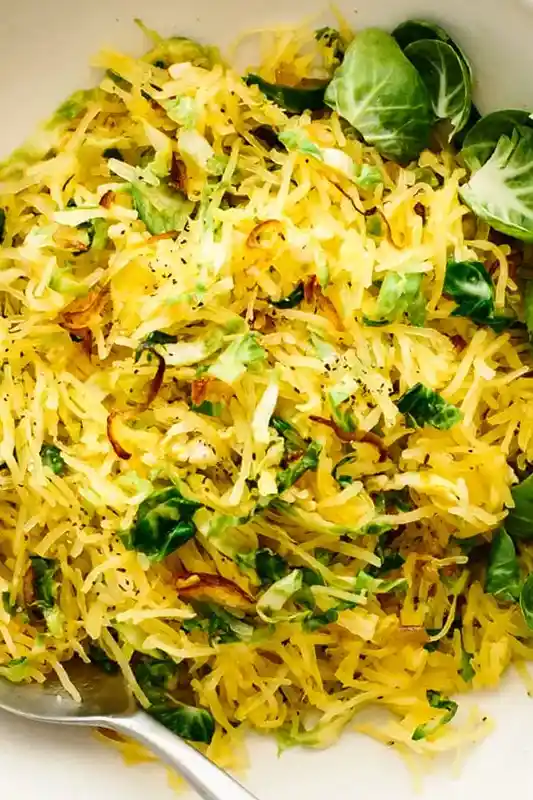
This vibrant side dish highlights the natural sweetness of spaghetti squash paired with the earthy crunch of shaved Brussels sprouts. Finished with golden, crispy shallots and a hint of garlic, this preparation creates a sophisticated texture profile that elevates simple seasonal vegetables. It serves as an excellent, nutrient-dense accompaniment for both weeknight dinners and special occasions.
List of ingredients
- 1 (3 1/2 – 4 pound) spaghetti squash
- 3 tablespoons olive oil, divided
- 2 large shallots, thinly sliced
- 1 pound Brussels sprouts, shaved or thinly sliced
- 3 garlic cloves, minced
- Salt and pepper, to taste
step-by-step instructions
- Step: Preheat your oven to 400F/200C. Slice the spaghetti squash in half and scoop out the seeds. Coat the inside with a little olive oil and salt and pepper, then bake for 40-50 minutes.
- Step: When the spaghetti squash has cooked for about 30 minutes, heat 2 tablespoons of olive oil on medium heat in a large pan. Add the shallots and cook, stirring frequently, for about 8 minutes or until lightly golden and crispy.
- Step: Use a slotted spoon to remove the crispy shallots to a paper towel to drain.
- Step: Add the brussels sprouts and minced garlic to the same pan and saute for 4-5 minutes. You may need to add another splash of oil as well.
- Step: When the spaghetti squash is done, remove it from the oven and use a fork to scrape out the flesh into a bowl.
- Step: Add the sauteed Brussels sprouts and crispy shallots to the bowl, and season with additional salt and pepper. Stir all of the ingredients together and serve!
Refining Your Roasting Technique
Choosing the Right Squash Size
Selecting a spaghetti squash that weighs between three and four pounds is ideal for this recipe. Smaller squashes tend to have more concentrated flavor, while very large ones can become overly watery and lose their structural integrity once shredded into strands. Aim for a firm, heavy-feeling squash with a uniform skin color for the best results.
Ensuring Even Roasting for Texture
Positioning the cut side of the squash face-down on the baking sheet allows it to steam slightly in its own moisture, which keeps the strands tender. If you prefer a slightly caramelized edge to your strands, you can flip them cut-side up for the final ten minutes of the roasting time. Always check the thickest part of the neck to ensure the squash is cooked through evenly before removing it from the oven.
Perfecting the Vegetable Sauté
Achieving Maximum Crispness for Shallots
The secret to perfectly crispy shallots lies in consistent heat management and constant movement within the pan. If the shallots appear to brown too quickly on the edges before the center softens, lower the heat slightly to allow them to dehydrate properly. Once they turn golden, remove them from the pan immediately, as they will continue to darken due to residual heat.
Preparing Brussels Sprouts for Uniform Cooking
Using a mandoline slicer or a sharp chef’s knife to create very thin shavings of Brussels sprouts ensures they cook quickly and maintain a delicate mouthfeel. Thickly sliced sprouts may remain tough in the center even after sautéing, so focus on uniform thickness. The thinner the slice, the more surface area will be available for browning, which adds a pleasant nutty complexity to the dish.
Serving Suggestions and Pairings
Complementing Proteins for a Hearty Meal
This side dish acts as a versatile canvas that works beautifully with lean proteins. You can pair it with lemon-herb roasted chicken or grilled white fish to create a balanced meal. The garlic-infused Brussels sprouts also hold up well against the richness of a seared steak or baked fish fillets, providing a lighter contrast to heavier main courses.
Transforming into a Main Course
If you want to serve this as the centerpiece of a vegetarian meal, consider tossing in a protein-rich component. Adding toasted walnuts, pecans, or pine nuts provides a satisfying crunch and healthy fats. You can also incorporate cooked chickpeas or white beans to round out the nutritional profile and keep the dish filling enough for a light supper.
Storage and Practical Maintenance
Proper Cooling Before Refrigeration
Allow the squash and sprout mixture to reach room temperature before sealing it in an airtight container for storage. Placing hot food directly into the refrigerator can create condensation inside the container, which leads to soggy vegetables and accelerated spoilage. Once cooled, it can be kept in the refrigerator for up to four days without losing significant texture.
Reheating Methods for Retaining Texture
To reheat, it is best to use a skillet over medium-low heat rather than a microwave, as this helps evaporate excess moisture. If you prefer using a microwave, cover the dish with a microwave-safe lid but leave a small vent for steam to escape. Heat in 30-second intervals and toss the strands gently to ensure even warming without overcooking the delicate squash.
Common Queries and Adjustments
Can I prepare the squash components ahead of time?
Yes, you can roast the spaghetti squash up to two days in advance and store the intact shells in the refrigerator. When you are ready to serve, simply scrape the strands out, sauté your sprouts, and combine everything in the pan for a final quick warm-up. This is an efficient way to save time during busy weeknights or when hosting guests.
What if I prefer a different aromatic profile?
While shallots and garlic are traditional for this dish, you can substitute the shallots with thinly sliced leeks for a milder onion flavor. If you enjoy heat, feel free to add a pinch of crushed red pepper flakes to the pan when sautéing the garlic. Fresh herbs like thyme or sage can also be added at the end of the cooking process to introduce seasonal brightness to the finished plate.
How can I prevent the squash from becoming watery?
If your squash seems to contain excessive liquid after roasting, place the scraped strands in a colander for ten minutes before adding them to the skillet. You can gently press down on the strands to drain away any extra moisture. This small step ensures the dish remains light and fluffy rather than damp when mixed with the sautéed sprouts and shallots.
Why is it important to use a slotted spoon for the shallots?
Using a slotted spoon allows the oil to drain back into the pan, which helps keep the shallots crispy instead of greasy. Transferring them directly onto a paper towel is crucial because it wicks away any lingering fat that would otherwise soften the crispy edges as they cool. The drained oil left in the pan is perfectly seasoned and works well for sautéing the remaining vegetables.
Print
Roasted Spaghetti Squash with Shaved Brussels Sprouts and Crispy Shallots
- Total Time: 60 minutes
- Yield: 4 servings 1x
- Diet: Vegetarian
Description
Spaghetti squash, Brussels sprouts, and crispy shallots are tossed together for an easy and flavorful side dish!
Ingredients
- 1 (3 1/2 – 4 pound) spaghetti squash
- 3 tablespoons olive oil, divided
- 2 large shallots, thinly sliced
- 1 pound Brussels sprouts, shaved or thinly sliced
- 3 garlic cloves, minced
- Salt and pepper, to taste
Instructions
- Step: Preheat your oven to 400F/200C. Slice the spaghetti squash in half and scoop out the seeds. Coat the inside with a little olive oil and salt and pepper, then bake for 40-50 minutes.
- Step: When the spaghetti squash has cooked for about 30 minutes, heat 2 tablespoons of olive oil on medium heat in a large pan. Add the shallots and cook, stirring frequently, for about 8 minutes or until lightly golden and crispy.
- Step: Use a slotted spoon to remove the crispy shallots to a paper towel to drain.
- Step: Add the brussels sprouts and minced garlic to the same pan and saute for 4-5 minutes. You may need to add another splash of oil as well.
- Step: When the spaghetti squash is done, remove it from the oven and use a fork to scrape out the flesh into a bowl.
- Step: Add the sauteed Brussels sprouts and crispy shallots to the bowl, and season with additional salt and pepper. Stir all of the ingredients together and serve!
Notes
Store leftovers in an airtight container in the fridge for up to 4 days. To reheat, microwave for about 1 minute.
- Prep Time: 15 minutes
- Cook Time: 45 minutes
- Category: Side Dish
- Method: Roasting, Sauteing
- Cuisine: American
Nutrition
- Serving Size: 1 serving
- Calories: 154 kcal
- Sugar: 4 g
- Sodium: 30 mg
- Fat: 11 g
- Saturated Fat: 2 g
- Unsaturated Fat: 8 g
- Trans Fat: 0 g
- Carbohydrates: 13 g
- Fiber: 5 g
- Protein: 4 g
- Cholesterol: 0 mg
Keywords: spaghetti squash, brussels sprouts, crispy shallots, side dish, vegetarian