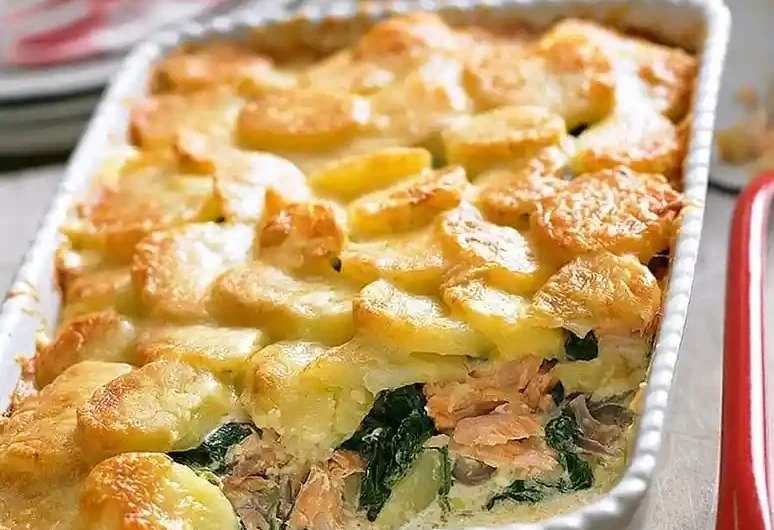
This hearty baked dish combines tender salmon fillets with sliced potatoes and a creamy cheese topping. It is a practical, budget-friendly meal designed to serve four people generously.
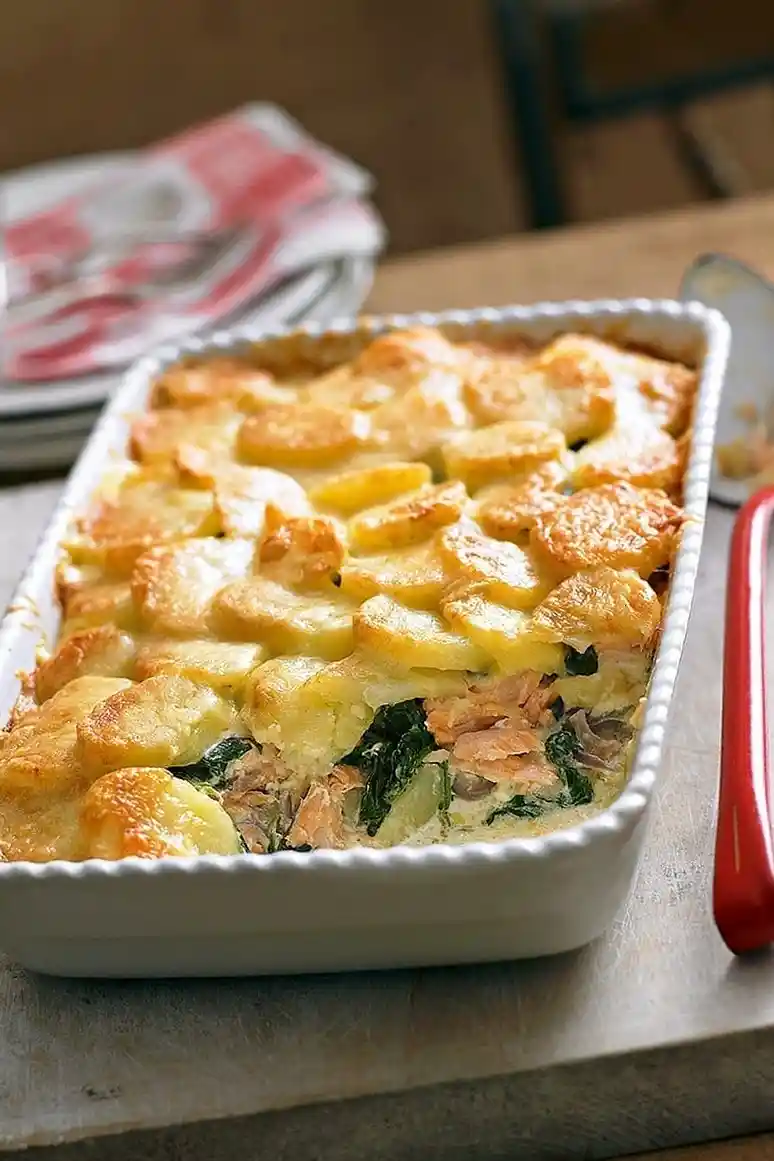
List of ingredients
- 1kg floury potatoes, cut into 3mm slices – ensures a soft, fluffy texture.
- 1 tbsp olive oil – used for sautéing the onions.
- 1 large red onion, sliced – provides a sweet, aromatic base.
- 1 tbsp plain flour – helps thicken the cream sauce.
- A few handfuls of baby spinach – adds color and nutrients.
- Butter, for greasing – prevents the bake from sticking to the dish.
- 3 salmon fillets, sliced – the primary protein source.
- 200ml double cream – creates a rich, velvety consistency.
- 50g grated microbial-rennet Gruyère – provides a salty, melted crust.
step-by-step instructions
- Prepare the oven and potatoes: Preheat the oven to 180°C/fan160°C/gas 4. Bring a pan of salted water to the boil, simmer the potato slices for 2-3 minutes, then drain and set aside.
- Cook the onion base: Heat the olive oil in a frying pan and gently fry the sliced red onion for 5 minutes. Stir in the plain flour and season the mixture well.
- Wilt the spinach: Place the baby spinach in a pan over medium heat until wilted. Squeeze out any excess liquid to avoid a watery bake.
- Assemble the dish: Butter a 1.2-litre ovenproof dish. Layer the potatoes and onion with the sliced salmon and the wilted spinach, ensuring the final layer consists of potatoes.
- Add topping and bake: Pour the double cream evenly over the top. Sprinkle with the grated Gruyère and bake for 20-30 minutes until the surface is golden and bubbling.
Optimizing Your Potato Base
Choosing Floury Potato Varieties
Floury potatoes, such as Maris Piper or King Edward, are ideal for this bake. Their high starch content allows them to break down slightly, creating a fluffy texture that absorbs the cream. Waxy potatoes tend to stay too firm and may not integrate well with the sauce.
The Importance of Uniform Slices
Slicing the potatoes to a consistent 3mm thickness is crucial for even cooking. If some slices are thicker than others, you may find raw spots in the center of the dish. Using a mandoline slicer can help achieve this precision quickly.
Benefits of Brief Parboiling
Simmering the potatoes for a few minutes before layering removes excess surface starch. This step ensures the potatoes are partially cooked, reducing the total oven time required. It also prevents the bottom layer from remaining hard after baking.
Preparing the Salmon Fillets
Slicing for Even Cooking
Cut the salmon fillets into uniform slices or chunks. This ensures that every piece of fish reaches the safe internal temperature at the same time. Avoid cutting them too thin, as they may overcook and become dry.
Removing Pin Bones
Carefully check the salmon slices for any remaining pin bones using tweezers. Removing these before assembly ensures a better dining experience. Pat the fish dry with paper towels to help it sear slightly during the baking process.
Managing Frozen Fillets
If using frozen salmon, thaw the fillets completely in the refrigerator overnight. Avoid thawing them in warm water, which can compromise the texture of the fish. Pat them thoroughly dry after thawing to prevent excess moisture in the dish.
Perfecting the Vegetable Layers
Developing Flavor in Red Onions
Fry the red onions slowly over medium-low heat to encourage caramelization. This process releases the natural sugars, providing a sweet contrast to the salty cheese. Avoid burning the onions, as this will introduce a bitter taste to the bake.
Removing Excess Moisture from Spinach
Squeezing the liquid out of wilted spinach is a critical step. Spinach releases a significant amount of water when heated, which can make the bottom of the bake soggy. Use a clean kitchen towel or a fine-mesh sieve to press out the liquid.
Sautéing for Better Texture
Sautéing the spinach quickly over medium heat prevents it from becoming overcooked and mushy. Aim for a bright green color and a soft texture. This keeps the vegetable layer distinct within the layered assembly.
Mastering the Creamy Sauce
Using Double Cream for Richness
Double cream provides the necessary fat content to create a stable, thick sauce that does not separate. It envelops the salmon and potatoes, keeping the fish moist during the baking process. Ensure the cream is at room temperature for easier pouring.
The Role of Plain Flour in Thickening
Stirring flour into the sautéed onions creates a basic roux. This thickens the double cream as it bakes, preventing the sauce from pooling at the bottom of the dish. It transforms the cream into a cohesive sauce that clings to the ingredients.
Seasoning the Sauce Layer
Season the onion and flour mixture generously with salt and black pepper before layering. Since the cream is unseasoned, the flavor depends on the base layers. You can also add a pinch of nutmeg to enhance the creaminess.
Achieving the Ideal Cheese Topping
Using Microbial-Rennet Gruyère
Gruyère is chosen for its excellent melting properties and nutty flavor. Using a version made with microbial rennet ensures the dish meets specific dietary requirements without sacrificing taste. Grating the cheese finely ensures it melts evenly across the entire surface.
Creating a Golden-Brown Crust
The cheese should be sprinkled evenly over the cream layer. For a deeper golden color, ensure the dish is placed on the middle or upper rack of the oven. If the cheese browns too quickly, cover the dish loosely with foil.
Distributing Cheese Evenly
Avoid piling the cheese in the center of the dish. Distribute it all the way to the edges to create a consistent seal. This seal helps trap steam inside, which keeps the salmon and potatoes tender.
Oven and Baking Techniques
Calibrating Oven Temperatures
Use an oven thermometer to verify that your oven is truly at 180°C. Many ovens fluctuate, and too high a temperature can burn the cheese before the potatoes are cooked. If using a fan oven, reducing the temperature to 160°C is necessary.
Selecting the Right Ovenproof Dish
A ceramic or glass 1.2-litre dish is recommended for this recipe. These materials distribute heat evenly and can withstand the high temperature. Ensure the dish is not too wide, or the ingredients will spread too thin and dry out.
Identifying the Finish Point
The dish is done when the cream is bubbling and the cheese is golden brown. You can test the potatoes by inserting a knife; it should slide through the top layer with no resistance. The salmon should be opaque and flake easily.
Customizing the Recipe
Adding Fresh Herbs for Aroma
Fresh dill or parsley can be stirred into the spinach or sprinkled on top after baking. These herbs pair naturally with salmon and cut through the richness of the cream. Add them at the end to preserve their bright color.
Integrating Lemon Zest
Adding the zest of one lemon to the cream mixture adds a bright, citrusy note. This acidity balances the heavy fats of the double cream and Gruyère. Avoid adding lemon juice to the cream, as it may cause the sauce to curdle.
Substituting Spinach with Kale
If you prefer a heartier green, you can substitute baby spinach with chopped kale. Kale requires a slightly longer sauté time than spinach to soften. Ensure you remove the tough central stems before adding it to the bake.
Serving and Presentation
Pairing with Side Salads
Serve this bake with a crisp green salad dressed in a light vinaigrette. The acidity of a lemon-olive oil dressing helps cleanse the palate between bites of the rich bake. A simple arugula salad with cherry tomatoes works well.
Plating Techniques
Use a wide spatula to lift portions out of the dish, keeping the layers intact. Serve the bake in shallow bowls to prevent the cream sauce from pooling. This presentation showcases the distinct layers of potato, fish, and greens.
Balancing Richness with Acidity
A wedge of fresh lemon served on the side allows guests to customize the acidity of their portion. A squeeze of fresh juice over the salmon elevates the flavor profile. This prevents the dish from feeling too heavy.
Storage and Food Safety
Cooling and Refrigeration
Allow the bake to cool for about 30 minutes before transferring it to the refrigerator. Store it in an airtight container to prevent the fish from absorbing other odors. It can be safely stored in the fridge for up to two days.
Guidelines for Safe Reheating
Reheat the bake in the oven at 150°C, covered with foil to maintain moisture. Avoid using a microwave on high power, as this can make the salmon rubbery. Heat until the center is steaming hot.
Avoiding Freezer Burn
This dish is not recommended for freezing due to the high cream and potato content. Freezing and thawing can cause the cream sauce to split and the potatoes to become grainy. It is best enjoyed fresh or as leftovers.
Troubleshooting Common Bake Issues
Fixing Watery Bottom Layers
If you find too much liquid at the bottom, it is usually due to under-drained spinach or potatoes. To prevent this, be more aggressive when squeezing the wilted greens. You can also add an extra teaspoon of flour to the onion mix.
Preventing Overcooked Salmon
Salmon continues to cook for a few minutes after being removed from the oven. Take the dish out when the fish is just barely opaque. This ensures the salmon remains moist and tender rather than dry.
Addressing Uneven Browning
If the cheese is not browning evenly, rotate the dish halfway through the cooking time. You can also switch the oven to the grill setting for the final two minutes. Keep a close watch to prevent burning.
Frequently Asked Questions
Can I use waxy potatoes instead?
Waxy potatoes can be used, but the texture will be firmer and less creamy. You may need to slice them even thinner to ensure they cook through in the allotted time.
Is there a substitute for double cream?
You can use heavy cream or a mixture of crème fraîche and a splash of milk. However, double cream provides the best stability and richness for this specific bake.
How long does this dish keep in the fridge?
The bake remains safe and tasty for up to 48 hours when stored in a sealed container. Ensure it is cooled quickly before refrigeration to maintain food safety.
Can I use a different type of cheese?
Yes, a mature Cheddar or Emmental can be used as alternatives to Gruyère. Choose a cheese that melts well and has a similar salt profile to ensure the flavor remains balanced.
Print
Salmon and Potato Bake
- Total Time: 55 minutes
- Yield: 4 servings 1x
- Diet: General
Description
A filling, budget-friendly recipe that will feed four generously.
Ingredients
- 1kg floury potatoes, cut into 3mm slices
- 1 tbsp olive oil
- 1 large red onion, sliced
- 1 tbsp plain flour
- A few handfuls of baby spinach
- Butter, for greasing
- 3 salmon fillets, sliced
- 200ml double cream
- 50g grated Gruyère
Instructions
- Step 1: Preheat the oven to 180°C/fan160°C/gas 4. Bring a pan of salted water to the boil, then simmer the potatoes for 2-3 minutes. Drain and set aside.
- Step 2: Heat the olive oil in a frying pan and gently fry the red onion for 5 minutes, then stir in the flour and season well.
- Step 3: Wilt the spinach in a pan over a medium heat, then squeeze out the excess liquid. Butter a 1.2-litre ovenproof dish and layer up the potatoes and onion with the salmon and the spinach, ending with a layer of potato.
- Step 4: Pour the cream over the top. Sprinkle with the Gruyère and bake for 20-30 minutes, until golden and bubbling.
Notes
Ensure the potatoes are sliced thinly (3mm) to ensure they cook through during the baking process.
- Prep Time: 15 minutes
- Cook Time: 40 minutes
- Category: Main Course
- Method: Baking
- Cuisine: British
Nutrition
- Serving Size: 1 serving
- Calories: 744 kcal
- Sugar: 4.3 g
- Sodium: 200 mg
- Fat: 46.9 g
- Saturated Fat: 21.9 g
- Unsaturated Fat: 25 g
- Trans Fat: 0 g
- Carbohydrates: 49.9 g
- Fiber: 6 g
- Protein: 33.4 g
- Cholesterol: 110 mg
Keywords: salmon, potato bake, fish dinner, British cuisine, family meal