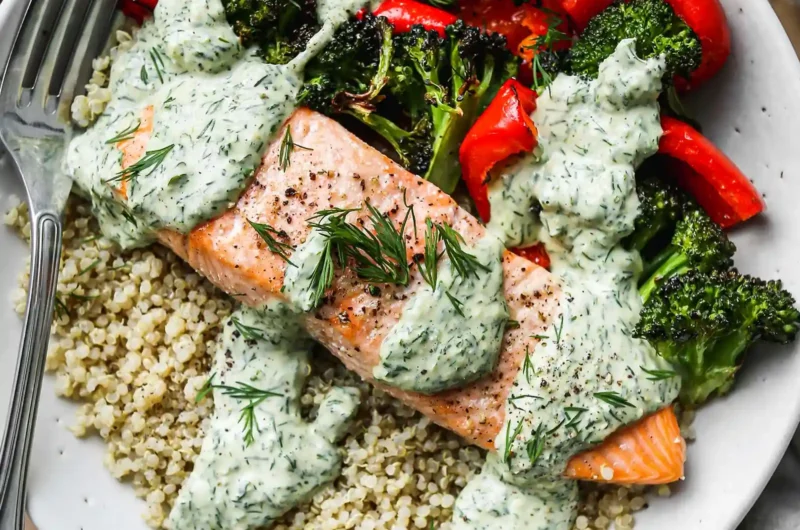
This nutrient-dense bowl combines roasted salmon and vegetables with a fluffy quinoa base. It is finished with a creamy lemon herb tahini sauce for a balanced, high-protein meal.
List of ingredients
- 1/3 cup dry quinoa (or 1 cup cooked) – provide a fiber-rich base.
- 2 fresh salmon fillets (4-6 ounces each) – ensure they are skin-on or skinless based on preference.
- 2 cups broccoli florets – cut into bite-sized pieces for even roasting.
- 1 large bell pepper – cored and chopped.
- 1 Tbsp olive oil, divided – used for roasting and salmon coating.
- Salt and black pepper – for seasoning all components.
- 1/4 cup tahini – the creamy base for the dressing.
- 1 Tbsp olive oil – for the sauce emulsion.
- 1/4 cup fresh parsley – finely chopped for brightness.
- 1/4 cup fresh dill – adds a distinct herbal note.
- 2 cloves garlic – minced or pressed.
- 3 Tbsp lemon juice – provide acidity to cut through the richness.
- 1/2 tsp maple syrup – balances the lemon’s tartness.
- 2 Tbsp hot water – used to thin the sauce to the right consistency.
step-by-step instructions
- Prepare the oven and pan: Preheat your oven to 400F and line a large baking sheet with parchment paper to prevent sticking. Chop the vegetables into small, uniform pieces while the oven heats.
- Cook the quinoa: If using dry quinoa, cook it according to the package directions. For 1/3 cup of dry quinoa, use slightly less than 2/3 cup of water.
- Roast the vegetables: Place the chopped broccoli and bell pepper on the baking sheet. Toss them with half of the olive oil, salt, and pepper, spreading them in an even layer. Roast for 15 minutes.
- Prepare the tahini sauce: Combine the tahini, 1 Tbsp olive oil, parsley, dill, garlic, lemon juice, maple syrup, and hot water in a food processor. Blend until smooth and adjust the water for your preferred thickness.
- Roast the salmon: After 15 minutes, remove the vegetables from the oven. Move them to the side to make room for the salmon fillets. Brush the fish with the remaining olive oil and season with salt and pepper. Return the pan to the oven for 12-15 minutes.
- Check for doneness: Ensure the salmon is cooked through but remains tender. The vegetables should be fork-tender with light brown edges.
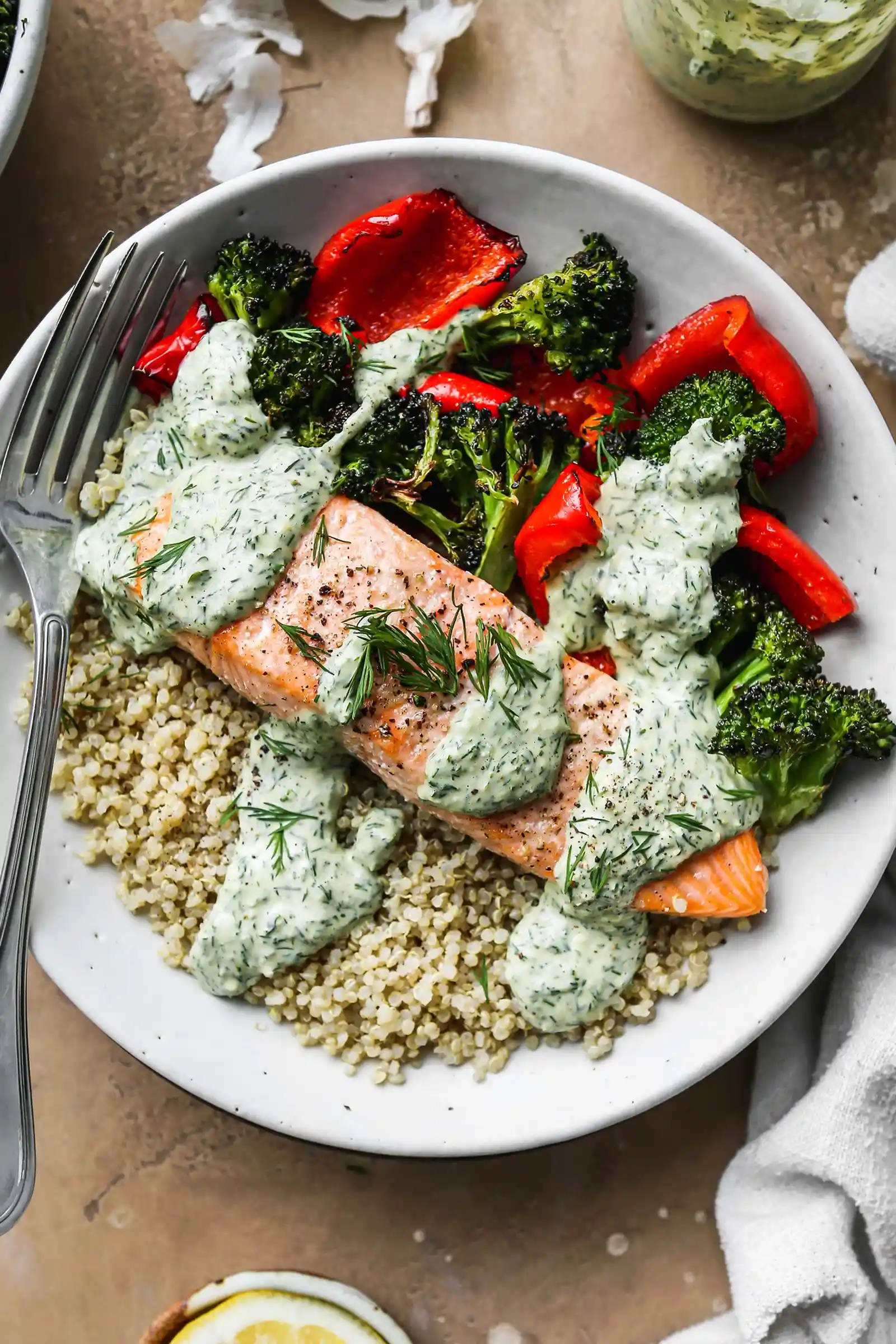
- Assemble the bowls: Divide the cooked quinoa evenly between two bowls. Top with the roasted vegetables and one salmon fillet per bowl. Drizzle the lemon herb tahini sauce over the top.
Alternative Vegetable Combinations
Root Vegetable Medley
Replace broccoli and bell peppers with diced carrots, parsnips, and sweet potatoes. Since root vegetables take longer to cook, roast them for 25-30 minutes before adding the salmon to the pan.
Spring Green Mix
Use asparagus spears and snap peas for a lighter profile. These vegetables cook quickly, so add them to the pan at the same time as the salmon for about 12-15 minutes.
Hearty Winter Blend
Try cauliflower florets and Brussels sprouts halved lengthwise. These provide a nuttier flavor and similar roasting times to broccoli, requiring about 15-20 minutes of initial roasting.
Leafy Green Additions
Add a handful of fresh baby spinach or kale to the bowl before adding the hot quinoa. The residual heat will wilt the greens slightly without overcooking them.
Flavor Twists for the Tahini Dressing
Pesto-Style Integration
Substitute the tahini with a homemade basil or sun-dried tomato pesto. This shifts the flavor profile toward a classic Italian style while maintaining the healthy fat content.
Curry Tahini Variation
Add a half teaspoon of yellow curry powder or cumin to the food processor when blending the sauce. This adds warmth and earthiness that pairs well with the roasted broccoli.
Avocado Green Goddess Sauce
Swap the tahini for a ripe avocado and a splash of lime juice. Keep the parsley and dill to maintain the fresh, herbal quality of the original recipe.
Miso Tahini Blend
Whisk in a teaspoon of white miso paste for an umami-rich flavor. This version works exceptionally well if you replace the bell pepper with roasted bok choy.
Tips for Perfect Roasted Salmon
Selecting the Right Cut
Choose center-cut fillets for uniform thickness, which ensures even cooking. Fresh salmon typically offers a softer, more tender texture than frozen alternatives.
Avoiding Overcooking
Use a meat thermometer to check the internal temperature of the salmon. Aim for 145F (63C) or slightly lower if you prefer a medium-rare center.
Ensuring a Good Sear
Ensure the oven is fully preheated to 400F before the pan goes in. High heat helps the edges of the salmon and vegetables caramelize, adding depth to the flavor.
Handling Frozen Fillets
If using frozen salmon, thaw it completely in the refrigerator overnight. Pat the fillets dry with paper towels before oiling to prevent the fish from steaming.
Mastering Quinoa Cooking
Rinsing the Grains
Always rinse dry quinoa in a fine-mesh strainer under cold water. This removes saponins, the natural coating that can make quinoa taste bitter.
Optimizing the Liquid Ratio
Use a 1:2 ratio of quinoa to water for a fluffy texture. For a more nutrient-dense base, replace the water with unsalted vegetable broth.
Using Pre-Cooked Quinoa
If using pre-cooked or frozen quinoa, simply reheat it with a teaspoon of water. Gently steam it in the microwave or on the stove to restore the moist texture.
Toasting for Extra Flavor
Toast the dry quinoa in the pot for 2-3 minutes over medium heat before adding water. This brings out a nuttier aroma and improves the overall taste.
Preserving and Warming Leftovers
Fridge Storage Duration
Store the assembled bowls or separate components in airtight containers for up to 3 days. Keep the tahini sauce in a separate jar to maintain its creamy consistency.
Best Reheating Methods
Reheat the quinoa and vegetables in the microwave for 1-2 minutes. To avoid overcooking the salmon, warm it gently or enjoy it cold as a chilled salad.
Reviving the Tahini Sauce
Tahini sauce naturally thickens in the fridge as the fats solidify. Stir in a teaspoon of warm water and whisk vigorously to bring back the original smooth texture.
Preventing Quinoa Clumping
When reheating quinoa, add a tiny splash of water or olive oil. This prevents the grains from becoming dry or clumpy during the heating process.
Make-Ahead Strategies
Batch Cooking Grains
Cook a large pot of quinoa at the start of the week. It stays fresh in the refrigerator for several days and reduces the daily prep time significantly.
Advance Sauce Preparation
Prepare the lemon herb tahini sauce up to 4 days in advance. Store it in a glass jar with a tight lid to keep the fresh herbs from oxidizing.
Pre-Chopping Vegetables
Dice your broccoli and bell peppers and store them in a breathable container. This allows you to move directly to the roasting stage on busy weeknights.
Freezing Cooked Components
While the fresh sauce doesn’t freeze well, cooked quinoa can be frozen in portions. Thaw it in the fridge overnight before adding it to your bowls.
Common Cooking Challenges
Dealing with Bitter Tahini
If your tahini tastes too bitter, increase the amount of maple syrup or lemon juice. The sweetness and acidity neutralize the natural bitterness of sesame seeds.
Fixing Mushy Quinoa
Mushy quinoa usually results from too much water or overcooking. Next time, reduce the water slightly or simmer on the lowest heat setting.
Preventing Salmon Sticking
Always use parchment paper or a silicone baking mat. If you use a bare pan, ensure you grease it well with olive oil before adding the fish.
Correcting Sauce Separation
If the sauce separates, it is likely due to the temperature of the ingredients. Use a whisk or immersion blender to re-emulsify the oil and tahini.
Frequently Asked Questions
Can I use a different grain instead of quinoa?
Yes, brown rice, farro, or millet are excellent substitutes. Be sure to adjust the cooking times and water ratios based on the specific grain you choose.
What is the best way to store the salmon?
Store cooked salmon in a sealed container in the coldest part of your refrigerator. It is best consumed within three days to maintain food safety and quality.
Is tahini the only option for the sauce?
You can use cashew butter or almond butter for a similar creamy texture. However, tahini provides the most authentic Mediterranean flavor profile for this dish.
How do I know when the salmon is done?
The salmon should flake easily with a fork at the thickest part. The color should change from translucent pink to an opaque light pink.
Can I roast everything at the same time?
Because vegetables and salmon have different cooking times, staggered roasting is recommended. This prevents the vegetables from burning while the salmon reaches the proper temperature.
Print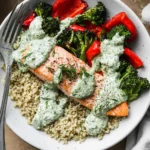
Salmon Quinoa Bowl With Tahini Dressing
- Total Time: 50 minutes
- Yield: 2 servings 1x
- Diet: Gluten Free, Low Lactose
Description
This healthy salmon quinoa bowl recipe is packed with protein, healthy fats, and fiber. Paired with a creamy lemon herb tahini sauce and roasted veggies, it is perfect for a nutritious dinner or packed lunch.
Ingredients
- 1/3 cup dry quinoa (or 1 cup cooked)
- 2 pieces fresh salmon (about 4–6 ounces each)
- 2 cups broccoli florets
- 1 large bell pepper, cored and chopped
- 1 Tbsp olive oil, divided
- Salt and pepper, to taste
- 1/4 cup tahini
- 1 Tbsp olive oil
- 1/4 cup fresh parsley
- 1/4 cup fresh dill
- 2 cloves garlic
- 3 Tbsp lemon juice
- 1/2 tsp maple syrup
- 2 Tbsp hot water
Instructions
- Prep: Preheat oven to 400F, line a large baking sheet with parchment paper, and chop vegetables.
- Cook Quinoa: Cook quinoa according to package directions.
- Roast Veggies: Toss chopped vegetables on the baking sheet with half of the olive oil, salt, and pepper, then roast for 15 minutes.
- Make Sauce: Blend tahini, 1 Tbsp olive oil, parsley, dill, garlic, lemon juice, maple syrup, and hot water in a food processor until smooth; season to taste.
- Cook Salmon: Move vegetables to the side, add salmon fillets to the sheet, brush with remaining olive oil, season with salt and pepper, and roast for 12-15 minutes.
- Finish: Remove salmon and vegetables from the oven once the fish is cooked through and vegetables are fork-tender.
- Assemble: Divide cooked quinoa and roasted vegetables into two bowls, top with salmon, and drizzle with tahini sauce.
Notes
Leftovers keep for up to 3 days in an airtight container in the fridge. You can substitute broccoli and bell pepper with cauliflower, zucchini, asparagus, or Brussels sprouts.
- Prep Time: 10 minutes
- Cook Time: 40 minutes
- Category: Main Course
- Method: Baking
- Cuisine: Mediterranean
Nutrition
- Serving Size: 1 bowl
- Calories: 680 kcal
- Sugar: 7 g
- Sodium: 117 mg
- Fat: 41 g
- Saturated Fat: 6 g
- Unsaturated Fat: 35 g
- Trans Fat: 0 g
- Carbohydrates: 41 g
- Fiber: 9 g
- Protein: 42 g
- Cholesterol: 78 mg
Keywords: bowl, easy, grain bowl, healthy, quinoa, salmon