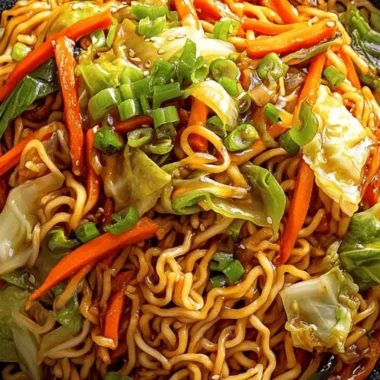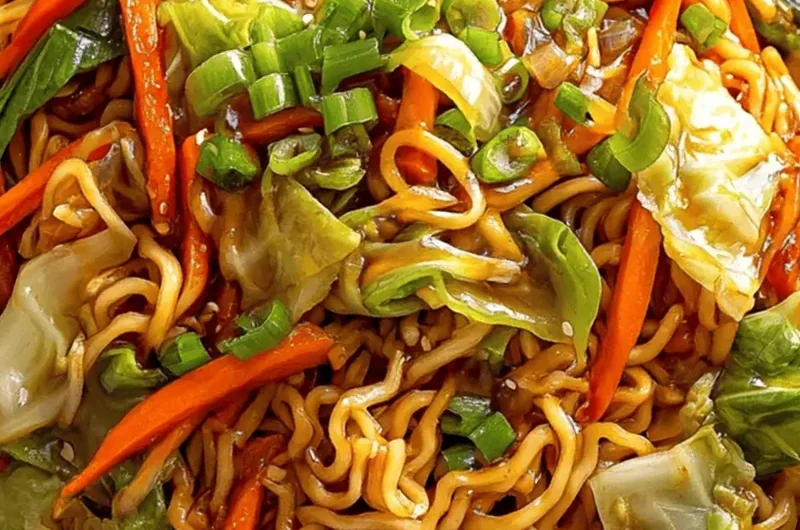
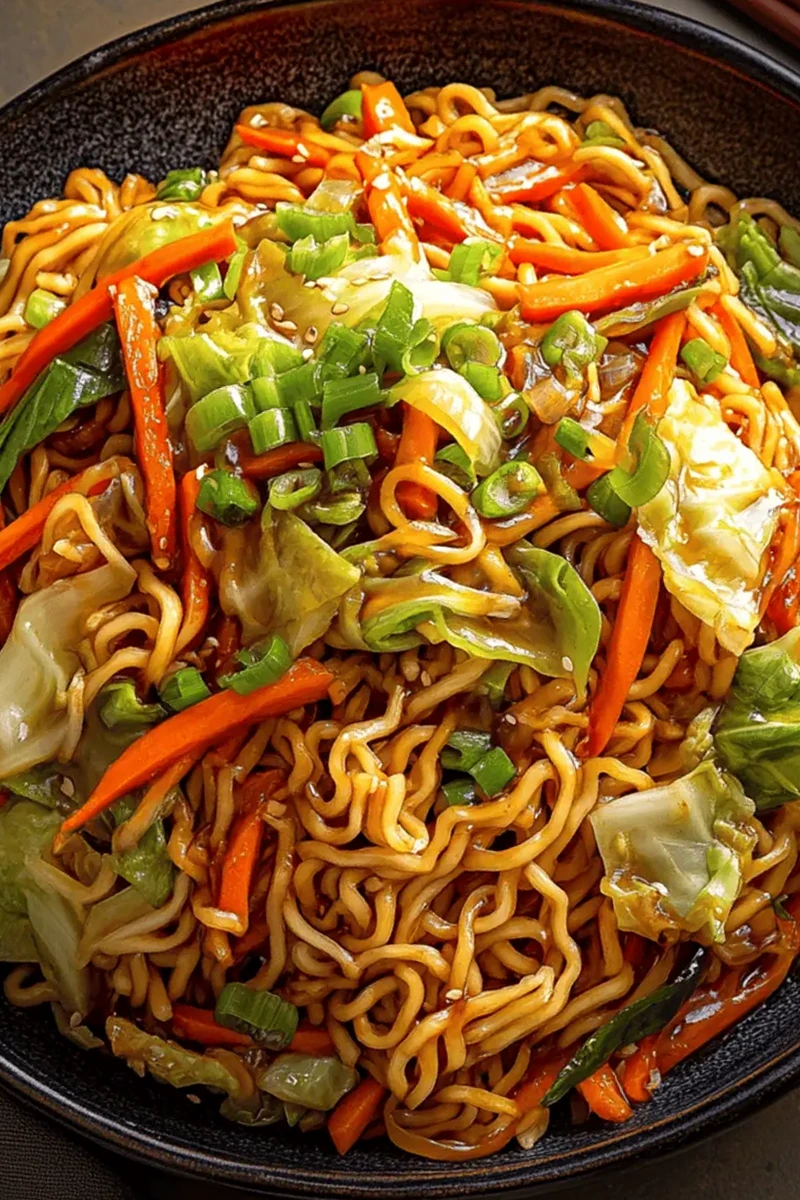
Japanese yakisoba is a beloved stir-fried noodle dish celebrated for its perfect balance of savory and sweet flavors. This quick and authentic recipe brings the vibrant energy of Tokyo street food directly to your home kitchen in under twenty minutes.
List of ingredients
- 2 tablespoons Vegetable Oil
- 8 oz Yakisoba Noodles
- 1 medium Onion
- 1 cup Carrots
- 2 cups Green Cabbage
- 4 stalks Green Onions
- 2 tablespoons Worcestershire Sauce
- 2 tablespoons Soy Sauce
- 2 tablespoons Ketchup
- 1 tablespoon Oyster Sauce
- 1 teaspoon Sugar
step-by-step instructions
- Step: In a bowl, whisk together the Worcestershire sauce, soy sauce, ketchup, oyster sauce, and sugar until well combined. Set the sauce aside.
- Step: If using instant yakisoba noodles, soak them in warm water for 1–2 minutes until they loosen. Drain well.
- Step: Place a large skillet or wok over medium-high heat until faint smoke rises.
- Step: Add vegetable oil, followed by the sliced onions and julienned carrots. Stir-fry for 2–3 minutes until onions are translucent.
- Step: Add shredded green cabbage and stir-fry for another 2–3 minutes until it wilts and is tender.
- Step: Gently toss in the yakisoba noodles and pour the prepared sauce over the mixture. Stir-fry for 2–4 minutes.
- Step: Stir in most of the sliced green onions, reserving some for garnish.
- Step: Transfer the yakisoba to serving bowls and garnish with reserved green onions.
Practical Cooking Pointers
Achieving the Ideal Noodle Texture
The secret to great yakisoba is preventing the noodles from becoming gummy. Ensure your noodles are thoroughly drained after soaking and avoid over-boiling them if they are fresh. A quick rinse with hot water is often all that is needed to prepare them for the skillet.
Managing Pan Temperature for Better Results
Using a large, heavy skillet is vital for authentic stir-frying because it retains heat well even when cold ingredients are added. If your pan is too crowded, the vegetables will release water and start to steam, resulting in mushy cabbage. Cook in batches if necessary to keep the heat high and the stir-fry crisp.
Balancing Flavor Profiles Effectively
The interplay between the savory Worcestershire and sweet ketchup defines this dish. If you prefer a more pronounced umami taste, you can add a drop more oyster sauce. If you want more sweetness, add a tiny extra pinch of sugar until the profile hits your personal preference.
Effective Substitutions
Finding Suitable Vegetable Alternatives
You can easily adjust the vegetable component based on what is in your crisper. Bell peppers, thinly sliced snow peas, or snap peas provide excellent texture and color. Bean sprouts are another classic addition that offers a refreshing crunch without overpowering the other ingredients.
Protein Additions for Heartier Meals
While this dish is substantial on its own, adding protein is simple. Thinly sliced chicken breast, firm tofu cubes, or peeled shrimp work perfectly. Ensure these proteins are seared in the pan before adding the onions and carrots so they cook through completely.
Serving Ideas for Complete Meals
Pairing with Refreshing Sides
To round out your meal, serve the noodles alongside simple, cooling sides. A quick cucumber salad dressed with rice vinegar and a sprinkle of sesame seeds provides a tangy contrast to the rich, savory noodles. Steamed edamame with a dusting of sea salt is another excellent, protein-rich accompaniment.
Expanding the Dining Experience
If you are hosting a dinner, adding a light soup such as miso broth creates a classic Japanese meal structure. The warmth of the soup and the chewiness of the noodles create a satisfying, well-rounded experience. You can also offer pickled ginger on the side, which cleanses the palate between bites of the savory stir-fry.
Storage and Reheating Techniques
Maintaining Quality in the Refrigerator
Store your leftovers in an airtight container to keep the moisture level stable. When refrigerated properly, the noodles will remain fresh for up to three days. It is important to avoid letting the dish sit out at room temperature for too long before refrigerating.
Reviving Leftovers on the Stovetop
Avoid the microwave if possible, as it tends to dry out the noodles and make the vegetables limp. Instead, reheat the leftovers in a lightly oiled pan over medium heat. Adding a tablespoon of water or vegetable broth while tossing will steam the noodles back to their original texture.
Common Queries Addressed
How do I make the dish gluten-free?
You can easily adapt this dish by using gluten-free tamari instead of standard soy sauce. Additionally, ensure your Worcestershire sauce is marked as gluten-free, as traditional versions may contain malt vinegar. Serve with rice noodles instead of wheat-based yakisoba noodles to complete the adaptation.
Can I freeze the cooked noodles?
Yes, you can freeze individual portions of this stir-fry in freezer-safe bags. While the cabbage may become slightly softer upon thawing, the flavor remains excellent. Thaw the container in the refrigerator overnight and reheat quickly in a hot pan for the best results.
How do I handle the sauce if it gets too thick?
If you notice the sauce becoming too tacky or thick while stir-frying, add a very small splash of warm water or broth. This thins the sauce enough to coat the noodles evenly without diluting the overall flavor profile. Always add liquid sparingly, one tablespoon at a time.
Is this dish suitable for meal preparation?
Yakisoba is an excellent candidate for meal prep because the components can be sliced and stored separately. Keeping your julienned carrots, sliced onions, and shredded cabbage in pre-portioned bags makes the cooking time significantly faster. Simply toss them into the pan when you are ready to eat.
What should I do if my cabbage releases too much liquid?
If the cabbage begins to release too much water during the stir-fry process, increase the heat to high. Tossing the vegetables constantly allows the excess liquid to evaporate rapidly. This step is crucial for achieving that characteristic caramelization on the noodles rather than creating a stew-like consistency.
Can I add more greens to the dish?
Yes, adding leafy greens like bok choy or spinach at the very end of the cooking process adds great color. Simply fold them in during the final minute of tossing so they wilt just enough while retaining their bright green color. This adds a nutritional boost without changing the fundamental flavor profile.
Print
Savoring Japanese Yakisoba with Cabbage & Carrots Tonight
- Total Time: 20 minutes
- Yield: 4 servings 1x
- Diet: Vegetarian-friendly
Description
This Quick and Flavorful Japanese Yakisoba with Cabbage & Carrots offers an easy dinner option that brings the taste of Japanese street food to your kitchen in under 20 minutes.
Ingredients
- 2 tablespoons Vegetable Oil
- 8 oz Yakisoba Noodles
- 1 medium Onion
- 1 cup Carrots
- 2 cups Green Cabbage
- 4 stalks Green Onions
- 2 tablespoons Worcestershire Sauce
- 2 tablespoons Soy Sauce
- 2 tablespoons Ketchup
- 1 tablespoon Oyster Sauce
- 1 teaspoon Sugar
Instructions
- Step: In a bowl, whisk together the Worcestershire sauce, soy sauce, ketchup, oyster sauce, and sugar until well combined. Set the sauce aside.
- Step: If using instant yakisoba noodles, soak them in warm water for 1–2 minutes until they loosen. Drain well.
- Step: Place a large skillet or wok over medium-high heat until faint smoke rises.
- Step: Add vegetable oil, followed by the sliced onions and julienned carrots. Stir-fry for 2–3 minutes until onions are translucent.
- Step: Add shredded green cabbage and stir-fry for another 2–3 minutes until it wilts and is tender.
- Step: Gently toss in the yakisoba noodles and pour the prepared sauce over the mixture. Stir-fry for 2–4 minutes.
- Step: Stir in most of the sliced green onions, reserving some for garnish.
- Step: Transfer the yakisoba to serving bowls and garnish with reserved green onions.
Notes
Store leftover yakisoba in an airtight container for up to 3 days. Reheat gently on the stovetop with a splash of water or vegetable broth to revive textures.
- Prep Time: 10 minutes
- Cook Time: 10 minutes
- Category: Dinner
- Method: Stir-fry
- Cuisine: Japanese
Nutrition
- Serving Size: 1 plate
- Calories: 450 kcal
- Sugar: 6 g
- Sodium: 800 mg
- Fat: 20 g
- Saturated Fat: 3 g
- Unsaturated Fat: 15 g
- Trans Fat: 0 g
- Carbohydrates: 60 g
- Fiber: 4 g
- Protein: 10 g
- Cholesterol: 0 mg
Keywords: Yakisoba, Stir-fry, Japanese, Quick Dinner, Noodles