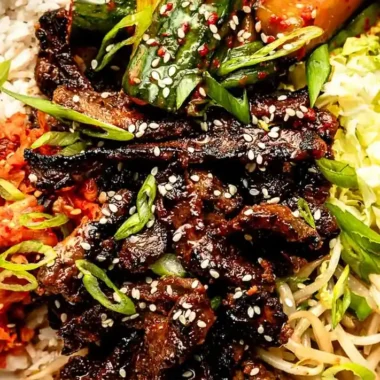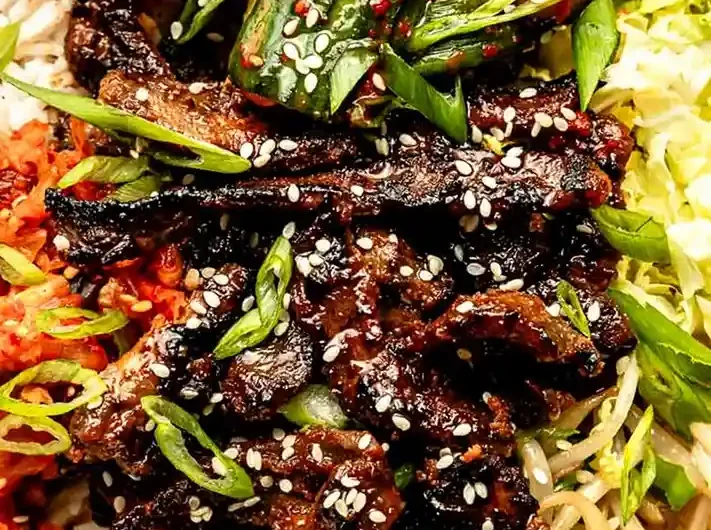
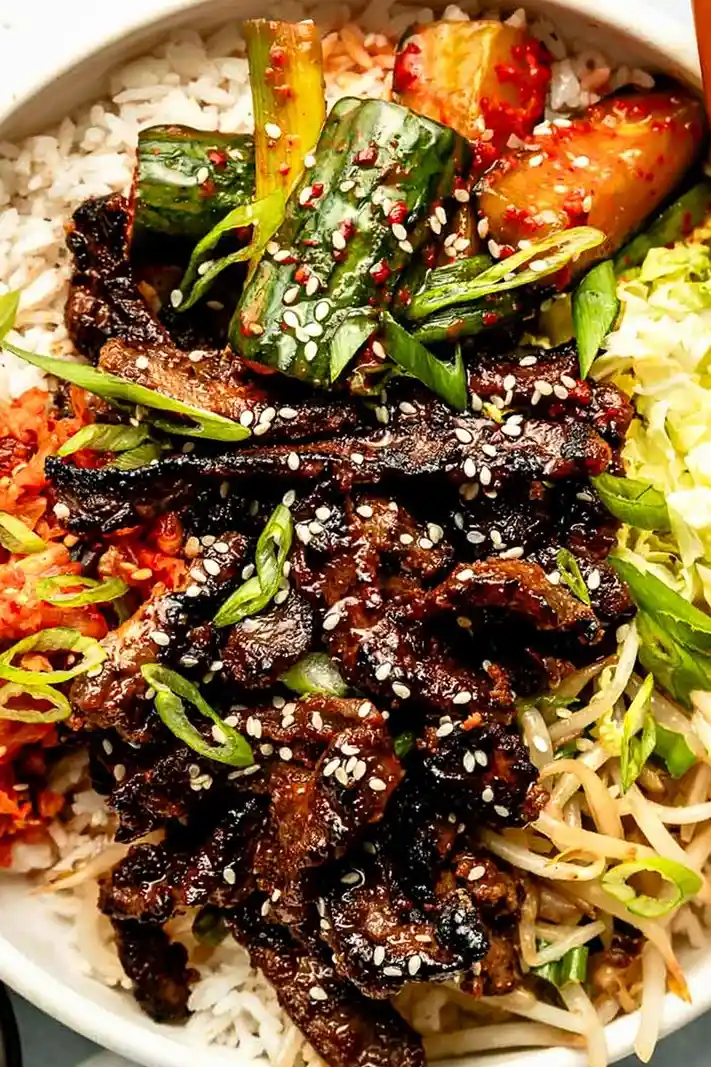
This recipe delivers a restaurant-style Korean BBQ experience with tender, caramelized steak and fresh vegetable toppings. It is a hearty meal that combines savory-sweet flavors with a satisfying crunch from mung bean sprouts over a bed of fluffy rice.
List of ingredients
- 2 pounds ribeye or tender steak of choice – thinly sliced against the grain into 1/8-inch strips.
- 1/2 cup shoyu – can substitute low-sodium soy sauce or tamari.
- 1/3 cup lightly packed dark brown sugar – can substitute light brown sugar.
- 2 tablespoons alcohol-free rice wine – used for a balanced sweetness.
- 2 tablespoons toasted sesame oil – provides a nutty aroma.
- 1 tablespoon gochujang – Korean fermented chili paste.
- 4 cloves garlic – peeled and roughly chopped.
- 1 small Asian pear – peeled, cored, and roughly chopped (substitute with Pink Lady apple or Bosc pear).
- 1 small yellow onion – peeled and roughly chopped.
- 1-inch piece fresh ginger – peeled and roughly chopped.
- Kosher salt and ground black pepper – for seasoning.
- 1-2 tablespoons vegetable oil – for searing the meat.
- 8 ounces fresh mung bean sprouts – for texture and freshness.
- 2 green onions – thinly sliced.
- 3 cups cooked white rice – serves as the base.
- For serving: leafy lettuce, shredded Napa cabbage, kimchi, pickled vegetables, gochujang aioli, or toasted sesame seeds.
step-by-step instructions
- Prepare the marinade: Combine shoyu, brown sugar, alcohol-free rice wine, sesame oil, gochujang, garlic, Asian pear, yellow onion, and ginger in a blender or food processor. Add 1 teaspoon kosher salt and black pepper, then blend or pulse until the mixture is smooth.
- Marinate the steak: Place the thinly sliced beef in a large bowl or resealable plastic bag. Pour the marinade over the meat and toss well, using your hands to separate the strips and ensure every piece is coated. Refrigerate for at least 12 hours or up to 3 days.
- Prepare for cooking: Remove the marinated beef from the refrigerator 30 to 60 minutes before cooking to take the chill off. Cook your white rice and prep any serving toppings. Line a large baking sheet with aluminum foil and preheat the oven broiler to its highest setting with the rack positioned directly below.
- Sear the beef: Heat 1 tablespoon of vegetable oil in a large skillet over medium-high heat until shimmering. Sear the beef in small batches to avoid overcrowding, cooking for 1 minute per side until a golden-brown sear forms. Transfer each batch to the lined baking sheet and discard any remaining marinade.
- Broil for caramelization: Place the baking sheet directly under the broiler. Broil for 2-3 minutes, rotating the pan halfway through, until the edges are browned and slightly crisp. Remove the pan from the oven.
- Cook the sprouts: Return the searing skillet to medium-high heat. Add mung bean sprouts and sliced green onions, seasoning with salt and pepper. Sauté briefly until warmed through, scraping up the browned beef bits from the bottom of the pan.
- Assemble the bowls: Divide the cooked rice into shallow bowls. Top with the caramelized bulgogi beef, sautéed bean sprouts, and your choice of banchan like kimchi or shredded cabbage. Serve immediately.
Steak Selection and Preparation
Choosing Ribeye for Maximum Flavor
Ribeye is the ideal choice for bulgogi because of its high fat content and marbling. When subjected to high heat, the fat renders and caramelizes, which enhances the savory-sweet profile of the marinade. This result is a more juicy and tender piece of meat compared to leaner cuts.
Using Top Sirloin as a Budget Alternative
Top sirloin is a leaner and more affordable option that still delivers great results if handled correctly. Because it lacks the marbling of ribeye, it can overcook more quickly. Ensure you stick strictly to the short searing times to prevent the meat from becoming tough.
Freezing Meat for Easier Slicing
Slicing raw steak into very thin 1/8-inch strips can be difficult. Place the beef in the freezer for 30 to 60 minutes before slicing. This firms up the muscle fibers and fat, allowing the knife to glide through the meat for consistent, thin cuts.
Slicing Against the Grain for Tenderness
To ensure the beef is tender, always slice perpendicular to the muscle fibers, known as slicing against the grain. This shortens the fibers, making the meat much easier to chew. Slicing with the grain results in long, stringy pieces that can feel chewy.
Marinade Composition and Science
The Role of Asian Pear in Tenderizing
Asian pears contain an enzyme called calpain, which acts as a natural meat tenderizer. This enzyme breaks down the tough proteins in the beef during the long marination process. If you cannot find an Asian pear, a Bosc pear or a firm apple provides a similar enzymatic effect and sweetness.
Balancing Sweetness with Brown Sugar
Dark brown sugar provides a deep, molasses-like sweetness that complements the salty shoyu. During the searing and broiling process, these sugars undergo the Maillard reaction. This creates the characteristic dark, sticky glaze and caramelized edges typical of authentic Korean BBQ.
Using Gochujang for Umami Depth
Gochujang is a fermented chili paste that adds a complex layer of spicy, sweet, and funky flavor. Unlike standard hot sauce, it has a thick consistency that helps the marinade cling to the meat. It provides a necessary counterpoint to the sweetness of the pear and sugar.
Adjusting Salt Levels with Shoyu or Tamari
Shoyu is a traditional soy sauce that provides the primary salt component of the dish. For those avoiding gluten, tamari is an excellent 1:1 substitute that maintains the same rich, salty profile. Use low-sodium versions if you prefer a less salty finish to allow the pear flavor to shine.
Cooking Techniques for the Perfect Char
Preventing Crowding in the Skillet
Cooking the beef in small batches is critical to prevent steaming. When too much meat is added to the pan, the temperature drops and the beef releases moisture, which boils the meat instead of searing it. Batch cooking ensures the pan remains hot enough to create a brown crust.
Achieving Caramelization with the Broiler
While the skillet provides the initial sear, the broiler provides the intense radiant heat needed for a true KBBQ char. The high heat rapidly evaporates surface moisture and concentrates the sugars in the marinade. This creates those sought-after crispy, blackened edges without overcooking the interior.
Managing High Heat to Avoid Burning
Because the marinade contains high amounts of sugar, it can go from caramelized to burnt very quickly under the broiler. Watch the pan closely and rotate it halfway through. Remove the beef as soon as you see deep browning and slight bubbling on the surface.
Using the Fond for Vegetable Flavor
The brown bits left in the pan after searing the beef, known as the fond, are concentrated flavor. By sautéing the mung bean sprouts in the same skillet, the vegetables deglaze the pan and absorb those savory juices. This integrates the flavors of the meat and the sides.
Customizing the Rice Bowl
Adding Fermented Kimchi for Acidity
Kimchi provides a sharp, acidic, and spicy contrast to the rich, sweet bulgogi beef. The fermentation adds a probiotic element and a bright tang that cuts through the fat of the ribeye. It is the most traditional accompaniment to ensure a balanced palate.
Incorporating Shredded Napa Cabbage
Freshly shredded Napa cabbage adds a cool, crisp texture to the bowl. It provides a refreshing break from the intense flavors of the marinated meat. You can serve it raw for maximum crunch or lightly sauté it with sesame oil.
Creating a Spicy Gochujang Aioli
For an extra layer of creaminess, blend mayonnaise with a small amount of gochujang and a squeeze of lime. Drizzle this over the assembled bowl to add a rich, velvety texture. The creaminess of the mayo mellows the heat of the chili paste.
Using Different Rice Varieties
Short-grain Calrose rice is traditional because its sticky texture holds onto the sauce effectively. However, jasmine rice provides a more floral aroma and a lighter feel. For a nuttier profile and more fiber, brown rice is a suitable alternative.
Storage and Reheating Advice
Refrigerator Storage Limits
Leftover bulgogi beef can be stored in an airtight container in the refrigerator for up to 3 days. Keep the beef separate from the rice and fresh vegetables to prevent the vegetables from wilting and the rice from becoming mushy. Ensure the container is sealed tightly to maintain moisture.
Best Way to Reheat Steak
To maintain the texture, reheat the beef in a hot skillet over medium heat for 2-3 minutes. This refreshes the caramelization on the edges. If using a microwave, use a medium power setting and heat in short intervals to avoid toughening the meat.
Maintaining Bean Sprout Texture
Mung bean sprouts lose their crunch quickly once cooked. To keep them fresh, reheat them separately or quickly toss them in a pan with a splash of water. Avoid microwaving the sprouts for long periods, as they can become rubbery.
Troubleshooting Common Issues
Why is my beef steaming instead of searing?
This usually happens if the pan is not hot enough or if the pan is overcrowded. Ensure the oil is shimmering before adding the meat. If the meat starts to release too much liquid, remove it immediately and increase the heat before starting the next batch.
What if I cannot find Asian pears?
Asian pears are prized for their crispness and enzymes. If unavailable, a Bosc pear is the closest substitute due to its density. A Pink Lady apple also works well, offering a similar balance of sweetness and acidity to help tenderize the beef.
How to fix a marinade that is too sweet?
If the marinade tastes overly sugary, balance it by adding a teaspoon of rice vinegar or a squeeze of fresh lime juice. The acidity neutralizes the perceived sweetness and adds a bright top note to the savory flavors.
Frequently Asked Questions
Can I use a different cut of meat?
Yes, while ribeye is preferred, you can use flank steak or top sirloin. Flank steak is very lean, so be extra careful not to overcook it, as it can become chewy. Always slice these leaner cuts very thinly against the grain.
How long can I marinate the beef?
The minimum marination time is 12 hours to allow the enzymes in the pear to work. You can marinate for up to 3 days. Beyond that, the acid and salt may begin to break down the meat’s structure too much, resulting in a mushy texture.
Is this dish gluten-free?
The recipe is not naturally gluten-free because of the shoyu (soy sauce). To make it gluten-free, simply replace the shoyu with tamari or coconut aminos. Ensure the gochujang brand you use is also certified gluten-free.
Print
Savory Caramelized Beef Bulgogi Bowls
- Total Time: 12 hours 45 minutes
- Yield: 4 servings 1x
- Diet: General
Description
A Korean BBQ-inspired beef bulgogi bowl featuring tender, caramelized strips of steak served over fluffy rice with crispy mung bean sprouts and traditional Korean side dishes.
Ingredients
- 2 pounds ribeye or tender steak of choice, thinly sliced against the grain into 1/8-inch strips
- 1–2 tablespoons vegetable oil
- 8 ounces fresh mung bean sprouts
- 2 green onions, thinly sliced
- 3 cups cooked white rice
- 1/2 cup shoyu (can substitute low-sodium soy sauce or tamari)
- 1/3 cup lightly packed dark brown sugar
- 2 tablespoons alcohol-free rice wine substitute
- 2 tablespoons toasted sesame oil
- 1 tablespoon gochujang
- 4 cloves garlic
- 1 small Asian pear, peeled, cored, and roughly chopped
- 1 small yellow onion, peeled and roughly chopped
- 1-inch piece fresh ginger, peeled and roughly chopped
- kosher salt and ground black pepper, to season
Instructions
- Step: To a blender or food processor, combine all listed bulgogi marinade ingredients (shoyu – ginger). Season with 1 teaspoon kosher salt and ground black pepper as desired. Blend or pulse to combine well.
- Step: Place the thinly sliced steak in a large bowl or resealable plastic bag. Pour the prepared bulgogi marinade over top. Toss well to combine, using your hands to separate the steak and ensure each individual piece is well coated. Cover and marinate in the refrigerator for at least 12 hours or up to 3 days.
- Step: About 1 hour or 30 minutes before cooking, remove the marinated bulgogi beef from the refrigerator and allow to warm slightly. This is also a great time to cook a pot of rice and prep any other bowl toppings you like. Just before cooking, line a large baking sheet with aluminum foil for easy clean up and set aside. Preheat your oven’s broiler to its highest setting, ensuring a rack is positioned directly underneath it.
- Step: Add 1 tablespoon of oil to a large skillet over medium-high heat. Once the oil is hot and shimmering, begin searing the beef in batches. Grab a small handful and carefully place it into the skillet, spreading it into an even layer. Cook for 1 minute, then flip and cook for 30 seconds more. Transfer to the prepared baking sheet. Continue to sear the remaining bulgogi beef in batches, adding additional oil to the pan as needed. Discard any remaining marinade.
- Step: Once all of the beef is seared, transfer the sheet pan to the oven, placing it directly under the broiler. Broil 2-3 minutes, carefully rotating the pan halfway through, until the beef bulgogi is browned and slightly crisp. Remove from the oven and set aside for serving.
- Step: Meanwhile, as the bulgogi beef broils, quickly cook the mung beans. Return the skillet used to sear the beef to medium-high heat. Add the mung beans and green onions. Season with a good pinch of salt and ground black pepper as desired. Cook until just warmed through.
- Step: Add the rice to a large, shallow bowl, then top it off with the bulgogi beef and any other banchan you love.
Notes
For easier slicing, chill the steak in the freezer for 30-60 minutes before cutting. Store leftover bulgogi beef in an airtight container in the refrigerator for up to 3 days.
- Prep Time: 30 minutes
- Cook Time: 15 minutes
- Category: Main Dishes
- Method: Stovetop, Broiled
- Cuisine: Korean-Inspired
Nutrition
- Serving Size: 1 bowl
- Calories: 850 kcal
- Sugar: 22 g
- Sodium: 1450 mg
- Fat: 48 g
- Saturated Fat: 18 g
- Unsaturated Fat: 30 g
- Trans Fat: 0 g
- Carbohydrates: 52 g
- Fiber: 4 g
- Protein: 55 g
- Cholesterol: 140 mg
Keywords: beef bulgogi, korean bbq, rice bowl, tender steak, weeknight dinner