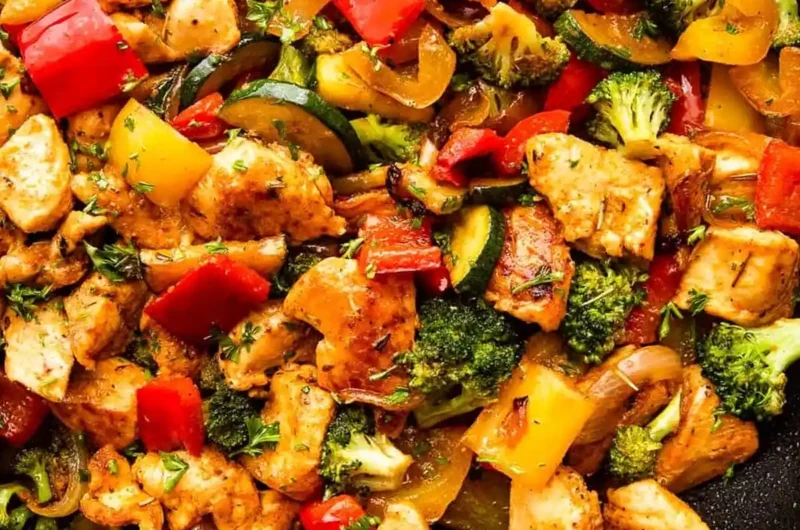
This quick chicken and vegetable skillet combines lean protein with a colorful medley of fresh produce. It is a nutrient-dense, one-pan meal that minimizes cleanup while delivering bold, herbaceous flavors.
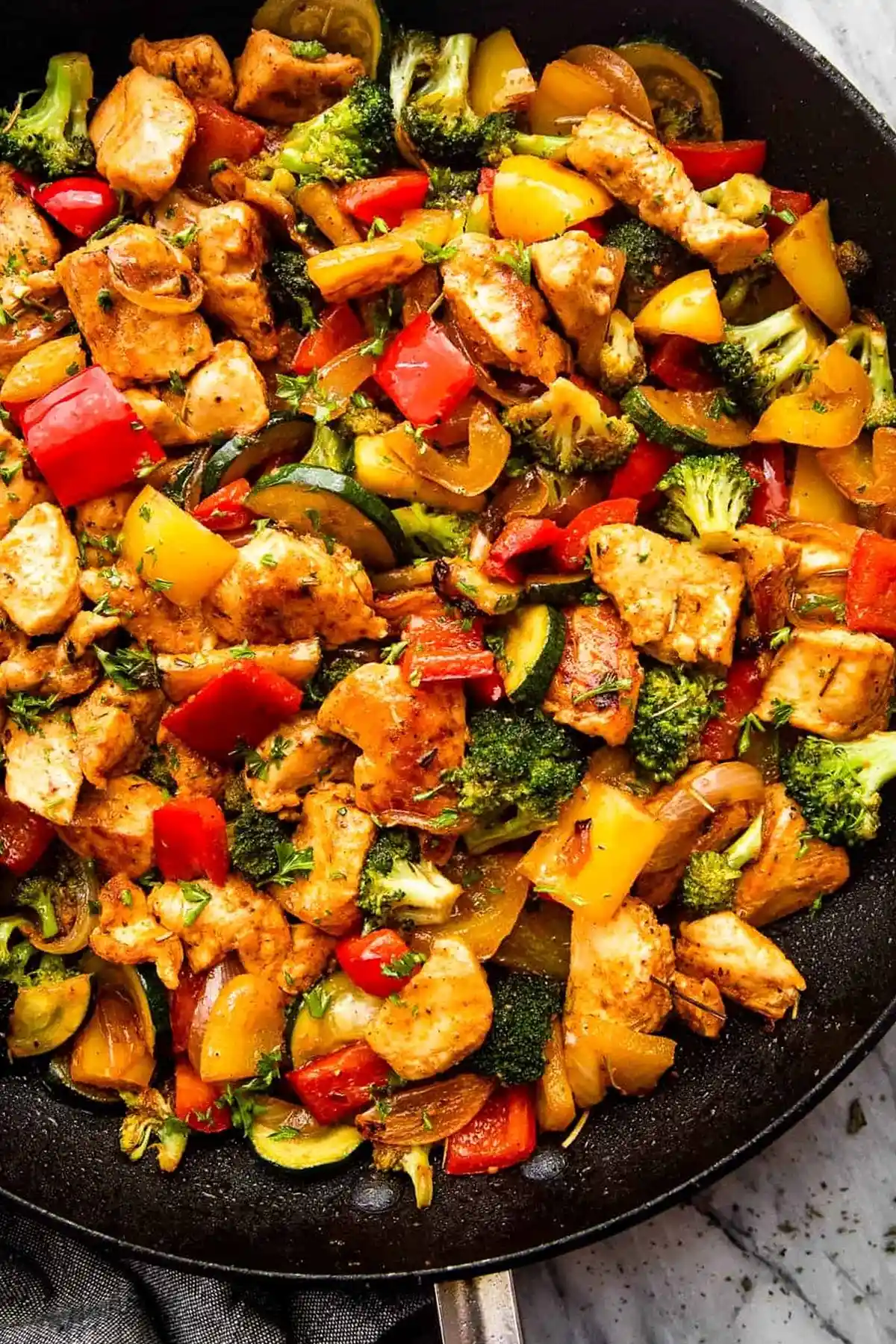
List of ingredients
- 2 tablespoons olive oil, divided – used for searing and sautéing
- 1 pound boneless skinless chicken breasts, cut into 1-inch pieces – provides the main protein
- salt and fresh ground black pepper, to taste – basic seasoning for depth
- ½ teaspoon garlic powder – adds a savory punch
- ½ teaspoon onion powder – adds aromatic sweetness
- ½ teaspoon dried thyme – provides an earthy herbal note
- ½ teaspoon dried rosemary – adds a woody fragrance
- ½ teaspoon paprika – gives color and mild sweetness
- ¼ to ½ teaspoon chili powder – provides a hint of warmth
- 1 small yellow onion, thinly sliced – adds a foundational savory flavor
- 3 cups bite-size broccoli florets – adds texture and nutrients
- 1 zucchini, thinly sliced and cut into half-moons – adds softness and mild taste
- 1 small yellow bell pepper, cut into 1-inch chunks – provides sweetness and color
- 1 small red bell pepper, cut into 1-inch chunks – adds brightness and sweetness
- ¼ cup low sodium chicken broth – used to deglaze the pan and create a light sauce
- chopped fresh parsley, for garnish – adds a fresh finish
step-by-step instructions
- Prepare the Meat: Cut the chicken into 1-inch pieces and season with salt and pepper; set aside.
- Blend the Seasoning: In a small mixing bowl combine garlic powder, onion powder, thyme, rosemary, paprika, and chili powder. Take half of the seasoning and sprinkle it over the chicken.
- Coat the Chicken: Add ½ tablespoon olive oil to the chicken and toss around to coat evenly.
- Sear the Protein: Heat 1 tablespoon olive oil in a large 12-inch skillet set over medium-high heat. Add the chicken pieces to the hot oil and cook for about 6 to 8 minutes, or until browned on all sides and the chicken is cooked through.
- Rest the Meat: Remove the chicken from the skillet, set aside on a plate, and keep covered to retain heat.
- Sauté the Aromatics: Return the skillet to the heat and add the remaining olive oil. Stir in the onions and cook for 2 minutes.
- Cook the Vegetables: Stir in the broccoli, zucchini, and peppers. Add more oil to the skillet if needed. Season with the remaining spice mix plus salt and pepper, and continue to cook for 4 to 6 minutes or until vegetables are crisp-tender, stirring occasionally.
- Deglaze the Pan: Stir in the chicken broth, scraping any browned bits from the bottom.
- Combine and Finish: Return chicken and any chicken juices to the skillet; stir around to combine and cook for a minute.
- Final Touch: Remove from heat, taste for salt and adjust accordingly. Garnish with parsley and serve.
Essential Cooking Techniques for the Best Results
Pat Dry the Chicken for a Superior Sear
Before seasoning the chicken, use a paper towel to pat each piece dry. Removing surface moisture prevents the meat from steaming in the pan, allowing it to brown deeply and develop a rich crust.
Maintain Consistent Piece Sizes
Cutting the chicken into uniform 1-inch cubes ensures that every piece cooks at the same rate. This prevents smaller pieces from overcooking and becoming dry while larger pieces remain raw in the center.
Manage the Pan Temperature
Ensure the skillet is hot before adding the oil and chicken. A shimmering oil indicates the pan is ready, which prevents the meat from sticking and ensures a quick sear that locks in juices.
Avoid Overcrowding the Skillet
If your pan is too small, cook the chicken in two batches. Overcrowding lowers the temperature of the pan and releases too much moisture, which leads to gray, steamed meat rather than golden-brown pieces.
Deglaze for Maximum Flavor
When you add the chicken broth, use a wooden spoon to scrape the browned bits, known as fond, from the bottom of the pan. These caramelized particles contain concentrated flavor that thickens the light sauce.
Ingredient Substitutions and Modifications
Use Boneless Chicken Thighs for Extra Juiciness
If you prefer a richer flavor, substitute chicken breasts with boneless, skinless thighs. Thighs have a higher fat content, making them more tender and less likely to dry out during the searing process.
Swap Vegetables Based on Seasonality
You can replace the broccoli or zucchini with other crisp vegetables like cauliflower florets, asparagus tips, or sliced carrots. Just ensure that denser vegetables like carrots are sliced thinner to cook in the same timeframe.
Modify the Spice Level for Different Palates
For a milder flavor, reduce the chili powder to a pinch or omit it entirely. If you prefer a spicier dish, add a pinch of cayenne pepper or red pepper flakes during the vegetable sauté phase.
Alternative Broth Options
If low-sodium chicken broth is unavailable, vegetable broth or water can be used. Vegetable broth maintains the savory depth, while water provides a cleaner, neutral base that lets the herbs shine.
Low-Carb Vegetable Alternatives
To reduce the carbohydrate count further, replace the onion with sliced leeks or increase the amount of zucchini and bell peppers. These options maintain the volume of the meal while keeping it keto-friendly.
Serving Suggestions and Pairing Ideas
Pair with Fluffy Grains
This skillet meal is excellent when served over a bed of basmati rice, quinoa, or brown rice. The grains soak up the light pan sauce, making the meal more filling and balanced.
Serve Over Hearty Pasta
Toss the finished chicken and vegetables with cooked fettuccine or penne. A splash of extra olive oil or a sprinkle of microbial-rennet parmesan cheese can enhance the pasta pairing.
Accompany with Roasted Root Vegetables
For a rustic meal, serve this dish alongside roasted sweet potato wedges or garlic mashed potatoes. The sweetness of the potatoes complements the earthy rosemary and thyme in the chicken.
Add a Fresh Side Salad
Balance the cooked components with a crisp side salad of mixed greens, cucumber, and a light lemon vinaigrette. The acidity of the dressing cuts through the richness of the olive oil.
Use Crusty Bread for Scooping
Serve the skillet with toasted sourdough or a warm baguette. Use the bread to scoop up the remaining pan juices and small pieces of seasoned vegetables.
Storage and Long-Term Preservation
Refrigerating Leftovers Safely
Store any remaining chicken and vegetables in an airtight glass or plastic container. Keep the pan juices with the meat to prevent it from drying out; it will stay fresh in the refrigerator for 3 to 4 days.
Freezing for Future Meals
Place the cooled dish in freezer-safe bags or containers, pressing out as much air as possible. This meal can be stored in the freezer for up to 3 months without significant loss of flavor.
Thawing Procedures
To maintain the texture of the vegetables, thaw frozen portions overnight in the refrigerator. Avoid thawing at room temperature to ensure food safety and prevent the vegetables from becoming too mushy.
Best Practices for Reheating
Stovetop Reheating Method
Place the leftovers in a covered skillet or saucepan over low to medium heat. Add a tablespoon of water or broth to restore moisture and stir occasionally until the dish is heated through.
Microwave Reheating Tips
Heat the food in short 30-second intervals, stirring in between. Covering the dish with a damp paper towel helps steam the chicken and vegetables, preventing them from becoming rubbery.
Preventing Overcooking During Reheating
Stop heating the food as soon as it is warm. Overheating the dish a second time can cause the broccoli and zucchini to lose their structure and become overly soft.
Advance Preparation and Meal Planning
Pre-Cutting Vegetables
Chop the onions, peppers, zucchini, and broccoli a day in advance. Store them in separate containers or a single large bag to reduce prep time on the day of cooking.
Pre-Mixing the Dry Rub
Combine the garlic powder, onion powder, thyme, rosemary, paprika, and chili powder in a small jar. This homemade seasoning blend can be stored for several weeks and used for other meat dishes.
Marinating the Meat
Toss the cubed chicken in the oil and half of the spice mix a few hours before cooking. This allows the flavors to penetrate deeper into the meat for a more savory result.
Troubleshooting Common Cooking Issues
Why are my vegetables mushy?
Mushy vegetables usually result from overcooking or using too little heat. Ensure your skillet is hot and cook the vegetables just until they are crisp-tender, removing them from the heat immediately.
Why is the chicken not browning?
If the chicken looks gray instead of brown, the pan may not have been hot enough, or the pan was overcrowded. Cook in smaller batches and increase the heat to medium-high for a better sear.
How to fix a sauce that is too thin?
If the pan sauce is too watery, simmer the broth for an extra minute after adding it, before returning the chicken to the pan. This reduces the liquid and concentrates the flavor.
What to do if the spices burn?
Burning spices happen when the heat is too high or the oil is overheating. If you notice the spices turning dark brown or smelling acrid, lower the heat and add a small splash of broth to cool the pan.
Frequently Asked Questions
Can I use frozen vegetables instead of fresh?
Yes, you can use frozen mixed vegetables, but ensure they are fully thawed and patted dry before adding them to the skillet. Adding frozen vegetables directly can release too much water, which will steam the meat.
Is this dish suitable for weekly meal prep?
Absolutely. This recipe is ideal for meal prep because it stores well and reheats easily. Divide the portions into containers with a side of rice or quinoa for a complete lunch.
What is the best type of skillet for this recipe?
A large cast-iron skillet or a heavy-bottomed stainless steel pan is best. These materials distribute heat evenly and can withstand the high temperatures needed for searing the chicken.
Can I add other proteins to this mix?
Yes, you can use steak tips, shrimp, or firm tofu cubes. Adjust the cooking time based on the protein; for example, shrimp will cook much faster than beef or chicken.
How can I make this dish creamier?
Stir in a tablespoon of microbial-rennet cream cheese or a splash of heavy cream at the very end. This will create a richer, velvety sauce that clings to the vegetables and chicken.
Print
Savory Chicken and Vegetable Skillet
- Total Time: 35 minutes
- Yield: 4 servings 1x
- Diet: General
Description
This Chicken and Vegetables dinner, featuring chicken infused with garlic and a medley of vibrant, crisp-tender vegetables, is a simple meal sure to be a hit with everyone.
Ingredients
- 2 tablespoons olive oil, divided
- 1 pound boneless skinless chicken breasts, cut into 1-inch pieces
- salt and fresh ground black pepper, to taste
- ½ teaspoon garlic powder
- ½ teaspoon onion powder
- ½ teaspoon dried thyme
- ½ teaspoon dried rosemary
- ½ teaspoon paprika
- ¼ to ½ teaspoon chili powder
- 1 small yellow onion, thinly sliced
- 3 cups bite-size broccoli florets
- 1 zucchini, thinly sliced and cut into half-moons
- 1 small yellow bell pepper, cut into 1-inch chunks
- 1 small red bell pepper, cut into 1-inch chunks
- ¼ cup low sodium chicken broth
- chopped fresh parsley, for garnish
Instructions
- Prep: Cut the chicken into 1-inch pieces and season with salt and pepper; set aside.
- Season: In a small mixing bowl combine garlic powder, onion powder, thyme, rosemary, paprika, and chili powder; take half of the seasoning and sprinkle it over the chicken.
- Coat: Add ½ tablespoon olive oil to the chicken and toss around to coat evenly.
- Sear: Heat 1 tablespoon olive oil in a large 12-inch skillet set over medium-high heat. Add the chicken pieces to the hot oil and cook for about 6 to 8 minutes, or until browned on all sides and the chicken is cooked through.
- Set Aside: Remove the chicken from the skillet, set aside in a plate, and keep covered.
- Sauté Veggies: Return the skillet to the heat and add the remaining olive oil. Stir in the onions and cook for 2 minutes. Stir in the broccoli, zucchini, and peppers. Add more oil to the skillet if needed. Season with remaining spice mix plus salt and pepper, and continue to cook for 4 to 6 minutes or until vegetables are crisp-tender. Stir occasionally.
- Deglaze: Stir in the chicken broth.
- Combine: Return chicken and any chicken juices to the skillet; stir around to combine and cook for a minute.
- Finish: Remove from heat. Taste for salt and adjust accordingly.
- Garnish: Garnish with parsley and serve.
Notes
For extra juiciness, you can use boneless chicken thighs. Feel free to substitute other vegetables like cauliflower or asparagus.
- Prep Time: 15 minutes
- Cook Time: 20 minutes
- Category: Dinner
- Method: Sautéing
- Cuisine: American
Nutrition
- Serving Size: 1 serving
- Calories: 257 kcal
- Sugar: 5 g
- Sodium: 168 mg
- Fat: 11 g
- Saturated Fat: 2 g
- Unsaturated Fat: 7 g
- Trans Fat: 1 g
- Carbohydrates: 13 g
- Fiber: 4 g
- Protein: 28 g
- Cholesterol: 73 mg
Keywords: chicken skillet, vegetable skillet, easy dinner, one pan meal, healthy chicken