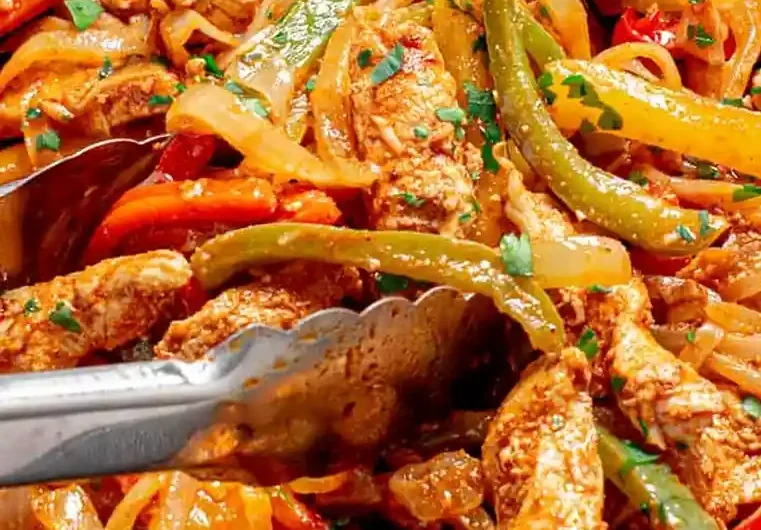
These chicken fajitas combine zesty marinated strips with sautéed bell peppers and onions for a fast and flavorful weeknight dinner. Serve them in warm tortillas with fresh toppings for a complete and satisfying meal.
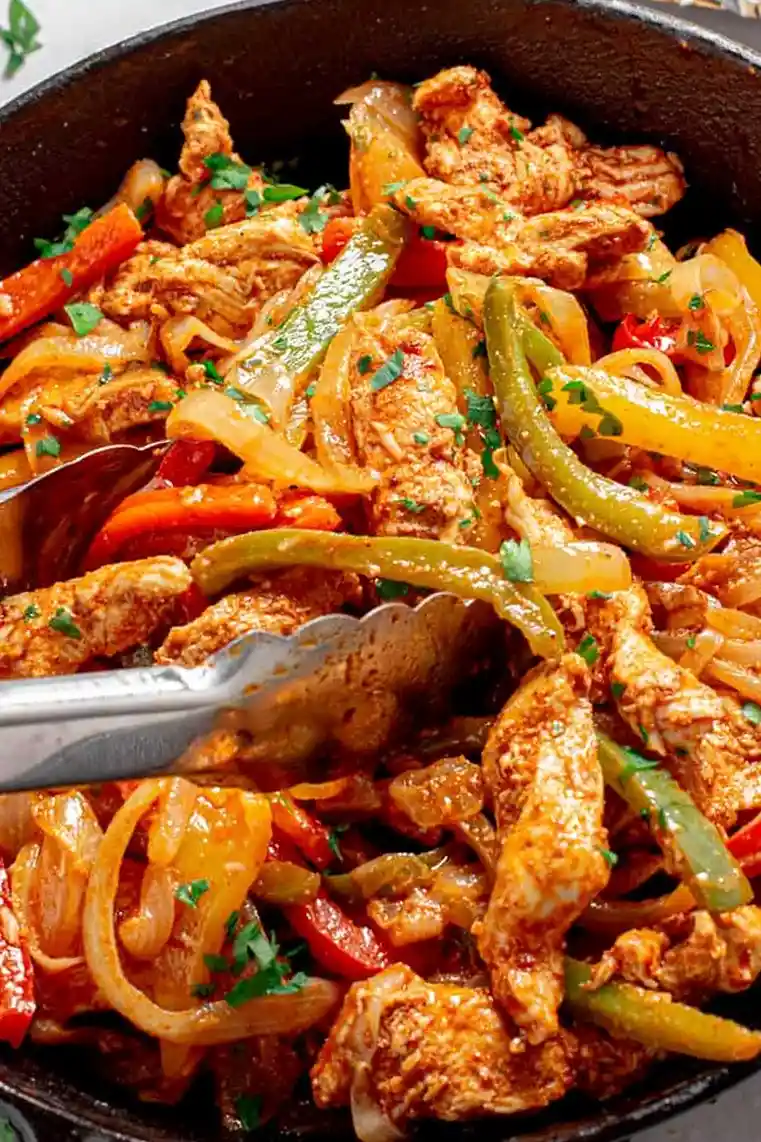
List of ingredients
- 3 medium chicken breasts (boneless and skinless) – sliced into strips
- 3 medium bell peppers (tricolors) – sliced into thin strips
- 1 medium onion – sliced into thin strips
- 1/2 tablespoon chili powder – for warmth and color
- 1/2 tablespoon ground cumin – adds earthy flavor
- 1 teaspoon garlic powder – for savory depth
- 1/2 teaspoon oregano – provides herbal notes
- 1/4 teaspoon salt – or adjusted to taste
- 1/8 teaspoon pepper – or adjusted to taste
- 2 tablespoons oil – for sautéing
- 1 tablespoon lime juice – adds brightness and acidity
- tortillas – for serving
- avocado – for creaminess
- shredded cheese – for topping
- sour cream – to balance the spice
- salsa – for extra flavor
- lime wedge – for final garnish
step-by-step instructions
- Prepare the marinade: Combine chili powder, ground cumin, garlic powder, oregano, salt, pepper, oil, and lime juice in a small mixing bowl and whisk together until smooth.
- Marinate the chicken: Cut chicken breasts into 1/2-1-inch-wide strips. Place the strips in a large bowl, pour in 3/4 of the prepared marinade, and toss to coat. Refrigerate for 20-30 minutes or overnight for deeper flavor.
- Season the vegetables: Slice bell peppers and onion into thin strips. Pour the remaining 1/4 of the marinade over the vegetables and toss well to coat.
- Sauté the vegetables: Heat a large skillet with oil or non-stick cooking spray over medium heat. Add the sliced vegetables and sauté until they are softened but still retain a slight crispness. Remove the vegetables from the skillet and set them aside on a plate.
- Cook the chicken: Place the marinated chicken strips into the same skillet. Cook for about 2-3 minutes per side or until the meat is cooked through and no longer pink in the center.
- Combine and serve: Return the sautéed vegetables to the skillet with the cooked chicken. Season with additional salt and pepper to taste if needed. Serve immediately in warm tortillas with your chosen toppings.
Pro Cooking Tips for Better Results
Optimal Meat Cutting Technique
Slice the chicken breasts across the grain to ensure the strips are tender. Aim for a consistent thickness of 1/2 to 1 inch to ensure all pieces cook at the same rate. This prevents smaller pieces from drying out while larger ones remain undercooked.
Achieving the Perfect Sear
Ensure the skillet is well-heated before adding the chicken to create a brown crust. Avoid overcrowding the pan, as too much meat will release moisture and cause the chicken to steam rather than sear. If cooking for a large group, sear the chicken in batches.
Controlling Vegetable Texture
Sauté the peppers and onions quickly over medium-high heat to achieve a charred exterior while keeping the inside crisp. Removing them from the pan before adding the chicken prevents them from becoming mushy during the final mixing stage.
Enhancing the Marinade Penetration
For the best results, marinate the chicken overnight in the refrigerator. The acid in the lime juice helps break down the muscle fibers, making the chicken more tender. Always pat the chicken slightly if it is overly wet to ensure a better sear in the pan.
Ingredient Substitutions and Adaptations
Using Chicken Thighs for Juiciness
Substitute boneless, skinless chicken thighs for breasts if you prefer a richer flavor and more moisture. Thighs are more forgiving during the cooking process and less likely to overcook. Follow the same slicing and marinating steps as the original recipe.
Alternative Bell Pepper Combinations
While tricolor peppers provide the best visual appeal, you can use any variety. Red, orange, and yellow peppers are sweeter, while green peppers offer a slightly more bitter, traditional flavor. Use a mix based on your preference for sweetness.
Substituting Sour Cream with Greek Yogurt
Use plain Greek yogurt as a healthier alternative to sour cream. It provides a similar creamy texture and tangy flavor profile while adding more protein to the dish. Ensure the yogurt is unsweetened and plain.
Low-Carb Tortilla Alternatives
Replace flour or corn tortillas with large lettuce leaves such as Romaine or butter lettuce for a low-carb option. You can also serve the chicken and vegetable mixture over a bed of cauliflower rice. This keeps the flavor profile intact while reducing carbohydrates.
Creative Serving Ideas
Choosing the Right Tortillas
Flour tortillas are softer and easier to fold, making them ideal for heavily loaded fajitas. Corn tortillas provide a more authentic flavor and are naturally gluten-free. Warm them on a dry skillet or over an open gas flame for a few seconds to improve flexibility.
Complementary Side Dishes
Serve your fajitas with a side of Mexican-style red rice or cilantro-lime rice to soak up the juices. Black beans or pinto beans seasoned with cumin and garlic provide a hearty accompaniment. A side of corn salad with lime and cilantro also adds a fresh contrast.
Customizing Topping Stations
Create a DIY topping bar with bowls of diced white onion, fresh cilantro, and sliced jalapeños. Include a variety of salsas, such as salsa verde for tanginess or salsa roja for heat. Freshly diced avocado or a smooth guacamole adds a necessary richness to the meal.
Serving as Fajita Bowls
Skip the tortillas entirely and serve the mixture in a bowl over a base of quinoa or brown rice. Add a scoop of black beans and a dollop of sour cream on top. This turns the meal into a nutrient-dense power bowl suitable for lunch.
Storage and Reheating Guidelines
Storing Leftover Fajitas
Store cooked chicken and vegetables in an airtight container in the refrigerator for up to 3 to 4 days. Keep the tortillas and fresh toppings like avocado and sour cream in separate containers to maintain their quality. Store avocado with a squeeze of lime juice to prevent browning.
Best Reheating Methods
Reheat the chicken and peppers in a skillet over medium heat with a teaspoon of water or oil to restore moisture. Avoid microwaving for long periods, as this can make the chicken rubbery. Heat tortillas separately in a dry pan or microwave them wrapped in a damp paper towel.
Freezing Cooked Fajita Meat
The cooked chicken and pepper mixture can be frozen for up to 2 months in a freezer-safe bag. Thaw the mixture in the refrigerator overnight before reheating in a pan. Note that the vegetables may lose some of their crispness after being frozen.
Maintaining Fresh Toppings
Store leftover salsa and sour cream in the back of the fridge where it is coldest. Use an airtight container for sliced onions and cilantro to prevent them from absorbing other odors. Discard any avocado that has turned dark brown.
Make-Ahead and Meal Prep Advice
Prepping Vegetables in Advance
Slice your bell peppers and onions up to two days before you plan to cook. Store them together in a sealed container or bag in the refrigerator. This reduces the active prep time on the day of the meal to just a few minutes.
Batch Marinating for the Week
Prepare a large batch of the marinade and divide it among several freezer bags. Add the chicken to the bags and freeze them raw. The chicken will marinate as it thaws in the refrigerator the day before you intend to cook it.
Pre-Cooking Components
You can sauté the vegetables and cook the chicken separately a day in advance. Store them in the fridge and combine them in the skillet just before serving. This allows you to serve a hot meal in under five minutes.
Organizing the Topping Station
Dice your onions, chop your cilantro, and slice your limes during your weekly meal prep. Store these in small containers so you can simply set them on the table when the fajitas are ready. This simplifies the final assembly process.
Troubleshooting and FAQs
Why is my chicken rubbery or dry?
Rubbery chicken usually results from overcooking or using high heat for too long. Cook the strips quickly over medium heat and remove them as soon as they reach an internal temperature of 165°F. Avoid overcrowding the pan, which can lead to uneven cooking.
How do I stop the peppers from getting mushy?
Mushy peppers occur when they are cooked for too long or sautéed over too low a heat. Cook them quickly on medium-high heat and remove them from the pan before they lose their structure. Add them back to the pan only at the very end of the process.
Can I make this recipe in one pan?
Yes, you can cook everything in one pan, but you must cook the ingredients in stages. Sauté the vegetables first, remove them, cook the chicken, and then recombine. Cooking everything together from the start will result in steamed vegetables and gray chicken.
What can I use if I don’t have lime juice?
Lemon juice is the best substitute for lime juice as it provides similar acidity. You can also use a small amount of apple cider vinegar, though the flavor will be slightly different. Avoid using white vinegar as it is too harsh for this flavor profile.
How do I keep my tortillas from cracking?
Cracking usually happens when tortillas are cold or over-dried during heating. Warm them in a microwave wrapped in a damp paper towel for 20 seconds. Alternatively, heat them on a hot skillet for 30 seconds per side until they are pliable.
Can I use a different oil for sautéing?
Any oil with a high smoke point will work well, such as avocado oil, canola oil, or vegetable oil. Avoid using extra virgin olive oil for high-heat sautéing as it can smoke and develop a bitter taste. Use a neutral oil to let the marinade flavors shine.
Print
Savory Chicken Fajitas with Sautéed Peppers
- Total Time: 30 minutes
- Yield: 8 servings 1x
- Diet: General
Description
Chicken Fajitas are a classic Mexican dish that is served with perfectly seasoned chicken strips with sauteed bell peppers and onions. Add in some spices and lime juice this will become a weekly dinner tradition in your house. Serve with your favorite fajita toppings and enjoy!
Ingredients
- 3 medium chicken breast (boneless and skinless)
- 3 medium bell peppers (tricolors)
- 1 medium onion
- 1/2 tablespoon chili powder
- 1/2 tablespoon ground cumin
- 1 teaspoon garlic powder
- 1/2 teaspoon oregano
- 1/4 teaspoon salt
- 1/8 teaspoon pepper
- 2 tablespoons oil
- 1 tablespoon lime juice
- tortillas
- avocado
- shredded cheese
- sour cream
- salsa
- lime wedge
Instructions
- Step: Prepare fajita marinade by adding all the ingredients into a small mixing bowl and whisking together.
- Step: Cut your chicken breast into 1/2-1-inch-wide strips. Place chicken strips into a large mixing bowl and pour in 3/4 of the prepared marinade. Toss chicken in marinade to coat. Place in the fridge to marinate for 20-30 minutes or overnight.
- Step: Prepare your fajita veggies by slicing them into thin strips and set them aside. Pour the remaining 1/4 of the prepared marinade on your veggies and toss to coat.
- Step: Heat a large skillet with non-stick cooking spray or oil over medium heat. Add prepared sliced veggies and sauté until softened yet still crispy. Set aside cooked veggies on a plate for later.
- Step: Place marinated chicken into the skillet and cook for about 2-3 minutes per side or until chicken strips are cooked through.
- Step: Add veggies back into the skillet with cooked chicken. Season with salt and pepper to taste. Serve in tortillas with optional serving ingredients.
Notes
Serve fajitas right out of the skillet on a hot pad. Corn or flour tortillas work well. Alternatively, serve over Mexican rice or on top of nachos. Fresh lime wedges enhance the flavors.
- Prep Time: 10 minutes
- Cook Time: 20 minutes
- Category: Dinner
- Method: Sautéing
- Cuisine: Mexican
Nutrition
- Serving Size: 4 oz
- Calories: 152 kcal
- Sugar: 3 g
- Sodium: 182 mg
- Fat: 6 g
- Saturated Fat: 1 g
- Unsaturated Fat: 5 g
- Trans Fat: 1 g
- Carbohydrates: 5 g
- Fiber: 1 g
- Protein: 19 g
- Cholesterol: 54 mg
Keywords: chicken fajitas, Mexican cuisine, Tex-Mex, dinner, healthy chicken recipe