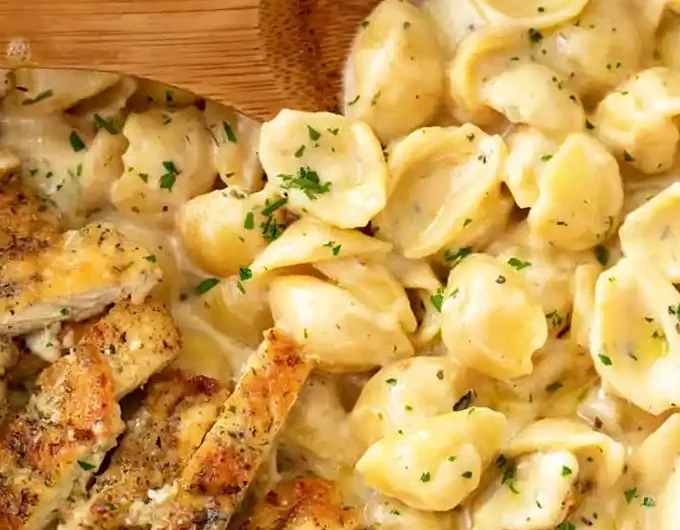
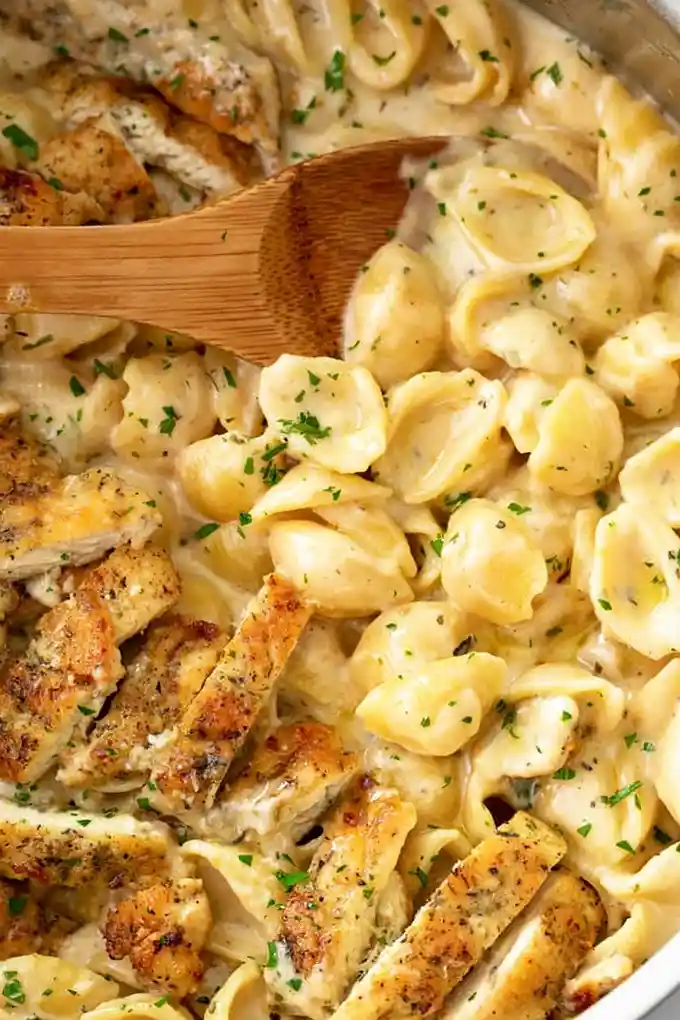
This flavorful chicken pasta features a rich, velvety cream sauce tossed with golden seared chicken. It is a versatile meal that pairs perfectly with various pasta shapes and optional vegetable additions.
List of ingredients
- 1 large boneless skinless chicken breast – sliced and pounded for even cooking.
- Salt and pepper – to taste.
- 2 teaspoons Italian seasoning – for aromatic depth.
- 1/4 cup flour – used for dredging the chicken.
- 1-2 tablespoons olive oil – for searing the meat.
- 1/2 cup chicken broth – used for deglazing the pan.
- 3 tablespoons butter – for the roux base.
- 3 cloves garlic, minced – provides a pungent flavor.
- 3 tablespoons flour – used to thicken the cream sauce.
- 1 1/4 cups half and half – a mix of light cream and milk for richness.
- 3/4 cup chicken broth – used in the sauce mixture.
- 1/2 chicken bouillon cube – adds concentrated savory flavor.
- 1/3 cup Parmesan cheese, grated – for a salty, nutty finish.
- 1/3 cup Romano cheese, grated – adds a sharper profile to the sauce.
- 1/2 lb pasta, any kind – shells are recommended for sauce retention.
- 1 cup pasta water, optional – reserved for adjusting sauce consistency.
- 1 lemon, optional – fresh juice for brightness.
- 1/2 teaspoon onion powder – dried seasoning.
- 1/2 teaspoon garlic salt – dried seasoning.
- 1/2 teaspoon oregano – dried seasoning.
- 1/2 teaspoon basil – dried seasoning.
- 1/2 teaspoon mustard powder – dried seasoning.
- 1/2 teaspoon parsley – dried seasoning.
- 1/8 teaspoon smoked paprika – for a hint of woodsy flavor.
step-by-step instructions
- Prepare the Mixture: Combine the half and half, 3/4 cup chicken broth, and all listed dried seasonings in a large measuring cup with a spout. Set this aside. Prepare your colander with a measuring cup inside to ensure you reserve pasta water later.
- Sear the Chicken: Slice the chicken breast in half lengthwise into 2-4 thinner pieces. Place plastic wrap over the meat and pound to a 1-inch thickness. Pat dry and season with salt, pepper, and Italian seasoning.
- Dredge and Cook: Lightly dust both sides of the chicken with flour. Heat olive oil in a large skillet over medium-high heat. Sear the chicken for 3-4 minutes per side until a golden crust forms. Remove the chicken from the pan, let it rest for 10 minutes, then slice into strips.
- Deglaze the Pan: Pour 1/2 cup chicken broth into the skillet over medium heat. Use a spatula to scrape the browned bits (fond) from the bottom of the pan. Let the liquid bubble and reduce by half, which takes about 3-4 minutes.
- Build the Roux: Add butter and minced garlic to the skillet, cooking for 1 minute. Stir in 3 tablespoons of flour and cook continuously for 2 minutes until the raw flour scent disappears.
- Simmer the Sauce: Gradually pour in the half and half and broth mixture in small splashes, stirring constantly to prevent lumps. Stir in the chicken bouillon cube. Bring to a gentle bubble, then reduce heat to low and cover partially.
- Cook the Pasta: Boil a pot of salted water and cook the pasta until al dente. Drain the pasta, making sure to reserve at least 1 cup of the starchy cooking water.
- Assemble the Dish: Gradually stir the grated Parmesan and Romano cheeses into the sauce over low heat. Toss in the cooked pasta, followed by the sliced chicken and its accumulated juices.
- Final Adjustments: If the sauce is too thick, stir in small splashes of reserved pasta water until the desired consistency is reached. Squeeze fresh lemon juice over the top and garnish with parsley before serving.
Sauce Texture and Consistency Tips
Use Freshly Grated Hard Cheeses
Always grate your Parmesan and Romano cheeses from a solid wedge rather than buying pre-shredded options. Pre-shredded cheeses are coated in cornstarch or cellulose to prevent clumping, which can make your sauce grainy. Freshly grated cheese melts smoothly into the liquid for a professional finish.
Control the Temperature During Cheese Incorporation
Ensure the sauce is on low heat before stirring in the cheese. If the base is boiling or too hot, the proteins in the cheese can tighten and separate from the fats. This results in a broken sauce with an oily appearance or a gritty texture.
Manage the Roux Slowly
When adding the liquid mixture to the butter and flour roux, do so in small increments. Stirring vigorously between each addition ensures the flour is fully integrated. This prevents the formation of lumps and creates a uniform, thick consistency.
Utilize Reserved Pasta Water
Pasta water contains starch released from the noodles during boiling. Adding a few tablespoons of this liquid at the end helps emulsify the sauce and allows it to cling better to the pasta. It acts as a bridge between the fat in the cream and the surface of the noodles.
Ingredient Substitutions and Adaptations
Selecting the Best Pasta Shapes
While shells are excellent because they scoop up the sauce, other shapes work well. Fettuccine and linguine provide a classic feel, while farfalle (bowtie) offers a bit more chew. Penne or rigatoni are great options if you are adding bulky vegetables like broccoli.
Alternative Cheese Options
If you cannot find Romano cheese, you can replace it entirely with more Parmesan. For a creamier, milder taste, a small amount of Pecorino Romano or even a touch of cream cheese can be used. Always ensure the substitute is a hard, aged cheese for the best flavor profile.
Liquid Substitutes for Half and Half
If half and half is unavailable, you can mix equal parts whole milk and heavy cream. For a lighter version, use whole milk, though the sauce will be thinner and less rich. Avoid using skim milk as it may curdle more easily when exposed to the acidity of the lemon.
Deglazing Alternatives
Chicken broth is the primary substitute for deglazing the pan. To add a bit more acidity similar to a traditional deglaze, you can add a teaspoon of apple cider vinegar or a squeeze of lemon juice to the broth before pouring it into the skillet.
Flavor Enhancements and Add-ons
Incorporating Fresh Leafy Greens
Fresh spinach or kale can be stirred into the sauce during the final minute of cooking. The residual heat will wilt the greens without overcooking them. This adds color and nutritional value to the dish without altering the core flavor.
Adding Earthy Sautéed Mushrooms
Mushrooms provide a great savory depth. Sauté sliced cremini or button mushrooms in a separate pan with a bit of butter and garlic until browned. Stir them into the pasta at the very end to maintain their texture.
Using Tangy Sun-Dried Tomatoes
Sliced sun-dried tomatoes add a concentrated sweetness and tang. Add them along with the cooked chicken to the sauce. Their intense flavor cuts through the richness of the cream and cheese.
Integrating Roasted Broccoli
Roasted broccoli florets add a charred flavor and a satisfying crunch. Toss the roasted florets in just before serving. This prevents the broccoli from becoming mushy while integrating it into the creamy sauce.
Adding a Toasted Breadcrumb Topping
For added texture, toast panko breadcrumbs in a small skillet with melted butter until golden brown. Sprinkle these over the plated pasta immediately before serving. This provides a contrast to the softness of the noodles and sauce.
Storage and Reheating Guidelines
Refrigeration for Short-Term Storage
Store leftovers in an airtight container in the refrigerator for up to three days. Creamy sauces tend to thicken significantly as they cool. Do not be alarmed if the pasta looks dry or the sauce appears solidified when cold.
Freezing and Thawing Process
This dish can be frozen for up to three months. Allow the pasta to cool completely before placing it in a freezer-safe container. Thaw the dish slowly in the refrigerator overnight before reheating to ensure the dairy doesn’t separate.
The Double Boiler Reheating Method
To restore the original texture, reheat the pasta using a makeshift double boiler. Place the pasta in a heat-proof bowl over a pot of simmering water. This gentle heat prevents the sauce from scorching or breaking.
Restoring Sauce Fluidity
When reheating, the sauce often absorbs more liquid from the pasta. Add a small splash of milk, chicken broth, or reserved pasta water while warming. Stir gently to emulsify the sauce back to its original creamy state.
Common Cooking Troubleshooting
Why is my sauce grainy?
Graininess usually occurs because the cheese was added to a sauce that was too hot, causing the fats to separate. To fix this, try whisking in a tablespoon of warm milk or cream over very low heat to help smooth it out.
How can I make the sauce thicker?
If the sauce is too thin, simmer it for a few more minutes without the lid to allow more evaporation. Alternatively, you can whisk in a small amount of additional Parmesan cheese or a cornstarch slurry (cornstarch mixed with cold water).
What if the chicken is overcooked?
Overcooked chicken becomes tough and dry. To mitigate this, ensure the chicken rests for at least 10 minutes before slicing. When adding it back to the pan, toss it in quickly at the end so it doesn’t continue to cook in the simmering sauce.
Can I use a different protein?
Yes, this sauce works well with shrimp, sliced sausage, or sliced beef tenderloin. Adjust the searing time based on the protein. Shrimp, for example, only needs 2 minutes per side and should be added to the sauce at the very last moment.
How do I stop chicken from sticking to the pan?
Ensure the oil is shimmering and hot before adding the meat. Avoid crowding the pan, as this lowers the temperature and causes the meat to steam instead of sear. Let the chicken develop a crust before attempting to flip it.
Print
Savory Creamy Chicken Pasta
- Total Time: 50 minutes
- Yield: 4 servings 1x
- Diet: General
Description
This Creamy Chicken Pasta has the most flavorful cream sauce tossed with juicy chicken and any kind of pasta! Add-on options include spinach, mushrooms, tomatoes, and more!
Ingredients
- 1 large boneless skinless chicken breast
- Salt and pepper to taste
- 2 teaspoons Italian seasoning
- ¼ cup flour
- 1–2 tablespoons olive oil
- ½ cup chicken broth (substitute for white wine)
- 3 tablespoons butter
- 3 cloves garlic, minced
- 3 tablespoons flour
- 1 ¼ cups half and half
- ¾ cup chicken broth
- ½ chicken bouillon cube
- 1/3 cup Parmesan cheese, grated
- 1/3 cup Romano cheese, grated
- ½ lb. pasta, any kind
- 1 cup pasta water, optional
- 1 lemon, optional
- ½ teaspoon onion powder
- ½ teaspoon garlic salt
- ½ teaspoon oregano, dried
- ½ teaspoon basil, dried
- ½ teaspoon mustard powder
- ½ teaspoon parsley, dried
- 1/8 teaspoon smoked paprika
Instructions
- Prep Work: Combine the half and half, chicken broth, and seasonings in a large measuring cup with a spout and set aside. Measure out remaining ingredients. Place a measuring cup in the colander used to drain the pasta to reserve pasta water.
- Season/Sear the Chicken: Slice the chicken in half lengthwise into 2-4 thinner slices. Pound each side to about 1-inch thick. Pat dry. Season with salt, pepper, and Italian seasoning. Dredge each side in flour. Heat olive oil in a large skillet over medium-high heat, sear until golden (3-4 minutes per side). Set aside to rest for 10 minutes, then cut into strips.
- Make the Sauce: Add chicken broth to the skillet and set heat to medium. Deglaze the skillet, scraping the bottom. Bring to a bubble and reduce by half (3-4 minutes). Add butter and garlic, cooking for 1 minute. Add flour and stir continuously for 2 minutes. Slowly add the chicken broth/half and half mixture in small splashes, stirring continuously. Stir in the chicken bouillon cube. Bring to a gentle bubble, then reduce heat to low and cover partially.
- Boil the Pasta: Salt boiling water and add pasta. Cook until al dente. Drain and reserve 1 cup of pasta water.
- Finish the Dish: Gradually sprinkle the cheese into the sauce, stirring continuously. Add the pasta and gently toss to incorporate. Add the cooked chicken and any juices. Add pasta water in small splashes if needed for desired consistency. Optional: Squeeze fresh lemon over the pasta and garnish with parsley.
Notes
For the cheese, grate from a wedge for better melting. Ensure the sauce base isn’t too hot when adding cheese to prevent separation. For a crunchy topping, toast panko breadcrumbs with melted butter in a separate skillet and sprinkle on top.
- Prep Time: 15 minutes
- Cook Time: 35 minutes
- Category: Main Course
- Method: Sautéing
- Cuisine: American, Italian
Nutrition
- Serving Size: 1 serving
- Calories: 526 kcal
- Sugar: 6 g
- Sodium: 810 mg
- Fat: 20 g
- Saturated Fat: 9 g
- Unsaturated Fat: 9 g
- Trans Fat: 0.01 g
- Carbohydrates: 54 g
- Fiber: 3 g
- Protein: 28 g
- Cholesterol: 80 mg
Keywords: creamy chicken pasta, cream sauce, dinner, Italian-American, chicken breast, pasta shells