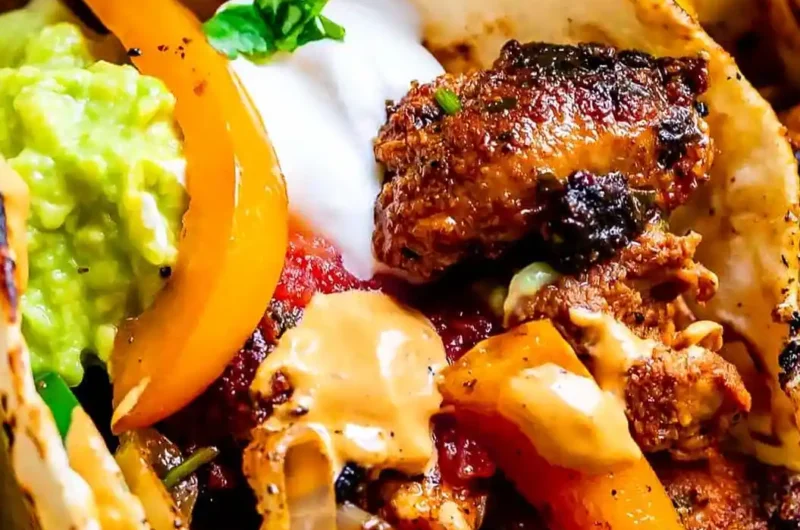
Create restaurant-quality chicken fajitas at home using a bold marinade and high-heat searing techniques. This method ensures the chicken stays juicy while the vegetables maintain a crisp-tender texture.

List of ingredients
- 1 and 1/2 pounds chicken thighs – can be substituted with chicken breast.
- 2 tablespoons lime juice – freshly squeezed from one lime.
- 1 tablespoon soy sauce – provides a rich umami base.
- 1 teaspoon liquid smoke – adds a grilled flavor without a grill.
- 2 tablespoons cumin – for earthy warmth.
- 2 teaspoons kosher salt – reduce slightly if using fine table salt.
- 2 teaspoons chili powder – for classic fajita flavor.
- 1 teaspoon smoked paprika – enhances the blackened appearance.
- 1 teaspoon onion powder – adds concentrated savory notes.
- 1/4 teaspoon cayenne pepper – increase this for more heat.
- 1/3 cup chopped cilantro – plus extra for garnishing.
- 4 cloves garlic – smashed and minced finely.
- 2 tablespoons vegetable oil – used for searing the chicken.
- 2 tablespoons butter – used for finishing the chicken.
- 3 small bell peppers – red, yellow, or orange, sliced.
- 1 medium onion – sliced.
- 1 teaspoon kosher salt – specifically for the vegetables.
- 12 6-inch flour tortillas – fajita size.
- 1 cup shredded Monterey Jack cheese – optional for melting.
- Sour cream – for topping.
- Chipotle Mayo – for topping.
- Guacamole – for topping.
- Lime wedges – for serving.
- Chopped cilantro – for garnish.
step-by-step instructions
- Marinate the chicken: Slice the chicken thighs into 1-inch wide strips, cutting perpendicular to the muscle lines (against the grain). Place the strips in a medium bowl. Add lime juice, soy sauce, liquid smoke, cumin, kosher salt, chili powder, smoked paprika, onion powder, cayenne pepper, chopped cilantro, and minced garlic. Stir well to ensure every piece is coated. Let the meat marinate for 15 minutes, or up to 24 hours in the refrigerator for deeper flavor.
- Prepare the vegetables: Slice bell peppers into 1/4 inch strips; cut long strips in half to make them bite-sized. Slice the onion into 1/4 inch slices by placing the flat side down on the board. Combine the peppers and onions in a container and set them aside.
- Sear the chicken: Heat a 12-inch cast iron skillet over medium-high heat for at least 2 minutes. Add 2 tablespoons of vegetable oil and swirl to coat. Use tongs to add chicken strips one by one, shaking off excess marinade to avoid steaming. Leave 1-2 inches of space between strips to ensure a proper sear. Cook in 2-3 batches to avoid crowding the pan. Sear for 2 minutes until the bottom is blackened.
- Finish the chicken: Add 1 tablespoon of butter to the pan and swirl it around the chicken. Flip each piece and sear for 1-2 minutes more. Ensure the internal temperature of the largest piece reaches 155 degrees Fahrenheit. Remove the chicken to a plate and tent with foil to keep warm. Save the remaining marinade.
- Cook the vegetables: Add 2 more tablespoons of oil to the same skillet over medium-high heat. Add peppers and onions, sprinkle with 1 teaspoon of kosher salt, and pour in the remaining chicken marinade. Saute for 2-3 minutes until crisp-tender.
- Combine the mixture: Remove the skillet from the heat. Cut any oversized chicken pieces into bite-sized portions. Add the chicken and any collected resting juices back into the pan with the vegetables.
- Warm the tortillas: Heat flour tortillas one by one in a clean skillet over medium heat. Sprinkle with shredded cheese and heat until melted. Fold them in half and keep them warm in a towel or tortilla warmer.
- Assemble and serve: Fill the warm cheese-lined tortillas with the chicken and pepper mixture. Top with sour cream, chipotle mayo, a squeeze of lime, and fresh cilantro. Serve with a side of lime rice.
Pro Techniques for the Perfect Sear
Using a Cast Iron Skillet for Heat Retention
Cast iron is ideal for fajitas because it retains heat much better than stainless steel or non-stick pans. This allows the pan to return to searing temperature quickly after the cold meat is added. This prevents the chicken from releasing its juices and steaming, which is how you achieve those dark, blackened edges.
Managing the Oil Shimmer Point
Wait for the vegetable oil to shimmer or barely smoke before adding the meat. If the oil is not hot enough, the chicken will stick to the pan and fail to brown. Using a high-smoke point oil like vegetable or canola oil prevents the fat from burning at the high temperatures required for a sear.
Avoiding the Crowding Trap
Adding too much meat to the pan at once drops the temperature significantly. This causes the chicken to boil in its own juices rather than searing. Work in small batches to ensure every strip has direct contact with the hot metal, ensuring a consistent char across all the meat.
Ingredient Substitutions and Adjustments
Swapping Chicken Thighs for Breast Meat
While thighs are more forgiving, you can use chicken breasts for a leaner option. To prevent breasts from drying out, slice them into thin cutlets first or keep the strips very uniform in size. Be careful not to overcook them, as breast meat reaches its ideal texture faster than thigh meat.
Alternative Cheese Varieties
Monterey Jack is recommended for its melting properties, but Oaxaca or Manchego are excellent authentic alternatives. For a spicier profile, use Pepper Jack cheese. If you prefer a sharper taste, a mild white cheddar can work, though it may not melt as smoothly in the tortilla.
Replacing Liquid Smoke
If liquid smoke is unavailable, you can substitute it with a teaspoon of smoked paprika or a small amount of Worcestershire sauce. While neither is an exact match, they provide the depth and savoriness needed. To get a true smoky flavor without additives, you can grill the chicken over charcoal before finishing it in the pan.
Using Different Bell Pepper Combinations
A mix of red, yellow, and orange peppers provides the best visual appeal and a mild sweetness. Green bell peppers can be used but are generally more bitter than the colored varieties. Adjust the ratio of peppers based on your preference for sweetness versus a more savory, earthy flavor.
Customizing Heat and Flavor Profiles
Increasing the Spicy Kick
The base recipe uses 1/4 teaspoon of cayenne, which is mild. For medium heat, increase this to 1/2 teaspoon, or for high heat, use a full teaspoon. You can also add diced fresh jalapeños to the vegetable saute to provide a bright, sharp heat that complements the smoky marinade.
Enhancing the Umami Depth
The soy sauce provides a necessary salty-savory depth. To increase this, you can add a pinch of mushroom powder or a small amount of tomato paste to the marinade. These ingredients reinforce the richness of the blackened chicken and help the flavors stand out against the sweetness of the peppers.
Maximizing Citrus Freshness
Using fresh lime juice is critical because bottled juice lacks the bright acidity needed to cut through the fat of the chicken and butter. For an extra citrus punch, zest one of the limes directly into the marinade. This adds aromatic oils that enhance the flavor without adding more liquid.
Serving and Presentation Ideas
Setting Up a Fajita Station
Presenting fajitas as a build-your-own bar is the most practical way to serve a group. Place the warm chicken and vegetables in a central platter and arrange bowls of sour cream, guacamole, and salsa around it. Keep the tortillas in a fabric warmer to ensure they stay soft and pliable throughout the meal.
Recommended Side Dish Pairings
Cilantro lime rice is the classic accompaniment, providing a fresh contrast to the heavy sear of the meat. For more heartiness, serve with pinto beans or refried beans. A crisp Mexican cucumber salad with lime and vinegar can also balance the richness of the cheese and sour cream.
Advanced Tortilla Warming Methods
While the skillet method with cheese is superior, you can also warm tortillas in a microwave by wrapping them in a damp paper towel for 30 seconds. Alternatively, char them directly over a gas burner for a few seconds per side to add a slight smoky flavor. Always store warmed tortillas in a covered container to prevent them from drying out.
Storage and Meal Prep Guide
Refrigerating Leftovers
Store the cooked chicken and vegetables in an airtight container in the refrigerator for up to 3 to 4 days. Keep the tortillas and fresh toppings like guacamole and sour cream in separate containers. This prevents the tortillas from becoming soggy and keeps the toppings fresh.
Freezing for Long Term Storage
You can freeze the cooked meat and vegetable mixture for up to 3 months in a freezer-safe Ziplock bag. Be aware that frozen peppers will lose some of their crispness and become softer upon reheating. For the best results, freeze only the marinated raw chicken and cook it fresh with new vegetables.
Optimal Reheating Techniques
To maintain the best texture, reheat the fajita filling in a skillet over medium heat with a splash of water or a small knob of butter. This restores the moisture and helps the chicken regain some of its sear. Avoid microwaving for long periods, as this can make the chicken rubbery and the peppers mushy.
Common Cooking Troubleshooting
Preventing Mushy Vegetables
Mushy vegetables usually happen because the pan temperature dropped or they were cooked for too long. Ensure the heat remains at medium-high and saute them quickly. They should be ‘crisp-tender,’ meaning they are cooked through but still have a slight snap when bitten.
Avoiding Dry Chicken Strips
Dry chicken is often a result of overcooking. Use a meat thermometer to pull the chicken off the heat exactly at 155 degrees Fahrenheit. The carryover cooking while the meat rests under foil will bring the internal temperature up to the safe 165 degrees without drying out the fibers.
Controlling Kitchen Smoke
High-heat searing in a cast iron pan can produce significant smoke. Ensure your kitchen is well-ventilated by turning your exhaust fan to the highest setting or opening a window. Using an oil with a high smoke point, like vegetable oil, will reduce the amount of acrid smoke produced.
Frequently Asked Questions
Is fajita seasoning different from taco seasoning?
Yes, while they share cumin and chili powder, they are not interchangeable. Fajita seasoning is generally simpler and focuses on a few bold flavors to complement the char of the grill. Taco seasoning usually includes more ingredients like oregano and garlic powder to create a more complex, earthy flavor for ground meat.
How can I make this recipe healthier?
To reduce calories, substitute the flour tortillas with corn tortillas or large lettuce wraps. You can also skip the butter during the searing process and use only olive or vegetable oil. Reducing the amount of cheese and using Greek yogurt instead of sour cream can further lower the fat content.
Why is a cast iron skillet recommended?
Cast iron is recommended because it provides an even, intense heat that is necessary for the Maillard reaction, which creates the browned, savory crust on the meat. Other pans may have hot spots or lose heat too quickly, resulting in meat that steams rather than sears.
Print
Savory Marinated Chicken Fajitas
- Total Time: 45 minutes
- Yield: 6 servings 1x
- Diet: General
Description
Tender, juicy blackened chicken marinated in a bold blend of spices, served with perfectly sautéed bell peppers and onions in warm, cheesy flour tortillas.
Ingredients
- 1 1/2 pounds chicken thighs, sliced into 1-inch strips
- 2 tablespoons lime juice
- 1 tablespoon soy sauce
- 1 teaspoon liquid smoke
- 2 tablespoons cumin
- 2 teaspoons kosher salt
- 2 teaspoons chili powder
- 1 teaspoon smoked paprika
- 1 teaspoon onion powder
- 1/4 teaspoon cayenne pepper
- 1/3 cup chopped cilantro
- 4 cloves garlic, smashed and minced
- 2 tablespoons vegetable oil
- 2 tablespoons butter
- 3 small red, yellow, or orange bell peppers, sliced
- 1 medium onion, sliced
- 1 teaspoon kosher salt
- 12 6-inch flour tortillas
- 1 cup shredded Monterey Jack cheese
- Sour cream, Chipotle Mayo, Guacamole, lime wedges, and chopped cilantro for garnish
Instructions
- Marinate: Place chicken strips in a bowl and mix with lime juice, soy sauce, liquid smoke, cumin, 2 tsp salt, chili powder, smoked paprika, onion powder, cayenne, cilantro, and garlic. Marinate for 15 minutes to 24 hours.
- Prep Veggies: Slice bell peppers into 1/4 inch pieces and slice onion into 1/4 inch strips.
- Sear Chicken: Heat vegetable oil in a cast iron skillet over medium-high heat. Sear chicken strips in batches for 2 minutes per side, adding 1 tablespoon of butter during the process, until internal temperature reaches 155°F. Remove chicken and tent with foil.
- Cook Veggies: Add 2 tablespoons of oil to the skillet. Sauté peppers and onions with 1 tsp salt and the remaining marinade for 2-3 minutes until crisp-tender.
- Combine: Return the cooked chicken and any resting juices to the skillet with the vegetables and remove from heat.
- Warm Tortillas: Warm flour tortillas in a skillet, sprinkle with shredded cheese until melted, and fold in half.
- Serve: Fill tortillas with chicken and peppers, and top with sour cream, chipotle mayo, lime juice, and cilantro.
Notes
If using chicken breasts, slice into thin cutlets or strips. To double the recipe, cook chicken and vegetables in batches to ensure proper searing rather than steaming.
- Prep Time: 25 minutes
- Cook Time: 20 minutes
- Category: Main Course
- Method: Searing
- Cuisine: Mexican
Nutrition
- Serving Size: 2 fajitas
- Calories: 611 kcal
- Sugar: 5 g
- Sodium: 850 mg
- Fat: 38 g
- Saturated Fat: 14 g
- Unsaturated Fat: 21 g
- Trans Fat: 0.3 g
- Carbohydrates: 37 g
- Fiber: 4 g
- Protein: 30 g
- Cholesterol: 138 mg
Keywords: chicken, fajitas, Tex-Mex