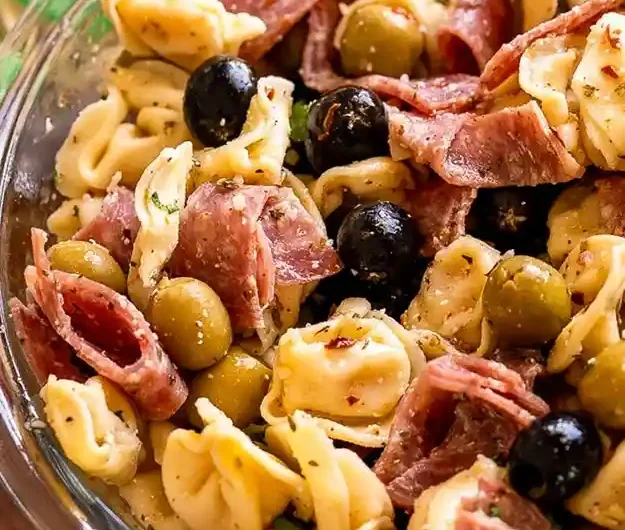
This hearty pasta salad combines cheesy tortellini with salty olives and savory beef salami. It is a quick preparation that works perfectly for outdoor gatherings, potlucks, or simple weekday meal prep.
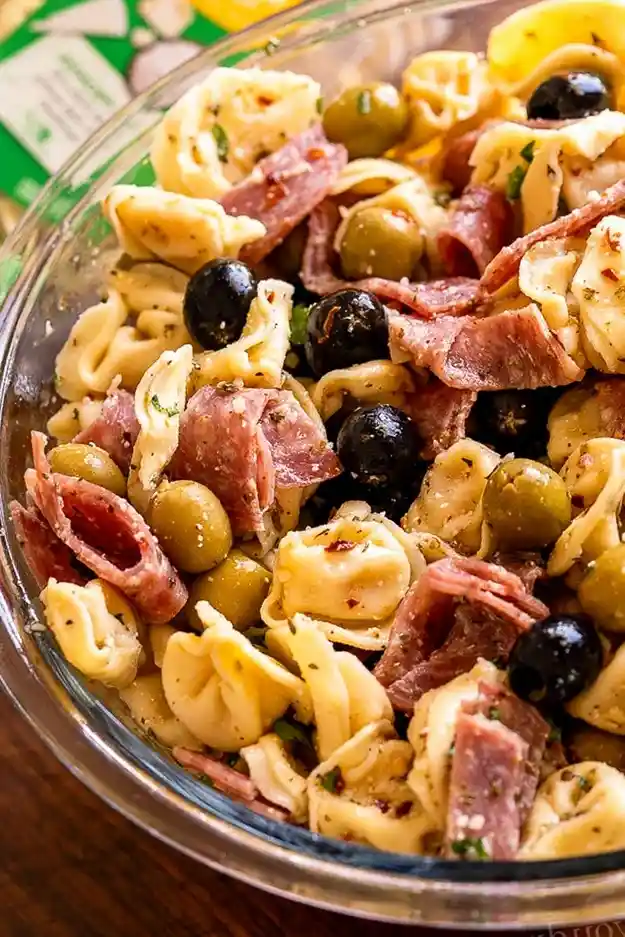
List of ingredients
- 20 oz Buitoni Three Cheese Tortellini Pasta – use the refrigerated kind for best texture.
- 1½ cups black olives, drained – provides a deep, salty flavor.
- 1½ cups green olives, stuffed with pimentos, drained – adds a tangy contrast.
- ½ lb. beef salami, sliced into strips – a savory, protein-rich addition.
- ½ cup extra virgin olive oil – the base for the zesty dressing.
- &frac1}{4} cup red wine vinegar – adds necessary acidity to balance the fats.
- &frac1}{4} cup parmesan cheese, finely grated – use microbial rennet for a savory finish.
- 3 tsp garlic, minced – provides a pungent, aromatic base.
- 1 tbsp dried oregano – brings a traditional Italian herb flavor.
- 1 tbsp parsley, freshly chopped – adds a bright, clean finish.
- &frac1}{2} tsp red pepper flakes – gives a subtle hint of warmth.
step-by-step instructions
- Cook the pasta: Boil the tortellini according to the package instructions, usually for about 7 minutes, until they reach an al dente texture. Drain the pasta and immediately run cool water over it to stop the cooking process. Place the cooled tortellini into a large mixing bowl.
- Combine the mix-ins: Add the drained black olives, pimento-stuffed green olives, and the sliced beef salami strips to the bowl with the cooled pasta.
- Prepare the dressing: Combine the olive oil, red wine vinegar, grated parmesan, minced garlic, dried oregano, chopped parsley, and red pepper flakes in a mason jar. Seal the lid tightly and shake vigorously until all ingredients are fully emulsified.
- Finish and chill: Pour the dressing over the pasta mixture and stir gently until everything is evenly coated. Cover the bowl tightly and store it in the refrigerator until you are ready to serve.
Optimization Tips for the Perfect Pasta Salad
Cooling the Pasta Quickly
Rinsing the tortellini with cold water is a critical step. This stops the carryover cooking that happens after draining, which prevents the pasta from becoming mushy. It also removes excess surface starch, ensuring the pasta pieces stay separate.
Selecting High-Quality Olive Oil
Since olive oil is a primary component of the dressing, its quality significantly impacts the taste. Use a cold-pressed extra virgin olive oil for the best flavor profile. A small amount of peppery or fruity oil complements the saltiness of the olives and beef salami.
Ensuring Proper Salami Cuts
Cutting the beef salami into thin, uniform strips allows for a more balanced distribution. When the meat is sliced thinly, you get a bit of protein in every forkful. This prevents large clumps of meat from dominating a single serving.
Choosing the Right Tortellini
Refrigerated tortellini typically have a softer, more authentic texture than dried versions. They cook faster and absorb the dressing more effectively. Always ensure the cheese filling is consistent and high-quality for the best taste.
Managing Garlic Pungency
Using fresh minced garlic provides a sharp, aromatic quality that jarred garlic lacks. If you find fresh garlic too overpowering, you can let it steep in the vinegar for a few minutes before adding the oil. This mellows the raw bite while keeping the flavor.
Optimizing the Dressing Emulsion
Shaking the dressing in a mason jar creates a temporary emulsion of oil and vinegar. This ensures that the herbs and cheese are suspended evenly throughout the liquid. An emulsified dressing coats the pasta more thoroughly than one that is simply stirred.
Ingredient Substitutions and Alternatives
Beef Salami Alternatives
If you prefer a leaner meat, turkey salami is an excellent substitute that maintains the savory profile. For a completely different flavor, you could use smoked beef strips. Ensure the meat is cured and seasoned to match the Italian theme.
Using Different Vinegars
While red wine vinegar is traditional, apple cider vinegar offers a slightly sweeter and softer acidity. White wine vinegar is another great option for a cleaner, more neutral taste. Avoid balsamic vinegar as it may darken the salad too much.
Cheese Variations
Pecorino Romano can be used in place of parmesan for a saltier, more pungent flavor. Asiago is another wonderful choice that adds a subtle nuttiness. Always verify that the cheese is made with microbial rennet.
Olive Alternatives
Kalamata olives can replace black olives for a deeper, fruitier tang. Castelvetrano olives are a great alternative to green olives if you prefer a milder, buttery taste. Mixing three different types of olives can add complexity to the salad.
Adding Fresh Vegetables
Sliced red bell peppers add a sweet crunch and vibrant color to the dish. Diced English cucumbers provide a refreshing water content that balances the salt. Halved cherry tomatoes add a burst of acidity and freshness.
Incorporating Extra Proteins
Grilled chicken breast or sautéed shrimp can be added to turn this side dish into a main course. For a plant-based protein boost, add canned chickpeas or cannellini beans. These ingredients absorb the dressing well and add heartiness.
Flavor Customizations and Variations
Adjusting the Spice Level
The half-teaspoon of red pepper flakes provides a very mild warmth. For those who prefer a spicy kick, increase the amount to a full teaspoon or add a pinch of cayenne pepper. Always taste the dressing before adding more heat.
Herb Modifications
Fresh basil leaves, torn into small pieces, add a sweet, aromatic quality that pairs perfectly with cheese. Fresh mint can be added for a more refreshing summer version. If using dried herbs, ensure they are fresh from the jar for maximum potency.
Enhancing with Citrus
Adding a teaspoon of fresh lemon zest to the dressing brightens the overall flavor. A squeeze of lemon juice can also help cut through the richness of the olive oil and cheese. This is especially helpful when serving the salad on a hot day.
Modifying the Salt Profile
Since olives, salami, and parmesan are all naturally salty, avoid adding extra salt to the dressing. If the salad tastes too salty, add a small amount of honey or sugar to balance the flavors. This creates a more rounded taste profile.
Adding Creamy Elements
Small pearls of fresh mozzarella can be added for an extra layer of creaminess. This creates a Caprese-style variation when combined with tomatoes and basil. Ensure the mozzarella is drained well to avoid adding excess moisture.
Integrating Bitter Greens
Tossing in a handful of baby arugula or spinach can add a peppery contrast. This increases the nutritional value and changes the texture of the salad. Fold the greens in gently just before serving to prevent wilting.
Serving and Presentation Ideas
Platter Arrangement
Use a shallow, wide platter instead of a deep bowl for presentation. This prevents the pasta at the bottom from being crushed and allows the colors of the olives and salami to show. It also makes the dish easier to serve at parties.
Pairing with Main Courses
This pasta salad pairs exceptionally well with grilled steaks or roasted chicken. It also complements lemon-garlic shrimp or grilled fish. The acidity of the salad acts as a palate cleanser between rich bites of meat.
Garnish Suggestions
Top the finished salad with a few whole olives and a sprinkle of fresh parsley. A light dusting of additional parmesan cheese adds a professional touch. These small additions make the dish visually appealing for guests.
Serving Temperature
This dish is best served chilled, as the flavors meld and intensify in the refrigerator. For a slightly more aromatic experience, let it sit at room temperature for 20 minutes before serving. Avoid serving it warm, as the dressing may separate.
Storage and Freshness Guidelines
Refrigeration Methods
Store the pasta salad in a glass airtight container to keep it fresh. Glass is preferable to plastic because it does not absorb odors and provides a better seal. Ensure the container is filled to the top to minimize air exposure.
Shelf Life Expectations
The salad remains at peak quality for up to 48 hours. After two days, the pasta may begin to absorb too much dressing and lose its structure. If you plan to serve it later, keep the dressing in a separate jar until the day of the event.
Preventing Pasta Dryness
Pasta tends to soak up oil and vinegar over time, which can leave the salad looking dry. To fix this, stir in a tablespoon of olive oil or a splash of vinegar right before serving. This restores the glossy sheen and moisture.
Transporting for Potlucks
When taking the salad to a party, use a cooler bag with ice packs. Maintaining a cold temperature is important for food safety and texture. Stir the salad once more after transport to redistribute the dressing.
Make-Ahead Strategies
Prepping the Dressing
The dressing can be made several days in advance and stored in the refrigerator. This allows the garlic and oregano to infuse into the oil. Simply shake the jar well before pouring it over the prepared pasta.
Preparing the Mix-ins
You can slice the beef salami and drain the olives a day early. Store these ingredients in separate containers or combined in one. This reduces the active prep time on the day you intend to serve the meal.
Timing the Pasta Boil
If you are preparing the salad for a large crowd, boil the pasta a few hours ahead of time. Once cooled and rinsed, keep the pasta in a bowl in the fridge. This ensures the salad is completely chilled through.
Troubleshooting Common Issues
Fixing a Bland Dressing
If the dressing tastes flat, it usually needs more acidity or a pinch of salt. Start by adding a teaspoon of red wine vinegar and stirring. If it still lacks depth, add a small amount of grated parmesan for extra umami.
Preventing Mushy Pasta
Mushy pasta is usually the result of overcooking or failing to rinse. Always use a timer to ensure the tortellini is only cooked until al dente. The immediate cold rinse is the best way to lock in the texture.
Correcting Excess Liquid
If you notice liquid pooling at the bottom of the bowl, your olives or salami may not have been drained enough. Gently drain the excess liquid or add a bit more parmesan cheese to help thicken the dressing. Patting ingredients dry with a paper towel prevents this.
Handling Pasta Sticking
If the tortellini sticks together after boiling, you can add a teaspoon of olive oil to the boiling water. This creates a thin barrier that prevents the pasta from clumping. Alternatively, toss the pasta with a small amount of oil immediately after rinsing.
Balancing Overpowering Garlic
If the garlic flavor is too strong, you can balance it by adding more olive oil or a pinch of sugar. Fresh garlic varies in potency, so always taste the dressing before combining it with the pasta. Adding a bit more parsley can also freshen the flavor.
Correcting Salt Overload
Because olives and salami are brine-cured, it is easy to over-salt the dish. If the salad is too salty, add more unsalted ingredients like diced cucumber or bell pepper. This dilutes the salt concentration without changing the core flavor.
Frequently Asked Questions
Can I use dried tortellini?
Yes, you can use dried tortellini, but be mindful that they have a different texture and longer cooking time. Follow the package directions exactly and still perform the cold rinse to prevent them from sticking.
How do I prevent the olives from clumping?
Stir the salad gently but thoroughly after adding the dressing. Occasionally stirring the salad while it chills in the refrigerator prevents the heavier ingredients like olives from settling at the bottom.
Can I make this vegan?
To make a vegan version, use plant-based cheese tortellini and vegan parmesan. Replace the beef salami with smoked tofu or marinated tempeh, and ensure all other ingredients are plant-derived.
What is the best way to store leftovers?
Store leftovers in a sealed glass jar or airtight container in the refrigerator. If the pasta seems too dry the next day, add a drizzle of olive oil and a squeeze of lemon to revive the flavor.
Can I freeze this pasta salad?
Freezing is not recommended for this recipe. The vinegar and oil in the dressing can change the texture of the pasta and olives, often resulting in a mushy consistency upon thawing.
Print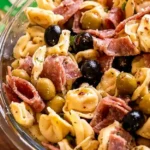
Savory Olive and Tortellini Pasta Salad
- Total Time: 17 minutes
- Yield: 10 servings 1x
- Diet: General
Description
This quick and easy Olive Tortellini Pasta Salad recipe is filled with three cheese tortellini, black and green olives, and sliced beef salami.
Ingredients
- 20 oz Three Cheese Tortellini Pasta
- 1½ cups black olives, drained
- 1½ cups green olives, stuffed with pimentos, drained
- ½ lb beef salami, sliced into strips
- ½ cup extra virgin olive oil
- ¼ cup red wine vinegar
- ¼ cup parmesan cheese (microbial rennet), finely grated
- 3 tsp garlic, minced
- 1 tbsp dried oregano
- 1 tbsp parsley, freshly chopped
- ½ tsp red pepper flakes
Instructions
- Step: Boil the tortellini according to package instructions, about 7 minutes, until al dente. Drain and run cool water over the pasta to cool it off. Add pasta to a large bowl.
- Step: Add the black and green olives as well as the beef salami to the bowl with the pasta.
- Step: Combine the ingredients for the dressing (olive oil, red wine vinegar, parmesan, garlic, oregano, parsley, and red pepper flakes) in a mason jar and seal the lid tightly.
- Step: Shake until fully combined, then pour over pasta and olives and stir to coat completely.
- Step: Cover and store in refrigerator until ready to serve.
Notes
Pasta salad can be made up to 2 days ahead of time with dressing. Best when served within 48 hours.
- Prep Time: 10 minutes
- Cook Time: 7 minutes
- Category: Salad
- Method: Boiling
- Cuisine: American
Nutrition
- Serving Size: 1 serving
- Calories: 436 kcal
- Sugar: 2 g
- Sodium: 1433 mg
- Fat: 30 g
- Saturated Fat: 7 g
- Unsaturated Fat: 23 g
- Trans Fat: 0 g
- Carbohydrates: 27 g
- Fiber: 4 g
- Protein: 15 g
- Cholesterol: 41 mg
Keywords: olives, Pasta, beef salami, Tortellini