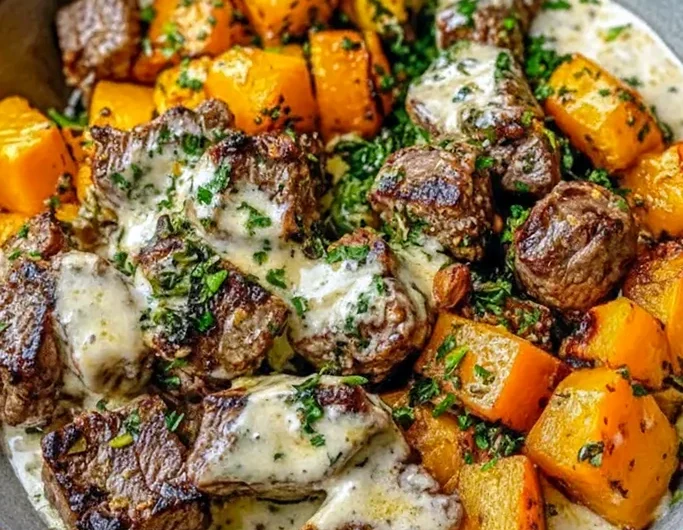
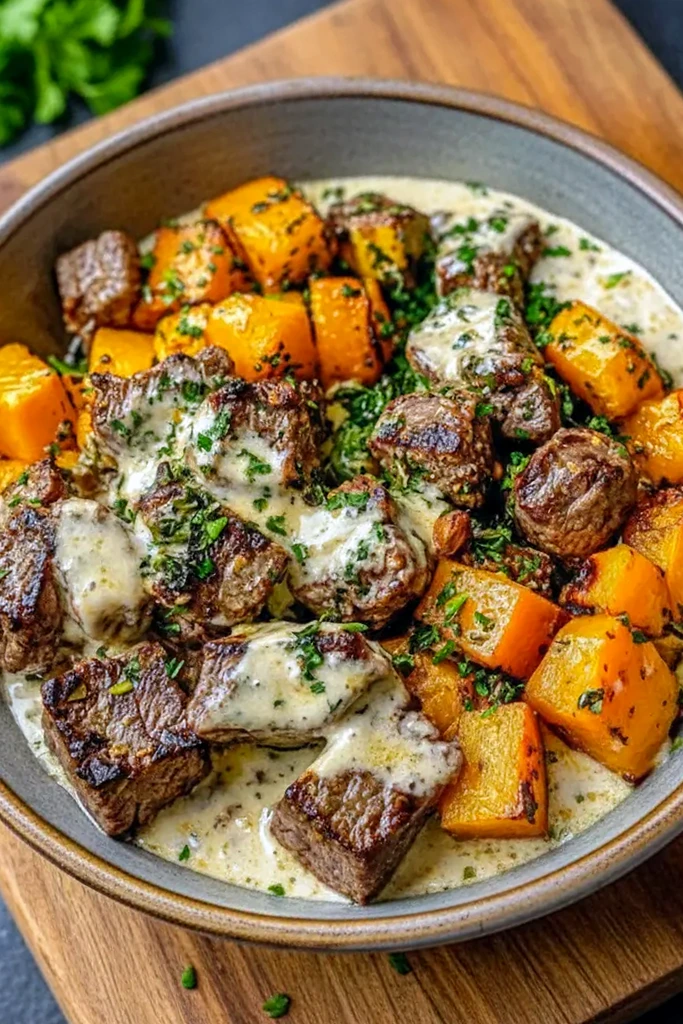
These nutrient-dense bowls combine seared steak with caramelized butternut squash for a satisfying meal. This dish provides a balance of protein and complex carbohydrates, making it suitable for healthy dinner rotations.
List of ingredients
- 1 medium butternut squash (cubed to yield about 2 cups) – ensures consistent roasting.
- 1 lb sirloin or ribeye steak – chosen for tenderness and flavor.
- 4 cloves garlic, finely minced – provides a pungent, aromatic finish.
- 2 tbsp extra virgin olive oil – used for roasting and searing.
- 2 sprigs rosemary, chopped – adds earthy notes to the meat.
- 2 sprigs thyme, chopped – complements the sweetness of the squash.
- Salt and pepper, to taste – essential for flavor enhancement.
step-by-step instructions
- Preheat the oven: Set your oven to 400°F (200°C) to ensure it reaches the correct temperature for roasting.
- Prepare the squash: Peel the butternut squash, remove the seeds, and cut into evenly sized cubes. Toss the cubes with olive oil, salt, and pepper, then spread them on a baking sheet without crowding the pan.
- Roast the squash: Bake for 25–30 minutes until the centers are tender and the edges are golden brown.
- Season the steak: Rub the steak with salt, pepper, chopped rosemary, and thyme. Allow the meat to rest at room temperature for 15 minutes to ensure even cooking.
- Sear the meat: Heat olive oil in a skillet over medium-high heat. Cook the steak for 4–5 minutes per side, depending on your preferred doneness, then remove from heat and let it rest for several minutes before slicing.
- Assemble the bowls: Place a generous portion of roasted squash in each bowl, top with sliced steak, and finish with a sprinkle of fresh minced garlic.
Beef Selection and Preparation
Choosing the Right Steak Cut
Sirloin is an excellent choice for those seeking a leaner protein option that still offers a robust beef flavor. Ribeye provides more marbling, which results in a juicier steak and a richer taste due to the higher fat content. For a more budget-friendly option, flank steak or skirt steak can be used, though they require thinner slicing across the grain.
The Importance of Tempering Meat
Allowing the steak to sit at room temperature for 15 to 30 minutes before cooking is called tempering. This prevents the center of the meat from remaining cold while the exterior overcooks. It results in a more uniform internal temperature and a more consistent level of doneness from edge to center.
Proper Slicing Techniques
Always slice steak against the grain to ensure the most tender bite. The grain refers to the direction of the muscle fibers; cutting perpendicularly across these fibers shortens them, making the meat easier to chew. Use a sharp carving knife or a serrated blade to avoid tearing the meat.
Managing Steak Doneness
Use a meat thermometer to achieve precise results. Rare steak is typically 125°F, medium-rare is 135°F, and medium is 145°F. Removing the meat from the pan 5 degrees before your target temperature allows carryover cooking to finish the process during the resting phase.
Butternut Squash Roasting Mastery
Ensuring Even Cube Sizes
Cut the squash into uniform 1-inch cubes to ensure they all cook at the same rate. If the pieces vary significantly in size, the smaller cubes will burn before the larger ones are soft. Use a stable cutting board and a sharp chef’s knife for safety and precision.
Preventing Steaming on the Pan
Crowding the baking sheet causes moisture to build up, which steams the vegetables instead of roasting them. Spread the squash cubes in a single layer with space between each piece. If you have a large batch, use two separate baking sheets to maintain high heat circulation.
Achieving Optimal Caramelization
The high oven temperature of 400°F triggers the Maillard reaction, which browns the natural sugars in the squash. For extra caramelization, flip the cubes halfway through the roasting time. This ensures all sides contact the hot pan and develop a golden-brown crust.
Testing for Doneness
The squash is ready when a fork easily pierces the center with minimal resistance. The edges should be visibly browned and slightly shriveled. If the squash is still firm, return it to the oven in 5-minute increments.
Advanced Searing Techniques
Selecting the Right Cookware
A cast iron skillet is the ideal tool for searing steak because of its superior heat retention. Stainless steel is a strong second choice, whereas non-stick pans are less effective for achieving a deep brown crust. Ensure the pan is preheated until the oil just begins to shimmer before adding the meat.
Controlling Pan Temperature
Avoid overheating the oil to the point where it smokes excessively, as this can create a bitter taste. Medium-high heat is sufficient for most steaks. If the pan becomes too hot, remove it from the burner for a few seconds to stabilize the temperature.
The Role of the Resting Period
Resting the steak for 5 to 10 minutes after cooking allows the muscle fibers to relax and the juices to redistribute. Cutting into a steak immediately after searing causes the juices to run out onto the board, leaving the meat dry. Cover the steak loosely with foil to keep it warm while it rests.
Using Herb-Infused Oils
For an extra layer of flavor, you can baste the steak with butter and fresh herbs during the last two minutes of cooking. Spoon the melted fat over the top of the steak repeatedly to infuse it with rosemary and thyme. This adds a professional, glossy finish to the beef.
Bowl Variations and Customizations
Integrating Leafy Greens
Adding a base of sautéed spinach, kale, or arugula can increase the nutritional value of the bowl. Wilt the greens in the same skillet used for the steak to pick up the leftover browned bits. This adds a bitter contrast to the sweetness of the roasted squash.
Adding Hearty Grains
For a more filling meal, serve the steak and squash over a bed of quinoa, farro, or brown rice. Grains help soak up the juices from the steak and the oil from the squash. Cook the grains separately and season them with a pinch of salt and olive oil.
Incorporating Tangy Toppings
Crumbling feta or goat cheese over the top adds a creamy, salty element that balances the savory beef. A drizzle of balsamic glaze can provide an acidic brightness that cuts through the richness of the ribeye. Fresh parsley or chives can be added for a burst of color and freshness.
Alternative Vegetable Substitutes
If butternut squash is unavailable, sweet potatoes or kabocha squash are excellent substitutes. Both have similar sugar levels and textures when roasted. Adjust the roasting time slightly, as sweet potatoes may cook faster depending on the cut.
Storage and Reheating Guide
Proper Refrigeration Methods
Store the steak and roasted squash in airtight glass containers to maintain freshness for up to three days. It is best to store the meat and vegetables in separate compartments or containers. This prevents the squash from absorbing too much meat juice, which can alter its texture.
Reheating Without Overcooking
To avoid toughening the steak, reheat it gently in a skillet over low heat with a teaspoon of water or broth. Alternatively, use a microwave on medium power in short bursts. Heat the roasted squash separately in the oven or air fryer to restore its roasted texture.
Freezing for Long-Term Use
Roasted butternut squash freezes well; spread the cooled cubes on a tray before bagging them to prevent clumping. The steak is better enjoyed fresh, but it can be frozen if cooked to medium or well-done. Thaw frozen components in the refrigerator overnight before reheating.
Maintaining Texture During Meal Prep
When prepping these bowls for the week, keep the fresh minced garlic separate until the moment of serving. Garlic loses its pungent kick when refrigerated for long periods. Adding the garlic fresh ensures the aroma remains bold.
Troubleshooting Common Issues
Why is my squash mushy?
Mushiness is usually caused by overcrowding the pan or overcooking. Ensure there is space between the cubes to allow steam to escape. Check the squash every five minutes once you reach the 20-minute mark to avoid over-roasting.
Why is the steak tough?
Toughness often results from using a lean cut without enough resting time or slicing across the grain. Ensure you are cutting perpendicular to the muscle fibers. If using a tougher cut like flank steak, consider marinating it for several hours prior to cooking.
How to fix bland flavor?
If the dish tastes flat, it likely needs more acidity or salt. Add a squeeze of fresh lemon juice or a splash of apple cider vinegar over the final bowl. Ensure you season the meat and squash generously at every stage of the process.
Preventing burnt garlic
Since the recipe calls for fresh minced garlic as a topping, avoid cooking it at high temperatures for long. If you prefer cooked garlic, add it to the pan only during the last 60 seconds of searing the steak to prevent it from turning bitter.
Frequently Asked Questions
Can I use frozen butternut squash?
Yes, you can use frozen cubed squash. Thaw it slightly and pat it dry with paper towels before roasting to prevent excess moisture from steaming the vegetables. You may need to increase the roasting time by 5-10 minutes.
Which steak cut is best for meal prep?
Sirloin is generally the best for meal prep because it holds its texture better when reheated. Ribeye can become overly greasy when microwaved, while sirloin remains firm and lean.
Can I substitute dried herbs for fresh?
Yes, you can use dried rosemary and thyme if fresh are unavailable. Use a ratio of one teaspoon of dried herbs for every tablespoon of fresh herbs. Rub the dried herbs into the steak with a bit of oil to help them release their oils.
Is it possible to make this in an air fryer?
The squash can be roasted in an air fryer at 400°F for about 12-15 minutes, shaking the basket halfway through. The steak should still be seared in a skillet to get the proper crust, as air fryers can dry out the exterior of the meat too quickly.
What is the best way to peel butternut squash?
Use a sturdy Y-peeler to remove the skin. Since butternut squash is dense, peel it in small sections and use a stable surface. If the squash is too large to handle, cut it in half first, scoop out the seeds, and then peel the outer skin.
Print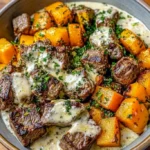
Savory Steak and Roasted Butternut Squash Bowls
- Total Time: 45 minutes
- Yield: 4 servings 1x
- Diet: Gluten-Free
Description
Looking for a hearty bowl that delivers big flavor with minimal fuss? These Steak & Roasted Butternut Squash Bowls are the perfect match. Juicy slices of seasoned steak meet caramelized squash and fragrant garlic, creating a warm, comforting meal that’s just as great for weeknight dinners as it is for hosting friends.
Ingredients
- 1 medium butternut squash (yields roughly 2 cups once cubed)
- 1 lb sirloin or ribeye steak
- 4 cloves garlic, finely minced
- 2 tbsp extra virgin olive oil
- 2 sprigs rosemary, chopped
- 2 sprigs thyme, chopped
- Salt and pepper, to taste
Instructions
- Step: Set your oven to 400°F (200°C) so it’s hot and ready for roasting.
- Step: Peel the squash, remove the seeds, and cut it into evenly sized cubes. Toss the pieces with olive oil, a sprinkle of salt, and a few cracks of pepper. Spread them out on a baking sheet so they roast instead of steam.
- Step: Slide the squash into the oven and bake for 25–30 minutes until the edges turn golden and the centers are soft.
- Step: While the squash cooks, rub your steak with salt, pepper, rosemary, and thyme. Let it rest on the counter for about 15 minutes so the flavors can sink in and the meat cooks more evenly.
- Step: Warm a bit of olive oil in a skillet over medium-high heat. Add the steak and cook for 4–5 minutes per side, or until it reaches your preferred doneness. Set it aside for a few minutes before slicing—this keeps it juicy.
- Step: Spoon the roasted squash into your bowl first. Lay the sliced steak on top and finish with a sprinkle of fresh minced garlic for a fragrant kick.
Notes
Resting the steak after cooking is non-negotiable to ensure juiciness. Avoid crowding the roasting pan to prevent the squash from steaming.
- Prep Time: 15 minutes
- Cook Time: 30 minutes
- Category: Main Course
- Method: Roasting and Searing
- Cuisine: American
Nutrition
- Serving Size: 1 bowl (approx. 350g)
- Calories: 480 kcal
- Sugar: 5 g
- Sodium: 600 mg
- Fat: 24 g
- Saturated Fat: 8 g
- Unsaturated Fat: 15 g
- Trans Fat: 0 g
- Carbohydrates: 40 g
- Fiber: 7 g
- Protein: 34 g
- Cholesterol: 85 mg
Keywords: steak, butternut squash, healthy dinner, meal prep, roasted vegetables