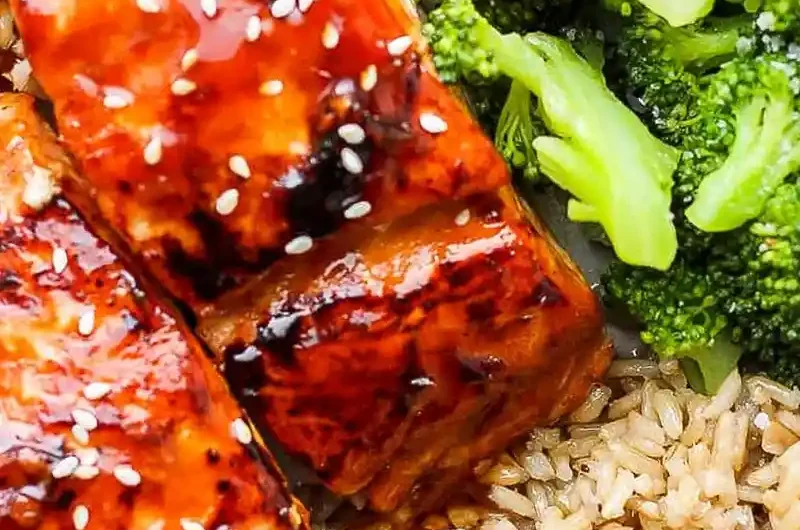
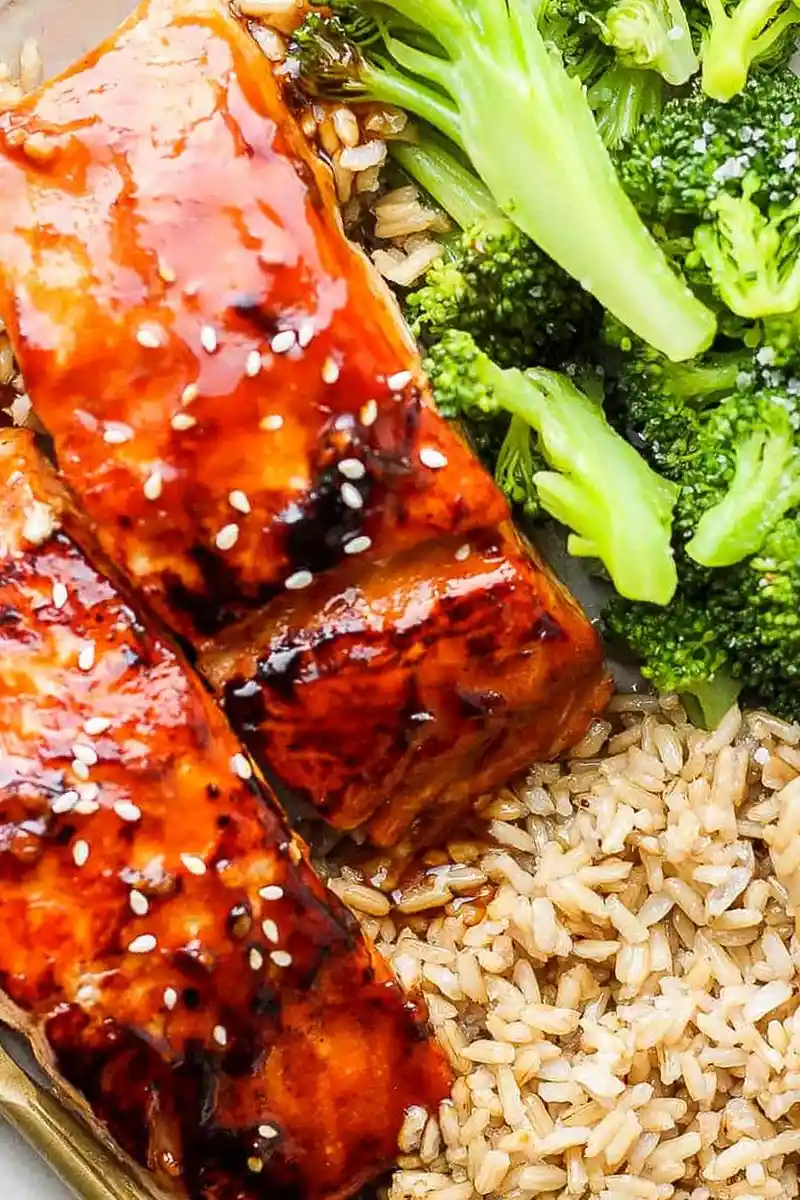
This cast iron and oven-finished salmon offers a perfect balance of sweet and savory flavors. It is a fast meal option that works well for family dinners and provides a high-protein centerpiece.
List of ingredients
- 1 cup water – used as the base for the teriyaki sauce.
- ½ cup soy sauce – provides the essential salty and umami profile.
- 4 tablespoons brown sugar or coconut sugar – adds sweetness and helps with caramelization.
- 2 teaspoons garlic, minced – adds a pungent, aromatic depth to the glaze.
- 1 teaspoon sesame oil – contributes a toasted, nutty fragrance.
- 1 teaspoon honey – adds a touch of floral sweetness and creates a glossy finish.
- ½ – 1 teaspoon fresh ginger, minced – provides a zesty, spicy kick.
- ¼ cup cold water – combined with cornstarch to make the thickening slurry.
- 2 tablespoons cornstarch – used to thicken the sauce into a glaze.
- 6 salmon fillets (4oz each) – skin-on fillets are recommended for better texture.
- Kosher salt and ground black pepper – used for basic seasoning of the fish.
- ½ tablespoon olive oil or avocado oil – prevents the salmon from sticking to the skillet.
step-by-step instructions
- Simmer the Sauce: In a medium saucepan, whisk together 1 cup water, ½ cup soy sauce, 4 tablespoons brown sugar, 2 teaspoons minced garlic, 1 teaspoon sesame oil, 1 teaspoon honey, and ½ – 1 teaspoon minced fresh ginger. Bring the mixture to a simmer over medium heat.
- Thicken the Glaze: In a small bowl or mixing cup, combine ¼ cup cold water and 2 tablespoons cornstarch. Whisk until smooth and stir the slurry into the simmering saucepan. Whisk slowly and continuously while bringing the sauce back to a simmer; remove it from the heat once it reaches your desired thickness.
- Reserve the Sauce: Set aside about ½ cup of the thickened sauce to brush onto the raw salmon fillets. Reserve the remaining sauce to pour over the fish after it is fully cooked.
- Prepare the Oven: Preheat your oven to 400°F to ensure it is at the correct temperature before baking.
- Season the Salmon: Pat the 6 salmon fillets dry with paper towels to remove excess moisture. Sprinkle lightly with kosher salt and ground black pepper, then brush some of the reserved teriyaki sauce on top of each piece.
- Sear the Fillets: Place a large cast iron skillet on the stove over medium-high heat. Add ½ tablespoon of olive oil and swirl to coat the pan. Sear the salmon fillets skin-side up for approximately 2-3 minutes until a nice char develops.
- Bake the Salmon: Flip the salmon fillets so the skin-side is down and brush more teriyaki sauce on top. Move the skillet to the middle rack of the oven and cook for 10-14 minutes, depending on the thickness, until the internal temperature reaches 140-145°F.
- Rest and Serve: Remove the skillet from the oven and let the salmon rest for 5 minutes. Brush with additional teriyaki sauce and serve immediately, ideally with broccoli and brown rice.
Professional Cooking Tips for Perfect Salmon
Pat Salmon Dry for a Superior Sear
Moisture is the enemy of a good sear. If the surface of the salmon is wet, the heat will spend energy evaporating the water instead of browning the protein. By patting the fillets thoroughly dry with paper towels, you ensure the fish hits the hot oil and immediately begins the Maillard reaction, which creates that deep brown crust and concentrated flavor.
Utilize a Cast Iron Skillet for Consistent Heat
Cast iron is ideal for this recipe because of its high thermal mass. Unlike thinner pans, cast iron maintains its temperature even when cold fish is added to the surface. This prevents the pan temperature from dropping, which allows for a consistent sear across all six fillets without the fish sticking or steaming.
Monitor Internal Temperature Precisely
Salmon can go from perfectly moist to dry and chalky in a matter of minutes. Using an instant-read meat thermometer is the only way to guarantee accuracy. Pull the salmon from the oven when it hits 140°F, as the temperature will continue to rise to the safe 145°F mark during the five-minute resting period.
Apply Glaze Strategically
Applying the teriyaki sauce in layers ensures the flavor penetrates the fish without burning. Because the sauce contains sugar, it can burn if exposed to high heat for too long. Brushing the sauce on during the sear and again before baking creates a built-up lacquer that is sticky and flavorful without becoming bitter.
Ingredient Substitutions and Variations
Switching Soy Sauce for Gluten-Free Options
If you need a gluten-free alternative to soy sauce, Tamari is the closest match in terms of saltiness and depth. For a soy-free and lower-sodium option, coconut aminos can be used. Note that coconut aminos are slightly sweeter and less salty, so you may want to reduce the amount of brown sugar used in the recipe.
Using Different Sweeteners for the Glaze
While brown sugar provides a rich, molasses-like flavor, coconut sugar is a great alternative for those preferring unrefined sugar. Maple syrup can also be used to add a distinct woody sweetness. When using liquid sweeteners like maple syrup, you may need to simmer the sauce slightly longer to achieve the same thickness.
Adding Spicy Elements to the Sauce
To add a kick to the teriyaki flavor, stir in a teaspoon of sriracha or a pinch of crushed red pepper flakes during the simmering stage. For a more complex heat, you can add a small amount of grated horseradish or chipotle powder. This cuts through the richness of the salmon and the sweetness of the honey.
Alternative Oils for High-Heat Searing
While olive oil works well, avocado oil is an excellent choice due to its higher smoke point. Using an oil with a high smoke point prevents the oil from breaking down and smoking in the kitchen during the initial sear. Grapeseed oil is another neutral option that won’t interfere with the teriyaki flavor.
Recommended Serving Suggestions
Pairing with Whole Grains
Brown rice is the traditional accompaniment, providing a nutty contrast to the sweet glaze. Quinoa is another healthy alternative that absorbs the extra sauce well. For a more aromatic experience, try cooking your rice with a piece of kombu or a splash of rice vinegar to brighten the overall meal.
Choosing the Right Green Vegetables
Steamed or roasted broccoli is the classic pairing because its florets catch the teriyaki sauce perfectly. Broccolini or sautéed bok choy are also excellent choices that complement the Asian-inspired flavors. For a low-carb approach, roasted asparagus or sautéed spinach provides a nutrient-dense side.
Creating a Low-Carb Salmon Bowl
To make this a low-carb or paleo meal, replace brown rice with cauliflower rice. Sauté the cauliflower rice in a pan with a bit of sesame oil and a tablespoon of the teriyaki sauce. Top the bowl with sliced scallions and sesame seeds for added texture and visual appeal.
Adding Fresh Garnishes for Contrast
Fresh garnishes add a necessary brightness to the rich, glazed fish. Sliced green onions or toasted sesame seeds provide a professional look and a slight crunch. A squeeze of fresh lime juice over the cooked salmon just before serving cuts through the sweetness of the glaze and elevates the fish.
Storage and Reheating Advice
Storing Cooked Salmon Properly
Place leftover salmon in an airtight glass container to prevent it from absorbing odors from other foods in the refrigerator. Cooked salmon stays fresh for up to 3 days. Ensure the fish is completely cooled before sealing the container to prevent excess moisture from building up, which can make the skin soggy.
Preserving Extra Teriyaki Sauce
Any remaining sauce can be stored in a sealed jar in the refrigerator for up to 2 weeks. The sauce may thicken further as it cools; if this happens, simply whisk in a teaspoon of water when reheating. This sauce is also excellent as a marinade for chicken or a glaze for roasted carrots.
Reheating Salmon Without Drying It Out
Avoid using a high-power microwave setting, as this often overcooks the salmon and makes it rubbery. Instead, place the fillets in a low oven at 275°F with a small splash of water or extra sauce in the pan. Cover the pan with foil and heat for 5-10 minutes until warmed through.
Freezing Considerations
While you can freeze cooked salmon, the texture often changes and becomes slightly drier upon thawing. If you choose to freeze it, wrap the fillets tightly in plastic wrap and then place them in a freezer bag. Thaw slowly in the refrigerator overnight before reheating in the oven.
Troubleshooting Common Issues
Dealing with a Sauce That Is Too Thin
If your sauce hasn’t thickened enough after simmering, you can add a small amount of additional cornstarch slurry. Mix 1 teaspoon of cornstarch with 1 teaspoon of cold water and stir it into the simmering sauce. Continue to simmer for another minute or two until the desired consistency is reached.
Fixing a Sauce That Is Too Thick
If the glaze becomes too thick or paste-like, it is likely due to over-reduction. Slowly whisk in a tablespoon of water or unsalted broth while the sauce is heating. This will thin the consistency without significantly altering the flavor profile of the teriyaki.
Preventing Salmon from Sticking to the Pan
Salmon sticking usually happens if the pan isn’t hot enough or if the fish was added too early. Ensure the oil is shimmering and almost smoking before placing the fillets in the skillet. Do not move the fish immediately after placing it; let the sear form, which naturally releases the fish from the surface.
Managing Burnt Sugar in the Glaze
Because of the high sugar content, teriyaki sauce can burn if the heat is too high during the searing process. If you notice the sauce darkening too quickly, lower the stove heat immediately. You can also choose to sear the fish with only oil and apply the glaze exclusively during the baking stage.
Frequently Asked Questions
Should I marinate the salmon before cooking?
Marinating is not required for this recipe because the searing and baking process with the glaze provides ample flavor. However, if you prefer a deeper infusion of taste, you can marinate the fillets in the sauce for 30 minutes in the refrigerator before searing. If you marinate, be sure to pat the fish dry before it hits the pan.
Can I grill teriyaki salmon instead of baking it?
Yes, grilling is a fantastic alternative. You can follow the sauce preparation steps and then grill the salmon directly on the grates or on a cedar plank. If using grates, oil them well and cook for about 4-6 minutes per side, brushing with sauce during the final few minutes to prevent burning.
Can I use frozen salmon fillets?
Frozen salmon works perfectly well as long as it is completely thawed before cooking. Thaw the fillets in the refrigerator overnight or in a sealed bag under cold running water. It is critical to pat frozen-then-thawed salmon extra dry, as they tend to release more moisture than fresh fillets.
Is it necessary to keep the skin on?
While you can remove the skin, keeping it on is highly recommended. The skin acts as a barrier that protects the delicate flesh from the direct heat of the pan, helping the fish stay moist. Additionally, the skin provides a textural contrast to the tender meat and the sticky glaze.
Print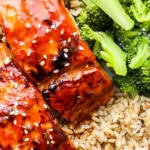
Savory Teriyaki Glazed Salmon
- Total Time: 30 minutes
- Yield: 6 servings 1x
- Diet: Dairy-Free
Description
Teriyaki Salmon – an easy, simple teriyaki salmon recipe made in a cast iron skillet – perfectly delicious and kid-friendly!
Ingredients
- 1 cup water
- ½ cup soy sauce
- 4 tablespoons brown sugar or coconut sugar
- 2 teaspoons garlic, minced
- 1 teaspoon sesame oil
- 1 teaspoon honey
- ½ – 1 teaspoon fresh ginger, minced
- ¼ cup cold water
- 2 tablespoons cornstarch
- 6 salmon fillets (4oz each)
- kosher salt and ground black pepper
- ½ tablespoon olive oil or avocado oil
Instructions
- Simmer Sauce: In medium saucepan, whisk together 1 cup water, ½ cup soy sauce, 4 tablespoons brown sugar, 2 teaspoons garlic, 1 teaspoon sesame oil, 1 teaspoon honey and ½ – 1 teaspoon fresh ginger. Bring to a simmer.
- Thicken Sauce: In a small bowl or mixing cup, add ¼ cup cold water and 2 tablespoons cornstarch. Whisk to combine and add slurry to saucepan. Whisk slowly but continuously while bringing sauce to a simmer. Remove when it reaches your desired thickness.
- Reserve: Set aside about a ½ cup or so to brush onto the raw salmon and reserve the rest to be poured over the fully cooked salmon.
- Prep: Preheat oven to 400℉.
- Season Salmon: Pat 6 salmon fillets dry with paper towel. Sprinkle lightly with kosher salt and ground black pepper. Brush some teriyaki sauce on top of each piece of salmon.
- Sear Salmon: Place large cast iron skillet on the stove to bring to medium-high heat. Add ½ tablespoon olive oil; swirl to coat the pan. Sear salmon (skin-side up) for approx. 2-3 minutes or until there is a nice little char on them.
- Bake: Flip salmon so the skin-side is down and brush with more teriyaki sauce. Move to the oven (middle rack). Let cook 10-14 minutes (depending upon how thick your salmon is) or until it reaches an internal temperature of 140-145℉.
- Rest + Serve: Remove from oven and let rest 5 minutes. Brush with additional teriyaki sauce (as much or as little as you want) and serve immediately.
Notes
Paleo/Whole30 option: use Paleo Teriyaki Sauce and serve with cauliflower rice. Store salmon leftovers in an airtight container in the refrigerator for up to 3 days; store leftover sauce for up to 2 weeks.
- Prep Time: 10 minutes
- Cook Time: 20 minutes
- Category: Dinner/Entree
- Method: Stove Top
- Cuisine: American
Nutrition
- Serving Size: 1 fillet
- Calories: 315 kcal
- Sugar: 9 g
- Sodium: 1160 mg
- Fat: 13 g
- Saturated Fat: 2 g
- Unsaturated Fat: 11 g
- Trans Fat: 0 g
- Carbohydrates: 13 g
- Fiber: 0.2 g
- Protein: 36 g
- Cholesterol: 94 mg
Keywords: teriyaki salmon, cast iron skillet, kid-friendly, easy dinner, salmon fillets