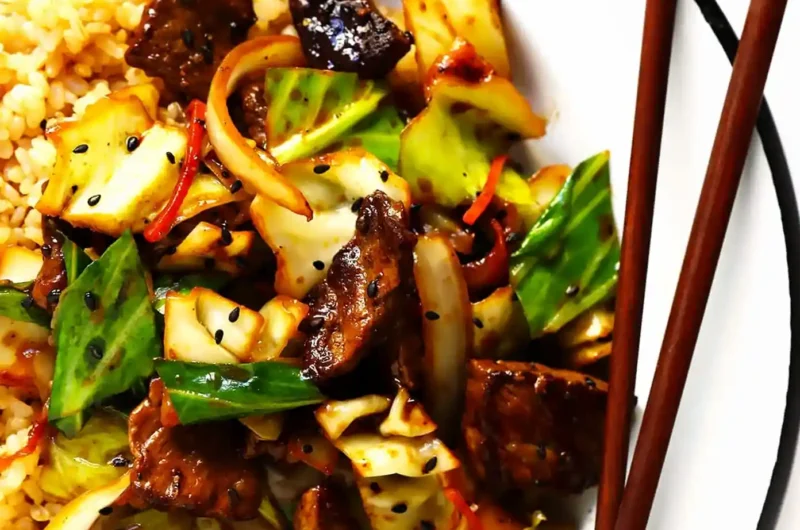
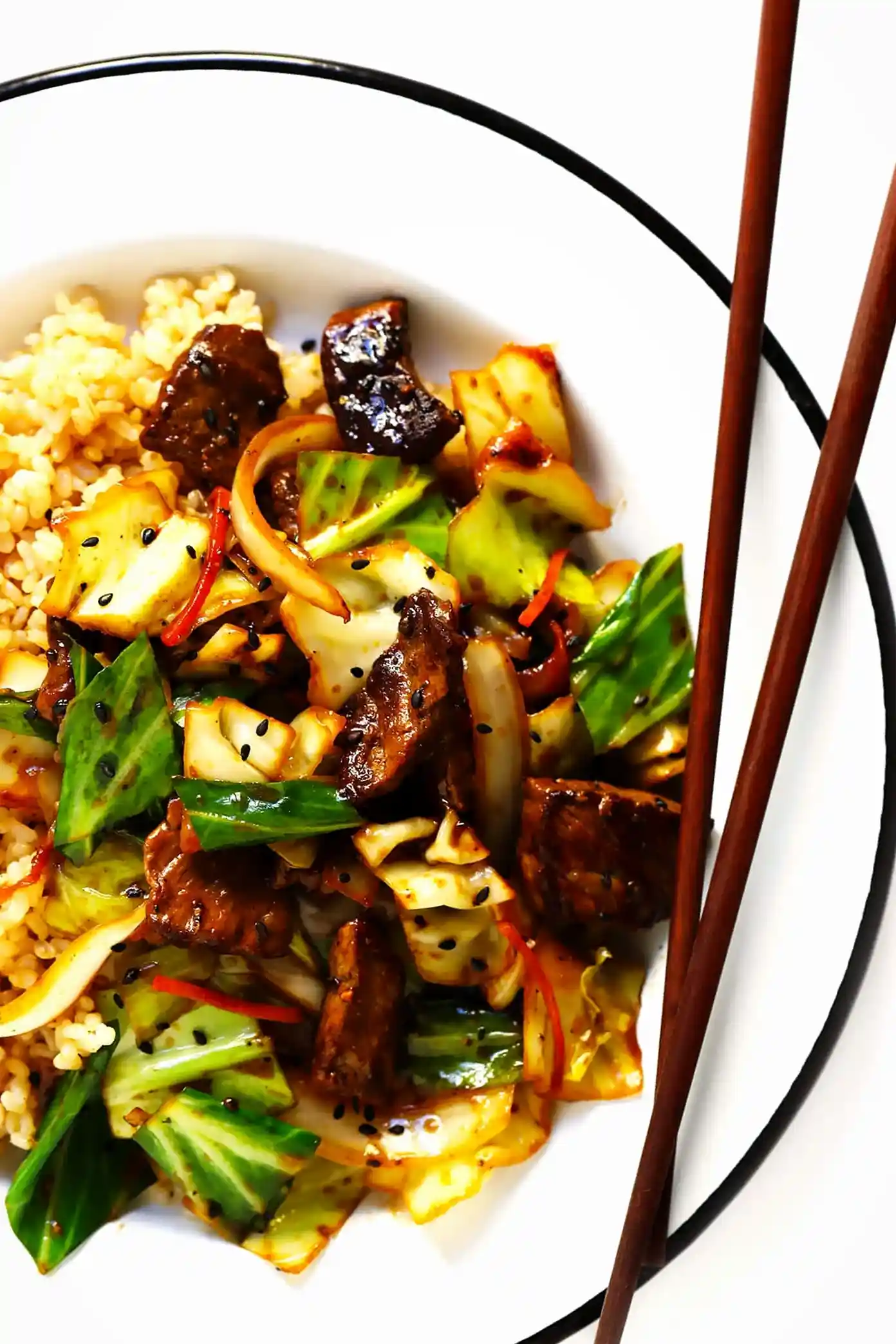
A savory blend of tender beef and crisp cabbage tossed in a gingery sesame sauce. This meal is designed for rapid preparation and balanced nutrition, making it an ideal choice for busy weeknights.
List of ingredients
- 1/2 cup low-sodium soy sauce – provides the salty, umami base.
- 1/3 cup water – thins the sauce to ensure even coating.
- 2 tablespoons cornstarch – acts as the primary thickening agent.
- 2 tablespoons maple syrup – adds a touch of balanced sweetness.
- 2 tablespoons rice vinegar – provides necessary acidity to cut through the fat.
- 1-2 teaspoons chili garlic sauce – adds mild heat and pungent depth.
- 1 teaspoon ground ginger – brings warm, aromatic flavor to the glaze.
- 1/2 teaspoon toasted sesame oil – contributes a rich, nutty finish.
- 1 pound flank steak – thinly sliced and cut into bite-sized pieces.
- sea salt and freshly-cracked black pepper – for essential seasoning.
- 2 tablespoons avocado oil – a high smoke point oil ideal for searing.
- 1 large white onion – peeled and thinly sliced.
- 1 small green cabbage – roughly chopped into bite-sized pieces.
- 4 cloves garlic – peeled and thinly sliced.
- 2/3 cup shredded carrots – adds color, texture, and sweetness.
- thinly-sliced green onions (optional) – for a fresh garnish.
- toasted sesame seeds (optional) – for added crunch and visual appeal.
step-by-step instructions
- Prepare the sauce: Whisk all sauce ingredients (soy sauce, water, cornstarch, maple syrup, rice vinegar, chili garlic sauce, ground ginger, and sesame oil) together in a small bowl or shake them in a mason jar until fully combined. Set the mixture aside.
- Sear the beef: Season the flank steak pieces with salt and pepper. Heat 1 tablespoon of avocado oil in a wok or large sauté pan over high heat. Add the steak and sauté for 4-5 minutes, tossing occasionally, until the meat is cooked through. Transfer the steak to a clean plate and set aside to prevent overcooking.
- Sauté the vegetables: Add the remaining 1 tablespoon of oil to the pan along with the sliced onion. Sauté for 4 minutes, stirring occasionally. Stir in the chopped cabbage, sliced garlic, and shredded carrots. Continue cooking for 2-4 more minutes, or until the cabbage has wilted to your preferred level of crispness.
- Combine and thicken: Add the cooked steak and the prepared sauce back into the pan with the vegetables. Toss everything together for about 30 seconds, or until the sauce thickens and coats the ingredients. Taste and season with additional salt and pepper if necessary.
- Finish and serve: Remove the pan from the heat and serve immediately. Garnish with green onions and toasted sesame seeds. Alternatively, transfer the dish to sealed containers and refrigerate for up to 4 days.
Optimizing Meat Tenderness
Slicing Against the Grain
To ensure the flank steak is tender, it is crucial to slice against the grain. Identify the direction of the muscle fibers and cut perpendicular to them. This shortens the fibers, making the beef much easier to chew.
Selecting Alternative Beef Cuts
While flank steak is recommended, sirloin or skirt steak are excellent substitutes. Sirloin offers a slightly milder flavor, while skirt steak provides a richer taste. Avoid cuts with heavy connective tissue, as they require slow cooking rather than quick searing.
Maintaining Proper Meat Temperature
Allow the beef to sit at room temperature for about 15-20 minutes before cooking. This prevents the pan temperature from dropping too sharply when the meat is added. A consistent high heat ensures a better sear and prevents the meat from steaming in its own juices.
Vegetable Preparation and Selection
Choosing the Right Cabbage
Green cabbage provides a sturdy crunch and a mild flavor. For a softer texture and sweeter taste, Napa cabbage is a great alternative. Bok choy can also be used, though it should be sliced into ribbons to match the other vegetables.
Preparing the Carrots
Using shredded carrots allows them to cook at the same rate as the cabbage. You can use a box grater or a food processor for efficiency. Store-bought shredded carrots work equally well for this recipe.
Slicing Garlic for Maximum Flavor
Slicing garlic thinly rather than mincing it prevents the garlic from burning too quickly in a high-heat pan. Thin slices provide a concentrated burst of flavor without the bitterness associated with burnt minced garlic.
Mastering the Sesame Ginger Sauce
Balancing the Flavor Profile
The combination of maple syrup and rice vinegar creates a classic sweet-and-sour balance. If you prefer a saltier sauce, slightly increase the soy sauce. For more acidity, add an extra teaspoon of rice vinegar.
Managing Sauce Thickness
The cornstarch is responsible for the glossy, thick coating on the beef and vegetables. Ensure the cornstarch is fully dissolved in the liquid before adding it to the pan. If the sauce is too thick, add a tablespoon of water; if too thin, simmer for an extra minute.
Substituting Ground Ginger
Fresh ginger provides a brighter, more pungent flavor than ground ginger. Use 1 tablespoon of freshly minced ginger as a replacement for 1 teaspoon of ground ginger. This adds a professional, restaurant-quality aromatic quality to the dish.
High-Heat Cooking Techniques
Using a Wok for Even Heat
A wok is ideal for stir-frying because its sloping sides allow for rapid movement of ingredients. This prevents the vegetables from overcooking and ensures the beef sears quickly. If using a skillet, ensure it is wide enough to avoid overcrowding.
The Importance of Smoke Point
Avocado oil is used here because it has one of the highest smoke points of any cooking oil. Using oils with low smoke points, like extra virgin olive oil, can lead to burnt oil and an acrid taste when cooking over high heat.
Avoiding Vegetable Sogginess
To keep the cabbage crisp, avoid overcrowding the pan. If too many vegetables are added at once, the temperature drops and the vegetables release moisture, leading to steaming rather than sautéing. Cook in batches if necessary.
Serving and Pairing Suggestions
Grain-Based Bases
Brown rice offers a nutty flavor and added fiber that complements the savory sauce. Quinoa is another nutrient-dense option; cooking it in vegetable broth instead of water adds an extra layer of flavor to the meal.
Noodle Pairings
Rice noodles or lo mein noodles are traditional choices for this stir-fry. Toss the noodles in a small amount of sesame oil before adding the beef and cabbage mixture on top for a complete meal.
Low-Carb Alternatives
For those avoiding grains, cauliflower rice is an excellent substitute. Sauté the cauliflower rice separately with a pinch of salt and garlic powder before serving the stir-fry over it.
Storage and Reheating Advice
Refrigeration Guidelines
Store the stir-fry in airtight glass or plastic containers in the refrigerator. It will remain fresh for up to 4 days. Keep the sauce-coated ingredients together to maintain moisture during storage.
Best Reheating Methods
To maintain the texture of the beef and cabbage, reheat on the stovetop over medium heat. Add a splash of water or beef broth to loosen the sauce. Avoid over-microwaving, as this can make the beef rubbery and the cabbage mushy.
Freezing Considerations
While the beef and sauce freeze well, the cabbage may lose its structure and become very soft upon thawing. For the best results, it is recommended to eat this dish fresh or refrigerated rather than frozen.
Troubleshooting Common Issues
The Sauce is Too Thin
If the sauce does not thicken after 30 seconds, it may be due to a lack of heat. Increase the temperature and stir constantly. Alternatively, mix a small amount of cornstarch with water (a slurry) and stir it in during the final minute of cooking.
The Beef is Tough
Tough beef is usually the result of slicing with the grain or overcooking. Ensure the steak is cut across the muscle fibers. Also, remove the beef from the pan as soon as it reaches the desired doneness; it will continue to cook slightly on the plate.
The Pan is Too Crowded
If you notice the vegetables releasing a lot of liquid, you have likely overcrowded the pan. To fix this, increase the heat to evaporate the liquid quickly, or next time, sear the beef and sauté the vegetables in smaller, separate batches.
Frequently Asked Questions
Can I make this recipe dairy-free?
Yes, this recipe is naturally dairy-free as it uses plant-based oils and sweeteners. No modifications are needed to keep it dairy-free.
How do I make this stir-fry gluten-free?
Replace the low-sodium soy sauce with tamari or coconut aminos. Both provide a similar salty, umami flavor while being free of wheat.
Can I use a different protein instead of beef?
Yes, chicken breast, shrimp, or extra-firm tofu are all suitable replacements. Adjust the cooking time for shrimp to 2-3 minutes per side to avoid overcooking.
Is it possible to make this dish spicier?
To increase the heat, add more chili garlic sauce or a teaspoon of sriracha to the sauce mixture. You can also add sliced fresh jalapeños or red chili flakes during the vegetable sauté phase.
What is the best way to peel and slice the onion for this recipe?
Cut the onion in half from root to stem, then slice thinly along the natural lines of the onion. This ensures uniform pieces that cook evenly in the high-heat pan.
Print
Sesame Beef and Cabbage Stir-Fry
- Total Time: 30 minutes
- Yield: 4–6 servings 1x
- Diet: General
Description
This Sesame Beef and Cabbage Stir-Fry recipe is quick and easy to make, tossed with a sesame ginger stir-fry sauce, and absolutely delicious!
Ingredients
- 1 pound flank steak, thinly sliced and cut into bite-sized pieces
- sea salt and freshly-cracked black pepper
- 2 tablespoons avocado oil, divided
- 1 large white onion, peeled and thinly sliced
- 1 small green cabbage, roughly chopped into bite-sized pieces
- 4 cloves garlic, peeled and thinly sliced
- 2/3 cup shredded carrots
- thinly-sliced green onions, optional topping
- toasted sesame seeds, optional topping
- 1/2 cup low-sodium soy sauce
- 1/3 cup water
- 2 tablespoons cornstarch
- 2 tablespoons maple syrup
- 2 tablespoons rice vinegar
- 1–2 teaspoons chili garlic sauce
- 1 teaspoon ground ginger
- 1/2 teaspoon toasted sesame oil
Instructions
- Mix Sauce: Whisk all sauce ingredients together in a small bowl or shake them together in a mason jar until combined. Set aside.
- Cook Steak: Season the steak with salt and pepper. Heat 1 tablespoon oil in a wok or large sauté pan over high heat. Add the steak and sauté for 4-5 minutes, tossing occasionally, until cooked through. Transfer steak to a clean plate and set aside.
- Sauté Vegetables: Add the remaining 1 tablespoon oil to the pan along with the onion. Sauté for 4 minutes, stirring occasionally. Add green cabbage, garlic and carrots, and stir to combine. Continue cooking for 2-4 more minutes, or until the cabbage has wilted to your desired level of crispness.
- Combine: Add the cooked steak and sauce to the veggies, and toss to combine for about 30 seconds, or until the sauce thickens up. Taste and season with additional salt and pepper if needed.
- Finish: Remove from heat and serve immediately, garnished with your desired toppings.
Notes
Can be served with brown rice, noodles, or quinoa. Store in sealed containers in the refrigerator for up to 4 days.
- Prep Time: 15 minutes
- Cook Time: 15 minutes
- Category: Main Course
- Method: Stir-fry
- Cuisine: Chinese
Nutrition
- Serving Size: 1 serving
- Calories: 310 kcal
- Sugar: 7 g
- Sodium: 820 mg
- Fat: 12 g
- Saturated Fat: 4 g
- Unsaturated Fat: 8 g
- Trans Fat: 0 g
- Carbohydrates: 21 g
- Fiber: 4 g
- Protein: 26 g
- Cholesterol: 65 mg
Keywords: sesame beef, cabbage stir-fry, sesame ginger sauce, meal prep, quick dinner