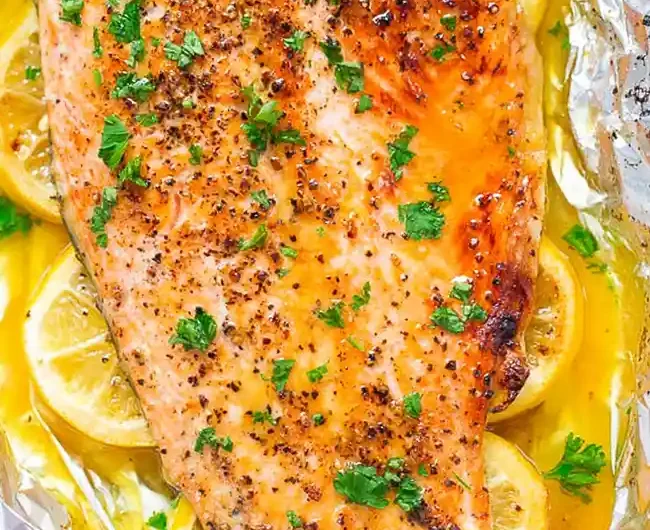
This sheet pan meal delivers a perfectly glazed salmon fillet using a simple combination of honey and citrus. The foil-packet technique ensures the fish remains moist and juicy throughout the baking process.
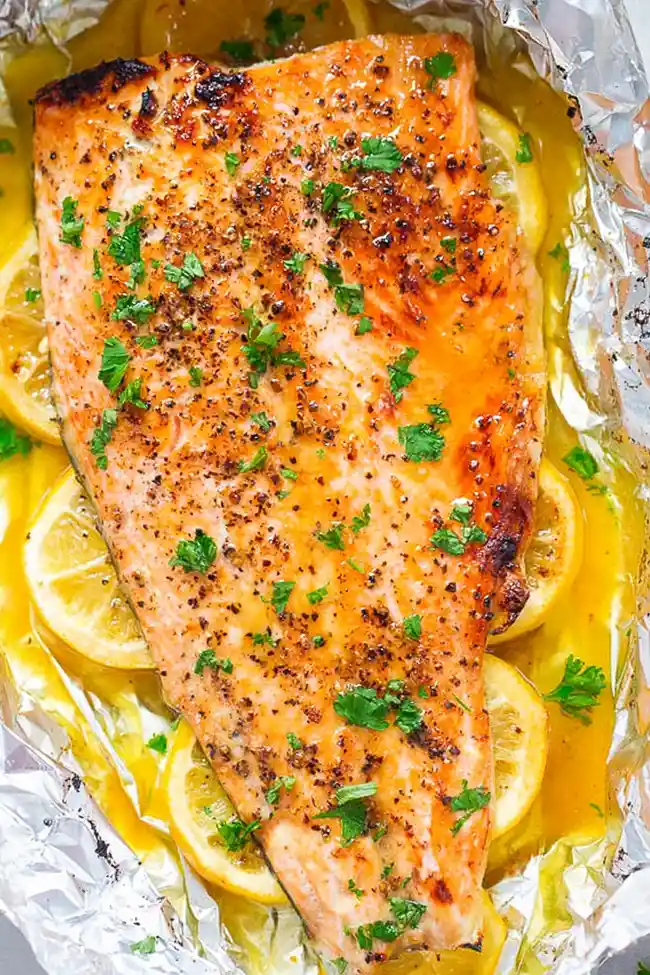
List of ingredients
- 1 to 1.25 pounds skin-on salmon fillet – provides a sturdy base and prevents sticking.
- 1 lemon – sliced into thin rounds for aromatic bedding.
- 1/2 cup unsalted butter – melted to create a rich sauce.
- 3 to 4 tablespoons honey – adds sweetness and aids in caramelization.
- 2 to 3 tablespoons lemon juice – freshly squeezed from about one lemon for brightness.
- 1 teaspoon Morton Kosher Salt – or adjusted to your taste preferences.
- 1/2 teaspoon freshly ground black pepper – or adjusted to your taste preferences.
- 1 tablespoon finely chopped fresh parsley – optional for a fresh finish.
step-by-step instructions
- Prepare Oven and Pan: Preheat your oven to 375F. Line a baking sheet completely with aluminum foil to ensure easy cleanup.
- Position Salmon: Place the salmon fillet on the foil with the skin-side down. Align the longer side of the fish parallel to the longer side of the pan. Raise the foil edges about 2 inches to create a basin for the sauce.
- Add Lemon Base: Carefully nestle the thin lemon slices underneath the salmon fillet, spacing them evenly across the bottom.
- Prepare Butter Mixture: Place the unsalted butter in a microwave-safe glass bowl or measuring cup. Heat on high for approximately 1 minute or until fully melted.
- Combine Glaze: Stir the honey and lemon juice into the melted butter. Pour about two-thirds of this mixture over the top of the salmon, reserving the remaining one-third for later.
- Season: Evenly sprinkle the Morton Kosher Salt and black pepper over the fillet.
- Seal and Marinate: Cover the salmon with another piece of foil. Crimp the edges of the top and bottom foil together to create an airtight seal. If time allows, let the fish marinate for 10 to 15 minutes to deepen the flavor.
- First Bake: Bake the sealed packet in the oven for 15 minutes.
- Prepare for Broiling: Remove the pan from the oven. Carefully remove the top foil layer or open the packet to expose the salmon, keeping the side edges raised to hold the juices.
- Set Broiler: Change the oven setting to High Broil.
- Final Glaze: Spoon the reserved butter mixture over the salmon if desired. Ensure you do not overfill the packet to avoid leaks on the pan.
- Broil: Broil for 5 to 10 minutes until the top is golden brown. Monitor closely as broiler intensities vary and the honey can burn quickly.
- Finish: Garnish with chopped parsley and serve immediately.
Pro Baking Techniques for Tender Fish
Use Freshly Squeezed Lemon Juice
Fresh lemon juice contains volatile oils and acidity levels that bottled versions lack. This brightness cuts through the richness of the butter and honey, creating a balanced flavor profile. Always squeeze your lemons immediately before mixing the glaze for the best results.
Prepare Organic Lemons for Slicing
Since the lemon slices are baked with the skin on, organic lemons are preferred to avoid pesticide residue. If organic is unavailable, scrub the lemons thoroughly under warm running water with a vegetable brush. This ensures a clean, natural flavor for the bedding layer.
Implement a Resting Period
Allow the salmon to rest for about 5 minutes after removing it from the oven. This allows the carry-over heat to finish cooking the center evenly without overcooking the exterior. Resting also helps the juices redistribute, ensuring every bite is moist.
Control the Broiler Heat
Broilers vary significantly between oven brands; some are much more intense than others. Keep the oven door slightly cracked or stand close to the oven to watch the caramelization process. Remove the fish as soon as the honey glaze turns golden to avoid a burnt taste.
Customizing Your Salmon Recipe
Adjusting Butter Ratios for Health
If you prefer a lighter sauce, you can reduce the butter by half without compromising the structure of the glaze. The honey and lemon juice will still provide plenty of moisture and flavor. You may notice a less creamy texture, but the citrus notes will be more prominent.
Substituting Honey with Maple Syrup
For a different flavor profile, replace the honey with pure maple syrup. Maple syrup provides a woody, deep sweetness that pairs exceptionally well with salmon. Keep the quantity the same as the honey to maintain the correct glaze consistency.
Adapting for Skinless Fillets
If using skinless salmon, increase the number of lemon slices underneath the fish to prevent sticking. You may also want to reduce the broiling time by a minute or two. Skinless fillets cook slightly faster and are more prone to drying out.
Incorporating Different Salt Types
While Kosher salt is recommended for its coarse grain and easy distribution, sea salt or table salt can be used. If using table salt, reduce the amount by one-third because it is more dense and salty by volume. Always taste a small piece of the cooked fish before adding extra salt.
Adding Garlic to the Glaze
For a more savory depth, stir in one teaspoon of minced garlic or garlic powder to the melted butter. Garlic complements the honey and lemon, adding a pungent aromatic quality. Sauté the garlic in the butter briefly before adding the honey for a smoother taste.
Ideal Pairing and Serving Ideas
Pairing with Ancient Grains
Serve this salmon alongside a bed of fluffy quinoa or farro to absorb the extra buttery glaze. The nuttiness of these grains contrasts well with the sweet and sour notes of the fish. Cook the grains in vegetable broth for added depth.
Adding Roasted Root Vegetables
You can add trimmed asparagus or thin carrots to the sheet pan around the salmon. Since they require similar cooking times, they can be baked in the foil packet. Toss the vegetables in a bit of the honey-butter mixture before adding them to the pan.
Serving with Fresh Greens
A light arugula salad with a simple vinaigrette provides a peppery contrast to the rich salmon. Use a dressing of olive oil and apple cider vinegar to keep the sides light. This balances the caloric density of the butter-based glaze.
Using Herb Alternatives for Garnish
If parsley is unavailable, fresh dill or chives are excellent alternatives. Dill provides a classic pairing for salmon, offering a bright, anise-like flavor. Chives add a mild onion quality that cuts through the honey sweetness.
Storage and Maintenance Guidelines
Refrigerating Leftover Salmon
Store any remaining salmon in an airtight glass container in the refrigerator. It will stay fresh for up to 3 days when kept at a constant cold temperature. Ensure the salmon is fully cooled before sealing the lid to prevent condensation.
The Best Reheating Method
To avoid overcooking the fish during reheating, use a low-temperature oven or a toaster oven. Place the salmon on foil and heat at 275F until warmed through. Avoid high-power microwaving, as this can make the fish rubbery and dry.
Serving Salmon Cold
Cold honey lemon salmon is an excellent addition to sandwiches or salads. Flake the chilled fish with a fork and mix it with a small amount of Greek yogurt or mayonnaise. This creates a gourmet fish salad with built-in citrus seasoning.
Freezing Considerations
While salmon can be frozen, the texture of the honey-butter glaze changes during the freezing and thawing process. It is generally recommended to eat this specific recipe fresh or refrigerated. If you must freeze it, wrap it tightly in foil and plastic wrap to prevent freezer burn.
Troubleshooting and FAQs
Can I make this with smaller pieces of salmon?
Yes, you can use individual fillets instead of one large piece. However, smaller pieces cook much faster, so you should check for doneness several minutes earlier. Use the flaking method to ensure they are cooked through without becoming dry.
Do I have to broil the salmon?
Broiling is optional but highly recommended for the caramelized texture and golden color. If you prefer not to broil, simply continue baking in the regular oven. Be careful not to overbake, as the fish can dry out quickly once the foil is opened.
How do you know when the salmon is fully cooked?
Baked salmon is done when the flesh becomes opaque and flakes easily with a fork. The internal temperature should reach 145F (63C) for food safety. If you are unsure, lean toward slightly undercooking it, as the broiling step will finish the center.
Why did my glaze burn during broiling?
The high sugar content in honey causes it to caramelize and then burn quickly. This usually happens if the broiler is too hot or the fish is placed too close to the heating element. Move the oven rack down one level if your broiler is particularly intense.
Can I use a parchment paper instead of foil?
Parchment paper is great for baking but does not seal as tightly as aluminum foil. Since this recipe relies on a sealed packet to steam the fish in butter, foil is the superior choice. If using parchment, you will need to fold and crimp the edges very carefully.
What can I use if I don’t have a broiler?
If your broiler is broken, increase the oven temperature to 425F for the final 5 minutes of cooking. Open the foil packet to allow the top to brown through convection heat. It won’t be as charred as broiled salmon, but it will still be delicious.
Print
Sheet Pan Honey Lemon Salmon
- Total Time: 25 minutes
- Yield: 4 servings 1x
- Diet: General
Description
This baked honey lemon salmon is ready in under 30 minutes! It’s designed to be foolproof, ensuring the salmon remains juicy and tender thanks to the honey lemon butter glaze.
Ingredients
- 1 to 1.25 pounds skin-on salmon fillet
- 1 lemon, sliced into thin rounds
- 1/2 cup unsalted butter, melted
- 3 to 4 tablespoons honey
- 2 to 3 tablespoons lemon juice (from about 1 lemon)
- 1 teaspoon Morton Kosher Salt (or to taste)
- 1/2 teaspoon freshly ground black pepper (or to taste)
- 1 tablespoon finely chopped fresh parsley (optional for garnishing)
Instructions
- Step: Preheat oven to 375F and place a piece of foil on the baking sheet to cover it completely.
- Step: Place salmon on the foil (with the longer side parallel with the longer side of the sheet pan) with the skin-side down. Raise the edges of the foil up about 2 inches to contain the buttery mixture.
- Step: Nestle lemon slices underneath the salmon, spaced evenly around the fillet; set aside.
- Step: To a microwave-safe glass measuring cup or bowl, add the butter and heat on high power to melt, about 1 minute.
- Step: Stir in the honey and lemon juice. Pour or spoon about two-thirds of the mixture over the salmon; reserve remainder.
- Step: Evenly season with Morton Kosher Salt and pepper, to taste.
- Step: Seal up the foil by crimping the top and bottom pieces of foil together to get it as air-tight as possible. If time permits, marinate for 10 to 15 minutes.
- Step: Bake for about 15 minutes.
- Step: Remove salmon from the oven and open the foil packet so the salmon is exposed, keeping the edges raised. Set oven to Hi broil.
- Step: Spoon the reserved buttery mixture over the salmon, if desired.
- Step: Broil salmon for about 5 to 10 minutes, or until as golden as desired, keeping a close eye to prevent burning.
- Step: Optionally garnish with parsley and serve immediately.
Notes
Recipe adapted from Sheet Pan Orange Chili Salmon. For best results, use freshly squeezed lemon juice.
- Prep Time: 5 minutes
- Cook Time: 20 minutes
- Category: Fish
- Method: Baking
- Cuisine: American
Nutrition
- Serving Size: 1 serving
- Calories: 424 kcal
- Sugar: 14 g
- Sodium: 636 mg
- Fat: 30 g
- Saturated Fat: 16 g
- Unsaturated Fat: 12 g
- Trans Fat: 1 g
- Carbohydrates: 16 g
- Fiber: 1 g
- Protein: 23 g
- Cholesterol: 123 mg
Keywords: sheet pan salmon, honey lemon salmon, baked salmon, easy fish recipe, 30 minute dinner