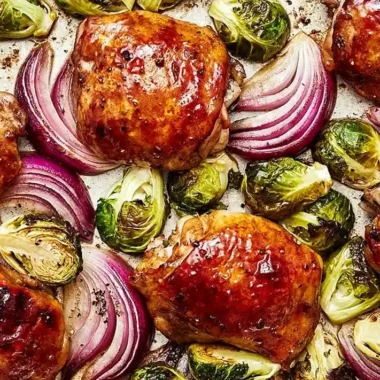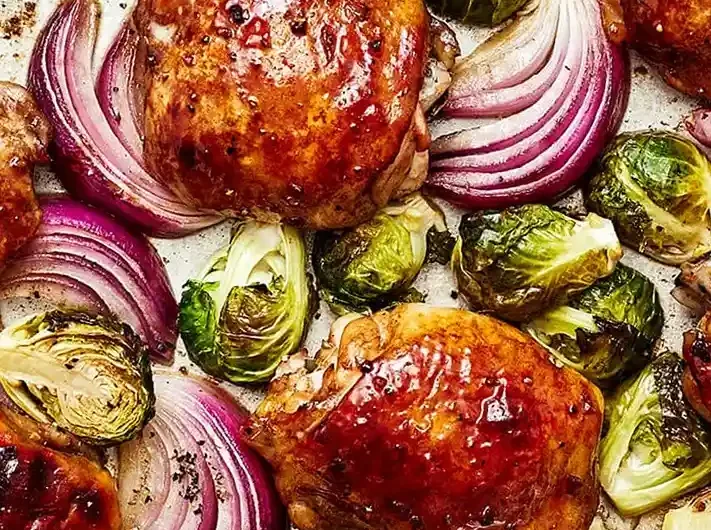
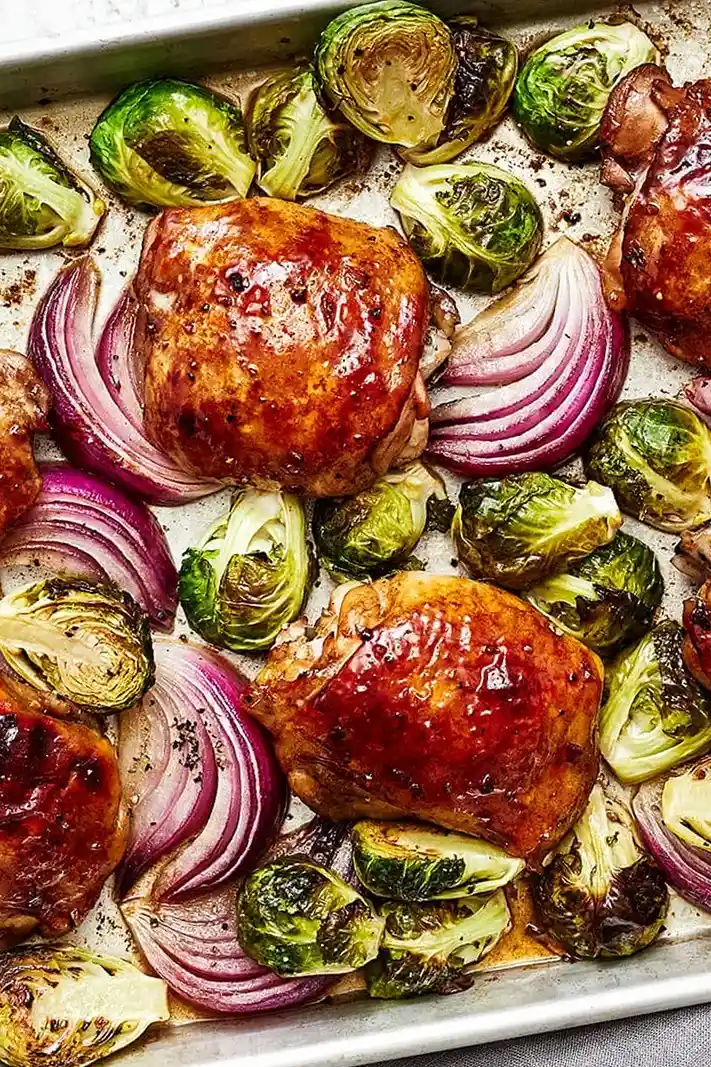
This simple sheet pan dinner combines juicy chicken thighs and roasted vegetables for a nutritious, one-pan meal. The savory-sweet balsamic glaze caramelizes in the oven, creating a rich flavor profile with minimal cleanup.
List of ingredients
- 1/2 cup balsamic vinegar – provides the acidic base for the glaze.
- 4 tablespoons extra-virgin olive oil – divided for marinating and roasting.
- 2 tablespoons maple syrup – adds a natural sweetness to balance the vinegar.
- 3 garlic cloves, minced – adds a pungent, savory depth.
- 1/2 teaspoon kosher salt – or more to taste for seasoning.
- 1/4 teaspoon freshly ground black pepper – or more to taste for a hint of spice.
- 6 chicken thighs – bone-in and skin-on for maximum juiciness.
- 1 pound Brussels sprouts – ends trimmed and sliced in half.
- 1 red onion – sliced into thick wedges for roasting.
step-by-step instructions
- Prepare the marinade: In a medium bowl, whisk together the balsamic vinegar, 2 tablespoons of olive oil, maple syrup, garlic, salt, and pepper until well combined.
- Marinate the chicken: Place the chicken thighs in a large glass bowl or a sealed plastic bag, then pour the marinade over them. Refrigerate for 1 to 2 hours to allow the flavors to penetrate the meat.
- Prepare the vegetables: Preheat your oven to 425°F (220°C). Spread the halved Brussels sprouts and red onion wedges onto a large sheet pan, drizzle with the remaining 2 tablespoons of olive oil, and season with salt and pepper. Toss everything by hand to ensure an even coating.
- Arrange and roast: Remove the chicken from the marinade and nestle the thighs between the vegetables on the sheet pan. Bake for 30 to 40 minutes or until the chicken is fully cooked through.
- Reduce the glaze: While the chicken is in the oven, pour the remaining marinade into a small saucepan over medium-low heat. Simmer for 8 to 10 minutes until the liquid is reduced and thickened into a syrupy glaze.
- Apply the glaze: Open the oven and brush the thickened glaze onto the chicken thighs. Continue baking and repeat the brushing process one more time before the cooking time ends.
- Final temperature check: Use an instant-read thermometer to ensure the chicken has reached an internal temperature of 165°F (74°C) before serving.
Mastering the Roasting Process
Select Bone-In Skin-On Thighs
Bone-in, skin-on chicken thighs are superior for sheet pan meals because the bone acts as an insulator, keeping the internal meat moist during high-heat roasting. The skin renders fat and becomes golden and crispy, which adds a necessary textural contrast to the tender vegetables. If you choose boneless thighs, be mindful that they cook faster and may dry out if left for the full 40 minutes.
Ensure Uniform Vegetable Cuts
When prepping your Brussels sprouts and red onions, aim for consistent sizes to ensure they cook at the same rate. Halving the sprouts exposes the inner surface, allowing the balsamic glaze to cling to the vegetable and caramelize. Slicing the onion into thick wedges prevents them from burning or disintegrating before the chicken is finished.
Avoid Overcrowding the Pan
Use the largest rimmed baking sheet available to ensure there is ample space between the chicken and the vegetables. If the ingredients are packed too tightly, they will steam instead of roasting, resulting in soggy vegetables and pale chicken skin. If you are doubling the recipe, it is essential to use two separate pans to maintain proper airflow.
Preheat the Oven Fully
Wait until your oven reaches the full 425°F (220°C) before sliding the pan inside. A hot oven creates an immediate sear on the chicken skin, which helps lock in the juices and starts the browning process instantly. This high temperature is also critical for achieving the charred, caramelized edges on the Brussels sprouts.
Ingredient Alternatives and Swaps
Substitute Maple Syrup with Honey
Honey is an excellent replacement for maple syrup and provides a similar thickness and sweetness to the glaze. Honey has a slightly more floral flavor profile that pairs beautifully with the acidity of the balsamic vinegar. Note that honey may thicken more quickly during the reduction process, so keep a close eye on the saucepan.
Using Apple Cider Vinegar
If you do not have balsamic vinegar, apple cider vinegar is a viable alternative, though it offers a brighter, sharper tang. Since apple cider vinegar lacks the natural syrupy sweetness of balsamic, you may want to increase the maple syrup by one tablespoon. This adjustment helps maintain the savory-sweet balance of the dish.
Replacing Brussels Sprouts with Broccoli
Broccoli florets are a great alternative for those who dislike sprouts and typically roast in the same amount of time. Cut the florets into bite-sized pieces to ensure they brown evenly across the sheet pan. Cauliflower also works well in this recipe and absorbs the balsamic glaze very effectively.
Swapping Red Onion for Shallots
Shallots offer a milder and sweeter flavor than traditional red onions. To use them in this recipe, slice the shallots into thick rounds so they do not burn during the roasting process. They tend to blend more seamlessly into the glaze and offer a more refined aromatic quality.
Adjusting Salt for Dietary Needs
For those monitoring sodium intake, you can replace kosher salt with a low-sodium alternative or a salt-free seasoning blend. Because balsamic vinegar and maple syrup provide such bold flavors, you can often reduce the amount of salt without significantly impacting the taste of the meal.
Professional Serving Recommendations
Pair with Quinoa or Brown Rice
Serving this sheet pan dinner over a bed of fluffy quinoa or brown rice helps soak up any extra balsamic reduction from the pan. These grains add complex carbohydrates and fiber, turning the meal into a more filling and balanced plate. Cook the grains separately and spoon the chicken and vegetables on top.
Add a Squeeze of Fresh Lemon
Adding a small squeeze of fresh lemon juice just before serving cuts through the richness of the chicken fat and the sweetness of the glaze. This hit of acidity brightens the overall flavor profile and balances the earthy, bitter notes of the roasted Brussels sprouts.
Top with Toasted Almonds
Sliced toasted almonds add a delightful crunch that contrasts with the tender chicken and softened vegetables. Toast the almonds in a dry skillet over medium heat for 2-3 minutes until they are golden brown. Sprinkle them over the dish right before bringing it to the table.
Serve with a Crisp Arugula Salad
A simple side salad of baby arugula tossed with olive oil and lemon juice complements the heavy flavors of the roasted meal. The peppery notes of the arugula provide a refreshing contrast to the sticky-sweet balsamic glaze and the richness of the thighs.
Preservation and Reheating Guide
Proper Air-Tight Storage
Store any leftovers in high-quality glass airtight containers to keep the chicken from drying out. To preserve the texture of the vegetables, avoid stacking the chicken too deeply in the container. Properly stored leftovers will remain fresh and safe to eat for 4 to 5 days in the refrigerator.
Thawing Frozen Portions
If you have frozen the meal, transfer the container to the refrigerator 24 hours before you plan to eat. This slow thawing process preserves the cellular structure of the meat and prevents the vegetables from becoming mushy. Avoid using the microwave for thawing, as this can cause uneven heating.
Oven Reheating for Crispiness
To restore the crispiness of the chicken skin, reheat the leftovers in the oven at 350°F (175°C) for 10-15 minutes. This is far superior to microwave reheating, which steams the skin and makes it soft. Covering the pan loosely with foil can prevent the meat from over-drying during this process.
Assessing Freshness
Before reheating, always check for any off-smells or a slimy texture on the chicken. If the balsamic glaze has separated in the fridge, it will naturally reintegrate as it heats up. When in doubt, discard any food that has been stored longer than five days.
Solving Common Cooking Issues
Preventing Glaze Burning
Because the balsamic glaze contains sugar from the maple syrup, it can burn if the oven temperature is too high or the chicken is left too long. Monitor the glaze closely during the final 10 minutes of baking. If you notice the glaze darkening too rapidly, lower the oven temperature by 25 degrees.
Fixing Underdone Vegetables
If the chicken reaches its target temperature but the Brussels sprouts are still too firm, remove the chicken to a serving plate. Return the vegetables to the oven for another 5-10 minutes at 425°F to ensure they are fully tender and caramelized.
Managing Excess Pan Liquid
Depending on the moisture content of the chicken, some liquid may accumulate on the pan. You can pour these savory juices into the saucepan with the glaze to add more depth of flavor. This ensures that the natural drippings from the chicken are not wasted.
Ensuring the Chicken is Safe
Always use a digital meat thermometer to check the thickest part of the thigh, making sure the probe does not touch the bone. While 165°F is the safety standard, chicken thighs often become more tender when cooked to 170-175°F, as this temperature further breaks down connective tissues.
Frequently Asked Questions
Can I use chicken breasts instead?
Yes, but chicken breasts cook faster and dry out more easily than thighs. Reduce the baking time to 20-25 minutes and consider using thick-cut breasts to ensure they remain juicy. You may also want to add the breasts to the pan a few minutes after the vegetables have started roasting.
Is the marinating time flexible?
While 1-2 hours is ideal, you can marinate the chicken for up to 24 hours for a deeper flavor. Avoid marinating for longer than 24 hours, as the acidity in the balsamic vinegar can begin to break down the meat fibers too much, which can lead to a mushy texture.
Can I use a different pan?
A rimmed baking sheet is the best choice for airflow and roasting. If you use a deep casserole dish, the vegetables are more likely to steam than roast. If using a dish, you may need to increase the cooking time or use the broiler for the last 3 minutes to brown the top.
How do I reduce the sweetness?
To make the dish less sweet, decrease the maple syrup to one tablespoon or replace it with a small amount of brown sugar. You can also increase the amount of balsamic vinegar slightly to shift the balance toward a more tart and acidic profile.
Can I prep this the night before?
Yes, you can marinate the chicken and chop the vegetables the night before. Keep the chicken in its marinade and the vegetables in a separate airtight container in the refrigerator. Toss the vegetables with oil and seasoning immediately before placing them in the oven.
Print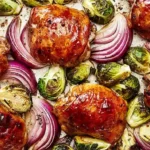
Sheet Pan Roasted Balsamic Chicken with Brussels Sprouts
- Total Time: 150 minutes
- Yield: 6 servings 1x
- Diet: General
Description
This balsamic chicken recipe couldn’t be any easier! Just nestle chicken thighs with Brussels sprouts and red onions, then coat in a balsamic glaze.
Ingredients
- ½ cup balsamic vinegar
- 4 tablespoons extra-virgin olive oil
- 2 tablespoons maple syrup
- 3 garlic cloves (minced)
- ½ teaspoon kosher salt
- ¼ teaspoon freshly ground black pepper
- 6 chicken thighs
- 1 pound Brussels sprouts (ends trimmed off and sliced in half)
- 1 red onion (sliced into wedges)
Instructions
- Whisk: In a medium bowl, whisk together the balsamic vinegar, 2 tablespoons of olive oil, maple syrup, garlic, salt, and pepper.
- Marinate: Place the chicken thighs in a large glass bowl or plastic bag and pour the marinade on top; marinate in the fridge for 1 to 2 hours.
- Prep Veggies: Preheat the oven to 425°F (220°C), place the Brussels sprouts and onion on a sheet pan, drizzle with the remaining 2 tablespoons of olive oil, and season with salt and pepper.
- Bake: Remove the chicken from the marinade, place it on the sheet pan between the vegetables, and bake for 30 to 40 minutes or until the chicken is cooked through.
- Glaze: Simmer the remaining marinade in a small saucepan on medium-low heat for 8 to 10 minutes until thickened, then brush the glaze on the chicken twice during the baking process.
- Finish: Use an instant read thermometer to ensure the chicken is cooked through to 165°F (74°C), then serve.
Notes
Use bone-in, skin-on chicken thighs for extra juiciness and crispy skin. You can substitute broccoli or cauliflower for Brussels sprouts if preferred.
- Prep Time: 120 minutes
- Cook Time: 30 minutes
- Category: Main Course
- Method: Roasting
- Cuisine: American
Nutrition
- Serving Size: 1 serving
- Calories: 478 kcal
- Sugar: 10 g
- Sodium: 331 mg
- Fat: 34 g
- Saturated Fat: 8 g
- Unsaturated Fat: 23 g
- Trans Fat: 0.1 g
- Carbohydrates: 17 g
- Fiber: 3 g
- Protein: 26 g
- Cholesterol: 142 mg
Keywords: balsamic chicken, sheet pan dinner, roasted brussels sprouts, healthy dinner