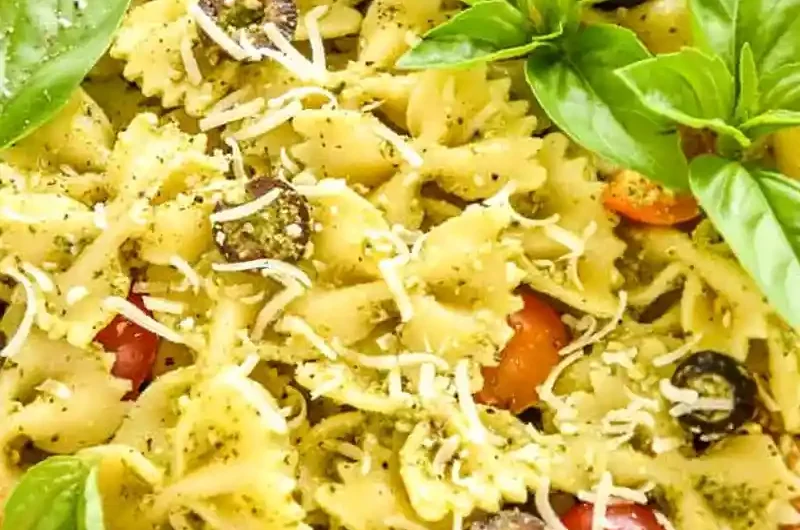
This chilled pesto pasta salad is a convenient side dish that requires minimal preparation. It combines savory basil pesto with fresh tomatoes and salty olives for a balanced flavor profile.
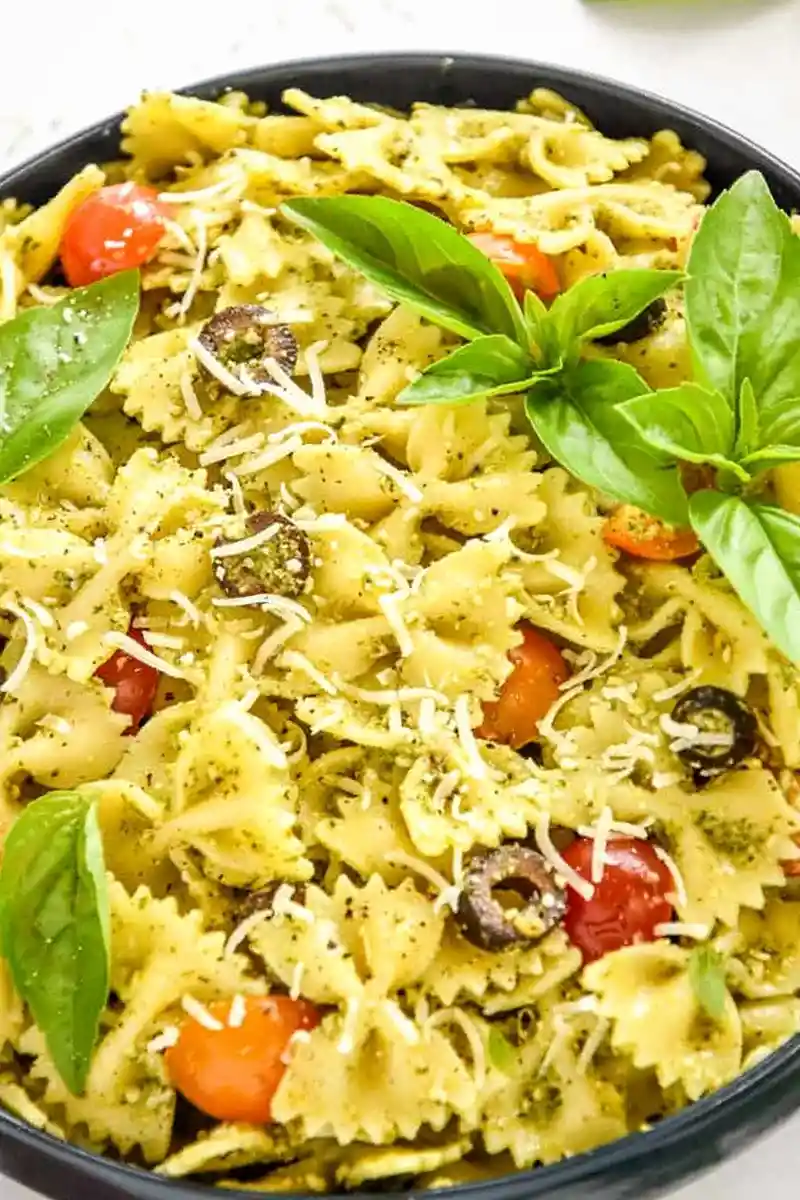
List of ingredients
- 1 pound farfalle (bowtie) pasta – provides a great shape for holding sauce.
- 2 tablespoons extra virgin olive oil – prevents the pasta from sticking and adds richness.
- 6-7 ounces (3/4 cup) container traditional prepared pesto – the main flavor base of the salad.
- 2/3 cup cherry tomatoes, halved – adds a fresh, juicy sweetness.
- 2.25 ounce can sliced black olives, drained – provides a briny, salty contrast.
- 1/4 cup freshly shredded parmesan cheese (microbial-rennet) – adds a savory, nutty finish.
- fine sea salt & fresh ground black pepper to taste – used for final seasoning adjustments.
step-by-step instructions
- Prepare the pasta: Heat about 5 quarts of water in a large stockpot over high heat. Once boiling, add at least 1 tablespoon salt to season the water. Cook the farfalle pasta to al dente based on the package directions. Drain the pasta well in a strainer and rinse it with cold water to stop the cooking process and bring it to room temperature. Set the pasta aside to cool further while preparing the other ingredients.
- Combine ingredients: Place the cooled pasta into your largest mixing bowl to allow room for tossing. Add the olive oil, prepared pesto, halved cherry tomatoes, drained sliced black olives, and shredded parmesan cheese. Use a large spoon or rubber spatula to mix everything together until the pesto is well dispersed and coats every noodle. Taste the salad and add fine sea salt or fresh ground black pepper as needed.
- Finish and store: Top the salad with additional parmesan cheese if desired. Serve immediately as a side dish or as a main course paired with cooked chicken. Store any remaining salad in an airtight container in the refrigerator for up to 4 days. If the leftovers appear dry, refresh them by stirring in 1-2 tablespoons of olive oil before serving.
Pasta Selection and Preparation
Using Farfalle for Better Sauce Adhesion
Farfalle pasta, also known as bowtie pasta, is an ideal choice for this cold salad. The unique folds and pinched center create pockets that trap the thick pesto more effectively than smooth pasta shapes. This results in a better sauce-to-pasta ratio in every single forkful.
Testing Pasta for Al Dente Firmness
It is critical to cook the pasta to al dente, meaning it still has a slight bite. Overcooked pasta can become mushy and break apart when you mix in the other ingredients. Taste a noodle a minute before the package directions suggest to ensure the texture is correct.
Stopping the Cooking Process with Cold Water
Rinsing the pasta with cold water immediately after draining is a necessary step for cold salads. This removes excess surface starch and stops the residual heat from continuing to cook the noodles. This process ensures the pasta remains distinct and does not clump together as it cools.
Seasoning Pasta Water for Internal Flavor
Adding at least one tablespoon of salt to the boiling water is the only chance to season the interior of the pasta. This enhances the overall taste of the dish and prevents the salad from tasting bland. Do not skip this step, as the pasta itself should have a seasoned base before the pesto is added.
Pesto and Flavor Enhancements
Identifying High-Quality Prepared Pesto
Since this recipe relies on a few ingredients, the quality of the store-bought pesto is very important. Look for brands that list basil and olive oil as the primary ingredients and avoid those with heavy fillers. Testing a few different brands helps you find the balance of garlic and salt that you prefer.
Integrating Fresh Homemade Pesto
While store-bought pesto is convenient, you can easily substitute it with a homemade version. Freshly blended basil, pine nuts, garlic, and microbial-rennet parmesan offer a brighter, more vibrant flavor. Ensure the homemade pesto is at room temperature before mixing to avoid chilling the pasta too quickly.
Using Olive Oil to Prevent Drying
The extra virgin olive oil added to the mixing bowl serves a dual purpose. It enhances the richness of the pesto and creates a protective barrier on the pasta. This prevents the noodles from absorbing all the moisture from the sauce, keeping the salad succulent.
Adjusting Seasoning Based on Pesto Saltiness
Different brands of prepared pesto vary significantly in their salt content. Always taste the combined salad before adding extra sea salt or black pepper. This prevents the dish from becoming overly salty, especially since the olives and parmesan already contribute sodium.
Ingredient Substitutions and Variations
Substituting Bowties with Fusilli or Rotini
If farfalle is unavailable, fusilli or rotini are excellent alternatives. These spiral-shaped pastas have ridges and grooves that are specifically designed to hold onto thick sauces like pesto. Avoid using long pastas like spaghetti, as they are more difficult to toss and serve in a salad format.
Using Sungold Tomatoes for Added Sweetness
Standard cherry tomatoes work well, but Sungold tomatoes provide a more intense, fruity sweetness. This brightness cuts through the richness of the pesto and the saltiness of the olives. Halving them allows the juices to mix slightly with the sauce for added depth.
Using Capers for a Sharper Briny Taste
If you find black olives too mild, you can substitute them with capers for a more pungent flavor. Capers provide a sharp, acidic pop that complements the herbal notes of the basil. Use about two tablespoons of drained capers to replace the can of olives.
Using Nutritional Yeast for a Dairy-Free Option
To make this recipe dairy-free, replace the parmesan cheese with nutritional yeast. Nutritional yeast provides a similar nutty and cheesy flavor profile without using animal products. Ensure the pesto used is also a vegan variety to maintain consistency.
Incorporating Roasted Peppers or Baby Spinach
For added nutrition and color, stir in sliced roasted red peppers or a handful of fresh baby spinach. Roasted peppers add a smoky sweetness, while baby spinach provides an earthy freshness. These additions keep the salad light while increasing the volume of vegetables.
Adding Grilled Chicken or Chickpeas
Transform the side dish into a full meal by adding grilled chicken breast or canned chickpeas. Chicken provides a lean protein that pairs naturally with pesto flavors. Chickpeas offer a plant-based protein option and a satisfying texture that blends well with the farfalle.
Serving and Presentation Ideas
Adding Fresh Basil Leaves for Color
Tossing in a few whole or torn fresh basil leaves just before serving adds a professional touch. The bright green color contrasts beautifully with the red tomatoes and black olives. It also provides a fresh aromatic hit that complements the cooked pesto.
Matching the Salad with Lemon-Herb Chicken
This pasta salad pairs exceptionally well with proteins seasoned with lemon and herbs. The acidity of lemon-herb grilled chicken balances the creamy, garlic-heavy nature of the pesto. Serve the chicken sliced on top of the salad for an elegant presentation.
Increasing Protein Ratios for a Full Meal
When serving this as a main course, increase the ratio of vegetables and protein. Adding extra cherry tomatoes and double the amount of parmesan cheese makes the dish more filling. This turns a simple side into a comprehensive, nutrient-dense lunch.
Using Wide Bowls for Better Distribution
Serving the salad in a wide, shallow bowl rather than a deep one allows for better distribution of the toppings. It ensures that the tomatoes and olives are visible and not all sunk to the bottom. This makes the dish more visually appealing for guests.
Storage and Maintenance
Storing Pasta Salad in Airtight Containers
To maintain freshness, transfer the salad to a high-quality airtight container immediately after cooling. This prevents the pasta from absorbing odors from other foods in the refrigerator. It also keeps the basil in the pesto from oxidizing too quickly.
Restoring Moisture with Olive Oil Drizzles
Pasta naturally absorbs liquid over time, which can make the salad seem dry after a day in the fridge. Stirring in one to two tablespoons of fresh olive oil restores the glossy texture. This simple step revitalizes the flavors and makes the salad taste freshly made.
Using Glass Containers to Maintain Freshness
Glass containers are preferable to plastic for storing pesto-based dishes. The oils in the pesto can sometimes stain plastic or leave a lingering scent. Glass provides a non-reactive surface that keeps the flavor of the basil pure.
Managing the Four-Day Refrigeration Limit
This salad is best consumed within four days of preparation. After this period, the tomatoes may become too soft and the pasta may lose its al dente structure. Always check the scent and texture before serving leftovers to ensure peak quality.
Common Troubleshooting
Handling Mushy Pasta in Cold Salads
If your pasta turns out too soft, avoid over-mixing the salad. Gentle tossing with a rubber spatula prevents the noodles from breaking further. In future batches, reduce the boiling time by one or two minutes to ensure a firmer texture.
Balancing the Pesto-to-Pasta Ratio
If the salad feels too dry, add another tablespoon of pesto or a splash of olive oil. If it feels too saucy, stir in a small amount of additional shredded parmesan cheese. The cheese helps absorb excess moisture while adding flavor.
Reducing the Brine Flavor from Olives
If the olives make the salad taste too salty, rinse them under cold water before adding them to the bowl. This removes the excess brine from the canning liquid. You can also add a squeeze of fresh lemon juice to brighten the flavor and cut through the salt.
Using Oil Early to Separate Noodles
If you find your pasta clumping together after rinsing, toss it with a teaspoon of olive oil while it is still slightly warm. This creates a lubrication layer that keeps the noodles separate. This is especially helpful if you are prepping the pasta several hours before mixing.
Frequently Asked Questions
Can this be frozen?
It is not recommended to freeze this salad because the fresh tomatoes and cooked pasta change texture significantly. The tomatoes become mushy upon thawing, and the pasta can become grainy. However, you can freeze the pesto in portions for later use.
Can I make this without olives?
Yes, you can completely omit the olives if you prefer. To replace the salty element, you can add a pinch more salt or use a small amount of feta cheese. The salad remains delicious and cohesive without the olives.
How do I prevent the basil from browning?
The store-bought pesto usually contains citric acid to prevent browning, but fresh additions may darken. Keeping the salad tightly sealed in an airtight container limits oxygen exposure. Storing it in the coldest part of the refrigerator also helps maintain the color.
Which parmesan is best for this recipe?
Freshly shredded parmesan from a wedge is superior to pre-shredded store options. Pre-shredded cheeses often contain anti-clumping agents like cellulose that prevent them from melting or blending smoothly. Grating your own cheese provides a cleaner taste and better texture.
Print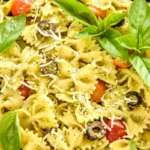
Simple Basil Pesto Pasta Salad
- Total Time: 20 minutes
- Yield: 8 servings 1x
- Diet: Vegetarian
Description
This Incredibly Easy Pesto Pasta Salad is the simplest make-ahead friendly side that’s perfect for all occasions. Use store-bought pesto and canned sliced olives to make quick work of this crowd-pleasing cold pasta salad recipe!
Ingredients
- 1 pound farfalle (bowtie) pasta
- 2 tablespoons extra virgin olive oil
- 6–7 ounces (3/4 cup) traditional prepared pesto
- 2/3 cup cherry tomatoes, halved
- 2.25 ounce can sliced black olives, drained
- 1/4 cup freshly shredded microbial-rennet parmesan cheese
- fine sea salt to taste
- fresh ground black pepper to taste
Instructions
- Cook the pasta: Heat about 5 quarts of water in a large stockpot over high heat. Once boiling, add at least 1 tablespoon salt to season the water. Cook pasta (16 ounces) to al dente based on package directions. Drain well in a strainer and rinse pasta with cold water to stop the cooking and bring it to room temperature. Set aside to cool further while you prep the remaining ingredients.
- Mix everything together: Add the cooked pasta to your largest mixing bowl. Add olive oil (2 tablespoons), pesto (6-7 ounces), tomatoes (2/3 cup, halved), olives (2.25 ounce can, drained) and parmesan cheese (1/4 cup freshly shredded). Use a large spoon or rubber spatula to mix everything together until the pesto is well dispersed. Taste and see if you think it needs any salt or pepper.
- Serve & store: Top with more parmesan cheese if you wish. Serve as a side or main dish with cooked chicken and other sides. Store in the refrigerator for up to 4 days. Refresh leftovers by stirring in 1-2 tablespoons of olive oil if it appears dry.
Notes
Refresh leftovers by stirring in 1-2 tablespoons of olive oil if it appears dry. This dish is best served cold or at room temperature.
- Prep Time: 8 minutes
- Cook Time: 12 minutes
- Category: Sides
- Method: Stovetop
- Cuisine: Italian
Nutrition
- Serving Size: 1 cup
- Calories: 405 kcal
- Sugar: 4 g
- Sodium: 680 mg
- Fat: 20 g
- Saturated Fat: 6 g
- Unsaturated Fat: 14 g
- Trans Fat: 0 g
- Carbohydrates: 45 g
- Fiber: 4 g
- Protein: 14 g
- Cholesterol: 25 mg
Keywords: pesto pasta salad, cold pasta salad, easy side dish, make-ahead salad, farfalle pasta