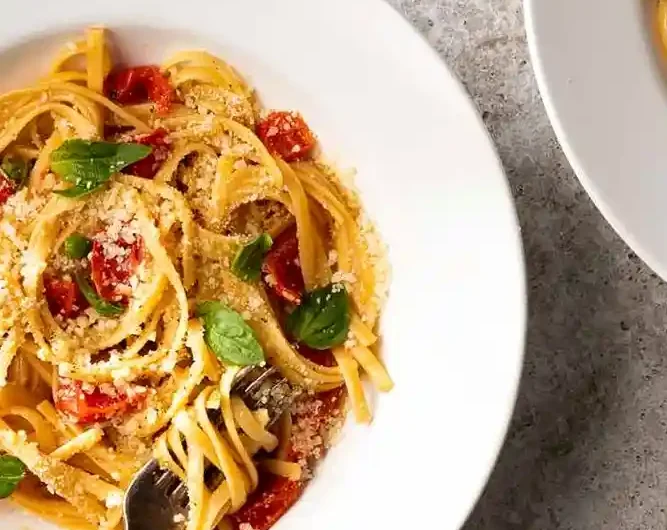
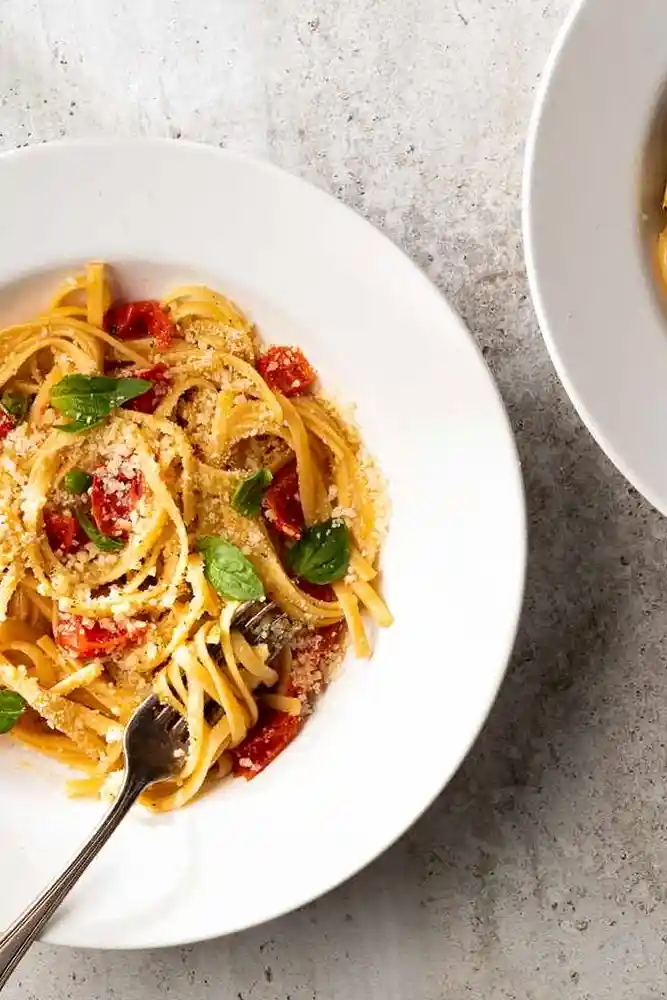
This efficient one-pan pasta is a fast dinner solution that cooks everything in a single skillet. It eliminates the need to drain water and creates a creamy sauce naturally through pasta starch.
List of ingredients
- 12 ounces linguine – use high-quality dried pasta.
- 12 ounces cherry or grape tomatoes – halved or quartered if they are large.
- 1 onion – thinly sliced, approximately 2 cups.
- 4 cloves garlic – thinly sliced for even flavor distribution.
- 0.5 teaspoon red-pepper flakes – adds a subtle heat.
- 2 sprigs basil – plus additional torn leaves for the final garnish.
- 2 tablespoons extra-virgin olive oil – plus extra for drizzling before serving.
- Coarse salt and freshly ground pepper – for seasoning the water and final taste.
- 4.5 cups water – the base for the cooking liquid.
- Freshly grated Parmesan cheese – for serving.
step-by-step instructions
- Combine and Boil: Add the pasta, tomatoes, onion, garlic, red-pepper flakes, basil sprigs, olive oil, 2 teaspoons of salt, 1/4 teaspoon of pepper, and water into a large straight-sided skillet. Bring the mixture to a boil over high heat.
- Cook and Stir: Maintain a boil and stir frequently, using tongs to turn the pasta. Continue this process until the pasta is al dente and the water has almost completely evaporated, which usually takes about 9 minutes.
- Season and Plate: Adjust the final taste with additional salt and pepper. Divide the pasta among 4 bowls, garnish with fresh torn basil leaves, and serve with a drizzle of olive oil and grated Parmesan cheese.
Essential Equipment for One-Pan Cooking
Choosing the Right Straight-Sided Skillet
Use a skillet with high walls to prevent the boiling water from splashing over the sides. Stainless steel or heavy-bottomed non-stick pans work best because they distribute heat evenly across the base. Ensure the pan is wide enough so the linguine does not clump together too tightly at the start.
Using Tongs for Better Pasta Control
Tongs are superior to spoons or forks for this recipe because they allow you to lift and turn the pasta strands. This movement prevents the linguine from sticking to the bottom of the pan. It also ensures that the pasta is evenly coated in the reducing sauce throughout the process.
The Importance of a Sharp Paring Knife
A sharp paring knife is necessary for slicing the garlic and onion very thinly. Thin slices ensure that the vegetables soften and integrate into the sauce within the short 9-minute cooking window. Coarse cuts may remain too crunchy and disrupt the texture of the final dish.
Ingredient Substitutions and Swaps
Swapping Linguine for Other Pasta Shapes
You can use other long pastas like spaghetti or fettuccine. The key is to ensure the substitute has a similar cooking time to linguine, typically around 9 to 11 minutes. If you use a thicker pasta, you may need to add an extra half-cup of water to prevent the pan from drying out too early.
Using Different Types of Tomatoes
While cherry and grape tomatoes are recommended for their sweetness and size, Roma tomatoes can be used if diced small. If you only have canned cherry tomatoes, reduce the water by half a cup since canned tomatoes provide more liquid. Fresh tomatoes are preferred for the best burst of flavor.
Onion Alternatives for Subtle Flavor
Shallots are an excellent substitute for yellow or white onions, offering a milder and slightly sweeter taste. Leeks can also be used, provided they are cleaned thoroughly and thinly sliced. These alternatives provide a more sophisticated flavor profile while maintaining the recipe’s structure.
Replacing Water with Vegetable Broth
Substituting all or half of the water with vegetable broth adds a deeper layer of savory flavor to the sauce. If using broth, be cautious with the added salt since most commercial broths are already seasoned. Taste the dish before adding the final seasoning to avoid oversalting.
Garlic Variations for Different Intensities
Sliced garlic provides a mellow flavor, but minced garlic will offer a more punchy, intense taste. If you prefer a very subtle garlic presence, you can smash the cloves and remove them before serving. Avoid using garlic powder, as it lacks the aromatic quality of fresh cloves.
Flavor Variations for Different Tastes
Adding Umami with Capers or Olives
Adding a tablespoon of capers or sliced Kalamata olives introduces a salty, briny element to the pasta. Stir these in during the last two minutes of cooking to keep their texture intact. This variation transforms the dish into something reminiscent of a Puttanesca sauce.
Incorporating Fresh Baby Spinach
For added nutrition, stir in two handfuls of fresh baby spinach immediately after the pasta is cooked. The residual heat from the pan will wilt the spinach in about 30 seconds. This adds a vibrant green color and a mild earthy taste to the meal.
Adding Plant-Based Protein Boosts
Chickpeas are a great addition for extra protein and texture; simply add them in with the water. For a seafood twist, add peeled shrimp during the last three minutes of boiling. Ensure the shrimp are small or cut into pieces so they cook through quickly.
Experimenting with Other Fresh Herbs
While basil is traditional, fresh parsley or oregano can be used for a different herbal note. Adding a pinch of red-pepper flakes at the end can also increase the heat level for those who prefer a spicier meal. Always use fresh herbs whenever possible for the most vibrant flavor.
Master Tips for the Perfect Texture
Achieving the Ideal Al Dente Bite
Start tasting the pasta about two minutes before the timer goes off. The pasta is al dente when it is tender but still has a slight firmness in the center. Overcooking will result in a mushy texture that cannot be reversed.
Preventing Pasta from Sticking to the Pan
The starch released from the pasta is what makes the sauce creamy, but it can also cause sticking. Constant movement with your tongs is the only way to prevent this. Stirring frequently breaks up any clumps and ensures every strand is hydrated.
Managing the Water Reduction Process
Keep the heat on high to maintain a steady boil, which is essential for the starch emulsification. If the water evaporates too quickly before the pasta is cooked, add a small splash of hot water. If too much water remains, increase the heat for the final minute to reduce the liquid.
Balancing Salt and Pepper Seasoning
Seasoning the water at the start is crucial, but the final taste check is where the dish is perfected. Because the water reduces, the salt concentrates. Always taste a strand of pasta and a bit of sauce before adding more salt at the end.
Serving and Presentation Ideas
Plating for Maximum Visual Appeal
Use tongs to twirl the pasta into a high mound in the center of the bowl. This creates a professional look and keeps the pasta warm for longer. Ensure some of the burst tomatoes are perched on top of the mound for color.
Enhancing with Final Finishing Touches
A final drizzle of high-quality extra-virgin olive oil adds a luxurious sheen and a fresh peppery taste. Freshly grated Parmesan should be added right before the plate hits the table. This prevents the cheese from clumping and allows it to melt slightly into the hot pasta.
Pairing with Complementary Side Dishes
This pasta pairs perfectly with a crisp green salad dressed in a simple lemon vinaigrette. Garlic bread or a toasted baguette can be served on the side to soak up any remaining sauce. Avoid heavy sides that might overwhelm the light, fresh flavors of the tomatoes.
Storage and Reheating Guidance
Storing Leftovers Safely in the Fridge
Place leftover pasta in an airtight container once it has cooled to room temperature. It will stay fresh in the refrigerator for up to three days. The sauce may thicken significantly as the pasta continues to absorb liquid during storage.
Reheating to Maintain Pasta Texture
Avoid reheating in the microwave if possible, as it can dry out the pasta. Instead, place the leftovers in a small skillet over medium heat with a splash of water or olive oil. Stir gently until the pasta is heated through and the sauce becomes creamy again.
Why Freezing One-Pan Pasta is Not Recommended
Freezing this specific dish is not recommended because the starch-based sauce often separates upon thawing. The pasta also tends to become mushy after being frozen and reheated. It is best to cook only what you need or enjoy the leftovers fresh.
Troubleshooting Common Issues
Managing Excess Liquid in the Pan
If the pasta is cooked but there is still too much water in the pan, remove the lid and increase the heat. Stir vigorously for one to two minutes to evaporate the remaining liquid. This will concentrate the flavors and create a thicker sauce.
Fixing Overcooked or Mushy Pasta
If the pasta goes past al dente, serve it immediately to stop the cooking process. Do not add more liquid or simmer it further. While the texture cannot be restored, serving it immediately prevents it from becoming completely disintegrated.
Reducing Excessive Oiliness in the Sauce
If the sauce appears too oily, it may be due to the type of olive oil used or too much added at the end. You can stir in a tablespoon of the pasta water or a pinch of Parmesan cheese to help emulsify the oil into the sauce. This creates a more cohesive texture.
Frequently Asked Questions
Can I use dried basil instead of fresh?
Dried basil can be used if fresh is unavailable, but use only one-third of the amount. Add dried basil at the beginning of the cooking process so it has time to rehydrate and release its oils. Fresh basil is preferred for its bright, sweet aroma.
Does the type of salt used affect the result?
Coarse salt or kosher salt is ideal for the boiling process as it dissolves evenly. Fine table salt can be used, but you should reduce the quantity slightly as it is more concentrated. Always taste the sauce before adding final seasonings.
Can I make this recipe in a deep pot instead of a pan?
You can use a pot, but a wide skillet is superior for this technique. The wider surface area allows water to evaporate more efficiently and prevents the pasta from stacking too deeply. In a narrow pot, the bottom pasta may overcook before the top pasta is done.
Print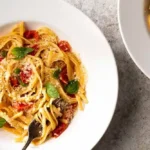
Simple One-Pot Tomato Linguine
- Total Time: 20 minutes
- Yield: 4 servings 1x
- Diet: General
Description
Our famous one-pan pasta makes a delicious dinner in just 20 minutes. All the ingredients—pasta, tomatoes, onions, and olive oil—cook together in one pan.
Ingredients
- 12 ounces linguine
- 12 ounces cherry or grape tomatoes, halved or quartered if large
- 1 onion, thinly sliced (about 2 cups)
- 4 cloves garlic, thinly sliced
- 0.5 teaspoon red-pepper flakes
- 2 sprigs basil, plus torn leaves for garnish
- 2 tablespoons extra-virgin olive oil, plus more for serving
- Coarse salt and freshly ground pepper
- 4.5 cups water
- Freshly grated Parmesan cheese, for serving
Instructions
- Combine: Combine pasta, tomatoes, onion, garlic, red-pepper flakes, basil, oil, 2 teaspoons salt, 1/4 teaspoon pepper, and water in a large straight-sided skillet. Bring to a boil over high heat.
- Cook: Boil mixture, stirring and turning pasta frequently with tongs, until pasta is al dente and water has nearly evaporated, about 9 minutes.
- Serve: Season to taste with salt and pepper, divide among 4 bowls, and garnish with basil. Serve with oil and Parmesan.
Notes
As the pasta cooks, the starchiness transforms the remaining water into a creamy sauce.
- Prep Time: 15 minutes
- Cook Time: 9 minutes
- Category: Entree
- Method: Stovetop
- Cuisine: Italian
Nutrition
- Serving Size: 1 serving
- Calories: 415 kcal
- Sugar: 6 g
- Sodium: 1250 mg
- Fat: 10 g
- Saturated Fat: 3 g
- Unsaturated Fat: 7 g
- Trans Fat: 0 g
- Carbohydrates: 59 g
- Fiber: 5 g
- Protein: 13 g
- Cholesterol: 10 mg
Keywords: one-pan pasta, linguine, Italian dinner, quick meal