
This hearty vegan lentil curry is a nourishing, one-pot meal that combines protein-rich lentils with aromatic Indian spices. It is an ideal dinner option for those seeking a comforting, plant-based dish that is easy to prepare. Serve it alongside steamed rice and warm naan for a complete and satisfying meal.
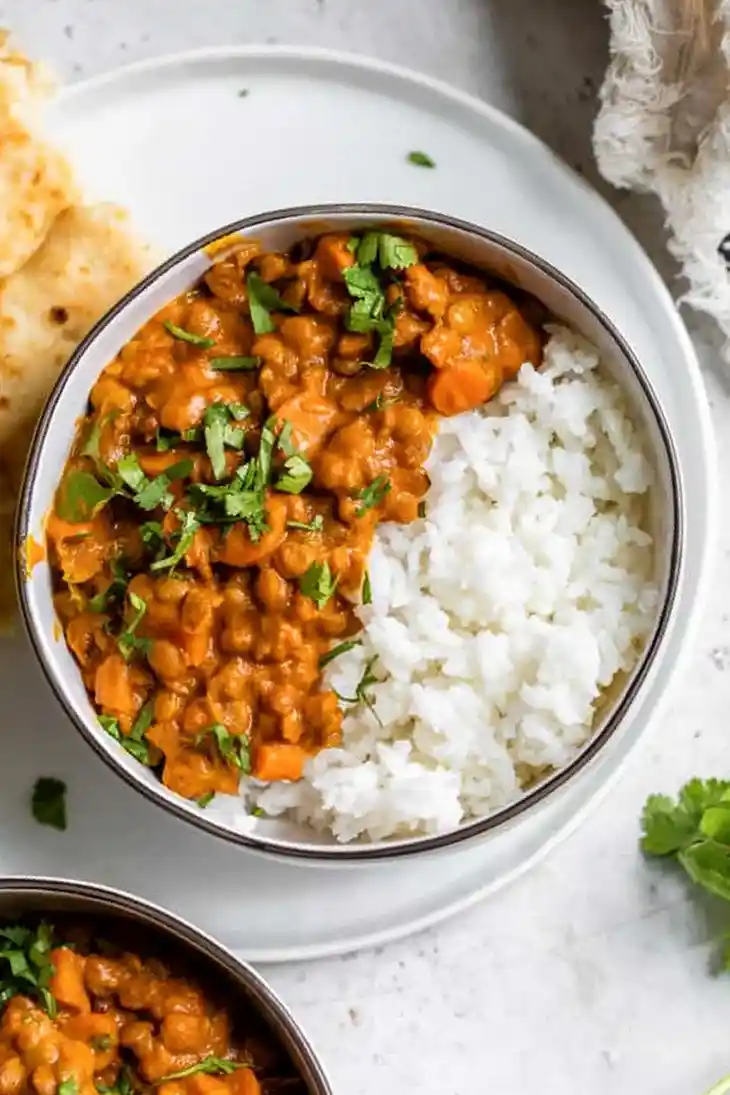
List of ingredients
- 2 tablespoons coconut oil – used for sautéing aromatics.
- ½ medium onion, diced – provides a savory base.
- 5 cloves garlic, minced – adds pungent depth.
- 1 ½ tablespoons freshly grated ginger – brings a zesty, warm flavor.
- 1 small bunch carrots, diced (about 1 cup) – adds sweetness and texture.
- 2 tablespoons mild curry powder – the primary spice blend.
- ¾ teaspoon ground turmeric – provides a vibrant yellow color.
- ½ teaspoon coriander powder – adds a citrusy, floral note.
- ½ teaspoon cumin – contributes an earthy aroma.
- ¼ teaspoon cayenne pepper (optional) – used to add a hint of heat.
- 1 teaspoon fine sea salt – adjust to taste for seasoning.
- 1 (14 ounce) can crushed tomatoes – creates a rich, acidic base.
- 2 ¾ cups water or vegetable broth – used for simmering the lentils.
- 1 cup dried brown lentils – the main protein source.
- 1 (14 ounce) can full-fat coconut milk – adds creaminess and balance.
- Fresh cilantro – used for a bright garnish.
- Rice, quinoa, or another grain – for serving.
- Naan – for dipping and scooping.
step-by-step instructions
- Sauté Aromatics: Heat 1 tablespoon of coconut oil in a large pot over medium heat. Add the diced onion, minced garlic, grated ginger, and carrots, cooking for 3-4 minutes while stirring frequently.
- Toast Spices: Stir in the curry powder, turmeric, coriander, cumin, cayenne, and salt. Increase the heat to medium-high and stir continuously for 4-5 minutes, adding a bit more oil if the mixture becomes too dry.
- Simmer Lentils: Reduce the heat back to medium. Stir in the crushed tomatoes, water (or broth), and dried brown lentils. Bring the mixture to a simmer, then cover the pot and cook for 35-40 minutes, stirring every 10 minutes.
- Incorporate Coconut Milk: Once the mixture has thickened slightly after 40 minutes, stir in the full-fat coconut milk. Continue to simmer uncovered on low-medium heat for an additional 5 minutes.
- Thicken and Serve: Remove the pot from the heat and let the curry stand for 10-15 minutes. This allows the sauce to thicken further. Serve warm with rice, naan, and a garnish of fresh cilantro.
- Instant Pot Alternative: Add coconut oil, onion, garlic, ginger, and carrots to the pot. Use ‘Saute’ mode on low heat for 4 minutes. Add spices and salt, stirring for 4-5 minutes. Stir in tomato puree, 1.75 cups water, and lentils. Secure the lid, set the valve to ‘sealing’, and cook on ‘manual’ mode for 15 minutes. Perform a ‘natural release’ for 10 minutes, then stir in the coconut milk and let the curry stand for 10 minutes.
Optimal Lentil Selection
Choosing Brown Lentils
Brown lentils are ideal for this recipe because they hold their shape well during the simmering process. They provide a satisfying, slightly firm texture that contrasts well with the creamy coconut sauce. This prevents the curry from becoming too mushy.
Using Green Lentils
Green lentils are an excellent alternative to brown lentils and have a similar cooking time. They offer a slightly earthier taste and a denser texture. They are particularly useful if you prefer a more robust bite in your curry.
Substituting with Red Lentils
Red lentils will break down much faster than brown or green varieties, resulting in a thicker, porridge-like consistency. This is a great choice if you prefer a creamier, smoother curry. Be aware that they may require slightly less simmering time to avoid complete disintegration.
Spice Customization and Balance
Selecting the Right Curry Powder
The flavor of your dish depends heavily on the brand of curry powder used. A mild powder provides a gentle warmth, while others may be more pungent or spicy. Always taste your dish before adding extra heat to ensure the flavors are balanced.
The Role of Turmeric
Turmeric is essential for achieving the characteristic golden-yellow hue of Indian-inspired curries. Beyond color, it adds a mild, woody bitterness that complements the sweetness of the carrots. It is a staple spice for adding depth to plant-based stews.
Balancing Cumin and Coriander
Cumin provides a heavy, earthy base that grounds the other flavors in the pot. Coriander adds a lighter, citrusy note that lifts the overall profile. Using both in combination creates a complex, multi-dimensional flavor profile.
Adjusting the Heat Level
Cayenne pepper is optional and should be added based on your personal spice tolerance. If you prefer a milder dish, omit the cayenne entirely. For those who enjoy a kick, you can increase the amount or add a pinch of red chili flakes.
Ingredient Alternatives and Enhancements
Using Vegetable Broth Instead of Water
Replacing water with a high-quality vegetable broth adds significant umami and complexity to the curry. It enhances the savory notes of the sautéed vegetables and lentils. Ensure the broth is low-sodium if you are sensitive to salt.
Choosing the Right Tomato Product
Crushed tomatoes provide a nice balance of texture and acidity. If you prefer a smoother sauce, you can substitute them with tomato sauce or tomato puree. This will result in a more uniform consistency throughout the dish.
Full-Fat vs Light Coconut Milk
Full-fat coconut milk is recommended for a rich, velvety texture and a creamy mouthfeel. Light coconut milk can be used to reduce calories, but the curry will be thinner and less rich. You may need to simmer it longer to achieve the desired thickness.
Alternative Cooking Oils
While coconut oil complements the tropical flavors of the dish, other neutral oils can be used. Avocado oil or grapeseed oil are excellent options for those who want to avoid the slight coconut taste during the sautéing phase. Ensure the oil has a high smoke point.
Adding Extra Vegetables
Incorporating Fresh Spinach
Fresh baby spinach can be stirred into the curry during the final 5 minutes of cooking. The residual heat will wilt the leaves without overcooking them. This adds a boost of iron and a pop of green color to the meal.
Adding Frozen Peas
Frozen peas are a convenient addition that adds a touch of sweetness and extra protein. Stir them in along with the coconut milk for the final simmer. They maintain a bright color and a slight snap if not overcooked.
Including Diced Cauliflower
Cauliflower florets can be added at the same time as the carrots for a heartier texture. They soak up the curry spices and provide a satisfying vegetable bite. Ensure the florets are cut into small, even pieces for uniform cooking.
Adding Sweet Potatoes
Diced sweet potatoes add a natural sweetness that balances the acidity of the tomatoes. Like cauliflower, add them during the initial vegetable sauté or when the water is added. They will partially break down, adding natural thickness to the sauce.
Serving and Pairing Ideas
Preparing Basmati Rice
Long-grain basmati rice is the traditional pairing for this curry due to its aromatic scent and fluffy texture. Rinse the rice thoroughly before cooking to remove excess starch. This ensures the grains remain separate and light.
Quinoa for Added Nutrition
Quinoa is a great alternative to rice for those looking for more protein and fiber. Its slightly nutty flavor pairs well with the creamy coconut and earthy lentils. Cook it separately and scoop the curry directly over the top.
Warming Vegan Naan
To get the best texture, warm your naan in a dry skillet over medium heat for a minute on each side. This makes the bread soft and pliable for scooping up the curry. Alternatively, you can wrap them in foil and warm them in the oven.
Finishing with Fresh Herbs
Fresh cilantro is the best garnish for adding a bright, clean finish to the rich curry. If you dislike cilantro, fresh mint or chopped parsley are suitable substitutes. The freshness of the herbs cuts through the density of the coconut milk.
Adding a Squeeze of Lime
A splash of fresh lime juice added just before serving can transform the dish. The acidity brightens the flavors and balances the richness of the coconut milk. It adds a professional, zesty touch to the final presentation.
Storage and Preservation
Refrigeration Guidelines
Store leftover curry in an airtight container in the refrigerator for up to four days. The flavors often meld and improve after a day in the fridge. Ensure the curry has cooled slightly before sealing the lid to prevent condensation.
Freezing for Long-Term Use
This curry freezes exceptionally well for up to six months. Use freezer-safe containers or vacuum-seal bags to prevent freezer burn. Divide the curry into single-serving portions for easier reheating later.
Proper Thawing Process
For the best results, thaw frozen curry in the refrigerator overnight. This slow process helps maintain the integrity of the lentils and prevents separation. Avoid thawing in the microwave to keep the texture consistent.
Reheating Methods
Stovetop Reheating
Reheat the curry in a small pot over medium-low heat. Add a tablespoon of water or coconut milk to loosen the sauce, as it will thicken during storage. Stir occasionally until heated through.
Microwave Reheating
Place the curry in a microwave-safe bowl and cover it with a lid or damp paper towel. Heat in short intervals, stirring in between to ensure even temperature distribution. This prevents hot spots and keeps the lentils moist.
Adjusting Consistency After Reheating
It is common for the curry to become very thick after being chilled. If it is too thick, stir in a small amount of water or broth while reheating. If it is too thin, simmer it uncovered for a few minutes to reduce the liquid.
Troubleshooting Common Issues
Fixing a Watery Consistency
If the curry is too thin, continue to simmer it uncovered on medium-low heat. This allows excess moisture to evaporate, concentrating the flavors and thickening the sauce. You can also mash a few lentils against the side of the pot to release starch.
Addressing Bitter Spice Tastes
If the spices taste too bitter, it may be due to over-toasting or a specific brand of powder. Add a small pinch of sugar or a teaspoon of maple syrup to balance the bitterness. Extra coconut milk can also mellow out harsh spice notes.
Ensuring Tender Lentils
If the lentils are still too firm after the simmer time, add another half cup of water. Cover the pot and continue simmering for another 10-15 minutes. Always check the lentils for tenderness before adding the coconut milk.
Frequently Asked Questions
Is this recipe gluten-free?
The curry itself is naturally gluten-free, provided your vegetable broth and curry powder contain no gluten. To keep the entire meal gluten-free, serve it with rice or a certified gluten-free naan substitute.
Can I use red lentils instead of brown?
Yes, you can use red lentils, but the texture will be significantly different. Red lentils dissolve as they cook, turning the curry into a smooth, creamy puree rather than a chunky stew.
Why did my coconut milk separate?
Coconut milk can sometimes separate if it is boiled too vigorously. To prevent this, stir it in at the end and keep the heat on low or medium-low. Stirring constantly during the final stage helps emulsify the fats.
How do I make the curry spicier?
To increase the heat, add more cayenne pepper or stir in some chopped fresh jalapeños or serrano peppers during the sauté stage. You can also stir in a spoonful of sriracha or chili garlic sauce at the end.
Print
Simple Plant-Based Lentil Curry
- Total Time: 50 minutes
- Yield: 6 servings 1x
- Diet: Vegan
Description
Vegan lentil curry with warm curry Indian spices! You will love this easy, one pot meal – the perfect plant based recipe for everyone to enjoy. Serve with rice and naan for a hearty meal.
Ingredients
- 2 tablespoons coconut oil
- ½ medium onion, diced
- 5 cloves garlic, minced
- 1 ½ tablespoons freshly grated ginger
- 1 small bunch carrots, diced (about 1 cup)
- 2 tablespoons mild curry powder
- ¾ teaspoon ground turmeric
- ½ teaspoon coriander powder
- ½ teaspoon cumin
- ¼ teaspoon cayenne pepper (optional)
- 1 teaspoon fine sea salt
- 1 (14 ounce) can crushed tomatoes
- 2 ¾ cups water or vegetable broth
- 1 cup dried brown lentils
- 1 (14 ounce) can full-fat coconut milk
- fresh cilantro, for garnish
- rice, or quinoa or another grain
- naan
Instructions
- Step 1: In large pot over medium heat, add 1 tablespoon coconut oil, onion, garlic, ginger and carrots. Cook for 3-4 minutes, stirring frequently.
- Step 2: Add in spices and salt, turn heat up to medium-high, stirring continuously for another 4-5 minutes. Add a little extra oil here as needed.
- Step 3: Reduce heat to medium; add crushed tomatoes, water and lentils.
- Step 4: Stir to combine then bring mixture to a simmer, then cover and continue simmering for about 35-40 minutes, stirring every 10 minutes.
- Step 5: Stir in coconut milk, continue simmering uncovered for 5 minutes on low-medium heat.
- Step 6: Remove from heat and let stand for 10-15 minutes, until curry has thickened more.
Notes
Instant Pot Method: Use 1.75 cups water. Sauté aromatics and spices as directed, add tomatoes, water, and lentils. Cook on high pressure ‘manual’ mode for 15 minutes, then ‘natural release’ for 10 minutes. Stir in coconut milk and let stand for 10 minutes.
- Prep Time: 10 minutes
- Cook Time: 40 minutes
- Category: Dinner
- Method: Stovetop
- Cuisine: Indian-Inspired
Nutrition
- Serving Size: 1 serving
- Calories: 330 kcal
- Sugar: 5 g
- Sodium: 508 mg
- Fat: 20 g
- Saturated Fat: 17 g
- Unsaturated Fat: 3 g
- Trans Fat: 0 g
- Carbohydrates: 32 g
- Fiber: 13 g
- Protein: 12 g
- Cholesterol: 0 mg
Keywords: vegan lentil curry, Indian-inspired, one pot meal, plant based