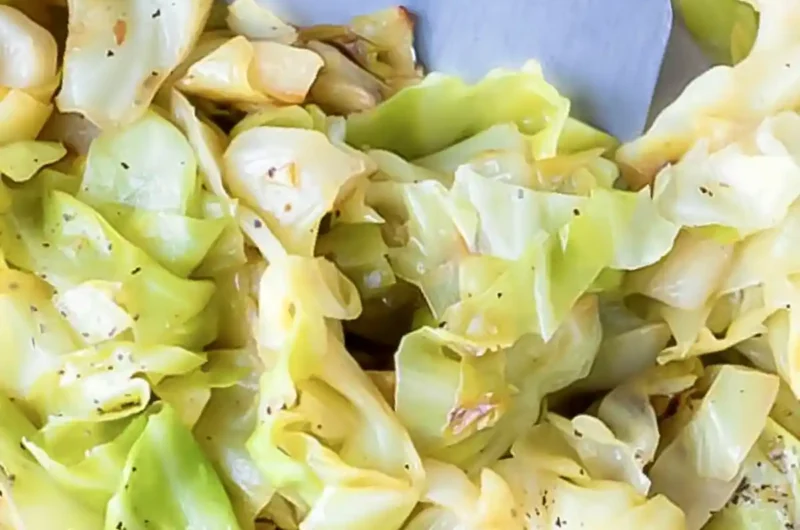
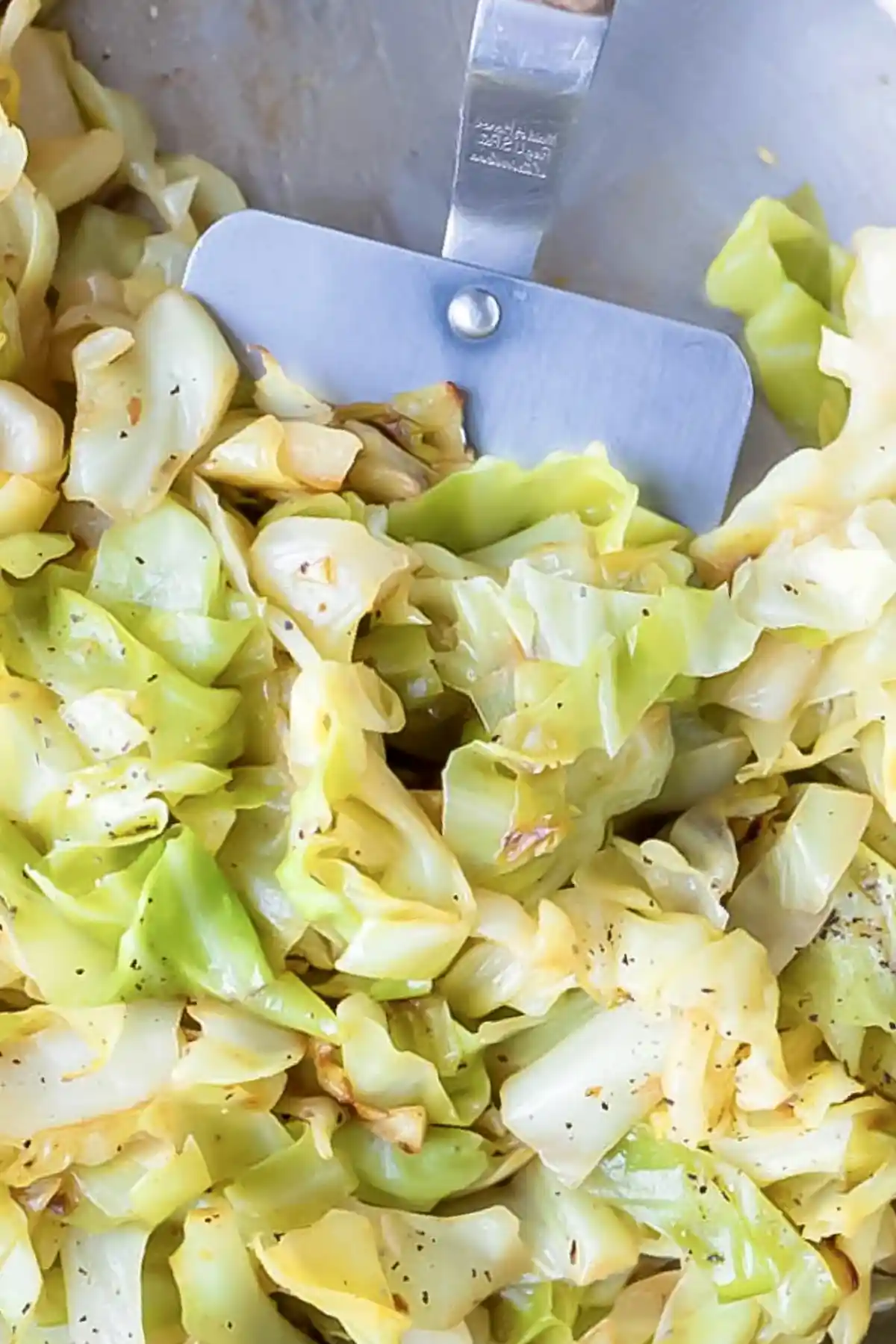
This easy sautéed cabbage transforms a simple head of green cabbage into a buttery, caramelized side dish in about 20 minutes. By slicing the ribbons thinly and allowing them to brown in a hot skillet, you achieve a delicate balance of sweetness and savory garlic flavor. It is a reliable, low-carb accompaniment that pairs perfectly with a variety of main courses.
List of ingredients
- 1 medium head green cabbage
- 2 Tbsp. butter
- 1 clove garlic, crushed
- ½ tsp. salt
- ¼ tsp. black pepper
step-by-step instructions
- Shred the Cabbage: Cut the entire head of cabbage into ¼-½” slices, yielding roughly 7-8 cups.
- Sauté the first Half: Place a large skillet over medium heat and add butter and crushed garlic. Sauté for 1 minute until fragrant. Add in roughly half of the sliced cabbage and cook for 1-2 minutes until it begins to wilt.
- Add the Rest: Add the remaining cabbage, salt, and pepper. Continue cooking for 12-15 minutes, stirring every 2-3 minutes. Let the cabbage sit undisturbed for a few minutes between stirs to allow for even caramelization.
- Serve: Serve immediately while warm.
Refining your technique
Why slicing consistency matters
Uniform slices ensure that the cabbage cooks at the same rate, preventing some pieces from becoming mushy while others remain raw. Aim for thin ribbons as they soften faster and offer a more pleasant, delicate texture compared to thick, chunky pieces.
The importance of pan space
Using a large, wide skillet is vital because it maximizes the surface area in contact with the heat. If you use a pan that is too small, the cabbage will steam in its own moisture rather than browning, leading to a limp and watery final result.
Managing heat for proper browning
Keep your burner set to medium or medium-high to encourage caramelization. If the heat is too low, the cabbage will soften without developing those sweet, toasted edges that define a great sauté.
Choosing the right variety
Variations based on cabbage types
Green cabbage is the standard for this recipe, but red or purple cabbage works well if you desire a sweeter flavor and a vibrant presentation. Keep in mind that red cabbage may stain your kitchen utensils, and it can be slightly denser, so you may need to add a splash of water if it seems too dry during cooking. Savoy cabbage is another excellent, tender option that cooks much faster than green cabbage; reduce your total cook time by about five minutes to prevent it from over-softening.
Serving suggestions
Pairing with lean proteins
The buttery, mild profile of this cabbage makes it an ideal partner for oven-roasted chicken breasts or seared salmon fillets. It adds volume and fiber to your plate without overpowering the delicate flavors of the fish.
Building a balanced meal
For a hearty weeknight dinner, serve this alongside a roasted beef brisket or tender herb-crusted lamb chops. The natural sweetness of the caramelized cabbage cuts through the richness of the meat, providing a sophisticated balance to your main course.
Troubleshooting common issues
Preventing a bitter outcome
Bitterness often occurs if the cabbage is cooked for too long or if the exterior leaves were damaged or old. If the cabbage sits on the heat for more than 25 minutes, it can develop a sulfurous smell and a sharp, unpleasant taste. Always remove the limp, outer leaves of the head before you begin slicing.
Correcting a soggy texture
A soggy outcome usually indicates that the pan was overcrowded or a lid was used during the cooking process. Cabbage releases a significant amount of water, and a lid traps this steam, essentially boiling the vegetables. Always cook uncovered to allow the moisture to evaporate, allowing the vegetable to crisp slightly.
Handling excess moisture
If you find your cabbage is releasing too much liquid early on, simply turn the heat up slightly and continue cooking until the liquid evaporates. Do not add any extra liquids like broth or acidic splashes until the very end, as they will disrupt the browning process.
Storage and preparation
Advanced prep techniques
You can shred your cabbage up to three days in advance, provided you store it in a clean, airtight container in the refrigerator. Keeping it dry is key; placing a paper towel inside the container can help absorb any lingering moisture and keep the ribbons crisp until you are ready to cook.
Managing leftovers
Leftover sautéed cabbage should be cooled completely before being sealed in an airtight container, where it will stay fresh for up to four days. The flavors often improve the next day as the butter and garlic permeate the leaves more thoroughly. When reheating, avoid the microwave, which can turn the texture gummy; instead, quickly warm it in a skillet over medium heat with a tiny pat of fresh butter.
Freezing guidelines
While cooked cabbage can be frozen for up to three months, note that the texture will become much softer upon thawing. It is best to reserve frozen portions for use in soups, stews, or grain bowls where a soft consistency is desired rather than serving it as a standalone side dish. Ensure all air is squeezed out of the freezer-safe bag to prevent freezer burn, which can negatively affect the flavor over time.
Frequently asked questions
Does the type of butter matter?
Salted butter provides a classic, savory foundation, but using unsalted butter gives you more control over the final salt levels. You can substitute with avocado oil for a dairy-free version, though you will miss the specific sweet, nutty finish that high-quality butter provides.
Can I use dried garlic instead of fresh?
It is strongly recommended to use fresh garlic, as it provides a robust, pungent flavor that permeates the cabbage as it melts with the butter. Garlic powder tends to disappear into the background or burn quickly in a hot pan, lacking the aromatic punch of a freshly crushed clove.
Why should I avoid covering the skillet?
Covering the skillet forces the cabbage to steam rather than sauté. To achieve the signature caramelization, the moisture needs a clear path to escape, which is only possible when the pan is left open. This airflow is the secret to getting those deep, flavorful brown edges on every ribbon.
Print
Simple Sautéed Cabbage Recipe
- Total Time: 20 minutes
- Yield: 4 servings 1x
- Diet: Low-carb, Vegetarian, Gluten-free
Description
This easy Sautéed Cabbage turns one head of cabbage, butter, garlic, salt, and pepper into a buttery, caramelized side dish in 20 minutes. Sliced thin, sautéed in batches, and finished with a generous pinch of salt, this versatile side pairs perfectly with everything from roasted proteins to salmon.
Ingredients
- 1 medium head green cabbage
- 2 Tbsp. butter
- 1 clove garlic, crushed
- ½ tsp. salt
- ¼ tsp. black pepper
Instructions
- Shred the Cabbage: Cut the entire head of cabbage into ¼-½” slices, yielding roughly 7-8 cups.
- Sauté the first Half: Place a large skillet over medium heat and add butter and crushed garlic. Sauté for 1 minute until fragrant. Add in roughly half of the sliced cabbage and cook for 1-2 minutes until it begins to wilt.
- Add the Rest: Add the remaining cabbage, salt, and pepper. Continue cooking for 12-15 minutes, stirring every 2-3 minutes. Let the cabbage sit undisturbed for a few minutes between stirs to allow for even caramelization.
- Serve: Serve immediately while warm.
Notes
Prep-ahead: Shred the cabbage up to 3 days in advance and store in an airtight container. Storage: Keep leftovers in an airtight container in the refrigerator for 3-4 days; reheat in a hot skillet with a little extra butter. Freezing: Cooked cabbage can be frozen for up to 3 months, though the texture will be softer upon thawing.
- Prep Time: 5 minutes
- Cook Time: 15 minutes
- Category: Side Dish
- Method: Sauté
- Cuisine: American
Nutrition
- Serving Size: 1/4 of the recipe
- Calories: 112 kcal
- Sugar: 7 g
- Sodium: 333 mg
- Fat: 6 g
- Saturated Fat: 4 g
- Unsaturated Fat: 2 g
- Trans Fat: 0 g
- Carbohydrates: 14 g
- Fiber: 6 g
- Protein: 3 g
- Cholesterol: 16 mg
Keywords: sautéed cabbage, low-carb side dish, easy cabbage recipe, buttery cabbage, garlic cabbage