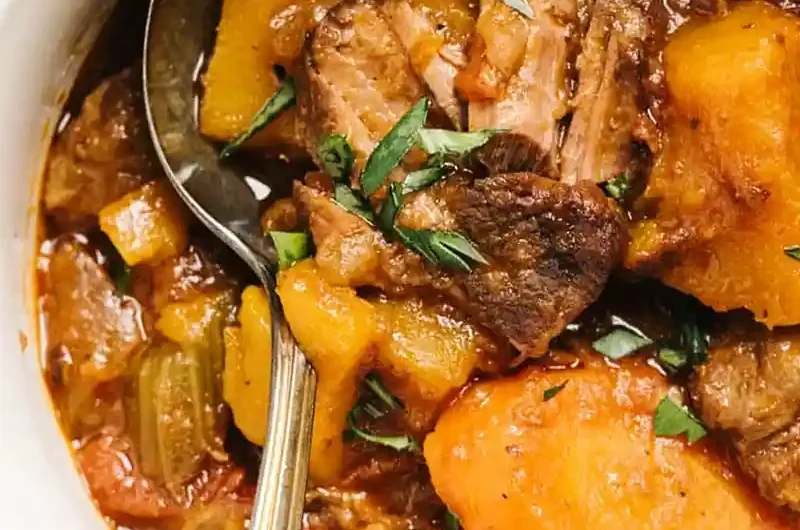
This slow-cooked beef stew is a hearty, nutrient-dense meal that pairs the rich, savory depth of tender chuck roast with the subtle, natural sweetness of butternut squash. By avoiding heavy starches, this dish relies on slow-simmered vegetables and aromatic herbs to create a balanced, satisfying flavor profile. It is a reliable, hands-off dinner option that ensures perfectly tender meat and vegetables with minimal effort.
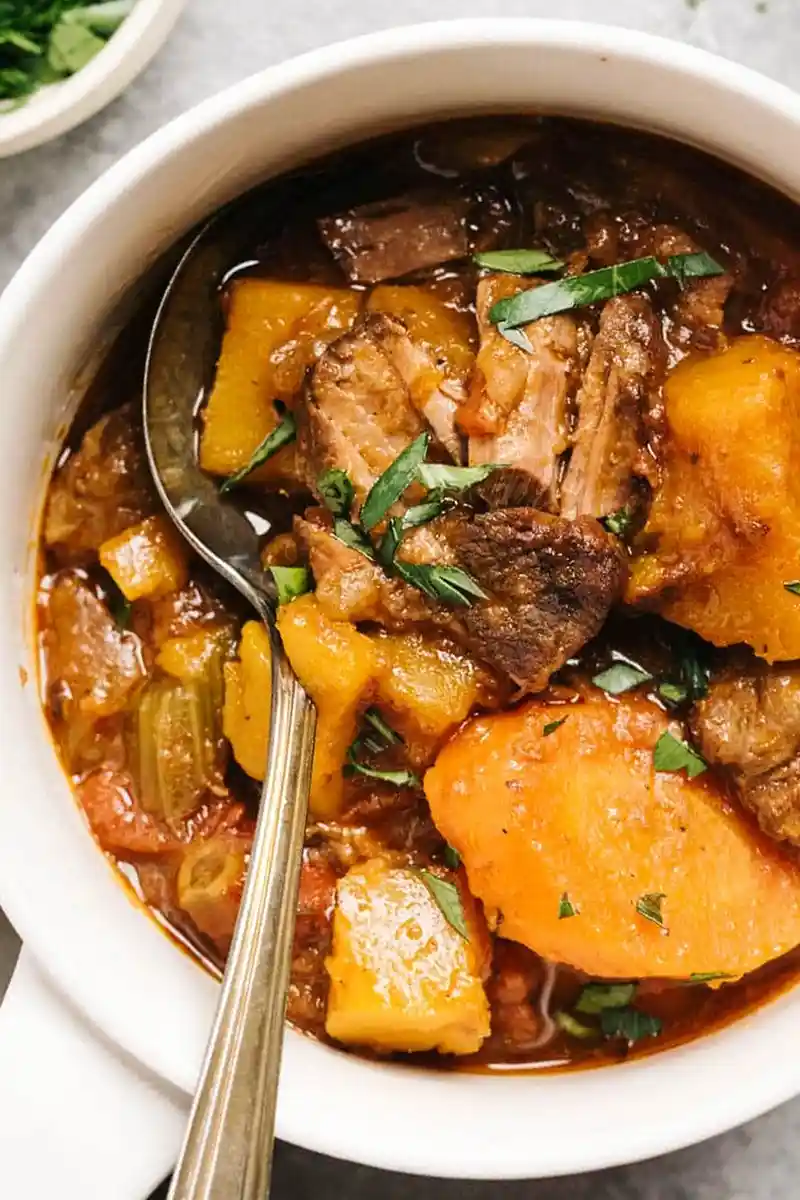
List of ingredients
- 1 medium sweet onion, diced to 1”
- 2 medium carrots, peeled and sliced into ½” coins
- 2 stalks celery, sliced into ½” coins
- 2 lb chuck roast, large fat deposits trimmed, cut into 2” cubes
- 2 tbsp cornstarch or arrowroot powder
- 2 tbsp olive oil
- 2 cloves garlic, minced
- 1 c beef broth
- 28-oz can crushed tomatoes
- 1 tsp italian seasoning
- 1.5 tsp kosher salt
- 1 tsp ground pepper
- 2 sprigs fresh thyme
- 1 bay leaf
- ½ medium butternut squash, peeled and cubed (2 cups)
step-by-step instructions
- Step: Layer the onion, carrot, and celery over the bottom of the slow cooker.
- Step: Place the beef into a large mixing bowl. Sprinkle the cornstarch or arrowroot powder over the beef, then toss until lightly coated on all sides.
- Step: Heat a 12” skillet over medium high heat. Add the oil and heat until it shimmers. Add half the beef in a single layer and cook until well browned and good crust has formed, 3-4 minutes. Flip then cook on the other side until browned. Remove the beef using a slotted spoon and transfer to the slow cooker. Repeat with the remaining beef.
- Step: Add the garlic to the rendered fat in the skillet. Cook, stirring frequently for 1-2 minutes, or until fragrant. Pour in the beef broth to deglaze the skillet and dissolve any browned bits; mix until the bottom of the pan is clean, then pour the liquid over the beef into the slow cooker.
- Step: Add the diced tomatoes, italian seasoning, salt, and pepper to the slow cooker, then give everything a good stir. Top with the thyme and bay leaf, then layer the cubed butternut squash on top.
- Step: Seal the slow cooker, then program to LOW 6-8 hours.
- Step: Remove the lid and stir the stew. The squash should be tender and the beef should be falling apart and tender. Taste for seasoning and adjust with salt and pepper as needed. Ladle into bowls and serve immediately.
Refining the Browning Process
Achieving the Perfect Sear
Searing your beef is the most important step for developing a rich, complex flavor profile in your final stew. When the meat hits the hot pan, the protein and natural sugars undergo the Maillard reaction, creating a crisp, browned crust that adds layers of flavor. Do not skip this step or crowd the pan, as moisture will prevent proper browning.
Maximizing Flavor with Deglazing
After you have removed the seared meat, the bottom of your skillet will be coated in a brown layer of concentrated flavor. Adding the beef broth to this hot pan and scraping the bottom ensures you integrate all those intense notes into your cooking liquid. This creates a deeply savory broth that standard boiling would never achieve.
Selecting and Preparing Your Ingredients
Choosing the Right Cut of Beef
Chuck roast is the ideal candidate for long, slow cooking because it contains a high amount of connective tissue. As the slow cooker works its magic, this tissue breaks down into gelatin, which thickens the sauce and keeps the meat incredibly moist. Ensure you remove only the largest, thickest chunks of outer fat rather than trimming away all the marbling, as that internal fat provides the necessary moisture for the meat to become fork-tender.
Preparing Butternut Squash
When preparing your squash, aim for consistent 2-inch cubes so they cook at an identical rate. Placing the squash on top of the stew instead of burying it ensures the squash steams in the moisture rising from the bottom, preventing it from turning into mush. This technique preserves the structural integrity of the squash, giving you distinct bites of sweetness throughout the dish.
Optimizing the Cooking Environment
Layering for Even Results
The sequence in which you add ingredients to the slow cooker influences how the final dish tastes and feels. Hearty vegetables like carrots and onions need the most time to absorb flavor and soften, which is why they are positioned at the bottom. The beef sits in the middle to benefit from the intense heat of the cooking liquid, while the squash is kept near the top to protect it from overcooking.
Managing Moisture Levels
If you find that the finished stew is slightly thinner than you prefer, you have a few options to adjust the consistency. Because you coated the meat in arrowroot or cornstarch at the start, the juices are usually naturally thickened. If the result is still too thin, you can remove the lid for the final 30 minutes of cooking, which allows excess moisture to evaporate and concentrates the flavors.
Storage and Reheating Advice
Storing Leftovers Safely
Store any leftover stew in an airtight container in your refrigerator for up to five days. As the stew sits in the fridge, the flavors will continue to meld, often making the leftovers taste even better the next day. Ensure the container is completely sealed to prevent the beef from absorbing any odors from other items in your refrigerator.
Guidelines for Freezing
This recipe freezes exceptionally well, making it a great option for meal planning. Allow the stew to cool down to room temperature before portioning it into freezer-safe containers or bags. It will maintain its quality for up to two months when stored properly in the back of the freezer where temperatures remain most consistent.
Best Methods for Reheating
When you are ready to eat frozen stew, move the container to the refrigerator the night before to thaw. Once thawed, heat the stew gently on the stovetop over medium heat, stirring occasionally to ensure even temperature distribution. If the stew seems slightly dry after reheating, add a small splash of fresh beef broth or water to loosen the consistency of the sauce.
Frequently Asked Questions
Can I use other types of winter squash?
Yes, acorn squash or even sugar pumpkin make excellent alternatives if butternut is unavailable. Ensure you peel the skin thoroughly as some winter varieties have tougher rinds that do not soften well.
What should I serve with this stew?
This dish is very substantial on its own, but it pairs beautifully with a simple green side salad dressed in olive oil and lemon. Some people also enjoy serving it over a bed of cauliflower rice to soak up the savory broth.
Why did my vegetables turn out mushy?
Vegetables often turn mushy if the cook time is too long or if the squash is placed at the bottom of the cooker with the other ingredients. Always follow the layering instructions provided, and avoid over-stirring the stew once the squash has become tender, as the chunks will be fragile.
How can I make the stew spicier?
If you prefer a bit of heat, consider adding a dash of red pepper flakes or a small amount of diced fresh chili pepper during the final hour of cooking. Do not add spice too early, as the heat can intensify significantly over the long cook time.
Print
Slow Cooker Beef and Butternut Squash Stew
- Total Time: 395 minutes
- Yield: 6 servings 1x
- Diet: Paleo, Whole30, Gluten-Free
Description
Whole30 Beef Stew with Butternut Squash gives new meaning to comfort food. No potatoes means no starchy heaviness. Brown your beef to get a crisp crust and build a fond with garlic and broth. Layer with your mirepoix, other vegetables and seasonings, and set on low for 6-8 hours. Test and adjust seasoning as needed. Serve up steaming.
Ingredients
- 1 medium sweet onion, diced to 1”
- 2 medium carrots, peeled and sliced into ½” coins
- 2 stalks celery, sliced into ½” coins
- 2 lb chuck roast, large fat deposits trimmed, cut into 2” cubes
- 2 tbsp cornstarch or arrowroot powder
- 2 tbsp olive oil
- 2 cloves garlic, minced
- 1 c beef broth
- 28-oz can crushed tomatoes
- 1 tsp italian seasoning
- 1.5 tsp kosher salt
- 1 tsp ground pepper
- 2 sprigs fresh thyme
- 1 bay leaf
- ½ medium butternut squash, peeled and cubed (2 cups)
Instructions
- Step: Layer the onion, carrot, and celery over the bottom of the slow cooker.
- Step: Place the beef into a large mixing bowl. Sprinkle the cornstarch or arrowroot powder over the beef, then toss until lightly coated on all sides.
- Step: Heat a 12” skillet over medium high heat. Add the oil and heat until it shimmers. Add half the beef in a single layer and cook until well browned and good crust has formed, 3-4 minutes. Flip then cook on the other side until browned. Remove the beef using a slotted spoon and transfer to the slow cooker. Repeat with the remaining beef.
- Step: Add the garlic to the rendered fat in the skillet. Cook, stirring frequently for 1-2 minutes, or until fragrant. Pour in the beef broth to deglaze the skillet and dissolve any browned bits; mix until the bottom of the pan is clean, then pour the liquid over the beef into the slow cooker.
- Step: Add the diced tomatoes, italian seasoning, salt, and pepper to the slow cooker, then give everything a good stir. Top with the thyme and bay leaf, then layer the cubed butternut squash on top.
- Step: Seal the slow cooker, then program to LOW 6-8 hours.
- Step: Remove the lid and stir the stew. The squash should be tender and the beef should be falling apart and tender. Taste for seasoning and adjust with salt and pepper as needed. Ladle into bowls and serve immediately.
Notes
Store leftovers in a sealed container in the fridge for up to 5 days. Freeze leftovers in an airtight container for up to 2 months; defrost in the fridge overnight and reheat in a pot over medium heat, adding more beef broth if the stew is too thick.
- Prep Time: 15 minutes
- Cook Time: 380 minutes
- Category: Main Course
- Method: Slow Cooker
- Cuisine: American
Nutrition
- Serving Size: 1 serving
- Calories: 532 kcal
- Sugar: 5 g
- Sodium: 485 mg
- Fat: 37 g
- Saturated Fat: 13 g
- Unsaturated Fat: 20 g
- Trans Fat: 0 g
- Carbohydrates: 20 g
- Fiber: 6 g
- Protein: 29 g
- Cholesterol: 107 mg
Keywords: Whole30, Paleo, Beef Stew, Slow Cooker, Gluten Free