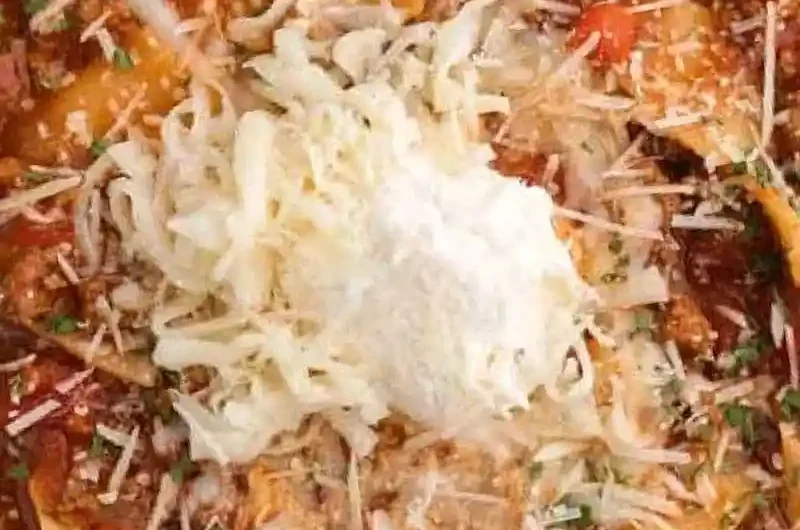
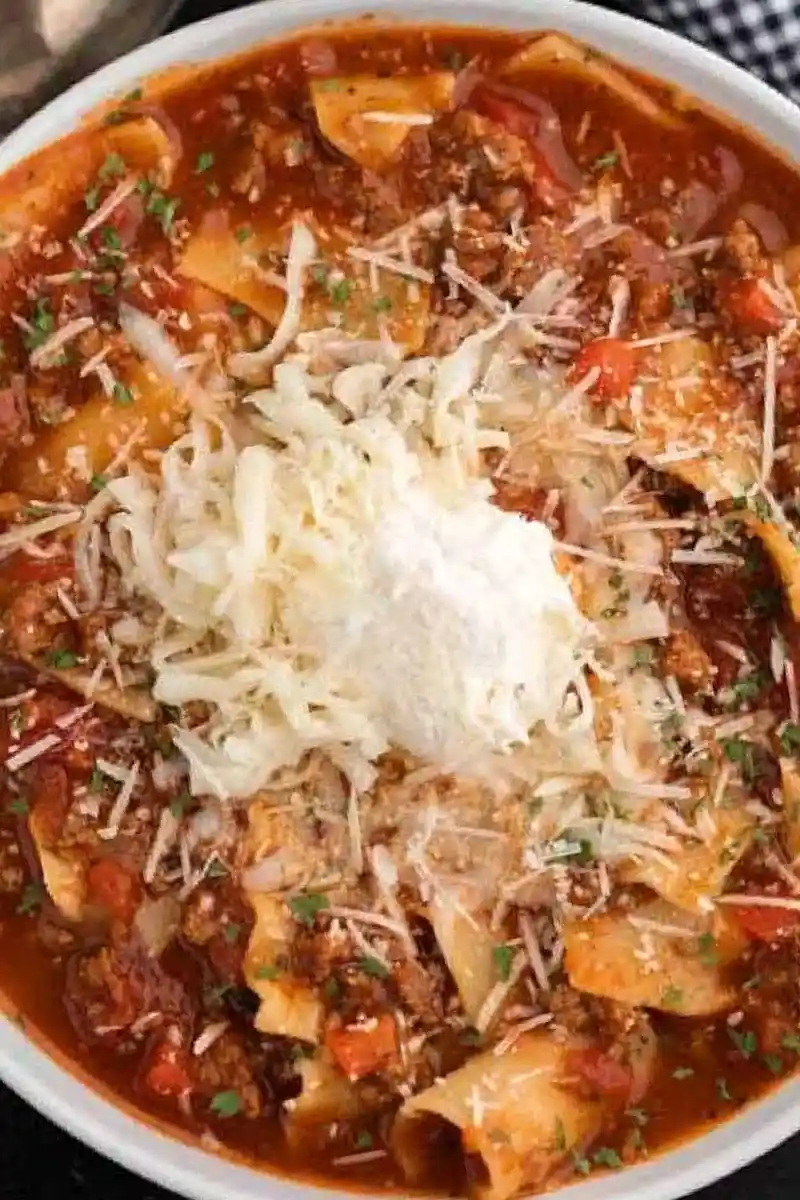
This hearty lasagna soup delivers the classic flavors of a traditional Italian bake in a convenient, one-pot format. It is an ideal comfort meal for busy schedules, combining rich meats, tomatoes, and cheeses without the need for tedious layering.
List of ingredients
- 1 pound ground beef – browned and drained of excess grease.
- 1/2 onion – finely diced for consistent flavor.
- 1 red bell pepper – diced into small pieces.
- 1 can petite diced tomatoes (14.5 oz) – adds texture and acidity.
- 1 can crushed tomatoes (28 oz) – creates the thick soup base.
- 1 teaspoon minced garlic – provides aromatic depth.
- 1 tablespoon Italian seasoning – a blend of herbs for traditional flavor.
- 4 cups beef broth (1 carton) – the primary liquid base.
- 12 oz lasagna noodles – broken into bite-sized pieces.
- 1/2 cup ricotta cheese – used as a creamy garnish.
- 1 cup mozzarella cheese (shredded) – for melting and stretch.
- 1 cup parmesan cheese (shredded) – adds a salty, sharp finish.
step-by-step instructions
- Brown the Meat: Cook 1 pound of ground beef in a large skillet over medium-high heat until fully browned. Drain any excess fat from the pan before proceeding.
- Transfer to Slow Cooker: Place the cooked ground beef into a 6-quart crock pot.
- Add Fresh Vegetables: Add the diced onion and diced red bell pepper to the crock pot with the beef.
- Mix in Tomatoes and Seasoning: Stir in the petite diced tomatoes (14.5 oz), crushed tomatoes (28 oz), minced garlic, and Italian seasoning until the mixture is well combined.
- Add Liquid Base: Pour 4 cups of beef broth into the crock pot and stir all ingredients together.
- Slow Cook: Cover the pot and cook on low for 6-8 hours or on high for 3-4 hours.
- Prepare and Add Noodles: Remove the lid and break the lasagna noodles into bite-sized pieces. Stir them directly into the hot soup.
- Final Cook: Cover again and cook on high for 30-45 minutes until the noodles are tender.
- Garnish and Serve: Ladle the soup into bowls. Top each serving with a portion of ricotta cheese, shredded mozzarella, and shredded parmesan before serving.
Meat Preparation and Selection
Browning the Beef for Better Flavor
Searing the ground beef in a skillet before adding it to the slow cooker creates a Maillard reaction. This process develops a deeper, richer flavor that cannot be achieved by cooking raw meat in liquid. Ensure the pan is hot before adding the beef to achieve a proper sear.
Managing Excess Fat
Draining the grease after browning is essential to prevent an oil slick from forming on top of the soup. Use a colander or a spoon to remove as much fat as possible. This keeps the broth clean and the overall dish lighter.
Alternative Meat Options
If you prefer a leaner profile, ground turkey is a suitable substitute for ground beef. When using turkey, you may need a small amount of olive oil in the skillet since turkey has less natural fat. The flavor profile remains consistent with the original recipe.
Ensuring Even Meat Texture
Use a wooden spoon or meat masher to break the beef into very small crumbles while browning. This ensures that every spoonful of soup has a balanced distribution of meat. Avoid large chunks which can disrupt the consistency of the broth.
Vegetable and Base Optimization
Dicing Vegetables for Uniformity
Cut the onion and red bell pepper into small, uniform cubes. This ensures they cook evenly during the long slow-cooking process and blend seamlessly into the soup. Smaller pieces also make the soup easier to eat with a spoon.
Selecting the Right Tomatoes
The combination of crushed and petite diced tomatoes provides both a smooth base and textural chunks. For a smoother consistency, you can use tomato sauce or a combination of marinara and tomato sauce. Avoid using only diced tomatoes as the soup will be too thin.
Enhancing the Garlic Aroma
Using minced fresh garlic provides a sharper, more authentic taste than garlic powder. If you prefer a milder flavor, you can sauté the garlic briefly with the onions before adding them to the crock pot. This removes the raw edge of the garlic.
Adjusting the Herb Blend
Italian seasoning typically contains oregano, basil, and rosemary. If you have these herbs individually, you can create your own mix to control the potency. Fresh parsley added at the very end can provide a bright contrast to the heavy flavors.
Liquid and Consistency Management
Choosing a Beef Broth
Using a low-sodium beef broth allows you to control the salt levels more effectively. Since the canned tomatoes and parmesan cheese already contain salt, a low-sodium option prevents the soup from becoming overly salty. Stir the broth well before pouring to ensure an even distribution of flavor.
Controlling Soup Thickness
If the soup appears too thin after cooking, you can simmer it on high without the lid for the last 30 minutes. Conversely, if the soup is too thick, stir in an extra half-cup of beef broth or water. The noodles will also naturally thicken the liquid as they release starch.
The Role of Tomato Acidity
The acidity from the tomatoes balances the richness of the beef and cheese. If the soup tastes too acidic, a small pinch of sugar can neutralize the sharpness. This creates a more rounded and mellow flavor profile.
Managing Liquid Levels for Noodles
The noodles absorb a significant amount of broth as they cook. Ensure there is enough liquid to fully submerge the broken pieces to avoid dry spots. Adding the noodles too early can lead to them absorbing too much liquid, making the soup a thick stew.
Noodle Cooking Techniques
Preventing Mushy Pasta
The most critical step is adding the noodles only during the last 30-45 minutes of cooking. Cooking pasta for the full 6-8 hours results in a mushy, disintegrated texture. Adding them at the end ensures they remain al dente.
Breaking Noodles for Ease of Eating
Breaking the lasagna sheets into bite-sized pieces allows you to eat the soup with a spoon without needing to cut the pasta. Aim for pieces about one inch in size for the best experience. This also ensures the noodles fit comfortably within the slow cooker.
Using Alternative Pasta Shapes
If you do not have lasagna noodles, you can use rotini, penne, or bow-tie pasta. Be mindful that different shapes have different cooking times; check the package instructions and adjust the final high-heat cook time accordingly.
Handling Leftover Noodles
Pasta continues to absorb liquid even after the heat is turned off. When storing the soup, the noodles may swell and soak up the broth. To fix this, add a small amount of water or broth when reheating the soup.
Cheese Garnish and Melting
Using Ricotta for Creaminess
Ricotta cheese should be added as a dollop on top of each individual bowl rather than stirred into the pot. This preserves the distinct creamy pockets of cheese that mimic a traditional lasagna layer. Stirring it in completely can make the broth cloudy.
Selecting the Best Mozzarella
Low-moisture shredded mozzarella is recommended for the best melt and stretch. Fresh mozzarella can be used, but it may release excess water into the soup. Shredding the cheese yourself from a block often results in a smoother melt than pre-shredded options.
Integrating Parmesan for Saltiness
Parmesan provides a sharp, salty contrast to the creamy ricotta. Use a finely grated parmesan to ensure it melts quickly into the hot soup. This cheese acts as a natural flavor enhancer for the beef and tomato base.
Alternative Cheese Substitutions
If you prefer a different flavor, provolone or gouda can be used in place of mozzarella. For a tangier taste, a small amount of cream cheese can be substituted for the ricotta. Always add cheese at the end to maintain the intended texture.
Serving and Pairing Ideas
Classic Garlic Bread Pairing
Serving this soup with toasted garlic bread or cheesy breadsticks provides a crunch that complements the soft noodles. Dipping the bread into the rich broth is a traditional way to enjoy the meal. Use butter, minced garlic, and parsley for a quick homemade version.
Adding a Fresh Side Salad
A simple Caesar salad or a garden salad with a vinaigrette helps cut through the richness of the soup. The acidity of the dressing cleanses the palate between bites of the creamy, cheesy soup. Focus on crisp greens like romaine or arugula.
Fresh Herb Toppings
Sprinkling freshly chopped basil or parsley over the finished bowl adds a pop of color and freshness. These herbs enhance the Italian profile of the dish. Add them immediately before serving to prevent them from wilting.
Bowl Selection for Serving
Use wide, shallow bowls to allow the cheese toppings to spread and melt evenly across the surface. This presentation makes it easier to get a bit of every ingredient in a single spoonful. Pre-heating the bowls can help keep the soup hot longer.
Storage and Preservation
Refrigeration Guidelines
Store leftover soup in an airtight container in the refrigerator for 5-7 days. Ensure the soup has cooled slightly before sealing the lid to prevent excessive condensation. Keep the cheese toppings separate if you have not yet added them to the bowls.
Freezing the Soup Base
You can freeze the soup base without the noodles for up to three months. Freezing cooked noodles often results in a mealy texture. To freeze, omit the pasta, freeze the liquid and meat, and then cook fresh noodles when you reheat the soup.
Managing Pasta Expansion in Storage
As mentioned, noodles expand during storage. If the soup becomes too thick in the fridge, do not worry; it is easily fixed. Simply add a splash of beef broth or water during the reheating process to restore the original consistency.
Identifying Spoilage
Check for any off-smells or changes in color before consuming leftovers. Because of the dairy components in the toppings, ensure the soup has been kept at a consistent refrigerated temperature. When in doubt, discard the food for safety.
Reheating Instructions
Stovetop Reheating Method
The best way to reheat the soup is in a pot over medium-low heat. This allows you to stir the ingredients gently and add liquid as needed to thin the broth. Bring the soup to a gentle simmer rather than a rolling boil to avoid overcooking the pasta.
Microwave Reheating Tips
Heat the soup in microwave-safe bowls in 1-minute intervals. Stir the soup between each interval to ensure even heating and to prevent hot spots. Add a teaspoon of water if the edges look too dry.
Adding Fresh Cheese Upon Reheating
If you stored the soup with the cheese already added, the cheese may have merged into the broth. To restore the lasagna-style experience, add a fresh dollop of ricotta and a sprinkle of mozzarella after reheating.
Avoiding Overcooking during Reheat
Avoid boiling the soup for long periods during reheating, as this will cause the noodles to break down. Heat only until the liquid is steaming and the meat is hot. Use a thermometer to ensure it reaches a safe internal temperature of 165 degrees Fahrenheit.
Troubleshooting Common Issues
What to do if the soup is too salty?
If the broth is too salty, add a splash of unsalted beef broth or a small amount of water. You can also add a diced potato and simmer it for a short time to absorb some of the excess salt. Alternatively, add a squeeze of lemon juice to balance the saltiness.
How to fix a thin or watery broth?
If the soup lacks thickness, simmer it on high without the lid for 30 to 60 minutes. This evaporates excess water and concentrates the flavors. You can also mash a few of the cooked noodles against the side of the pot to release more starch into the liquid.
Dealing with Separated Grease
If oil droplets appear on the surface, use a wide spoon or a piece of paper towel to skim the fat off the top. This usually happens if the ground beef was not drained thoroughly. Doing this improves both the look and the taste of the soup.
Correcting Bland Flavors
If the soup tastes flat, increase the amount of Italian seasoning or add a teaspoon of Worcestershire sauce for umami depth. A small amount of additional parmesan cheese can also boost the salt and savoriness. Taste and adjust in small increments.
Frequently Asked Questions
Can I use a different type of meat?
Yes, you can use ground turkey, ground chicken, or even plant-based meat alternatives. If using turkey or chicken, you may need to add a tablespoon of olive oil for browning since these meats are leaner than beef.
Is it possible to make this recipe dairy-free?
You can substitute the ricotta, mozzarella, and parmesan with plant-based cheese alternatives. Ensure the vegan cheeses have a good melting point to maintain the texture. The base of the soup is already dairy-free.
Can I add vegetables like spinach or carrots?
Yes, adding diced carrots or celery during the initial vegetable step adds nutrition and flavor. For spinach, stir in fresh baby spinach during the last 5 minutes of cooking until it wilts.
Do I have to brown the beef first?
While you can add raw beef to the slow cooker, browning it first is highly recommended. Searing the meat adds a depth of flavor and prevents the soup from having a greasy texture.
Why are my noodles too soft?
Noodles become too soft if they are added at the beginning of the slow-cooking process. Always add the pasta during the final 30-45 minutes of cooking on high heat to ensure they maintain their structure.
Print
Slow Cooker Lasagna Soup
- Total Time: 6 hours 10 minutes
- Yield: 6 servings 1x
- Diet: General
Description
An easy crock pot lasagna soup recipe that tastes just like traditional lasagna without all the effort of layering.
Ingredients
- 1 pound ground beef
- 1/2 onion, diced
- 1 red bell pepper, diced
- 14.5 oz can petite diced tomatoes
- 28 oz can crushed tomatoes
- 1 teaspoon minced garlic
- 1 tablespoon Italian seasoning
- 4 cups beef broth
- 12 oz lasagna noodles
- 1/2 cup ricotta cheese
- 1 cup shredded mozzarella cheese
- 1 cup shredded parmesan cheese
Instructions
- Brown Beef: In a large skillet over medium-high heat, cook 1 pound ground beef until browned and fully cooked, then drain off any excess grease.
- Combine Base: Place the ground beef into a 6 quart crock pot and add 1/2 diced onion and 1 diced red bell pepper.
- Add Tomatoes and Seasoning: Stir in 1 can petite diced tomatoes (14.5 oz), 1 can crushed tomatoes (28 oz), 1 teaspoon minced garlic, and 1 tablespoon Italian seasoning.
- Add Broth: Pour 4 cups beef broth into the crock pot and stir to combine.
- Slow Cook: Cover and cook on low for 6-8 hours or on high for 3-4 hours.
- Add Noodles: Remove the lid and break 12 oz lasagna noodles into bite-size pieces directly into the crock pot and stir.
- Finish Cooking: Cover and cook on high for 30-45 minutes until the noodles are cooked through.
- Serve: Ladle the soup into bowls and top each serving with a portion of ricotta cheese, shredded mozzarella, and shredded parmesan cheese.
Notes
Refrigerate leftovers in an airtight container for up to 5-7 days.
- Prep Time: 10 minutes
- Cook Time: 6 hours
- Category: Soup
- Method: Slow Cooking
- Cuisine: Italian
Nutrition
- Serving Size: 1 serving
- Calories: 605 kcal
- Sugar: 6 g
- Sodium: 1143 mg
- Fat: 28 g
- Saturated Fat: 13 g
- Unsaturated Fat: 14 g
- Trans Fat: 1 g
- Carbohydrates: 52 g
- Fiber: 4 g
- Protein: 36 g
- Cholesterol: 90 mg
Keywords: crock pot lasagna soup, slow cooker soup, Italian soup, easy dinner