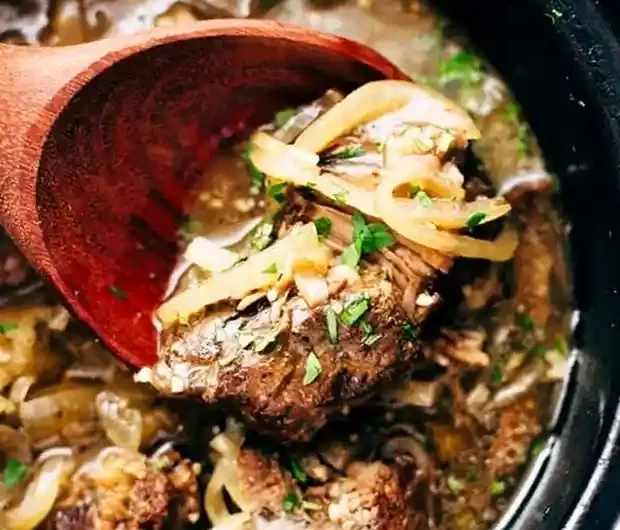
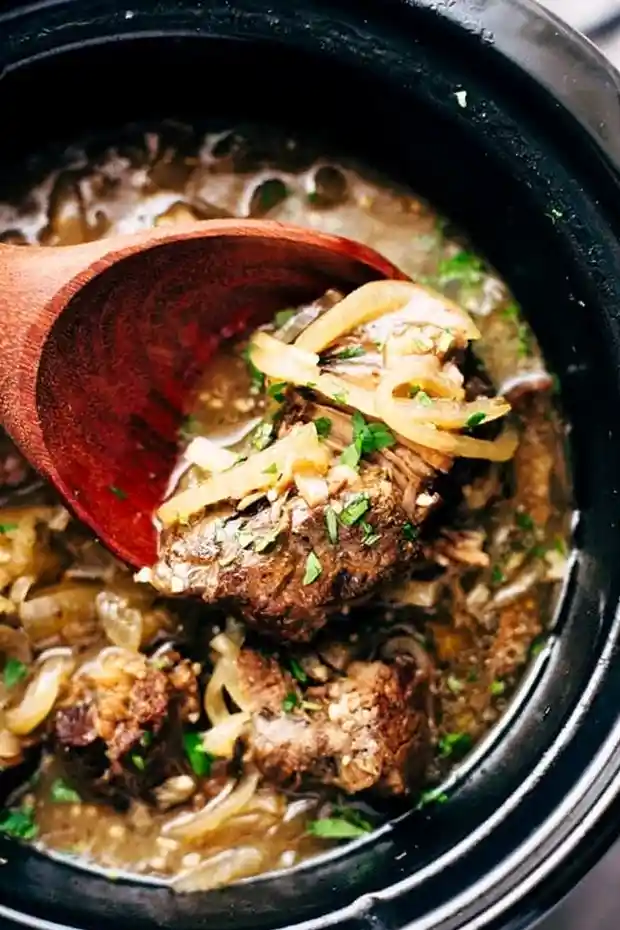
This rich and savory pot roast blends the deep flavors of French onion soup with tender, slow-cooked beef. It is a versatile meal that can be prepared in either a slow cooker or a Dutch oven for a comforting dinner.
List of ingredients
- 2 pounds chuck roast – select a well-marbled cut for tenderness.
- 2 tablespoons butter – used for searing the meat.
- 1 tablespoon avocado oil – prevents the butter from burning.
- 3 garlic cloves – pressed or minced for aromatic flavor.
- 2 yellow onions – thinly sliced to melt into the sauce.
- 2 cups beef stock – the base for the braising liquid.
- 1 tablespoon Worcestershire sauce – adds a deep umami quality.
- 1 tablespoon apple cider vinegar – helps tenderize the beef fibers.
- ½ teaspoon onion powder – intensifies the onion profile.
- ½ teaspoon dried thyme – provides a classic earthy herb note.
- 1 bay leaf – adds a subtle background depth.
- ⅛ teaspoon celery seeds – crushed between fingers to release oils.
- 1 tablespoon sugar – balances the acidity of the vinegar.
- 2-3 tablespoons cornstarch – used to thicken the final gravy.
- ⅓ cup water – mixed with cornstarch for the slurry.
step-by-step instructions
- Sear the Beef: Pat the chuck roast dry and season all sides generously with salt and pepper. Heat a large skillet or Dutch oven over medium-high heat with butter and avocado oil. Once the butter crackles, sear the roast for 2-3 minutes per side until browned, then move to a plate.
- Sauté the Onions (Optional): Add a small amount of additional oil to the same pan. Sauté the sliced onions for 3-4 minutes until they begin to sweat and pick up the browned bits from the meat.
- Slow Cooker Method: Place half of the sliced onions in the slow cooker. Add the minced garlic, beef stock, Worcestershire sauce, apple cider vinegar, onion powder, dried thyme, bay leaf, celery seeds, and sugar. Place the seared roast on top and cover with the remaining onions. Cook on low for 6-8 hours until the meat shreds easily.
- Oven Method: Preheat your oven to 275°F and place a rack in the center. After sautéing the onions, add the roast back to the Dutch oven with the garlic, beef stock, Worcestershire sauce, apple cider vinegar, onion powder, dried thyme, bay leaf, celery seeds, and sugar. Ensure the liquid reaches halfway up the roast, adding more broth if needed. Cover and braise for 1 hour and 15 minutes, then continue for another 1 to 1.5 hours until fork-tender.
- Thicken the Gravy: Remove the meat and keep it warm. Mix 2 tablespoons of cornstarch with water in a small bowl. Pour the slurry into the cooking liquid and whisk. In the slow cooker, cook for 5-7 minutes; in the Dutch oven, simmer over medium-high heat. If the gravy is too thin, repeat with the remaining tablespoon of cornstarch and 2 tablespoons of water.
- Serve: Plate the shredded beef over a bed of cheddar mashed potatoes or crusty bread. Drizzle the thickened French onion gravy generously over the top.
Meat Selection and Preparation
Choosing a Well Marbled Chuck Roast
Chuck roast comes from the shoulder of the cow and contains significant connective tissue and fat. This marbling is essential because it breaks down during the long cooking process, resulting in meat that is tender and juicy. Avoid lean cuts, as they will likely become dry and tough during a slow braise.
Importance of Patting the Meat Dry
Moisture on the surface of the beef creates steam, which prevents a proper sear from forming. Use paper towels to thoroughly dry the roast before seasoning. A dry surface allows the meat to brown quickly and develop a rich crust, which adds significant flavor to the overall dish.
Proper Seasoning Application
Generous amounts of kosher salt and black pepper should be applied to all sides of the roast. Salt not only enhances the flavor but also helps draw out moisture for a better sear. Apply the seasoning right before the meat hits the pan to prevent the salt from pulling too much moisture to the surface prematurely.
Searing and Browning Techniques
Using a Butter and Oil Blend
Combining butter with a high-smoke point oil like avocado oil prevents the butter from burning. The oil stabilizes the milk solids in the butter, allowing you to reach the high temperatures needed for searing without creating acrid smoke. This ensures a golden-brown color rather than a burnt black crust.
Avoiding Pan Overcrowding
If the pan is too full, the temperature drops rapidly, and the meat will boil in its own juices instead of searing. Use a large skillet or a wide Dutch oven to ensure there is plenty of space around the roast. This allows the moisture to evaporate quickly, promoting the Maillard reaction for maximum flavor.
Achieving a Deep Brown Crust
Allow the meat to sit undisturbed for 3-4 minutes per side. Frequently moving the roast prevents the surface from developing the deep brown color required for a rich gravy. Patience during the searing phase is the key to a professional-tasting pot roast.
Developing Complex Flavors
The Role of Apple Cider Vinegar
The acidity in apple cider vinegar acts as a natural tenderizer by breaking down tough muscle fibers in the beef. It also cuts through the richness of the beef fat and butter, providing a balanced flavor profile. This subtle tang mimics the acidity found in traditional French onion soup.
Maximizing Onion Depth
Slicing onions thinly ensures they break down completely into the sauce, creating a thick, jammy consistency. While adding them raw to the slow cooker works, sautéing them first caramelizes the natural sugars. This adds a layer of sweetness and complexity that enhances the savory beef broth.
Dried Thyme and Celery Seed Usage
Dried thyme provides an earthy, woody aroma that complements the beef and onions perfectly. Crushing the celery seeds between your fingers before adding them releases the essential oils. These small herb additions provide the classic savory notes associated with traditional braised beef dishes.
Comparing Cooking Methods
Slow Cooker Convenience
The slow cooker is ideal for those who want a set-it-and-forget-it meal. The low, consistent heat gently breaks down the collagen over 6 to 8 hours without the risk of overcooking. This method is highly effective for achieving a pull-apart texture with minimal supervision.
Dutch Oven Braising
Cooking in the oven at 275°F allows for a more controlled braise and an easier transition from searing to simmering. The heavy walls of a Dutch oven distribute heat evenly, preventing hot spots. This method often produces a slightly more concentrated sauce than the slow cooker.
Managing Liquid Levels
In the oven method, it is crucial that the liquid only reaches halfway up the side of the roast. Too much liquid will poach the meat rather than braise it, resulting in a different texture. In the slow cooker, the onions release a significant amount of water, so additional liquid is less critical.
Perfecting the Gravy
Creating a Smooth Cornstarch Slurry
Always mix cornstarch with cold water before adding it to the hot liquid to create a slurry. Adding dry cornstarch directly to the pot will cause immediate clumping and a lumpy sauce. Whisk the mixture until it is completely smooth before pouring it into the cooking vessel.
Controlling the Final Consistency
The gravy should be thick enough to coat the back of a spoon but not so thick that it becomes a paste. If the sauce is too thin after the first addition of slurry, let it simmer for a few more minutes. You can add the remaining tablespoon of cornstarch in small increments until the desired thickness is achieved.
Removing Aromatics Before Serving
Before thickening the sauce, locate and remove the bay leaf and any large pieces of thyme stems. This ensures a smooth eating experience without unexpected herbal bits. Straining the liquid through a fine-mesh sieve is another option for a professional, silky finish.
Serving and Pairing Ideas
Classic Cheddar Mashed Potatoes
The sharp flavor of cheddar cheese complements the sweetness of the caramelized onions and the richness of the beef. Mash boiled potatoes with butter, cream, and shredded sharp cheddar for a hearty base. This pairing absorbs the gravy effectively, making every bite flavorful.
Serving Over Buttered Egg Noodles
For a lighter alternative to potatoes, wide egg noodles tossed in butter and parsley are an excellent choice. The noodles provide a neutral base that allows the French onion flavors to stand out. This is a traditional way to serve beef stews and roasts in many households.
Adding Crusty Bread
A warm, crusty baguette or a piece of no-knead artisan bread is essential for cleaning the plate. The porous texture of the bread is perfect for soaking up the remaining au jus. To elevate this, toast the bread with a sprinkle of Gruyere cheese to lean into the French onion theme.
Storage and Reheating
Refrigerator Storage Guidelines
Store the leftover beef and gravy in an airtight container in the refrigerator for up to four days. Keep the meat submerged in the gravy to prevent it from drying out. The flavors often meld and intensify overnight, making leftovers taste even better the next day.
Freezing the Roast
This dish freezes exceptionally well because the fat and collagen protect the meat from freezer burn. Place the roast and sauce in a freezer-safe bag or container for up to three months. Thaw the meat in the refrigerator overnight before reheating to maintain the texture.
Best Reheating Methods
To reheat, place the beef and gravy in a covered pot over low heat on the stove. Adding a splash of beef broth or water can help loosen the gravy if it has thickened too much in the fridge. Avoid microwaving on high heat, as this can make the beef tough and rubbery.
Troubleshooting Common Issues
Meat Not Shredding Easily
If the beef does not pull apart with a fork, it likely needs more time to cook. Collagen breaks down at a specific temperature over time, and rushing the process leads to tough meat. Put the roast back in the pot for another 30 to 60 minutes until it reaches the desired tenderness.
Gravy Remaining Too Thin
If the gravy is still watery after adding the cornstarch, ensure the liquid has reached a full simmer. Cornstarch only activates and thickens when it reaches a certain temperature. If it still lacks body, simmer the sauce uncovered to reduce the liquid and concentrate the flavors.
Burnt Searing Bits
If the bottom of the pan becomes too dark or smells burnt during searing, do not scrape those bits into the pot. Burnt carbon will introduce a bitter taste to the entire roast. Instead, wipe the pan clean and start the searing process again with fresh oil and butter.
Frequently Asked Questions
Can I use a different cut of beef?
While chuck roast is recommended, you can use bottom round or brisket. However, these cuts are leaner or have different grain structures and may require longer cooking times or more liquid to stay moist. Always choose a cut with visible fat marbling for the best results.
What is a substitute for avocado oil?
Any oil with a high smoke point will work, such as canola oil, grapeseed oil, or vegetable oil. Avoid using extra virgin olive oil for searing at high temperatures, as it has a lower smoke point and can burn, leaving a bitter taste in the meat.
How do I know when the roast is done?
The best indicator of doneness is the fork-tender test. Insert two forks into the thickest part of the roast and gently pull in opposite directions. If the meat shreds easily without resistance, it is ready to be removed from the heat.
Can I add carrots or potatoes to the pot?
Yes, you can add large-cut carrots and halved baby potatoes during the last 2-3 hours of slow cooking. Avoid adding them at the beginning, as they may become mushy during the full 8-hour process. This turns the recipe into a complete one-pot meal.
Print
Soul Warming French Onion Pot Roast
- Total Time: 8 hours 25 minutes
- Yield: 5 servings 1x
- Diet: General
Description
The perfect warming pot roast recipe for the chilly months! This French onion pot roast is a mashup of winter favorites, full of flavor, and can be made in the slow cooker or oven for a stress-free dinner.
Ingredients
- 2 pounds chuck roast
- 2 tablespoons butter
- 1 tablespoon avocado oil
- 3 garlic cloves, pressed or minced
- 2 yellow onions, thinly sliced
- 2 cups beef stock
- 1 tablespoon Worcestershire sauce
- 1 tablespoon apple cider vinegar
- ½ teaspoon onion powder
- ½ teaspoon dried thyme
- 1 bay leaf
- ⅛ teaspoon celery seeds, crushed
- 1 tablespoon sugar
- 2–3 tablespoons cornstarch
- ⅓ cup water
Instructions
- Sear: Pat down chuck roast and season generously with salt and pepper. Heat a large skillet or dutch oven over medium-high heat with butter and oil; sear roast on all sides for 2-3 minutes per side. Remove to a plate.
- Sauté: Optionally sauté sliced onions in the pan for 3-4 minutes until they sweat.
- Slow Cook: Add half the onions to the slow cooker, followed by garlic, beef broth, Worcestershire sauce, apple cider vinegar, onion powder, dried thyme, bay leaf, celery seeds, sugar, and the roast. Top with remaining onions. Cook on low for 6-8 hours.
- Slow Cooker Gravy: Remove meat. Combine cornstarch and water to make a slurry. Stir into the slow cooker and cook for 5-7 minutes until thickened.
- Oven Method: Preheat oven to 275ºF. Add roast, garlic, beef broth, Worcestershire sauce, apple cider vinegar, onion powder, dried thyme, bay leaf, celery seeds, and sugar to a dutch oven. Cover and braise for 2.25 to 3 hours until fork-tender.
- Oven Gravy: Remove meat. Heat liquid on the stove to a simmer, stir in cornstarch slurry, and cook until thickened.
Notes
If doubling or tripling the recipe, use a 6-8 quart slow cooker.
- Prep Time: 10 minutes
- Cook Time: 8 hours 15 minutes
- Category: Beef, Stews
- Method: Slow Cooking, Braising
- Cuisine: American
Nutrition
- Serving Size: 1 serving
- Calories: 450 kcal
- Sugar: 5 g
- Sodium: 850 mg
- Fat: 28 g
- Saturated Fat: 12 g
- Unsaturated Fat: 16 g
- Trans Fat: 0 g
- Carbohydrates: 12 g
- Fiber: 1 g
- Protein: 37 g
- Cholesterol: 1 mg
Keywords: French onion pot roast, slow cooker beef, comfort food, pot roast gravy, oven braised beef