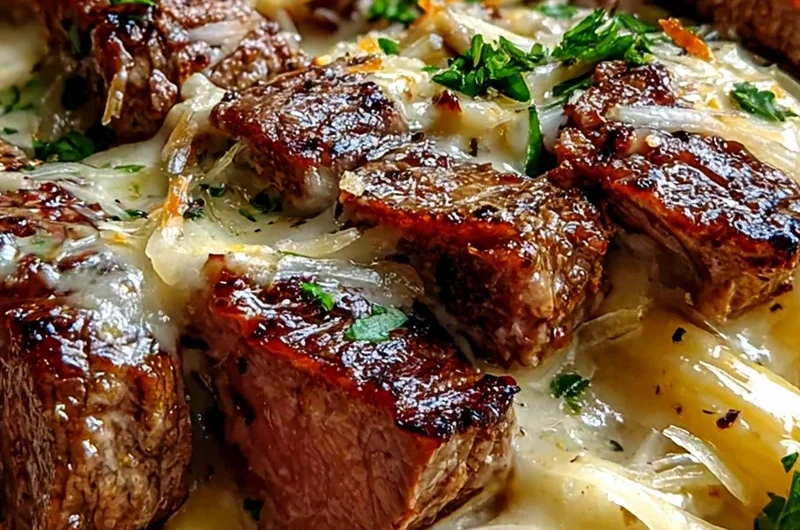
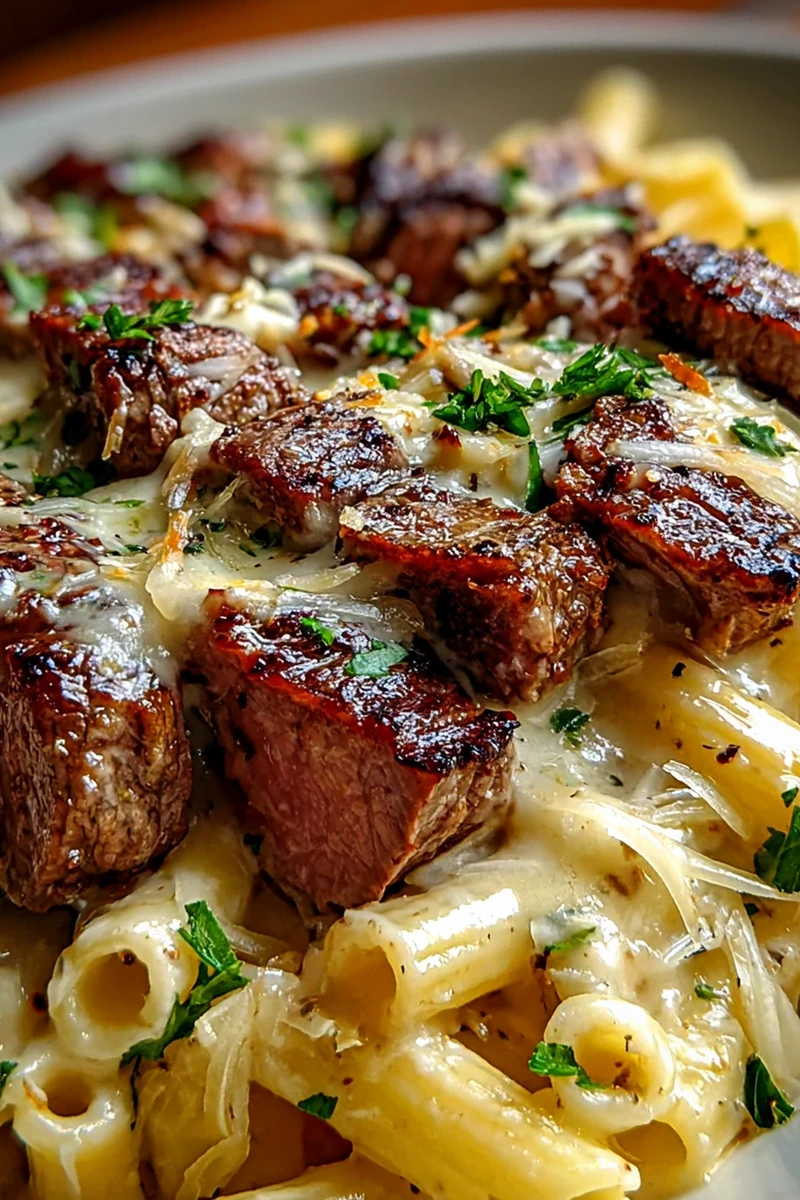
This steak and garlic Parmesan pasta combines savory seared meat with a rich, creamy sauce for a restaurant-style meal at home. It is a satisfying dinner option that comes together in about 30 minutes.
List of ingredients
- 2 boneless ribeye or sirloin steaks (6 oz each) – choose well-marbled cuts for juiciness.
- 12 oz pasta (spaghetti, fettuccine, or penne) – use a shape that holds sauce well.
- 2 tablespoons olive oil – for searing the meat at high heat.
- Salt and black pepper – used for seasoning both the meat and the pasta water.
- 2 tablespoons butter – adds richness to the garlic base.
- 4 cloves garlic, minced – provides the primary aromatic flavor.
- ½ cup heavy cream – creates the velvety texture of the sauce.
- ½ cup grated Parmesan cheese – adds a salty, nutty depth.
- Optional: ½ cup beef broth – enhances the savory notes of the sauce.
- Optional: crushed red pepper flakes – adds a hint of spicy warmth.
step-by-step instructions
- Cook the pasta: Bring a large pot of salted water to a boil. Add the pasta and cook until al dente (8–10 minutes), then drain and reserve ½ cup of the pasta water.
- Sear the steaks: Heat olive oil in a skillet over medium-high heat. Season steaks with salt and pepper, then sear for 4–5 minutes per side until they reach your desired doneness. Remove the steaks from the pan and let them rest before slicing.
- Sauté the aromatics: Reduce the skillet heat to medium and add butter and minced garlic. Sauté until the garlic is fragrant. Pour in the beef broth if you are using it and let it simmer for a few minutes.
- Create the sauce: Stir in the heavy cream and bring to a gentle simmer. Whisk in the grated Parmesan cheese and continue stirring until the sauce has thickened.
- Combine and serve: Toss the cooked pasta into the sauce, adding the reserved pasta water as needed to reach your preferred consistency. Mix in the sliced steak just before serving.
Optimal Meat Selection
Selecting Ribeye for Maximum Flavor
Ribeye steaks are highly recommended for this dish because of their significant intramuscular fat. This marbling melts during the searing process, contributing a deep, buttery flavor to both the meat and the pan drippings used for the sauce.
Using Sirloin for a Leaner Option
Sirloin is an excellent choice for those who prefer a leaner cut of beef. While it has less fat than ribeye, it still provides a robust beefy flavor and a firm texture that holds up well when sliced and tossed with pasta.
Achieving a Perfect Crust
To get a professional sear, always pat the steaks dry with paper towels before seasoning. Moisture on the surface of the meat creates steam, which prevents the Maillard reaction and stops a dark, flavorful crust from forming.
Why Resting the Meat is Essential
Allowing the steak to rest for 5 to 10 minutes after cooking lets the muscle fibers relax and the juices redistribute. If you slice the meat immediately, the juices will run out onto the board, leaving the steak dry and the pasta sauce watered down.
Pasta Preparation Essentials
Choosing the Best Pasta Shape
Long, flat noodles like fettuccine or spaghetti are traditional for creamy sauces because they provide a large surface area for the sauce to cling to. For a heartier bite, penne is a great alternative as the sauce fills the hollow center of the pasta.
The Role of Salted Boiling Water
Adding a generous amount of salt to the pasta water is the only chance to season the noodles themselves. This ensures that the pasta tastes flavorful on its own and complements the rich garlic Parmesan sauce without needing excess salt later.
Testing for Al Dente Texture
Cook the pasta for 1 to 2 minutes less than the package instructions to achieve an al dente texture. Since the pasta will be tossed in a simmering sauce at the end, undercooking it slightly prevents it from becoming mushy.
The Importance of Reserved Pasta Water
Pasta water contains starch that acts as a natural emulsifier. Adding a splash of this liquid to the cream sauce helps bind the fats and liquids together, creating a smooth, glossy consistency that adheres perfectly to the noodles.
Mastering the Garlic Parmesan Sauce
Preventing Garlic from Burning
Garlic burns quickly at high temperatures, which can introduce a bitter taste to the sauce. Keep the heat at medium and sauté the minced garlic only until it becomes fragrant, usually about 1 to 2 minutes.
Using Beef Broth for Depth
While optional, adding beef broth creates a bridge between the richness of the cream and the savory flavor of the steak. It adds a layer of complexity and prevents the sauce from tasting overly heavy or one-dimensional.
Emulsifying the Cream and Cheese
Whisk the Parmesan cheese in slowly while the cream is at a gentle simmer. Rapidly stirring the cheese helps it melt evenly into the cream, preventing clumps from forming and ensuring a velvety smooth texture.
Adjusting Sauce Thickness
The sauce will naturally thicken as it cools or as the cheese melts. If it becomes too thick or sticky, stir in a tablespoon of the reserved pasta water at a time until the sauce reaches a pourable, creamy consistency.
Flavor Variations and Substitutions
Incorporating Fresh Baby Spinach
Folding in a handful of fresh baby spinach during the final step adds color and nutrients. The heat from the pasta and sauce will wilt the spinach in seconds without requiring extra cooking time.
Adding Sautéed Mushrooms
Sautéing sliced mushrooms in the skillet before adding the garlic adds an earthy, umami quality to the dish. Mushrooms pair exceptionally well with both steak and Parmesan cheese.
Swapping Steak for Other Proteins
This creamy garlic sauce is versatile and works well with grilled chicken breasts or seared shrimp. Simply follow the same searing process for the alternative protein before preparing the sauce.
Increasing the Heat Level
For those who enjoy a spicy kick, add crushed red pepper flakes during the garlic sauté step. This infuses the oil with heat, which is then distributed evenly throughout the entire cream sauce.
Recommended Serving Pairings
Pairing with Crusty Garlic Bread
Warm, toasted garlic bread is a classic accompaniment that helps soak up any remaining sauce on the plate. Use a baguette or sourdough loaf brushed with butter and garlic for the best result.
Balancing with a Bitter Green Salad
A light salad featuring arugula or mixed greens with a lemon vinaigrette provides a sharp contrast to the richness of the pasta. The acidity of the dressing cleanses the palate between bites of creamy sauce.
Adding Roasted Asparagus
Roasted asparagus spears add a fresh, vegetal element and a pop of color to the meal. Toss them in olive oil and salt, then roast at 400°F for 10-12 minutes until tender.
Finishing with Fresh Herbs
Garnishing with freshly chopped parsley or basil adds a bright, aromatic finish. These herbs cut through the heaviness of the cream and cheese, making the dish feel more balanced.
Storage and Preservation Tips
Proper Refrigeration Methods
Store leftovers in an airtight glass or plastic container. To keep the pasta from absorbing all the sauce, you can store the steak and pasta separately if you plan to eat them over several days.
Freezer-Safe Storage
While cream sauces can sometimes separate when frozen, this dish can be kept in a freezer-safe bag for up to two months. Thaw the pasta in the refrigerator overnight before reheating to maintain the best possible texture.
Cooling Before Sealing
Allow the pasta and steak to cool slightly before closing the lid of the storage container. Sealing the food while it is steaming hot can create excess condensation, which may make the pasta soggy.
Effective Reheating Methods
Stovetop Reheating for Best Texture
The best way to reheat this dish is in a skillet over low heat. Add a small splash of milk or water to the pan to loosen the sauce and bring it back to its original creamy state.
Oven Warming for Large Portions
Place leftovers in a baking dish and cover tightly with foil to trap moisture. Heat at 350°F for about 20 minutes, stirring halfway through to ensure the heat is distributed evenly.
Quick Microwave Reheating
Use a microwave-safe dish and cover it with a damp paper towel to prevent the pasta from drying out. Heat in 1-minute intervals, stirring between each session to avoid hot spots.
Correcting Sauce Consistency After Reheating
Cream sauces often thicken significantly in the fridge. If the sauce looks broken or too thick after reheating, whisk in a teaspoon of butter or a tablespoon of warm water to restore the emulsion.
Cooking Troubleshooting
Fixing a Broken Sauce
If the sauce separates and looks oily, it is usually because the heat was too high. Remove the pan from the heat and whisk in a tablespoon of pasta water or cream vigorously to bring the sauce back together.
Preventing Tough Steak
Overcooking the meat is the most common cause of toughness. Use a digital meat thermometer to ensure you hit your target temperature, such as 130-135°F for medium-rare, and remove it immediately.
Avoiding Overcooked Pasta
If the pasta is too soft, it will break apart when tossed with the steak. Always start tasting the pasta two minutes before the package’s recommended time to ensure it remains firm.
Managing Excess Oil in the Pan
If there is too much oil in the skillet after searing the steak, wipe out some of the excess with a paper towel before adding the butter. This prevents the final sauce from having a greasy film on top.
Frequently Asked Questions
Which steak cut is most tender?
Ribeye is generally the most tender and flavorful due to its high fat content, followed closely by filet mignon. Sirloin is tender but leaner, making it a great mid-range option for pasta dishes.
Can I use a different cheese?
While Parmesan is traditional for its salty tang, you can use Pecorino Romano for a sharper flavor or Gruyère for a nuttier, meltier sauce. Ensure the cheese is finely grated for a smooth melt.
How do I ensure the sauce isn’t too salty?
Since Parmesan cheese and beef broth are naturally salty, avoid adding extra salt to the sauce until the very end. Taste the finished product and adjust the seasoning only after the cheese has melted.
Can this dish be prepared in advance?
You can sear the steaks and boil the pasta ahead of time. However, for the best quality, the creamy sauce should be made and combined with the other ingredients immediately before serving.
Print
Steak and Creamy Garlic Parmesan Pasta
- Total Time: 30 minutes
- Yield: 4 servings 1x
- Diet: General
Description
If you’re craving a comforting yet indulgent dish, look no further than Steak and Creamy Garlic Parmesan Pasta. This recipe features tender slices of seared ribeye or sirloin steak nestled over perfectly cooked pasta, all enveloped in a luscious garlic Parmesan sauce. Ideal for impressing guests or enjoying a cozy night in, this dish is quick to prepare, taking less than 30 minutes from start to finish.
Ingredients
- 2 boneless ribeye or sirloin steaks (6 oz each)
- 12 oz pasta (spaghetti, fettuccine, or penne)
- 2 tablespoons olive oil
- Salt and black pepper to taste
- 2 tablespoons butter
- 4 cloves garlic, minced
- ½ cup heavy cream
- ½ cup grated Parmesan cheese
- ½ cup vegetable broth
- ½ teaspoon crushed red pepper flakes
- ¼ cup fresh basil or parsley, chopped
Instructions
- Step: Cook pasta in salted boiling water until al dente (8–10 minutes). Drain and reserve ½ cup pasta water.
- Step: Heat olive oil in a skillet over medium-high heat. Season steaks with salt and pepper; sear for 4–5 minutes on each side. Let rest before slicing.
- Step: In the same skillet, lower heat and add butter and garlic; sauté until fragrant. Pour in vegetable broth and simmer for a few minutes.
- Step: Stir in heavy cream and bring to a gentle simmer. Whisk in Parmesan cheese until thickened.
- Step: Toss cooked pasta into the sauce, adding reserved pasta water as needed for consistency. Mix in sliced steak just before serving.
Notes
Allow the steak to rest for 5 minutes after searing to ensure juiciness. Use fresh garlic and herbs for the best flavor profile. Reserved pasta water is key to adjusting the sauce consistency.
- Prep Time: 10 minutes
- Cook Time: 20 minutes
- Category: Main
- Method: Searing
- Cuisine: American
Nutrition
- Serving Size: 1 plate (about 350g)
- Calories: 670 kcal
- Sugar: 3 g
- Sodium: 850 mg
- Fat: 32 g
- Saturated Fat: 15 g
- Unsaturated Fat: 17 g
- Trans Fat: 0 g
- Carbohydrates: 62 g
- Fiber: 3 g
- Protein: 38 g
- Cholesterol: 115 mg
Keywords: steak, creamy pasta, garlic parmesan, comfort food, main dish