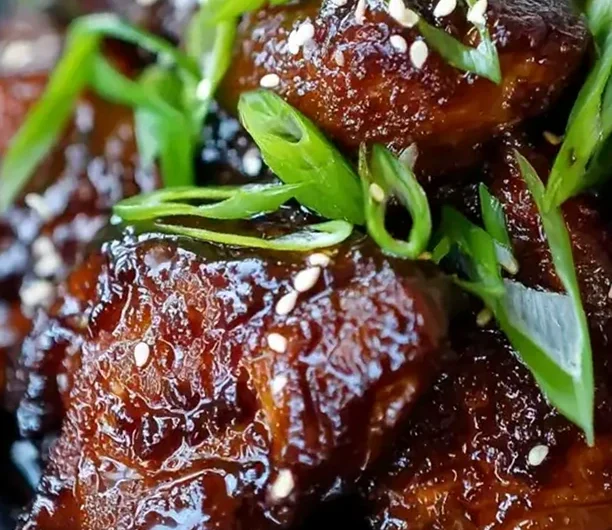
This easy one-pan meal delivers tender chicken thighs coated in a glossy, sweet and savory glaze. It is a fast alternative to takeout that takes only 30 minutes to prepare and serve.
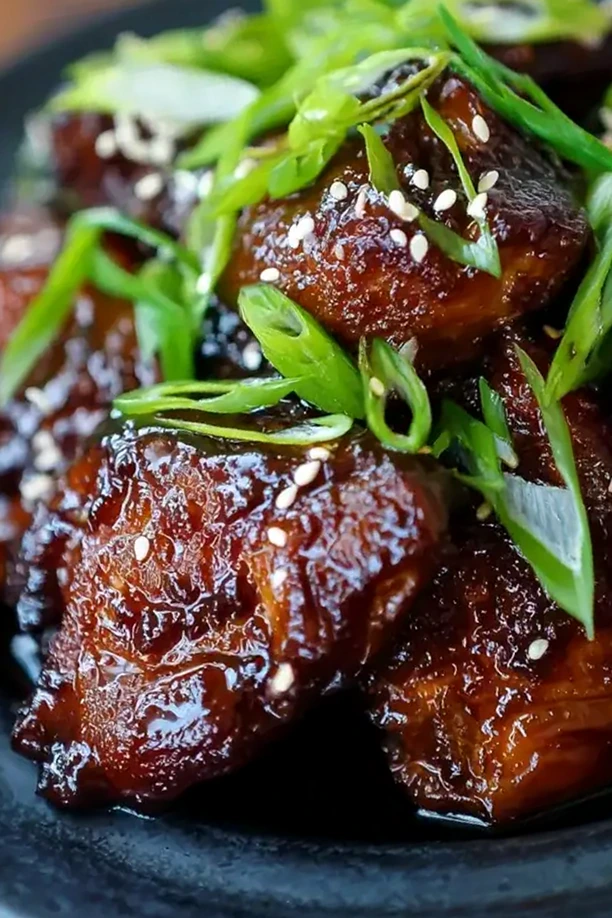
List of ingredients
- 600 g boneless, skinless chicken thighs – cut into 1-inch pieces for even cooking.
- 3 tbsp cornstarch – used to create a light, crispy exterior.
- 2 tbsp vegetable oil – for searing the meat at high heat.
- 4 cloves garlic – minced finely for a strong aroma.
- 1 tbsp fresh ginger – grated to provide a pungent, fresh zing.
- 100 ml low-sodium soy sauce – for saltiness and umami depth.
- 80 ml water – to balance the sauce concentration.
- 75 g dark brown sugar – provides a deep sweetness and glossy finish.
- 2 tsp rice vinegar – adds a subtle acidity to balance the sugar.
- 1 tsp sesame oil – for a distinct, nutty aromatic finish.
- 3 spring onions – sliced, keeping the green parts for the final garnish.
- 1 dried red chili – optional, added for a mild heat.
step-by-step instructions
- Prepare the meat: Pat the chicken thigh pieces completely dry with paper towels to ensure the cornstarch adheres and the meat sears properly. Place the chicken in a medium bowl, sprinkle with cornstarch, and toss until every piece is evenly coated.
- Sear the chicken: Heat vegetable oil in a large skillet or wok over medium-high heat. Add chicken in a single layer, cooking undisturbed for 2-3 minutes per side until a golden-brown crust forms, then remove the pieces to a clean plate.
- Cook the aromatics: Reduce the heat to medium in the same pan to utilize the browned bits. Sauté the minced garlic and grated ginger for 30-60 seconds until fragrant, ensuring they do not burn.
- Simmer the sauce base: Pour in the soy sauce and water, then stir in the dark brown sugar and the optional dried chili. Whisk the mixture while scraping the bottom of the pan and bring it to a gentle simmer until the sugar dissolves.
- Thicken the glaze: Let the sauce simmer for 2-3 minutes until it is thick enough to coat the back of a spoon. Stir in the rice vinegar and sesame oil just before the sauce is finished to preserve their delicate flavors.
- Combine and glaze: Return the seared chicken thighs and any juices back into the skillet. Toss everything together for 2-3 minutes until the chicken is fully cooked and generously coated in the glossy sauce.
- Final garnish: Turn off the heat and stir in the sliced spring onions, reserving some green parts. Transfer the chicken to a platter, sprinkle with the remaining green onions, and serve immediately over steamed rice.
Mastering the Cooking Process
Using High Heat for Searing
The pan must be shimmering hot before the chicken is added to ensure a proper sear. This process creates a golden-brown crust that locks in the juices of the thigh meat. Avoid stirring the meat too often during the first two minutes to allow the crust to develop fully.
The Role of Cornstarch
Cornstarch serves two critical functions in this recipe. First, it protects the meat from the direct heat of the oil, creating a light crispness. Second, it acts as a thickening agent once the sauce is added, helping the glaze cling to the chicken instead of pooling at the bottom of the plate.
Choosing the Right Pan
A heavy-bottomed skillet or a carbon steel wok is ideal for this dish. These pans distribute heat evenly and can withstand the high temperatures needed for searing. Using a thin pan may lead to hot spots where the sugar in the sauce can burn quickly.
Customizing Your Ingredients
Switching to Chicken Breasts
You can use boneless, skinless chicken breasts if thighs are unavailable. Because breasts are leaner, they cook much faster and can become dry if overcooked. Reduce the initial searing time and return them to the sauce only until the internal temperature reaches 165°F.
Managing the Sweetness Levels
If you prefer a less sweet profile, start by using 50g of brown sugar instead of 75g. Taste the sauce after it has simmered for a few minutes before adding the chicken. You can always stir in an extra teaspoon of sugar at the end, but you cannot remove it once dissolved.
Soy Sauce Alternatives
For a gluten-free version, replace the low-sodium soy sauce with tamari. Coconut aminos are another alternative that provides a similar savory taste. Note that coconut aminos are naturally sweeter, so you should reduce the amount of brown sugar accordingly.
Using Fresh vs Ground Ginger
Freshly grated ginger is highly recommended for its bright, pungent aroma. Ground ginger lacks the same intensity and can taste overly woody in this specific sauce. If you must use ground ginger, use only one-third of the amount specified in the recipe.
Best Ways to Serve This Dish
Pairing with Steamed Jasmine Rice
Jasmine rice is the ideal accompaniment due to its fragrance and slightly sticky texture. The grains effectively absorb the excess Mongolian sauce, ensuring that every bite is flavorful. For a lower-calorie option, brown rice provides a nuttier taste and more fiber.
Adding Garlic-Sautéed Broccoli
Fresh broccoli florets offer a crisp texture and a slight bitterness that balances the sweetness of the glaze. Sauté them in the same pan before cooking the chicken to save on cleanup. Ensure they remain bright green and slightly crunchy for the best contrast.
Complementing with Fresh Sliced Cucumbers
A side of chilled cucumber slices tossed in rice vinegar and a pinch of salt provides a refreshing contrast. The cool temperature and acidity of the cucumbers cleanse the palate between bites of the rich, savory chicken.
Serving with Steamed Bok Choy
Bok choy adds a mild, peppery flavor and a vibrant green color to the plate. Steam the leaves quickly for 2-3 minutes to maintain their structure. This vegetable pairs perfectly with the umami notes of the soy and ginger sauce.
Storage and Preservation Guide
Refrigeration Basics
Allow the chicken to cool completely before transferring it to an airtight glass container. Store it in the refrigerator for up to three days. Keeping the sauce and chicken together helps the meat stay moist during storage.
Freezing the Dish
This recipe can be frozen for up to three months in a sealed, freezer-safe container. Thaw the chicken overnight in the refrigerator before reheating. Freezing prevents waste and makes this a great option for bulk meal preparation.
Optimal Reheating Methods
Avoid using a microwave, as it can make the chicken rubbery and break the sauce emulsion. Instead, place the chicken in a skillet over medium heat. Add a tablespoon of water or chicken broth to loosen the glaze and heat until steaming.
Troubleshooting Common Issues
Avoiding Steamed Chicken
Overcrowding the pan is the most common mistake when searing chicken. If too many pieces are added at once, the oil temperature drops and the meat releases moisture, leading to steaming instead of searing. Always cook the chicken in batches if your pan is small.
Preventing Bitter Garlic
Garlic has a low burn point and can turn bitter if it browns too quickly. Only sauté the garlic and ginger for a maximum of 60 seconds. If the pan seems too hot, lift it off the burner for a few seconds before adding the liquid ingredients.
Fixing a Too-Thin Sauce
If the sauce does not thicken sufficiently, continue to simmer it for another 2-3 minutes before adding the chicken. The reduction of water and the melting of the sugar will naturally create a syrupy consistency. Avoid adding more cornstarch at this stage to prevent a raw flour taste.
Balancing Over-Saltiness
If the sauce tastes too salty, it is likely due to the brand of soy sauce used. You can balance this by adding a small amount of water or a pinch more brown sugar. A squeeze of fresh lime juice at the end can also cut through the saltiness.
Meal Prep Advice
Prepping the Sauce in Advance
You can whisk the soy sauce, water, brown sugar, and sesame oil together in a jar a day before cooking. Store the mixture in the refrigerator and shake it well before use. This reduces the active cooking time and prevents errors during the fast-paced sauté process.
Cutting Chicken for Consistency
Ensure all chicken pieces are cut into uniform one-inch cubes. Consistent sizing ensures that every piece of meat reaches the same internal temperature at the same time. This prevents some pieces from being overcooked while others remain raw.
Organizing Your Mise en Place
Because the sauce simmers and thickens quickly, have all ingredients measured and ready on your counter. This practice, known as mise en place, prevents the garlic from burning while you are searching for the rice vinegar or sesame oil.
Frequently Asked Questions
Can I use chicken breasts instead of thighs?
Yes, but you must be careful not to overcook them. Breasts lack the fat of thighs and can dry out quickly. Reduce the searing time and ensure they are returned to the sauce only until they are just cooked through.
What can I use if I don’t have rice vinegar?
Apple cider vinegar is the best substitute because it provides a similar level of acidity. While it has a slightly different fruity profile, it still balances the sugar and soy sauce effectively.
Is this recipe spicy?
The recipe is mild unless you include the optional dried red chili. For those who prefer more heat, you can add a teaspoon of red pepper flakes or a drizzle of sriracha during the simmering stage.
Can I use a slow cooker for this recipe?
No, a slow cooker is not suitable for this dish. The key to the texture is the high-heat sear and the rapid reduction of the sauce. Slow cooking would result in boiled meat and a thin, non-glossy sauce.
How do I keep the chicken tender?
Avoid overcooking the chicken during the initial searing phase. The meat should be golden on the outside but not fully cooked through, as it will finish cooking when it is tossed back into the simmering sauce at the end.
Print
Sticky Mongolian Chicken Thighs
- Total Time: 30 minutes
- Yield: 4 servings 1x
- Diet: General
Description
Make restaurant-style Mongolian Chicken Thighs at home in 30 minutes! This one-pan recipe features a sticky-sweet sauce over tender chicken.
Ingredients
- 600 g boneless, skinless chicken thighs, cut into 1-inch pieces
- 3 tbsp cornstarch
- 2 tbsp vegetable oil
- 4 cloves garlic, minced
- 1 tbsp fresh ginger, grated
- 100 ml low-sodium soy sauce
- 80 ml water
- 75 g dark brown sugar
- 2 tsp rice vinegar
- 1 tsp sesame oil
- 3 spring onions, sliced
- 1 dried red chili
Instructions
- Prep: Pat chicken thighs dry and toss with cornstarch until evenly coated.
- Sear: Heat oil in a large skillet over medium-high heat; cook chicken 2-3 minutes per side until golden, then remove to a plate.
- Sauté: In the same skillet, sauté minced garlic and grated ginger for 30-60 seconds.
- Simmer: Stir in soy sauce, water, brown sugar, and dried chili; bring to a gentle simmer.
- Finish Sauce: Simmer for 2-3 minutes, then stir in rice vinegar and sesame oil.
- Combine: Return chicken to the skillet and toss for 2-3 minutes until cooked through and coated.
- Garnish: Stir in sliced spring onions and serve immediately over steamed rice.
Notes
Store in an airtight container in the fridge for up to 3 days or in the freezer for up to 3 months. Reheat gently in a skillet with a splash of water.
- Prep Time: 15 minutes
- Cook Time: 15 minutes
- Category: chicken thigh recipes
- Method: Stir-fry
- Cuisine: Asian, Chinese
Nutrition
- Serving Size: 1 serving
- Calories: 385 kcal
- Sugar: 18 g
- Sodium: 850 mg
- Fat: 16 g
- Saturated Fat: 4 g
- Unsaturated Fat: 12 g
- Trans Fat: 0 g
- Carbohydrates: 32 g
- Fiber: 1 g
- Protein: 28 g
- Cholesterol: 95 mg
Keywords: Mongolian Chicken, chicken thighs, sticky chicken, one-pan, Asian dinner