
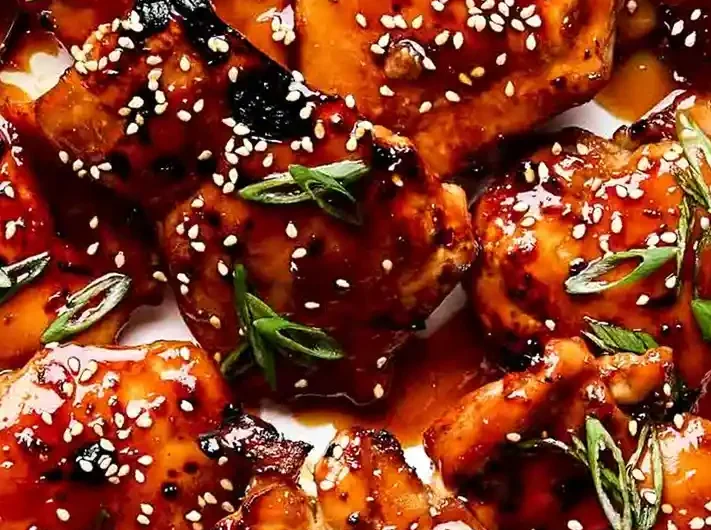
These sticky-sweet baked teriyaki chicken thighs deliver authentic, grill-like flavor in under thirty minutes. By using a simple marinade and a quick blast under the broiler, you achieve a caramelized finish that pairs perfectly with steamed rice and crisp vegetables. This reliable method ensures juicy, tender results that make a fantastic, stress-free weeknight dinner for the entire family.

List of ingredients
- Nonstick cooking spray
- 2 pounds boneless, skinless chicken thighs
- 3/4 cup teriyaki sauce, divided
- 2 green onions, thinly sliced
step-by-step instructions
- Marinate: To a large bowl, add the chicken thighs and 1/2 cup of teriyaki sauce. Mix to coat well and set aside to marinate for 10 minutes.
- Prepare: Preheat oven to 400 degrees F. Arrange racks with one in the center and one 4-6 inches below the broiler. Line a rimmed baking sheet with foil and spritz with cooking spray.
- Bake: Transfer marinated chicken to the baking sheet in a single layer, de-boned side up. Pour any remaining sauce from the bowl over the chicken. Bake on the center rack for 15 minutes.
- Broil: Preheat broiler to high. Flip the chicken thighs, spooning pan juices over them. Broil on the top rack for 4-5 minutes, rotating halfway through, until golden and caramelized.
- Serve: Drizzle with reserved teriyaki sauce and sprinkle with sliced green onions.
Refining Your Technique
Achieving The Signature Char
The secret to that genuine yakitori-style flavor lies in the transition from baking to broiling. Baking ensures the chicken is cooked through to a safe internal temperature without drying out, while the intense heat of the broiler caramelizes the sugars in the sauce. Watch the pan closely during those final minutes, as the sauce can transition from perfectly caramelized to burnt very quickly.
Managing Sauce Consistency
Selecting the right sauce is vital for a successful outcome. Many mass-produced versions are thickened with heavy starches or gums, which often create a rubbery or gloopy texture when exposed to high oven heat. Aim for a thinner, drizzly sauce that flows easily; this type of sauce reduces during cooking to create a sticky, concentrated glaze rather than a heavy layer of goo.
Optimal Chicken Placement
Always arrange your chicken in a single, even layer on the baking sheet to facilitate consistent cooking. If the pieces overlap, they will steam rather than roast, preventing the development of those desired caramelized edges. If you have a larger volume of chicken, use two separate sheet pans rather than overcrowding one.
Substitutions and Adjustments
Handling Chicken Breast Preferences
If you prefer chicken breasts over thighs, it is important to pound them to an even thickness or butterfly them before marinating. Because breasts are leaner, they cook much faster and can easily become dry. Reduce your baking time slightly and monitor the internal temperature with a meat thermometer to ensure they reach 165 degrees Fahrenheit without overcooking.
Enhancing Umami Profiles
If you feel your sauce needs more depth, consider adding a teaspoon of freshly grated ginger or minced garlic to the marinade. These aromatics bloom in the oven’s heat, providing a more complex flavor profile that mimics slow-cooked, authentic Japanese preparations. Fresh ingredients always outperform dried powders when marinating for short windows.
Storage and Efficiency
Managing Leftovers Properly
To store your leftovers, transfer any remaining chicken into an airtight container once it has cooled to room temperature. This helps maintain moisture levels. You can store the chicken in the refrigerator for three to four days, making it a perfect component for meal-prepped lunches throughout the week.
Revitalizing Reheated Chicken
When reheating, avoid the microwave if you want to maintain the integrity of the sauce. Instead, use a skillet over medium-low heat with a tiny splash of water or broth, which helps loosen the sauce and returns it to a glazed consistency. This method prevents the chicken from becoming rubbery, a common issue with high-heat microwave reheating.
Troubleshooting Common Concerns
Preventing Dry Meat During Broiling
If you are worried about the chicken drying out under the broiler, keep the broiling time strictly between 4 and 5 minutes. The purpose of this step is strictly color and flavor development, not full cooking. If the chicken still looks pale after 5 minutes, it is better to move the rack closer to the heat source rather than leaving it in longer.
Managing Excessive Smoke
The sugars in the teriyaki sauce can sometimes smoke when exposed to direct broiler heat. To mitigate this, ensure your pan is clean and free of excessive marinade pools before putting it under the broiler. If your oven creates significant smoke, turn on your exhaust fan immediately and keep a close eye on the browning process.
Addressing Uneven Browning
If your oven has hotspots, rotate the sheet pan more frequently during the broiling phase. Since broiler elements are often smaller than the oven footprint, moving the pan ensures each piece receives equal exposure to the direct radiant heat. Always use heavy-duty tongs to move the pieces if you find some are browning faster than others.
Frequently Asked Questions
Can I use this method for other proteins?
Yes, this bake-and-broil technique works exceptionally well with firm tofu or even portobello mushroom caps. Simply adjust the baking time down by about five minutes for vegetables, as they cook much faster than poultry.
Is it necessary to use a wire rack?
While a wire rack can promote air circulation, it is not strictly necessary for this recipe. Baking directly on the foil-lined sheet allows the chicken to braise slightly in the sauce, which adds to the final sticky texture of the glaze.
Should I wash the chicken before marinating?
Standard culinary practice dictates that washing raw chicken is unnecessary and can spread bacteria in your kitchen. Simply pat the chicken dry with a paper towel if it is excessively moist, then add it directly to the marinade.
What is the ideal thickness for the chicken?
Uniformity is more important than specific thickness, but aim for pieces that are roughly one inch thick. If using thick, whole breasts, butterfly them to achieve this consistent height for even roasting.
Can I freeze the marinated chicken?
You can freeze the chicken in the teriyaki marinade for up to one month. Thaw it completely in the refrigerator overnight before proceeding with the baking instructions to ensure proper cooking times.
Print
Sticky-Sweet Baked Teriyaki Chicken Thighs (30 Minutes)
- Total Time: PT30M
- Yield: 4 1x
- Diet: Gluten Free
Description
Made with a tried-and-true teriyaki sauce, these Easy Baked Teriyaki Chicken Thighs are juicy, sticky-sweet, and downright irresistible! Quickly marinate the chicken while your oven preheats, bake it on a sheet pan until tender, and finish under the broiler for caramelized yakitori-style char. Ready in 30 minutes or less!
Ingredients
- Nonstick cooking spray
- 2 pounds boneless, skinless chicken thighs
- 3/4 cup teriyaki sauce, divided
- 2 green onions, thinly sliced
Instructions
- Marinate: To a large bowl, add the chicken thighs and 1/2 cup of teriyaki sauce. Mix to coat well and set aside to marinate for 10 minutes.
- Prepare: Preheat oven to 400 degrees F. Arrange racks with one in the center and one 4-6 inches below the broiler. Line a rimmed baking sheet with foil and spritz with cooking spray.
- Bake: Transfer marinated chicken to the baking sheet in a single layer, de-boned side up. Pour any remaining sauce from the bowl over the chicken. Bake on the center rack for 15 minutes.
- Broil: Preheat broiler to high. Flip the chicken thighs, spooning pan juices over them. Broil on the top rack for 4-5 minutes, rotating halfway through, until golden and caramelized.
- Serve: Drizzle with reserved teriyaki sauce and sprinkle with sliced green onions.
Notes
Chicken thighs are recommended for optimal juiciness. If substituting chicken breasts, pound them flat or butterfly them for even cooking and monitor closely to avoid drying out under the broiler. Store leftovers in an airtight container in the refrigerator for up to 4 days.
- Prep Time: PT10M
- Cook Time: PT20M
- Category: Main Dishes
- Method: Baked & Broiled
- Cuisine: Asian-Inspired
Nutrition
- Serving Size: 1 thigh
- Calories: 320 kcal
- Sugar: 12 g
- Sodium: 780 mg
- Fat: 11 g
- Saturated Fat: 2.5 g
- Unsaturated Fat: 7 g
- Trans Fat: 0 g
- Carbohydrates: 15 g
- Fiber: 1 g
- Protein: 38 g
- Cholesterol: 120 mg
Keywords: teriyaki chicken, baked chicken, sheet pan meal, 30 minute dinner, asian-inspired, chicken thighs


