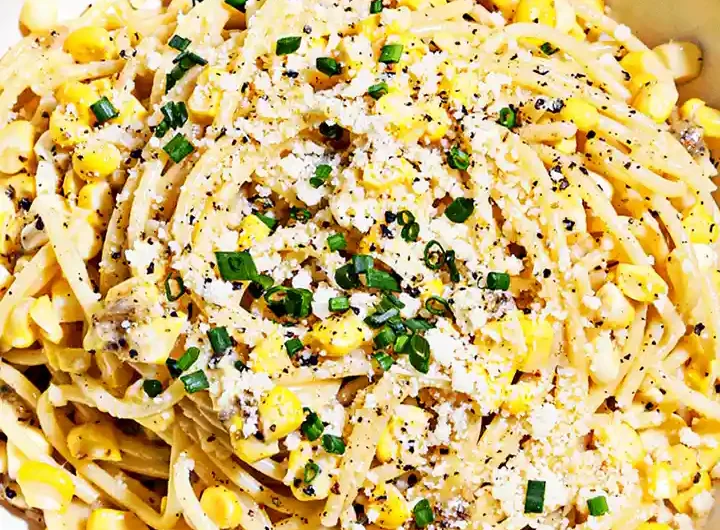
This recipe combines the sharp, peppery bite of a classic Roman pasta with the natural sweetness of fresh summer corn. It utilizes a simple emulsion technique to create a rich, creamy sauce without needing heavy cream.
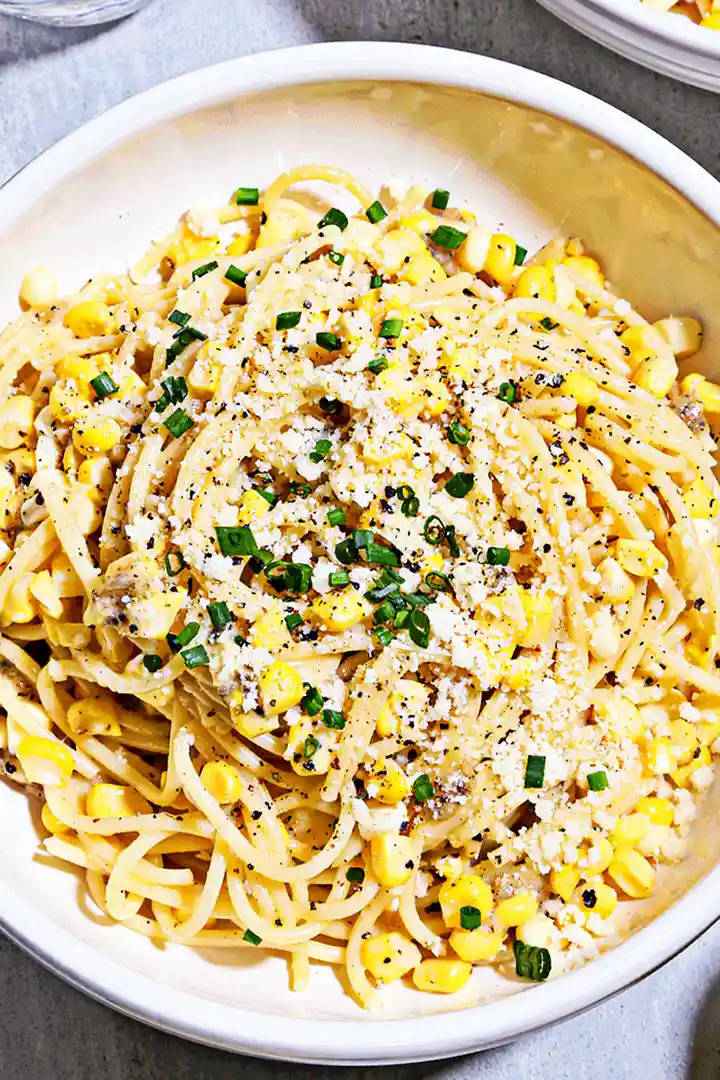
List of ingredients
- 6 ounces dried spaghetti – use a high-quality bronze-cut variety for better sauce adhesion.
- Kosher salt – used for seasoning the pasta water and the final dish.
- 1 teaspoon freshly ground black pepper – use a coarse grind, plus extra for the final garnish.
- 1 cup fresh sweet corn – cut directly from the cob for maximum freshness.
- 3 tablespoons cold, unsalted butter – keep it chilled and cut into small cubes for a better emulsion.
- 1 cup microbial-rennet Parmesan-style cheese – freshly grated to ensure it melts smoothly.
- 1 tablespoon chives – finely chopped to add a mild onion-like brightness.
step-by-step instructions
- Boil the Pasta: Bring a large pot of water to a boil over high heat and season generously with salt. Add the spaghetti and cook for 2 minutes less than the package directions specify. Reserve 1 cup of the starchy pasta water before draining the pasta and setting both aside.
- Sauté Ingredients: Heat a large sauté pan over medium-high heat. Add the drained spaghetti, 1/2 cup of the reserved pasta water, 1 teaspoon of black pepper, the fresh corn, and a pinch of salt. Cook and stir occasionally for about 1 minute.
- Create the Emulsion: Add 2 tablespoons of the cold cubed butter to the pan. Stir constantly for approximately 1 minute to emulsify the butter with the pasta water, creating a creamy base.
- Finish the Sauce: Turn off the heat completely. Stir in half of the grated cheese until combined. If the sauce seems too thick, add a few splashes of the remaining pasta water until the pasta is evenly coated.
- Final Toss and Garnish: Add the remaining tablespoon of butter and the rest of the cheese to the hot pasta. Toss everything together until glossy. Garnish with chopped chives, additional black pepper, and more cheese before serving.
Professional Pasta Preparation Tips
Using a Microplane for Fine Cheese Texture
Grate your microbial-rennet cheese using a microplane or the finest side of a box grater. Finely grated cheese melts much faster and more evenly, which prevents the sauce from becoming clumpy or stringy.
Utilizing Starchy Pasta Water for Sauce Stability
The reserved pasta water is essential because the starch acts as a binder between the fats from the butter and cheese. This creates a stable emulsion that clings to the noodles rather than pooling at the bottom of the plate.
Selecting the Right Spaghetti Gauge
Standard spaghetti is ideal for this recipe, but you can use spaghettini for a lighter feel. Avoid overly thick pasta like bucatini unless you increase the cooking time in the sauté pan to ensure the core is fully cooked.
Toasting the Black Pepper
While the recipe adds pepper during the sauté phase, you can briefly toast whole peppercorns in a dry pan before grinding them. This releases the essential oils and provides a deeper, more complex flavor profile.
Managing Temperature During Cheese Addition
Always remove the pan from the heat source before adding the cheese. Excessive heat can cause the proteins in the cheese to tighten and separate from the fats, resulting in an oily sauce instead of a creamy one.
Controlling the Butter Temperature
Using cold, cubed butter instead of softened butter helps create a better emulsion. The slow melting process allows the fat to integrate more effectively with the starchy water and cheese.
Ingredient Substitutions and Alternatives
Substituting Seasonal Vegetables for Corn
If fresh corn is unavailable, you can use frozen peas or finely diced zucchini. Ensure the vegetables are cooked until tender before adding the butter and cheese to maintain the correct sauce consistency.
Alternative Hard Cheeses for Different Flavor Profiles
While a microbial-rennet Parmesan-style cheese is standard, you can use a similar microbial-rennet Pecorino for a saltier, tangier taste. Mixing both cheeses can provide a more balanced and complex flavor.
Dairy-Free Butter Alternatives
For a dairy-free version, use a high-quality plant-based butter substitute and a vegan parmesan alternative. Be aware that plant-based cheeses may have different melting points and might require slightly more pasta water.
Gluten-Free Pasta Options
Brown rice or corn-based spaghetti works well for this dish. Since gluten-free pasta releases different amounts of starch, you may need to add a pinch of cornstarch to the boiling water to help the sauce emulsify.
Adding Fresh Herbs for Variety
If chives are not available, fresh parsley or basil can be used as a garnish. These herbs provide a different aromatic profile while still offering the freshness needed to balance the heavy cheese.
Adjusting the Pepper Heat
For those who prefer less heat, use a white pepper blend for a milder flavor. Conversely, adding a pinch of crushed red pepper flakes during the sauté step can add a subtle spicy kick.
Creative Serving Suggestions
Adding Protein for a Heartier Meal
Pan-seared shrimp or grilled scallops pair exceptionally well with the corn and pepper flavors. Place the protein on top of the plated pasta to keep the seafood crisp.
Pairing with Fresh Side Salads
Serve this pasta with a simple arugula salad tossed in lemon juice and olive oil. The acidity of the lemon cuts through the richness of the butter and cheese sauce.
Enhancing Flavor with Citrus Zest
Grate a small amount of fresh lemon zest over the final dish. The bright citrus notes highlight the sweetness of the corn and lighten the overall feel of the meal.
Plating for Professional Presentation
Use a carving fork or long tongs to twirl the spaghetti into a high nest in the center of the bowl. This prevents the pasta from spreading and allows the garnish to sit prominently on top.
Storage and Reheating Guidance
Storing Leftovers in the Refrigerator
Place leftover pasta in an airtight container and refrigerate for up to three days. The sauce will thicken and absorb into the pasta as it cools, which is normal for emulsion-based sauces.
Reviving the Sauce During Reheating
Avoid the microwave if possible, as it can cause the cheese to separate. Instead, reheat the pasta in a pan over low heat with a splash of water or milk to loosen the sauce.
Freezer Suitability
This dish is not recommended for freezing. The emulsion of butter and cheese typically breaks during the freezing and thawing process, leaving the pasta with a grainy texture.
Maintaining Garnish Freshness
Store the chives separately if you are preparing the dish in advance. Add the fresh herbs only at the moment of serving to ensure they remain vibrant and aromatic.
Troubleshooting Common Issues
Fixing a Clumpy Cheese Sauce
If the cheese clumps, it is usually due to too much heat. Immediately remove the pan from the heat and vigorously stir in a tablespoon of warm pasta water to smooth out the texture.
Adjusting Sauce Thickness
If the sauce is too thin, let it simmer for an extra 30 seconds before adding the cheese. If it is too thick or dry, add reserved pasta water one tablespoon at a time until creamy.
Managing Overcooked Pasta
If the spaghetti becomes too soft, you may have boiled it too long before the sauté step. To prevent this, always stick to the ‘2 minutes less’ rule to account for the final cooking in the pan.
Preventing the Pepper from Burning
If you notice the black pepper smelling burnt, lower the heat of your sauté pan. The pepper should be fragrant and toasted, not charred, to avoid a bitter taste in the sauce.
Frequently Asked Questions
Can I use frozen corn instead of fresh?
Yes, you can use frozen corn kernels. Thaw them completely and pat them dry with a paper towel before adding them to the pan to prevent excess water from thinning the sauce.
Why is my sauce separating into oil and water?
Separation happens when the sauce is overheated after the cheese is added. Ensure the burner is off and the pan is slightly cooled before stirring in your cheese and butter.
Can I use pre-shredded cheese from a bag?
It is not recommended because pre-shredded cheeses are coated in potato starch or cellulose to prevent clumping. This coating interferes with the emulsion and can make the sauce grainy.
How do I get the corn off the cob efficiently?
Place the corn cob upright in a large bowl and slice downwards with a sharp knife. This keeps the kernels contained and ensures you get the most out of every ear of corn.
Print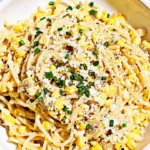
Summer Corn Cacio e Pepe Pasta
- Total Time: 25 minutes
- Yield: 2 servings 1x
- Diet: Vegetarian
Description
A summery twist on the classic Cacio e Pepe, this recipe incorporates fresh sweet corn to lighten up the creamy, peppery pasta, finished with a sprinkle of fresh chives.
Ingredients
- 6 ounces dried spaghetti
- Kosher salt
- 1 teaspoon freshly ground black pepper, plus more for garnish
- 1 cup fresh sweet corn cut from the cob
- 3 tablespoons cold, unsalted butter, cut into cubes
- 1 cup microbial-rennet Parmigiano-Reggiano cheese, freshly grated, plus more for garnish
- 1 tablespoon chives, finely chopped
Instructions
- Boil: Bring a large pot of water to a boil over high heat. Season the water generously with salt. Add the spaghetti to the water and cook for 2 minutes less than directed on the package. Reserve 1 cup of the pasta water and drain the pasta. Set both aside.
- Sauté: In a large sauté pan over medium high heat, add the drained spaghetti, 1/2 cup of pasta water, 1 teaspoon of black pepper, corn, and salt. Cook, stirring occasionally for 1 minute.
- Emulsify: Add 2 tablespoons of butter to emulsify, stirring to incorporate and make sauce creamy, approximately 1 minute.
- Finish: Turn off the heat, add half of the cheese and stir to combine. If necessary, add a few splashes of reserved pasta water to reach the desired consistency and to ensure the sauce coats the pasta. Add remaining butter to the hot pasta and the remaining cheese and toss to coat. Garnish with chives, more black pepper and more cheese if desired. Serve.
Notes
Ensure the butter is cold when adding to the pan to help create a stable emulsion for the sauce.
- Prep Time: 10 minutes
- Cook Time: 15 minutes
- Category: Main dish
- Method: Sautéing
- Cuisine: Italian-American
Nutrition
- Serving Size: 1 serving
- Calories: 700 kcal
- Sugar: 6 g
- Sodium: 850 mg
- Fat: 32 g
- Saturated Fat: 18 g
- Unsaturated Fat: 14 g
- Trans Fat: 0 g
- Carbohydrates: 70 g
- Fiber: 6 g
- Protein: 25 g
- Cholesterol: 95 mg
Keywords: Bobby Flay, corn, pasta, Cacio e Pepe, vegetarian, summer recipes