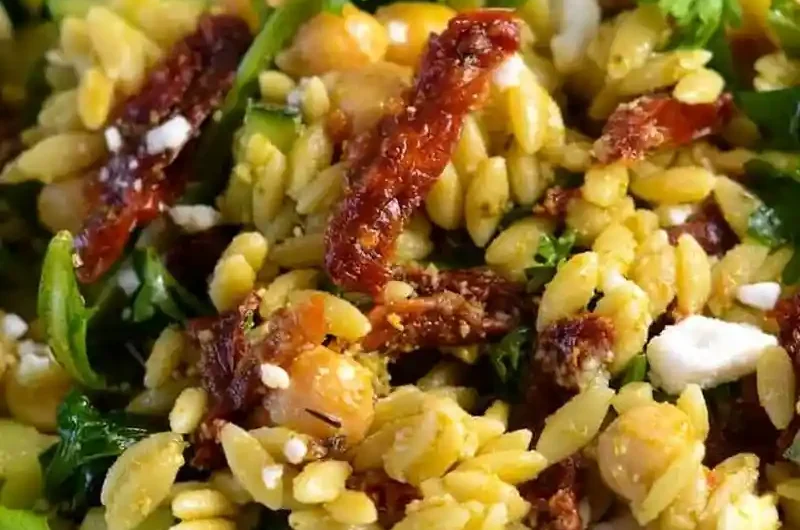
This refreshing pesto orzo salad is a quick lunch or side dish that comes together in about 15 minutes. It is a versatile option for summer gatherings, picnics, or a healthy weekday meal.
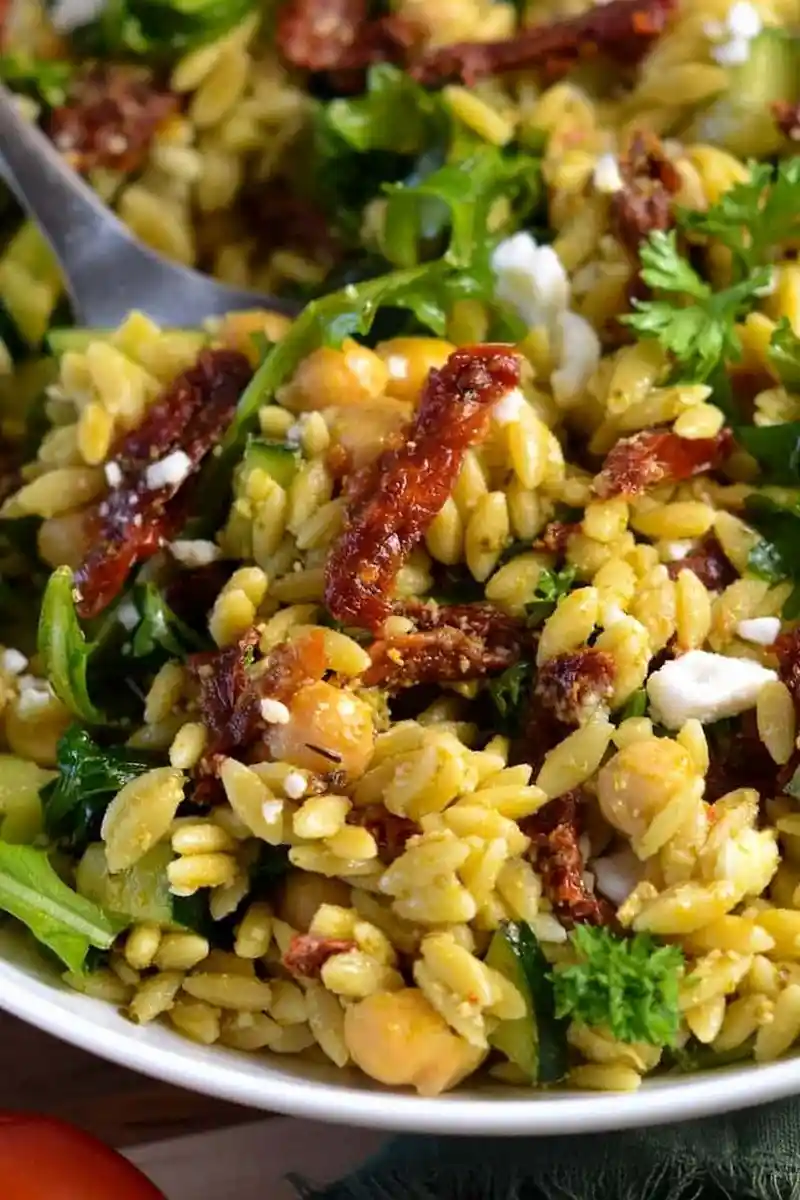
List of ingredients
- 6 oz orzo pasta (1 cup uncooked, gluten-free pasta can be used) – provides the base texture.
- 3 heaping tbsp pesto (use a dairy-free version for vegan diets) – adds the primary creamy flavor.
- 1 tbsp extra virgin olive oil – helps emulsify the dressing and adds richness.
- 1/2 cucumber (diced) – contributes a fresh, cooling crunch.
- 1/3 cup sun-dried tomatoes (julienne, packed in oil) – adds a concentrated, sweet-tart flavor.
- 1/3 cup feta (ensure it is made with microbial rennet for safety) – provides a salty, tangy contrast.
- 1 cup arugula – adds a peppery note and vibrant color.
- 1 cup chickpeas (drained and rinsed) – increases protein and satiety.
- 2-3 tbsp parsley (chopped) – adds fresh herbal brightness.
- 1/2 lemon (juiced) – balances the richness of the pesto with acidity.
- salt and pepper to taste – adjusts the final seasoning.
step-by-step instructions
- Cook the pasta: Boil the orzo in salted water according to the package directions. Ensure it is cooked al dente and not overdone to maintain structure.
- Prep the produce: While the orzo is boiling, dice your cucumber into small pieces and chop the fresh parsley.
- Cool the pasta: Once the orzo is finished cooking, drain it and immediately rinse it under cold running water.
- Combine ingredients: In a large mixing bowl, combine the cooled orzo, pesto, olive oil, diced cucumber, sun-dried tomatoes, chickpeas, feta, parsley, arugula, and fresh lemon juice.
- Mix gently: Toss all the ingredients together with a spoon or tongs until the pesto is evenly distributed.
- Season and serve: Taste the salad and add salt and pepper as needed. You can eat it immediately or refrigerate it for an hour to serve chilled.
Ingredient Customizations and Alternatives
Replacing Orzo with Gluten-Free Options
If you need a gluten-free version, look for orzo made from corn, brown rice, or quinoa blends. These alternatives maintain a similar shape and texture, though you may need to monitor the cooking time closely to avoid mushiness.
Using Fresh Tomatoes Instead of Dried
If you cannot find sun-dried tomatoes, halved cherry tomatoes or grape tomatoes are excellent substitutes. They provide a juicier, fresher taste that pairs well with the lemon juice and pesto.
Swapping Parsley for Other Fresh Herbs
Fresh basil is the most natural alternative to parsley since it is already a key component of the pesto. For a more unique flavor profile, try adding a small amount of fresh mint or cilantro.
Dairy-Free and Vegan Feta Alternatives
For a vegan version, use a plant-based feta made from coconut oil or almonds. You can also substitute the feta with small cubes of firm tofu marinated in lemon juice and salt for a similar tang.
Adding Extra Vegetables for Nutrition
Boost the nutrient density by adding diced red bell peppers, sliced kalamata olives, or thinly sliced red onions. Fresh baby spinach can also be used as a replacement for arugula if you prefer a milder green.
Increasing Protein with Legumes
While chickpeas are the standard, cannellini beans or chickpeas are great options for extra protein. Ensure they are thoroughly rinsed to remove excess sodium and prevent a salty flavor.
Incorporating Crunchy Nuts
To add a sophisticated texture, sprinkle toasted pine nuts or crushed pistachios over the finished salad. These nuts complement the basil in the pesto and add a satisfying crunch to every bite.
Expert Cooking Techniques for Better Pasta Salad
Properly Rehydrating Dry Sun-Dried Tomatoes
If using dry sun-dried tomatoes instead of oil-packed ones, place them in a bowl of warm water for about 5 minutes. Once they are soft, drain them well and pat them dry with a paper towel before slicing.
Cooking Orzo Al Dente for Texture
It is crucial to cook the pasta slightly under the package’s recommended time. This ensures the orzo retains its bite and does not break down when you mix in the dressing and other ingredients.
The Importance of Rinsing Cold Water
Rinsing the cooked orzo under cold water stops the cooking process immediately. This step also removes excess surface starch, which prevents the pasta from clumping together into a mass.
Balancing Acidity with Lemon Juice
The lemon juice is essential for cutting through the richness of the olive oil and pesto. If the salad tastes too heavy, add an extra squeeze of fresh lemon to brighten the overall flavor.
Storage and Freshness Guidelines
Maximizing Fridge Life
Store the completed salad in an airtight glass or plastic container to prevent it from absorbing other smells in the fridge. When stored properly, this salad remains fresh and tasty for up to 5 days.
Avoiding Freezer Damage
This recipe is not suitable for freezing because the cucumber and arugula will lose their structure and become watery upon thawing. The feta cheese may also change texture and crumble excessively.
Best Practices for Make-Ahead Prep
If prepping a day in advance, consider keeping the arugula and lemon juice separate. Stir them in just before serving to ensure the greens stay crisp and the flavors remain vibrant.
Serving Temperature Recommendations
This dish can be enjoyed at room temperature for a softer taste or chilled for a more refreshing experience. Chilling allows the flavors of the pesto and lemon to meld together more deeply.
Meal Pairing and Serving Ideas
Complementary Main Course Pairings
This salad pairs beautifully with a plant-based burger, a grilled vegetable wrap, or a Mediterranean-style flatbread pizza. The acidity of the salad cleanses the palate between bites of richer foods.
Ideal Appetizer Side-Kicks
Serve this orzo salad alongside cucumber bites topped with hummus or a plate of stuffed grape leaves. These combinations create a cohesive Mediterranean-themed appetizer spread for guests.
Professional Plating for Groups
For a party, serve the salad in a wide, shallow bowl rather than a deep one. This prevents the heavier ingredients like chickpeas and feta from settling at the bottom, keeping the distribution even.
Common Troubleshooting Solutions
Preventing the Pasta from Drying Out
Pasta tends to absorb moisture over time, which can make the salad feel dry. If this happens, stir in a small amount of extra olive oil or a teaspoon of water to restore the creaminess.
Correcting a Pesto-Heavy Sauce
If the pesto flavor is too overwhelming, add more fresh vegetables like diced cucumber or extra arugula. You can also increase the amount of lemon juice to balance the intense basil and garlic notes.
Maintaining Arugula’s Crispness
Arugula can wilt quickly when exposed to salt and acid. To keep it fresh, fold the greens in very gently at the very end of the mixing process instead of stirring them vigorously.
Frequently Asked Questions about Orzo Salad
Is orzo a pasta or rice?
Orzo is a pasta made from durum wheat, despite its rice-like appearance. It is often referred to as risoni and is cooked similarly to other small pasta shapes.
Is whole grain orzo a healthier choice?
Yes, whole grain orzo provides more fiber and a slightly nuttier flavor than refined white orzo. It helps maintain blood sugar levels and keeps you feeling full for longer.
Should I always rinse pasta for cold salads?
Rinsing is highly recommended for cold pasta salads to stop the cooking and remove starch. For hot pasta dishes, you should avoid rinsing so the sauce adheres better to the noodle.
What is the difference between oil-packed and dry tomatoes?
Oil-packed tomatoes are softer and infused with herbs, while dry tomatoes are more concentrated and chewy. Dry versions must be rehydrated in warm water to reach a palatable consistency.
Print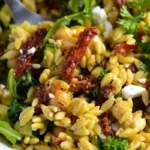
Sun Dried Tomato Orzo Pesto Salad
- Total Time: 15 minutes
- Yield: 4 servings 1x
- Diet: Vegetarian
Description
This refreshing pesto orzo salad is an easy lunch or side dish that can be made in just 15 minutes and is perfect for your next summer gathering! You can easily double this recipe for a group.
Ingredients
- 6 oz orzo pasta
- 3 heaping tbsp pesto
- 1 tbsp extra virgin olive oil
- 1/2 cucumber, diced
- 1/3 cup sun-dried tomatoes, julienne, in oil
- 1/3 cup feta
- 1 cup arugula
- 1 cup chickpeas, drained and rinsed
- 2–3 tbsp parsley, chopped
- 1/2 lemon, juiced
- salt and pepper to taste
Instructions
- Step 1: Start by cooking your orzo to package instructions. Cook it until it is al dente and not overcooked.
- Step 2: While your orzo is cooking, dice up your cucumbers and parsley.
- Step 3: Once your orzo is done cooking, rinse it under cold water.
- Step 4: In a large bowl combine cooked orzo with pesto, olive oil, diced cucumber, sun-dried tomatoes, chickpeas, feta, parsley, arugula, and fresh lemon juice. Gently mix until combined.
- Step 5: Taste and add salt and pepper if desired.
- Step 6: Eat right away or store in the fridge for an hour until chilled.
Notes
Storage: Keep in the fridge for up to 5 days. If using dried sundried tomatoes, rehydrate them by soaking in warm water for 5 minutes, then drain and pat dry. You can substitute orzo with other small pasta like rotini or a gluten-free alternative.
- Prep Time: 7 minutes
- Cook Time: 8 minutes
- Category: Lunch, Side Dish
- Method: Boiling
- Cuisine: Mediterranean
Nutrition
- Serving Size: 1 serving
- Calories: 294 kcal
- Sugar: 8 g
- Sodium: 166 mg
- Fat: 5 g
- Saturated Fat: 2 g
- Unsaturated Fat: 3 g
- Trans Fat: 0 g
- Carbohydrates: 51 g
- Fiber: 6 g
- Protein: 13 g
- Cholesterol: 11 mg
Keywords: pesto orzo salad, sun-dried tomatoes, summer salad, lunch, side dish, Mediterranean