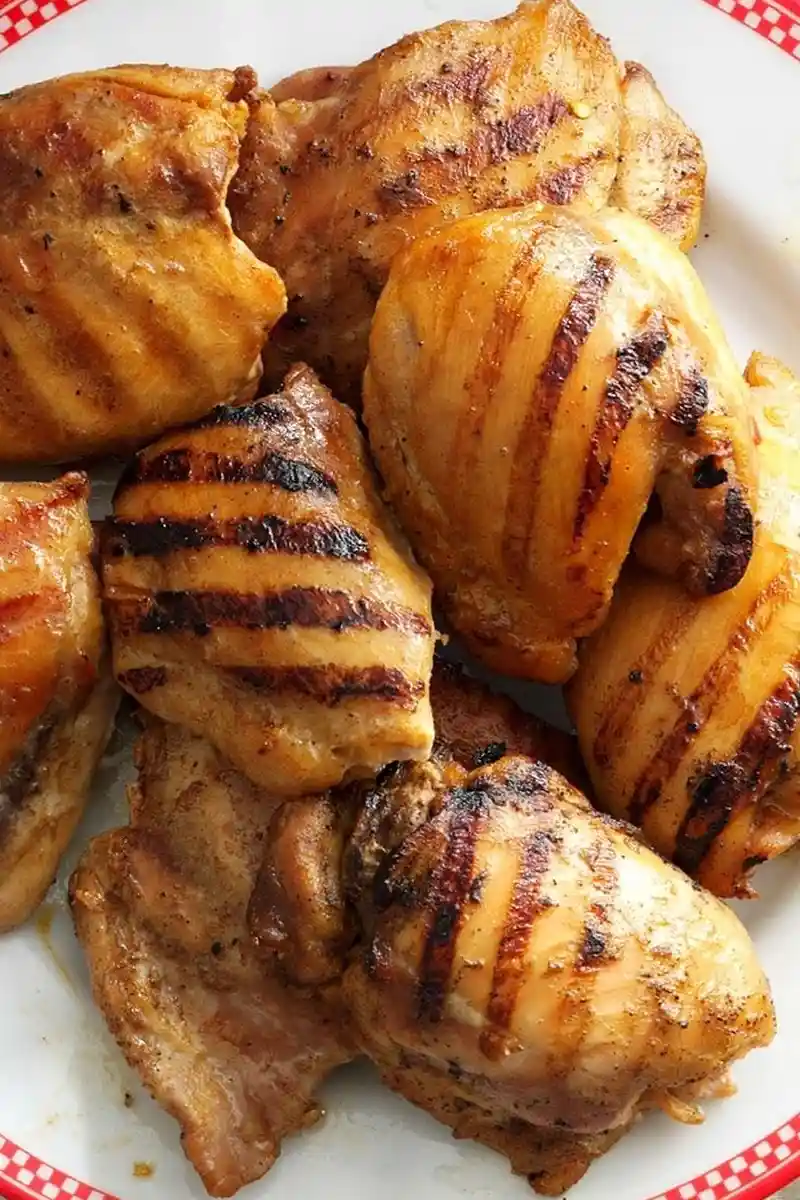
Prepare a flavorful meal with this quick grilled chicken dish featuring a tangy brown sugar and mustard glaze. It is an efficient recipe for weeknight dinners that delivers a balance of sweetness and spice.
List of ingredients
- 1/2 cup yellow or Dijon mustard – provides the tangy base for the glaze.
- 1/3 cup packed brown sugar – adds sweetness and helps with caramelization on the grill.
- 1/2 teaspoon ground allspice – provides a warm, aromatic depth to the flavor profile.
- 1/4 teaspoon crushed red pepper flakes – adds a subtle, spicy heat.
- 8 boneless skinless chicken thighs (about 2 pounds) – juicy protein that holds up well to grilling.
step-by-step instructions
- Prepare the Glaze: In a large bowl, mix the mustard, brown sugar, allspice, and red pepper flakes. Remove 1/4 cup of this mixture and set it aside to serve with the finished chicken. Add the chicken thighs to the remaining mixture and toss them until every piece is evenly coated.
- Grill the Chicken: Place the chicken on a grill covered over medium heat, or place it in an oven 4 inches from the heat source under the broiler. Cook for 6-8 minutes per side, or until a meat thermometer indicates an internal temperature of 170°F. Serve the hot chicken with the reserved mustard mixture on the side.
Grilling and Cooking Techniques
Managing Heat for Caramelization
Because this recipe uses brown sugar, the glaze can burn if the heat is too high. Use a medium heat setting to ensure the chicken cooks through before the sugars char. If you see the exterior darkening too quickly, move the meat to a cooler part of the grill.
Using a Meat Thermometer for Precision
Chicken thighs are best when cooked to 170°F to ensure the connective tissue breaks down. Use an instant-read thermometer inserted into the thickest part of the thigh. This prevents overcooking while ensuring the meat is safe to eat.
The Advantage of Using Chicken Thighs
Thighs are more forgiving than breasts and remain juicy even if cooked slightly longer. Their higher fat content works well with the acidity of the mustard. This makes them an ideal choice for high-heat methods like grilling or broiling.
Broiling as an Oven Alternative
When broiling, keep the oven rack about 4 inches away from the heating element. This distance allows the heat to penetrate the meat without scorching the sugar glaze immediately. Flip the chicken halfway through the cooking time for an even sear.
Ingredient Substitutions and Customizations
Choosing Between Yellow and Dijon Mustard
Yellow mustard provides a sharp, vinegary tang typical of American barbecue. Dijon mustard offers a more refined, slightly spicy, and complex flavor. Either option works well, but Dijon will result in a more sophisticated taste profile.
Using Honey Instead of Brown Sugar
Honey can be substituted for brown sugar to create a glossier finish. Since honey is a liquid, you may need to slightly reduce the amount of mustard to keep the glaze thick. This substitution adds a floral sweetness to the dish.
Adjusting the Heat Level
For those who prefer a spicier meal, increase the crushed red pepper flakes to 1/2 teaspoon. If you are cooking for children or sensitive palates, reduce the flakes to a small pinch. The heat is mild but can be easily scaled.
Allspice Replacements
If allspice is unavailable, use a combination of ground cinnamon and ground cloves. A pinch of each creates a similar warm profile. Alternatively, a small amount of nutmeg can provide a comparable aromatic quality.
Serving Suggestions and Side Dishes
Pairing with Fresh Garden Salads
A crisp green salad with a lemon vinaigrette balances the sweetness of the brown sugar glaze. Avoid heavy creamy dressings that might clash with the tangy mustard. Fresh cucumbers and radishes add a refreshing crunch.
Complementing with Grilled Vegetables
Grill asparagus, zucchini, or bell peppers alongside the chicken. Coat the vegetables in olive oil and salt to let their natural flavors shine. The charred vegetables pair perfectly with the savory glaze.
Choosing the Right Grains and Starches
Serve the chicken over a bed of brown rice or quinoa for a nutty contrast. Mashed cauliflower or a simple baked potato also work well. These starches help soak up any extra mustard sauce on the plate.
Adding a Fresh Garnish
Sprinkle chopped fresh parsley or sliced green onions over the chicken before serving. This adds a pop of color and a fresh, sharp contrast to the rich glaze. A squeeze of fresh lime juice can also brighten the overall flavor.
Proper Storage and Food Safety
Refrigerator Storage Duration
Store leftover chicken in an airtight container in the refrigerator. It will remain fresh and safe to eat for 3 to 4 days. Keep the reserved sauce in a separate small container to maintain its consistency.
Freezing Cooked Chicken
Wrap cooked chicken thighs tightly in aluminum foil and place them in a freezer-safe bag. They can be frozen for up to 3 months. Thaw the meat in the refrigerator overnight before reheating.
Safe Handling of Raw Chicken
Always use a dedicated cutting board for raw chicken to avoid cross-contamination. Wash your hands and all utensils with soap and warm water after they touch raw meat. Ensure the chicken is cooked to the proper internal temperature.
Reheating Methods for Best Results
Oven Reheating to Maintain Texture
Place the chicken in a baking dish and cover it with aluminum foil to trap moisture. Heat at 325°F until the internal temperature reaches 165°F. This method prevents the meat from drying out compared to higher temperatures.
Microwave Tips for Even Heating
Heat the chicken in short 30-second intervals to avoid toughening the proteins. Place a damp paper towel over the meat or add a teaspoon of water to the plate. This creates steam that keeps the chicken moist.
Stovetop Reheating with Extra Sauce
Place the chicken in a skillet over low to medium heat. Add a small amount of the reserved mustard mixture or a splash of vegetable broth. Cover the pan with a lid to steam the meat through gently.
Preparation and Make-Ahead Advice
Marinating Time for Deeper Flavor
While a quick coat works, letting the chicken sit in the glaze for 2 to 4 hours enhances the flavor. Do not marinate for more than 24 hours, as the acid in the mustard can change the texture of the meat. Store the marinating chicken in a sealed container in the fridge.
Pre-portioning the Sauce
Mix the entire batch of glaze a day in advance and store it in a jar. When ready to cook, simply pour out the required amount and reserve the serving portion. This saves time during the actual cooking process.
Organizing Your Mise en Place
Measure all spices and mustard into a bowl before preparing the meat. Pat the chicken thighs dry with paper towels to help the glaze adhere better. Having everything ready prevents the chicken from sitting too long at room temperature.
Troubleshooting Common Issues
Preventing the Sauce from Burning
If the glaze is scorching, reduce the heat immediately. Ensure the grill lid is closed to circulate heat more evenly around the meat. You can also lightly brush a small amount of oil on the grates to prevent sticking and burning.
Fixing Dry Chicken
If the chicken seems dry, let it rest for 5 minutes before slicing to allow juices to redistribute. Apply an extra spoonful of the reserved mustard mixture to the meat. This adds immediate moisture and flavor.
Balancing Excessive Tanginess
If the mustard flavor is too overpowering, stir a small amount of honey or maple syrup into the reserved sauce. A tiny pinch of salt can also help balance the acidity. Adjust the flavor based on your personal preference.
Choosing the Best Chicken Thighs
Bone-in vs Boneless Thighs
Boneless thighs cook faster and are easier to coat in the glaze. Bone-in thighs provide more flavor and stay juicier but require a longer cooking time. If using bone-in, increase the grill time and check the temperature at the bone.
Skinless vs Skin-on Options
Skinless thighs allow the mustard glaze to penetrate the meat directly. Skin-on thighs provide a crispy exterior but require a higher initial heat to render the fat. For this specific glaze, skinless is recommended for better sauce adhesion.
Trimming Excess Fat
Use kitchen shears to remove any large pieces of hanging fat from the thighs. Excess fat can cause flare-ups on the grill, which may burn the sugar in the glaze. Trimming ensures a cleaner cook and a healthier result.
Grill Preparation and Maintenance
Cleaning the Grill Grates
Use a wire grill brush to remove carbon buildup while the grates are hot. Clean grates prevent the chicken from sticking and avoid off-flavors from previous meals. A clean surface ensures better sear marks.
Oiling the Grates to Prevent Sticking
Dip a folded paper towel in vegetable oil and use tongs to rub it over the hot grates. This creates a non-stick barrier between the meat and the metal. It is especially important for recipes containing sugar.
Setting Up Two-Zone Heating
Create a hot zone and a medium zone on your grill by piling coals on one side or lighting only half the burners. Start the chicken on the hot side for a sear and move it to the medium side to finish. This prevents the sugar from burning while the meat finishes cooking.
Nutritional Considerations
Reducing the Sugar Content
To lower the calories, reduce the brown sugar by half or use a monk fruit sweetener. The glaze will be less thick and will not caramelize as deeply. This is a practical way to make the recipe more diet-friendly.
Increasing the Protein Ratio
Increase the number of chicken thighs while keeping the sauce quantity the same. This results in a lighter coating of glaze per piece of meat. It reduces the total sugar intake per serving without losing the flavor profile.
Adding Fiber with Side Vegetables
Serve the chicken with a large portion of steamed broccoli or sautéed spinach. These high-fiber vegetables help slow the absorption of sugars from the glaze. They also provide essential vitamins to create a balanced meal.
Frequently Asked Questions
Can I use chicken breasts instead?
Yes, but you must adjust the cooking time. Breasts cook faster than thighs and can dry out quickly; remove them from the heat when they reach 165°F. Consider slicing them into thinner cutlets for more even cooking.
Do I need to marinate the chicken?
Marinating is not strictly required because the mustard and sugar are strong flavors that coat the surface. However, a short soak of 30 minutes will allow the flavors to penetrate slightly deeper into the meat.
Is this recipe suitable for slow cookers?
You can adapt this for a slow cooker by placing the thighs in the pot with the glaze. Cook on low for 6 hours, then transfer the chicken to a broiler for 3 minutes per side to get the caramelized finish.
How do I know when the chicken is done?
The most reliable method is using a meat thermometer. The chicken is safe and juicy when the internal temperature reaches 170°F. Avoid relying on the color of the juices, as this can be misleading.
Print
Sweet and Savory Grilled Mustard Chicken
- Total Time: 20 minutes
- Yield: 8 servings 1x
- Diet: General
Description
I came up with this recipe in college and it’s been a household staple ever since. It’s a snap to throw together with ingredients I have on hand.
Ingredients
- 1/2 cup yellow or Dijon mustard
- 1/3 cup packed brown sugar
- 1/2 teaspoon ground allspice
- 1/4 teaspoon crushed red pepper flakes
- 8 boneless skinless chicken thighs (about 2 pounds)
Instructions
- Step: In a large bowl, mix mustard, brown sugar, allspice and pepper flakes. Remove 1/4 cup mixture for serving. Add chicken to remaining mixture; toss to coat.
- Step: Grill chicken, covered, over medium heat or broil 4 in. from heat 6-8 minutes on each side or until a thermometer reads 170°. Serve with reserved mustard mixture.
- Prep Time: 5 minutes
- Cook Time: 15 minutes
- Category: Dinner
- Method: Grilling
- Cuisine: American
Nutrition
- Serving Size: 1 chicken thigh
- Calories: 224 kcal
- Sugar: 9 g
- Sodium: 597 mg
- Fat: 9 g
- Saturated Fat: 2 g
- Unsaturated Fat: 7 g
- Trans Fat: 0 g
- Carbohydrates: 13 g
- Fiber: 1 g
- Protein: 22 g
- Cholesterol: 76 mg
Keywords: grilled chicken, brown sugar, mustard, chicken thighs