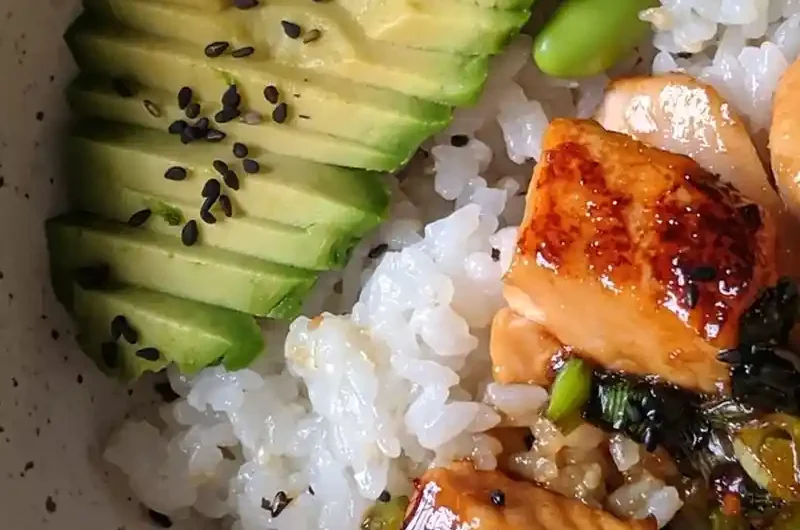
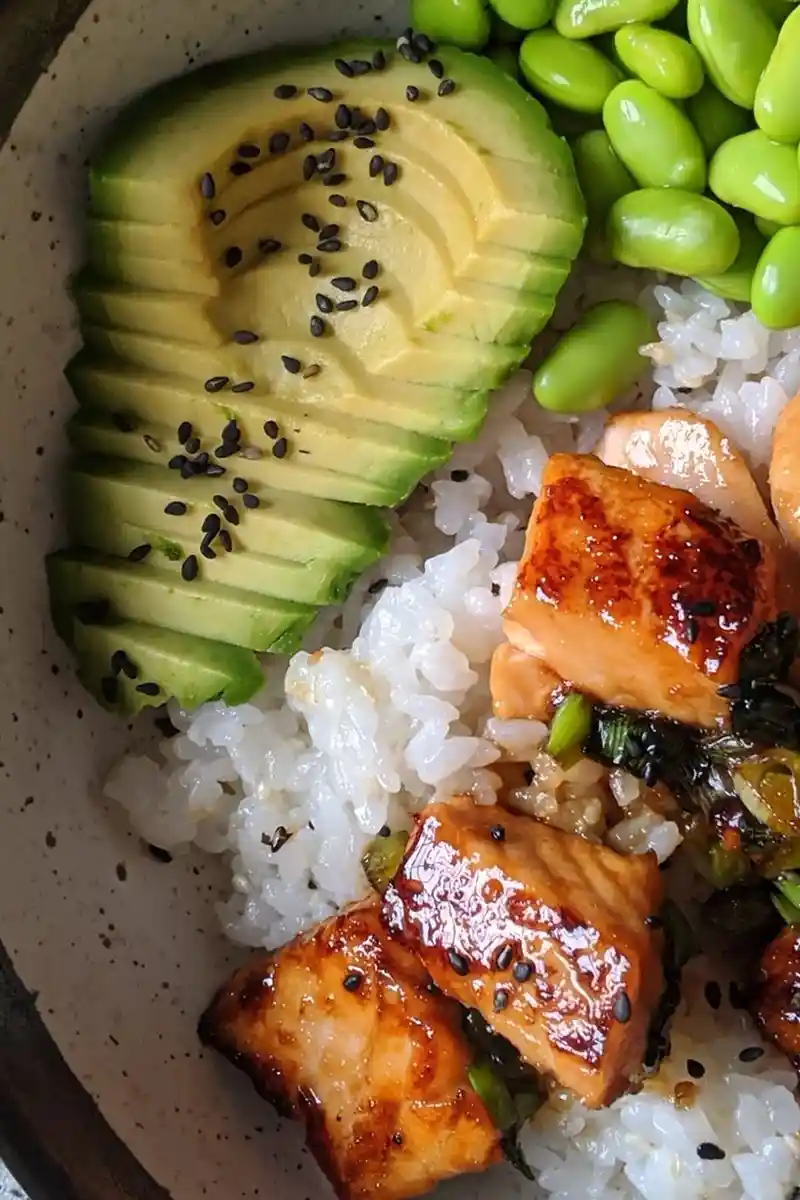
This nutritious bowl combines sticky glazed salmon with seasoned sushi rice and fresh vegetables for a complete meal. It offers all the flavors of a sushi roll without the complex assembly process. Prepare it in under 30 minutes for a healthy lunch or dinner.
List of ingredients
- 180g (6.5oz) sushi rice – provides the essential sticky base.
- 3 tbsp rice vinegar – adds tanginess to the rice dressing.
- 1 tsp caster sugar – balances the acidity of the vinegar.
- 0.5 tsp fine salt – enhances the overall flavor of the rice.
- 30ml (1fl oz) maple syrup – creates a thick, glossy glaze.
- 1 tsp sesame oil – adds a toasted, nutty aroma.
- 2 tsp gluten free tamari soy sauce – provides a deep salty umami taste.
- 0.5 tsp garlic granules – adds a savory depth to the marinade.
- 1 tsp white wine vinegar – used as a substitute for mirin for a bright finish.
- 2 salmon fillets – the primary protein source.
- 2 tbsp sesame seeds – used for texture and decoration.
- 4 spring onions – adds a fresh, sharp contrast to the glaze.
- 150g (5oz) edamame beans – provides plant-based protein and color.
- Half a ripe avocado – adds a creamy richness to the bowl.
step-by-step instructions
- Prepare the rice: Cook the sushi rice following the package directions. While the rice is cooking, whisk together the rice vinegar, caster sugar, and fine salt in a small bowl until fully dissolved.
- Season the rice: Pour the prepared vinegar dressing over the hot, freshly cooked rice. Stir gently to coat all the grains and fluff the rice with a fork.
- Add texture: Lightly toast the sesame seeds in a small frying pan over medium heat. Stir the toasted seeds into the rice and set the pan aside to cool slightly.
- Prep the components: Remove the skin from the salmon fillets and cut them into bite-sized chunks. Finely dice the spring onions.
- Mix the glaze: Combine maple syrup, sesame oil, tamari, garlic granules, and white wine vinegar in a small dish. Stir until the ingredients are well integrated.
- Assemble the bowls: Divide the warm rice between two wide bowls, covering about two-thirds of the base. Fill the remaining third with edamame beans and sliced avocado.
- Reduce the sauce: Pour the marinade into a frying pan over high heat. Once it bubbles, reduce to a simmer and stir constantly until the liquid thickens into a glossy glaze.
- Cook the salmon: Increase the heat to high and add the salmon chunks to the pan. Stir to ensure the fish is fully coated in the glaze and sprinkle in the diced spring onions.
- Final sear: Continue cooking for a few minutes, stirring occasionally, until the salmon is glazed and cooked to your preferred doneness.
- Serve: Scoop the teriyaki salmon and spring onions onto the rice bowls. Serve immediately with extra tamari on the side if desired.
Customizing Your Bowl Ingredients
Substitute Salmon with Firm Tofu
For a plant-based version, use extra-firm tofu pressed and cut into cubes. Sear the tofu in the pan first until golden before adding the teriyaki glaze to ensure a crisp exterior.
Swap Sushi Rice for Quinoa
Quinoa is a great alternative for those seeking a higher protein grain. Since quinoa is not naturally sticky, omit the vinegar dressing and instead toss it with a splash of lime juice and salt.
Use Fresh Cucumber for Extra Crunch
Adding thinly sliced Persian cucumbers provides a refreshing contrast to the rich glaze. Slice them into rounds or matchsticks and place them alongside the edamame beans.
Incorporate Shredded Carrots for Color
Grated carrots add a natural sweetness and a bright orange hue to the presentation. Toss them in a tiny bit of sesame oil and salt before adding them to the bowl.
Try Brown Rice for More Fiber
Short-grain brown rice can be used for a heartier texture. Note that brown rice requires a longer cooking time and slightly more water than white sushi rice.
Add Sliced Radishes for Sharpness
Thinly sliced red radishes offer a peppery bite and a crisp texture. They work well as a topping to cut through the creaminess of the avocado.
Glaze and Flavor Modifications
Use Honey Instead of Maple Syrup
Honey provides a similar thickness and sweetness to maple syrup. Be cautious as honey can caramelize and burn faster, so keep the heat moderate during the reduction phase.
Adjust the Saltiness with Coconut Aminos
For a lower-sodium alternative to tamari, use coconut aminos. This will result in a slightly sweeter sauce, so you may want to reduce the amount of maple syrup used.
Increase the Sauce Volume for Drizzling
The standard recipe creates a tight glaze that coats the salmon. To have extra sauce for the rice, double the quantities of the maple syrup, tamari, and vinegar ingredients.
Add Fresh Ginger for Zesty Heat
Grating a small amount of fresh ginger into the marinade adds a classic Asian flavor profile. Stir the ginger paste in with the garlic granules before reducing the sauce.
Storage and Freshness Guidelines
Store Components Separately for Meal Prep
To maintain the best texture, store the cooked rice, salmon, and fresh vegetables in separate containers. This prevents the rice from absorbing all the sauce and the avocado from softening.
Reheating the Glazed Salmon
Reheat the salmon gently in a microwave or a small pan with a teaspoon of water. Avoid overheating, as salmon can become dry and rubbery very quickly.
Reviving Dried Out Sushi Rice
If the rice becomes hard in the fridge, sprinkle it with a tablespoon of water before reheating. Microwave it covered with a damp paper towel to steam the grains back to softness.
Preventing Avocado Browning
Squeeze a small amount of lemon or lime juice over the sliced avocado. Store the avocado in an airtight container with the pit still inside to slow down oxidation.
Professional Preparation Techniques
Rinse Sushi Rice Until Water Runs Clear
Rinsing the rice removes excess surface starch that can cause the rice to become gummy. Use a fine-mesh strainer and run cold water over the grains until the water is no longer cloudy.
Cook Salmon at Room Temperature
Remove the salmon from the refrigerator about 15 minutes before cooking. This ensures the fish cooks evenly throughout and doesn’t release too much moisture in the pan.
Achieve a Perfect Glaze Reduction
The key to a sticky glaze is the reduction process. Simmer the sauce until it coats the back of a spoon before adding the salmon to ensure the flavor is concentrated.
Use a Non-Stick Pan for the Glaze
Because of the high sugar content in the maple syrup, the sauce can stick and burn. A heavy-bottomed non-stick pan allows for easier stirring and more consistent caramelization.
Troubleshooting Common Issues
Fixing Rice That Is Too Sticky
If your rice is overly clumped, you may have used too much water or skipped the rinsing step. Gently fluff the rice with a fork or rice paddle to separate the grains.
Preventing the Glaze from Burning
If the sauce begins to smoke or turn dark brown too quickly, add a splash of water or rice vinegar. Immediately lower the heat to bring the temperature back down.
Handling Salmon That Sticks to the Pan
Ensure the pan is sufficiently hot before adding the fish. Avoid moving the salmon chunks too frequently; let them sear for a minute to develop a crust before stirring.
Correcting a Sauce That Is Too Sweet
If the glaze tastes overly sweet, stir in an extra teaspoon of tamari or a squeeze of fresh lime. This adds acidity and salt to balance the maple syrup.
Frequently Asked Questions
Can I make this recipe completely vegan?
Yes, replace the salmon with extra-firm tofu or chickpeas. Ensure the tamari used is certified vegan and keep all other ingredients as listed.
What is the best way to choose a ripe avocado?
Gently squeeze the avocado in the palm of your hand. It should give slightly but not feel mushy; a dark skin usually indicates ripeness.
Is tamari the same as soy sauce?
Tamari is a Japanese style of soy sauce that is typically brewed without wheat. It has a richer flavor and is the preferred choice for gluten-free diets.
How long does the prepared bowl last in the fridge?
The assembled bowl lasts about 24 hours, but the components separately last up to 3 days. Always keep the bowl refrigerated to ensure food safety.
Can I use a different type of vinegar for the rice?
While rice vinegar is traditional, apple cider vinegar is a decent substitute. It has a similar acidity but a slightly more fruity profile.
Print
Teriyaki Salmon Sushi Bowl
- Total Time: 30 minutes
- Yield: 2 servings 1x
- Diet: Gluten-free, Dairy-free
Description
A healthy, gluten-free Teriyaki Salmon Sushi Bowl featuring sticky glazed salmon, seasoned sushi rice, edamame beans, and creamy avocado.
Ingredients
- 180g (6.5oz) sushi rice
- 3 tbsp rice vinegar
- 1 tsp caster sugar
- 0.5 tsp fine salt
- 30ml (1fl oz) maple syrup
- 1 tsp sesame oil
- 2 tsp gluten free tamari soy sauce
- 0.5 tsp garlic granules
- 1 tsp rice vinegar (substitute for mirin)
- 2 salmon fillets
- 2 tbsp sesame seeds
- 4 spring onions
- 150g (5oz) edamame beans
- Half a ripe avocado
Instructions
- Step: Cook the sushi rice according to the packet instructions and while it is cooking prepare the sushi rice dressing. To do this, mix the rice vinegar, sugar and salt together in a small dish, stirring well until the sugar and salt have dissolved in the vinegar. When the rice is cooked, pour the dressing over the top (while it is still hot) and then stir to coat the rice and fluff it up.
- Step: In a small frying pan, lightly toast the sesame seeds, scatter them over the rice and stir through. Set the rice aside (still in the saucepan) to cool slightly.
- Step: Prepare the salmon fillets by removing the skin and chopping into chunks. Dice the spring onions into small chunks. Also prepare the teriyaki marinade by mixing the maple syrup, sesame oil, tamari, garlic granules and rice vinegar together in a small dish. Set these three elements aside while you prepare the sushi bowl base.
- Step: Once the rice has cooled, and is now warm rather than hot, you can assemble the base for the bowls. Split the rice between two wide bowls so that two-thirds of each base is covered. In the remaining third, pile edamame beans and sliced avocado.
- Step: Pour the marinade into a small frying pan over a high heat. When it begins to bubble, turn the heat down to simmering and stir it constantly until it has reduced, turning from watery sauce to a thicker, glaze consistency. Add the chunks of salmon to the pan and turn the heat back up to high – stir so that the salmon is fully coated in the glaze and then sprinkle the spring onions over the top. Continue to cook on a high heat for a couple of minutes, stirring occasionally, until the salmon is beautifully glazed and cooked to your preferred level. Remove from the pan and scoop the teriyaki salmon and spring onions onto the sushi bowls.
Notes
If you do not dress the rice in this recipe, you may wish to double the quantity of teriyaki sauce, as the current amount is primarily a marinade for the salmon.
- Prep Time: 15 minutes
- Cook Time: 15 minutes
- Category: Main Course
- Method: Sautéing
- Cuisine: Asian
Nutrition
- Serving Size: 1 bowl
- Calories: 820 kcal
- Sugar: 18 g
- Sodium: 980 mg
- Fat: 28 g
- Saturated Fat: 6 g
- Unsaturated Fat: 22 g
- Trans Fat: 0 g
- Carbohydrates: 82 g
- Fiber: 11 g
- Protein: 46 g
- Cholesterol: 95 mg
Keywords: teriyaki salmon, sushi bowl, gluten free, healthy lunch, asian bowl