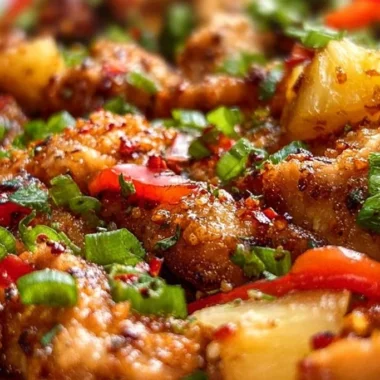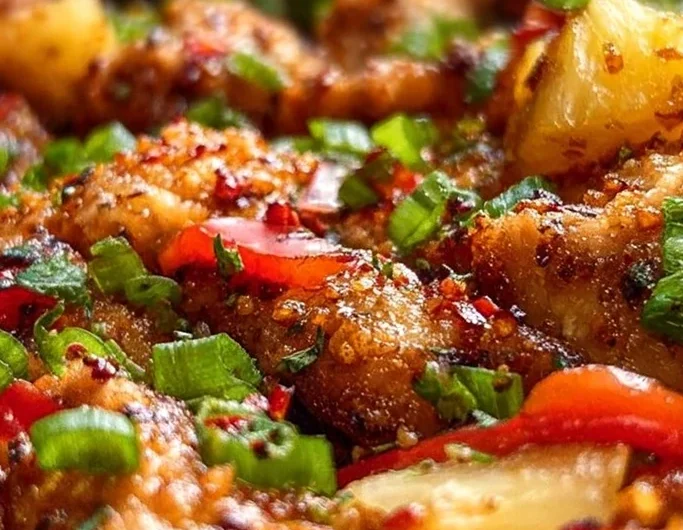
This sheet pan meal combines juicy chicken and sweet pineapple for a fast, nutrient-dense weeknight dinner. It is a balanced dish that simplifies kitchen cleanup by using a single baking sheet for all components.
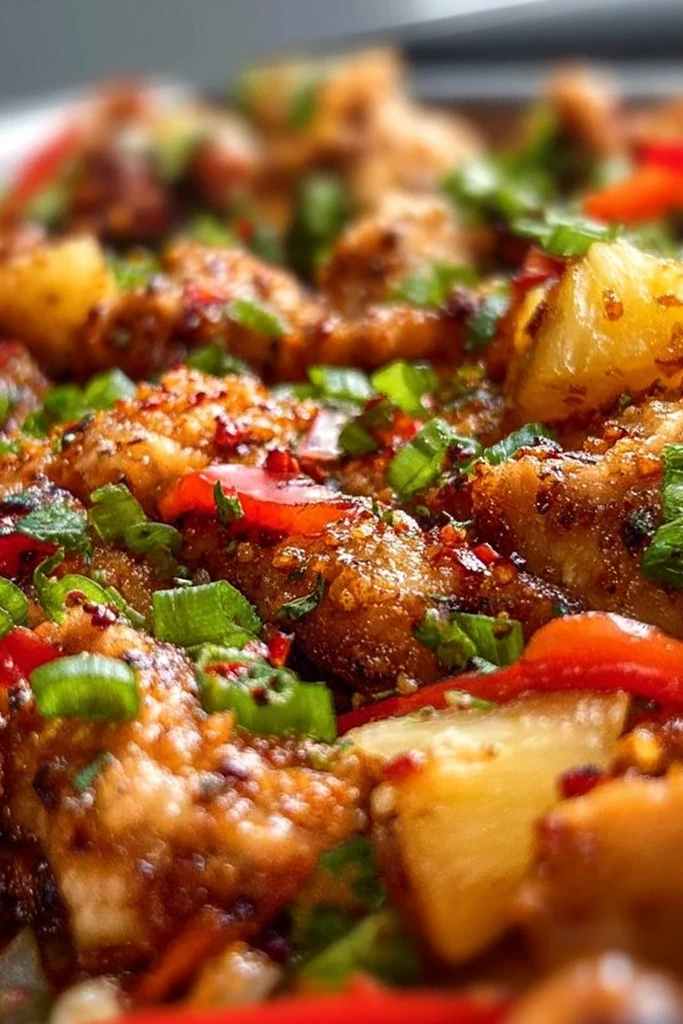
List of ingredients
- 1 ½ lbs (700 g) boneless skinless chicken breasts, cut into 1-inch pieces – ensures even cooking and maximum sauce absorption.
- 1 red bell pepper, chopped – provides a sweet flavor and vibrant color.
- 1 yellow bell pepper, chopped – adds a mild sweetness and visual contrast.
- 1 small red onion, cut into wedges – offers a sharp, savory balance to the sweet glaze.
- 1 ½ cups fresh pineapple chunks (or canned, drained) – delivers the signature tropical acidity.
- 2 tbsp olive oil – helps prevent sticking and aids in browning.
- 2 cloves garlic, minced – provides a pungent, aromatic base.
- ½ tsp salt – enhances all the natural flavors in the meat and vegetables.
- ½ tsp black pepper – adds a subtle earthy heat.
- ½ tsp paprika – introduces a warm, smoky depth to the chicken.
- ½ tsp chili flakes (optional) – adds a spicy kick for those who prefer more heat.
- ½ cup low-sodium soy sauce – the primary savory and salty component of the glaze.
- ½ cup pineapple juice (from the can or fresh) – thickens the sauce with tropical sweetness.
- 3 tbsp honey (or brown sugar) – provides the viscosity and sugar needed for caramelization.
- 2 tbsp rice vinegar (or apple cider vinegar) – cuts through the sweetness with a tangy finish.
- 1 tbsp cornstarch + 2 tbsp water (optional for thickening) – creates a slurry to make the sauce cling to the ingredients.
step-by-step instructions
- Preheat the oven: Set your oven to 425°F (220°C) to ensure the pan is hot enough for immediate searing upon entry.
- Season the chicken: In a large mixing bowl, toss the diced chicken with olive oil, minced garlic, salt, black pepper, paprika, and chili flakes until every piece is well coated.
- Combine with vegetables: Add the chopped red and yellow bell peppers and the red onion wedges into the bowl with the chicken and toss again to distribute the oil and spices.
- Prepare the glaze: In a separate medium bowl, whisk together the low-sodium soy sauce, pineapple juice, honey, rice vinegar, and the cornstarch slurry if you prefer a thicker consistency.
- Arrange on the pan: Line a large baking sheet with parchment paper and spread the chicken and vegetable mixture in a single, even layer to avoid steaming.
- Apply first sauce layer: Drizzle approximately half of the prepared glaze over the chicken and vegetables, tossing gently to coat.
- Roast the mixture: Bake for 20-25 minutes, stirring the ingredients halfway through the cooking time to ensure uniform browning.
- Apply final glaze: Remove the pan from the oven and immediately drizzle the remaining sauce over the hot ingredients for a glossy finish.
- Rest the dish: Let the meal rest on the pan for five minutes before serving to allow the chicken juices to redistribute.
Customizing the Vegetable Component
Substituting Different Bell Pepper Colors
While red and yellow peppers provide the best sweetness, green bell peppers can be used for a more bitter, earthy flavor profile. Orange peppers are also an excellent alternative that maintains the visual brightness of the dish. Use a mix of three colors to increase the antioxidant variety of the meal.
Adding Crisp Snap Peas or Zucchini
Snap peas add a satisfying crunch and a fresh, green taste that complements the soy glaze. If using zucchini, cut it into thick half-moons to prevent it from becoming too mushy during the roasting process. Add these vegetables during the last 10 minutes of roasting to maintain their structural integrity.
Using Carrots for Added Texture
Carrots provide a denser texture and a natural sweetness that pairs well with the pineapple. Slice carrots into thin coins or matchsticks so they cook at the same rate as the chicken breasts. Roast them from the start of the process to ensure they are tender throughout.
Protein Variations and Substitutions
Using Boneless Skinless Chicken Thighs
Chicken thighs are a great substitute for breasts as they contain more fat, making them less likely to dry out at 425°F. Thighs provide a richer flavor and stay juicy even if left in the oven for an extra few minutes. Ensure they are cut into uniform 1-inch pieces for consistent cooking.
Replacing Chicken with Shrimp
Shrimp is a fast-cooking alternative that transforms this into a seafood dish. Because shrimp cook much faster than chicken, roast the vegetables first for 15 minutes, then add the shrimp for the final 5-7 minutes. Avoid overcooking the shrimp to prevent them from becoming rubbery.
Preparing Extra Firm Tofu for a Plant-Based Version
Extra firm tofu can be used by pressing it for 30 minutes to remove excess water before cubing. Toss the tofu in the same oil and spice mixture as the chicken to ensure it browns properly. Tofu absorbs the soy and pineapple glaze exceptionally well, providing a savory plant-based experience.
Enhancing the Tropical Glaze
Switching to Coconut Aminos for Lower Sodium
Coconut aminos are a direct substitute for soy sauce that offer a lower sodium content and a naturally sweeter taste. This is an ideal option for those watching their salt intake or seeking a soy-free alternative. The consistency is slightly thinner, so you may want to increase the cornstarch slurry slightly.
Substituting Honey with Maple Syrup
Maple syrup provides a different kind of sweetness that works well with the acidity of the rice vinegar. It is a suitable option for those avoiding honey or seeking a more woodland-sweet flavor. The caramelization process remains similar, producing a sticky, glossy glaze.
Using Orange Juice Instead of Pineapple Juice
If pineapple juice is unavailable, fresh orange juice offers a citrusy brightness that still fits the tropical theme. Orange juice provides a different type of acidity that pairs well with the garlic and paprika. The result is a more citrus-forward sauce that complements the chicken perfectly.
Adding Sriracha for Increased Heat
For a spicy version of the glaze, whisk in one to two tablespoons of Sriracha or a similar chili garlic sauce. This adds a vinegary heat that balances the sugar in the honey and pineapple. Adjust the quantity based on your heat tolerance, as the roasting process can intensify the spice.
Oven and Equipment Optimization
The Importance of Using Parchment Paper
Parchment paper is essential for this recipe because the sugars in the honey and pineapple juice tend to caramelize and stick to the pan. Using a liner prevents the sauce from burning onto the metal and makes cleanup nearly effortless. Avoid using wax paper, as it will melt at 425°F.
Preventing Pan Overcrowding
If the chicken and vegetables are piled too high, they will steam rather than roast, leading to soft vegetables and pale chicken. Use the largest baking sheet available to ensure the ingredients are spread in a single layer. If you are doubling the recipe, use two separate pans to maintain the roasting effect.
Using the Broiler for Extra Caramelization
If you prefer a charred, grilled appearance, turn on the broiler for the last 2-3 minutes of cooking. Keep a close eye on the pan, as the high sugar content in the sauce can go from caramelized to burnt very quickly. This step adds a smoky depth that mimics an outdoor grill.
Serving and Pairing Recommendations
Choosing the Best Rice for Pairing
Fluffy jasmine rice is the traditional choice due to its aromatic scent and ability to soak up the extra glaze. Basmati rice is also an excellent option for those who prefer a more distinct, separate grain. For a healthier alternative, brown rice provides a nutty flavor and more fiber.
Incorporating Coconut Rice for Tropical Flavor
Replacing water with coconut milk when cooking your rice adds a creamy, rich dimension to the meal. The coconut flavor complements the pineapple and soy sauce perfectly, enhancing the overall tropical experience. Season the coconut rice with a pinch of salt to balance the richness.
Adding Fresh Garnishes for Contrast
Freshly chopped green onions add a sharp, fresh contrast to the sweet and savory roast. Toasted sesame seeds provide a slight nuttiness and a professional visual finish. Sprinkle these on just before serving to maintain their color and texture.
Serving with Fresh Lime Wedges
Squeezing fresh lime juice over the finished dish right before eating brightens all the flavors. The citric acid cuts through the richness of the oil and the sweetness of the honey. This small addition transforms the flavor profile from heavy to refreshing.
Storage and Preservation Tips
Storing Leftovers in Airtight Containers
Place the cooled chicken and vegetables in a glass airtight container to maintain freshness. Store the meal in the refrigerator for up to four days. Keeping the ingredients tightly sealed prevents the chicken from absorbing other refrigerator odors.
Reheating in the Oven for Best Texture
To maintain the texture of the vegetables, reheat the leftovers in the oven at 325°F for about 10-15 minutes. This method prevents the chicken from becoming rubbery and helps the glaze re-caramelize. Add a teaspoon of water to the pan to keep the meat moist.
Microwaving for Quick Reheating
When using a microwave, heat the food in short 30-second intervals, stirring in between. Cover the dish with a damp paper towel to trap steam, which prevents the chicken breasts from drying out. This is the fastest method but may soften the bell peppers.
Make-Ahead Strategies
Pre-Chopping Ingredients for Faster Prep
Cut the chicken, peppers, and onions a day in advance and store them in separate containers or one large zip-top bag. This reduces the active prep time on the night of cooking to just a few minutes. Ensure the chicken is stored at the bottom of the container to keep it coldest.
Preparing the Glaze in Advance
The soy-pineapple sauce can be whisked together and stored in a jar in the refrigerator for up to one week. When ready to use, simply shake the jar to redistribute the cornstarch and honey. Using a chilled sauce can actually help the chicken sear more effectively when first applied.
Marinating the Meat Before Roasting
For deeper flavor, toss the chicken in the oil and spice mixture and let it marinate in the fridge for 2-4 hours. This allows the paprika and garlic to penetrate the meat more deeply. Do not add the soy-based sauce during the long marinade, as the salt can toughen the chicken breasts.
Troubleshooting Common Issues
Fixing a Thin or Watery Sauce
If the sauce does not thicken enough during roasting, it is likely due to excess moisture from the pineapple or vegetables. Simmer the remaining sauce in a small saucepan over medium heat for 3-5 minutes until it reduces. Pour this thickened reduction over the dish just before serving.
Preventing Overcooked, Dry Chicken
Dry chicken occurs when the pieces are cut too small or left in the oven too long. Use a meat thermometer to ensure the thickest piece of chicken reaches an internal temperature of 165°F. If you notice the chicken browning too fast, lower the oven temperature to 400°F.
Managing Soggy Roasted Vegetables
Soggy vegetables are often the result of using canned pineapple that wasn’t drained properly. Ensure all canned fruit is patted dry with a paper towel before adding it to the pan. Additionally, avoid stirring the pan too frequently, as this releases more moisture and lowers the surface temperature.
Frequently Asked Questions
Can I use frozen pineapple chunks?
Yes, you can use frozen pineapple, but it is important to thaw and pat them dry first. Frozen fruit releases more water as it melts, which can lead to a watery sauce and steamed vegetables. If using them straight from frozen, increase the roasting time by 5 minutes.
How long does the leftover sauce stay fresh?
The prepared sauce can be kept in an airtight container in the refrigerator for about 7 days. Because it contains honey and soy sauce, it has a decent shelf life. Always stir or shake the sauce before using it if it has been sitting.
Can I add mango to this recipe?
Mango is a wonderful addition and can be used in place of or alongside the pineapple. Use firm, slightly under-ripe mangoes so they hold their shape during the roasting process. Mango adds a creamier sweetness that pairs exceptionally well with the soy glaze.
What is the best way to avoid the sauce burning?
The high sugar content in honey and pineapple juice can burn if the oven is too hot or the pan is too close to the heating element. Place your oven rack in the center position and ensure you are using parchment paper. If the edges look too dark, remove the pan a few minutes early.
Print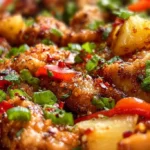
Tropical Hawaiian Chicken Sheet Pan Dinner
- Total Time: 40 minutes
- Yield: 4 servings 1x
- Diet: Gluten-Free
Description
A vibrant and flavorful dish featuring tender chicken, fresh veggies, and a sweet soy glaze, perfect for a family meal.
Ingredients
- 1 ½ lbs (700 g) boneless skinless chicken breasts, cut into 1-inch pieces
- 1 red bell pepper, chopped
- 1 yellow bell pepper, chopped
- 1 small red onion, cut into wedges
- 1 ½ cups fresh pineapple chunks (or canned, drained)
- 2 tbsp olive oil
- 2 cloves garlic, minced
- ½ tsp salt
- ½ tsp black pepper
- ½ tsp paprika
- ¼ tsp chili flakes (optional)
- ⅓ cup low-sodium soy sauce
- ¼ cup pineapple juice (from the can or fresh)
- 3 tbsp honey (or brown sugar)
- 2 tbsp rice vinegar (or apple cider vinegar)
- 1 tbsp cornstarch + 2 tbsp water (optional for thickening)
Instructions
- Preheat: Preheat your oven to 425°F (220°C).
- Season: Toss the diced chicken with olive oil, garlic, salt, black pepper, paprika, and chili flakes in a large bowl.
- Combine: Chop the bell peppers and red onion and add them to the chicken mixture.
- Whisk: Whisk together the soy sauce, pineapple juice, honey, rice vinegar, and cornstarch slurry in a separate bowl.
- Arrange: Line a large baking sheet with parchment paper and spread the chicken and vegetable mixture evenly across the pan.
- Drizzle: Drizzle half of the sauce over the chicken and veggies.
- Roast: Roast for about 20-25 minutes, stirring halfway through.
- Finish: Remove the pan from the oven and drizzle the remaining sauce on top.
- Rest: Allow to rest for about five minutes before serving.
Notes
Serve with jasmine or coconut rice and garnish with sesame seeds and lime wedges for an extra zing.
- Prep Time: 15 minutes
- Cook Time: 25 minutes
- Category: Main Course
- Method: Baking
- Cuisine: Hawaiian
Nutrition
- Serving Size: 1 serving
- Calories: 400 kcal
- Sugar: 20 g
- Sodium: 600 mg
- Fat: 10 g
- Saturated Fat: 1 g
- Unsaturated Fat: 5 g
- Trans Fat: 0 g
- Carbohydrates: 45 g
- Fiber: 3 g
- Protein: 25 g
- Cholesterol: 60 mg
Keywords: Hawaiian chicken, sheet pan, easy dinner, tropical recipe, family meal