Enjoy a light, low-carb alternative to classic pasta that doesn’t sacrifice flavor. This vegan zucchini lasagna replaces traditional noodles with fresh vegetable slices for a nutrient-dense and satisfying meal. It is a perfect choice for those seeking a gluten-free or vegan-friendly comfort food option.
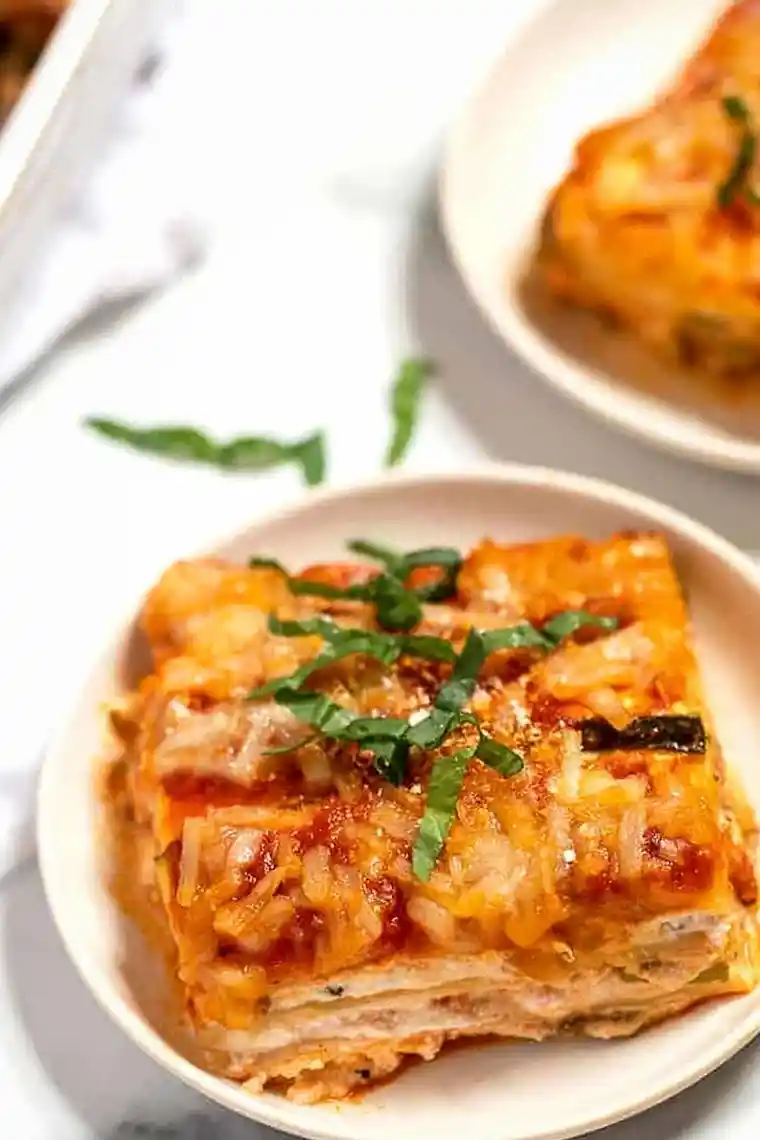
List of ingredients
- 12 oz vegan ricotta – serve as the creamy filling layer.
- 1 tablespoon Italian seasoning – stir into the ricotta for herbal depth.
- 4 large zucchini – sliced thinly to replace pasta noodles.
- 1 1/4 – 1 1/2 cups jarred tomato sauce – use a smooth or chunky variety based on preference.
- 1 cup shredded vegan cheese – optional, for a traditional melted topping.
step-by-step instructions
- Preheat Oven: Set your oven to 375ºF to ensure it is fully heated before baking.
- Prepare Ricotta: If using store-bought vegan ricotta, place it in a bowl and stir in the Italian seasoning. If you are using homemade tofu ricotta, skip this step as the seasoning is already integrated.
- Slice Zucchini: Use a mandolin slicer to create long, thin, even strips of zucchini. If you only have a knife, slice as thinly and uniformly as possible to ensure even cooking.
- Extract Moisture: Line baking sheets with paper towels and lay the zucchini strips on top. Sprinkle the slices with sea salt and let them sit for at least 15 minutes to draw out excess water.
- Dry the Slices: After 15 minutes, use fresh paper towels to pat the zucchini slices completely dry.
- Base Layer: Pour 1/2 cup of tomato sauce into a 9×13 baking dish and spread it evenly across the bottom.
- Build Layers: Place a layer of zucchini slices to cover the base. Spread about 1/3 to 1/2 cup of ricotta over the zucchini, then top with a thin layer of sauce (about 1/4 cup).
- Repeat Process: Continue the pattern of zucchini, ricotta, and sauce until all ingredients are used or the pan is filled.
- Final Topping: End with a final layer of zucchini, topped with the remaining 1/3 to 1/2 cup of sauce. Sprinkle the shredded vegan cheese over the top if using.
- Bake: Place the dish on the center oven rack and bake for 40 to 45 minutes until the zucchini is tender.
- Rest and Serve: Let the lasagna cool for 10 to 15 minutes to allow the layers to set. Slice into 6 portions and serve.
Zucchini Preparation Techniques
Using a Mandolin for Consistent Thickness
A mandolin slicer is the most efficient tool for creating uniform zucchini strips. Consistent thickness ensures that every layer cooks at the same rate, preventing some slices from remaining raw while others become overcooked. Always use the safety guard to protect your fingers during this process.
Manual Slicing with a Chef Knife
If you do not own a mandolin, a sharp chef knife can achieve similar results with patience. Place the zucchini on a stable cutting board and use a steady slicing motion to create thin ribbons. While more time-consuming, this method allows you to trim the ends of the zucchini more precisely.
The Science of Salting Vegetables
Salting the zucchini is the most critical step to prevent a watery lasagna. Salt draws moisture out of the vegetable cells through osmosis, which stops the zucchini from releasing liquid during the baking process. Without this step, the sauce may become diluted and the lasagna may lose its structural integrity.
Alternative Method for Removing Moisture
For those who prefer a charred flavor, grilling the zucchini slices is an excellent alternative to salting. Quickly sear the strips on a hot grill or grill pan for a few minutes per side. This removes moisture through evaporation and adds a smoky depth to the overall dish.
Creating the Perfect Vegan Cheese Layer
Homemade Tofu Ricotta Components
To make a high-protein tofu ricotta, combine one block of extra-firm tofu with 1/4 cup nutritional yeast and 1/4 cup unsweetened non-dairy milk. Add 2 tablespoons of lemon juice, 1 tablespoon of olive oil, 1 teaspoon of sea salt, 1 teaspoon of garlic powder, and 1 teaspoon of parsley. These ingredients mimic the tangy and salty profile of traditional ricotta.
Processing Tofu for the Right Texture
Start by pressing the extra-firm tofu between paper towels to remove excess water. Crumble the tofu into a food processor and pulse until it reaches a grainy, crumbly consistency. Add the remaining ingredients and pulse again until the mixture is mostly smooth but still retains some texture.
Enhancing the Flavor of Vegan Ricotta
If your ricotta tastes too bland, increase the amount of nutritional yeast or add a pinch of onion powder. A small amount of apple cider vinegar can also boost the lactic tang associated with traditional cheeses. Ensure you taste the mixture before layering it into the lasagna.
Selecting Store-Bought Vegan Ricotta
When buying pre-made vegan ricotta, look for brands based on almond or cashew for a creamier texture. Check the label for added sugars, which can clash with the savory tomato sauce. Stirring in fresh herbs like basil or oregano can elevate a basic store-bought cheese.
Customizing Your Lasagna Fillings
Integrating Sauteed Spinach
Fresh spinach adds a nutritional boost and a pop of color to each layer. Sauté the spinach with a bit of garlic until wilted, then squeeze out all excess liquid using a kitchen towel. Spread the spinach over the ricotta layer before adding the sauce.
Adding Earthy Mushrooms
Sliced mushrooms provide a meaty texture that complements the zucchini. Sauté mushrooms in a pan until they have released their water and browned slightly. Layer them between the zucchini and ricotta to add more depth to the dish.
Incorporating Bell Peppers and Onions
Finely diced bell peppers and onions add sweetness and crunch. Sauté them together until soft and slightly caramelized before adding them to the assembly. This ensures the vegetables are fully cooked and do not release raw juices into the pan.
Using Plant-Based Ground Meat
For a heartier version, add a layer of browned plant-based crumbles. Mix the crumbles directly into the tomato sauce or spread them as a separate layer. This increases the protein content and gives the lasagna a more traditional texture.
Tomato Sauce Variations
Using Basil-Infused Sauces
A fresh basil tomato sauce enhances the Italian profile of the dish. You can blend fresh basil leaves into your favorite jarred sauce or stir in a tablespoon of basil pesto. This adds a bright, aromatic quality that cuts through the richness of the vegan cheese.
Adjusting Sauce Thickness
If your sauce is too thin, simmer it in a pan for 10 minutes to reduce the water content. A thicker sauce clings better to the zucchini slices and prevents the layers from sliding. You can also stir in a teaspoon of tomato paste to thicken it instantly.
Reducing Sugar in Commercial Sauces
Many jarred sauces contain high amounts of added sugar. To balance this, add a splash of lemon juice or a pinch of red pepper flakes. This creates a more complex flavor profile that tastes more like a homemade marinara.
Assembly and Baking Guidelines
Layering for Structural Integrity
The order of layers is essential for a clean slice. Always start and end with sauce to protect the zucchini from burning and to lock in moisture. Applying the ricotta directly onto the zucchini prevents the sauce from soaking into the vegetable too quickly.
Optimizing Oven Placement
Bake the lasagna on the center rack to ensure even heat distribution. Placing the dish too high can burn the vegan cheese topping before the zucchini is tender. Conversely, placing it too low may result in a soggy bottom layer.
Identifying the Perfect Doneness
The lasagna is ready when the edges are bubbling and the zucchini slices feel soft when pierced with a fork. If using vegan cheese, wait until it is fully melted and slightly golden. Avoid overbaking, as zucchini can become mushy if left in the oven too long.
Serving and Storage Solutions
Importance of the Cooling Period
Allowing the lasagna to cool for 15 minutes is the secret to getting clean, square slices. During this time, the vegan ricotta firms up and the sauce thickens. Cutting into it immediately often results in the layers sliding apart.
Safe Refrigeration Practices
Store leftovers in an airtight container in the refrigerator for up to four days. Because zucchini has a high water content, the lasagna may release some liquid over time. Gently drain any excess liquid before reheating.
Freezing for Long-Term Storage
This lasagna can be frozen if the zucchini was properly salted and dried. Wrap individual portions in foil and place them in a freezer-safe bag for up to three months. Thaw the lasagna in the refrigerator overnight before reheating.
Best Methods for Reheating
To maintain the texture, reheat portions in the oven at 350ºF until warmed through. If using a microwave, cover the dish with a damp paper towel to prevent the vegan cheese from becoming rubbery. Heat in short intervals to avoid overcooking the zucchini.
Troubleshooting Common Issues
Fixing a Watery Lasagna
If you find your lasagna is too watery, it is usually due to insufficient salting of the zucchini. You can try to fix this by carefully spooning out excess liquid from the edges of the pan halfway through baking. For future batches, increase the salting time to 20 minutes.
Preventing Burnt Vegan Cheese
Some vegan cheeses burn faster than dairy cheese. If the topping is browning too quickly, cover the baking dish loosely with aluminum foil. This protects the cheese while allowing the interior zucchini layers to finish cooking.
Addressing Mushy Zucchini Texture
Mushy zucchini often occurs when the slices are too thin or the oven temperature is too low. Ensure you use a consistent medium thickness and maintain a steady 375ºF. Avoid over-mixing the zucchini with the sauce before baking.
Frequently Asked Questions
Can I use yellow squash instead of zucchini?
Yes, yellow squash works perfectly as a substitute. It has a similar texture and moisture content, so you must follow the same salting and drying process to ensure the lasagna does not become watery.
Is this recipe entirely gluten-free?
Yes, this recipe is naturally gluten-free as it replaces wheat-based pasta with zucchini. Just ensure that your chosen brand of jarred tomato sauce and vegan cheese does not contain hidden gluten additives.
How do I keep the layers from sliding?
The best way to prevent sliding is to let the dish cool completely before slicing. Additionally, using a thicker vegan ricotta and ensuring the zucchini is patted dry helps the layers adhere to one another.
What is the best substitute for Italian seasoning?
If you don’t have a pre-mixed Italian seasoning, you can combine dried oregano, basil, thyme, and rosemary. A mix of equal parts dried basil and oregano is a simple and effective alternative.
Print
Vegan Zucchini Lasagna
- Total Time: 60 minutes
- Yield: 6 servings 1x
- Diet: Vegan, Gluten-Free
Description
This vegan zucchini lasagna is incredible! It tastes just like the real thing, but it uses no noodles, is low carb, and isn’t watery at all.
Ingredients
- 12 oz vegan ricotta
- 1 tablespoon Italian seasoning
- 4 large zucchini
- 1 1/4 – 1 1/2 cups jarred tomato sauce
- 1 cup shredded vegan cheese (optional)
Instructions
- Step 1: Preheat the oven to 375ºF.
- Step 2: Stir Italian seasoning into vegan ricotta and set aside in the fridge.
- Step 3: Thinly slice the zucchini into long strips using a mandolin slicer or knife.
- Step 4: Lay zucchini on paper towels, sprinkle with sea salt, and let sit for at least 15 minutes.
- Step 5: Pat the zucchini slices dry.
- Step 6: Spread 1/2 cup of tomato sauce evenly in a 9×13 baking dish.
- Step 7: Add a layer of zucchini, followed by 1/3-1/2 cup of ricotta, and then 1/4 cup of sauce.
- Step 8: Repeat this layer pattern until all ingredients are used or the pan is filled.
- Step 9: Create a final layer of zucchini, top with 1/3-1/2 cup of sauce, and sprinkle with vegan cheese if using.
- Step 10: Bake on the center rack for 40-45 minutes until the zucchini is cooked through.
- Step 11: Allow to cool for 10-15 minutes, slice into 6 portions, and serve.
Notes
To avoid a watery lasagna, it is crucial to salt the zucchini and pat them dry to remove excess moisture before assembling.
- Prep Time: 20 minutes
- Cook Time: 40 minutes
- Category: Entree
- Method: Baking
- Cuisine: American
Nutrition
- Serving Size: 1 slice
- Calories: 210 kcal
- Sugar: 8 g
- Sodium: 833 mg
- Fat: 12 g
- Saturated Fat: 6 g
- Unsaturated Fat: 6 g
- Trans Fat: 0 g
- Carbohydrates: 17 g
- Fiber: 4 g
- Protein: 10 g
- Cholesterol: 29 mg
Keywords: vegan zucchini lasagna, low carb lasagna, gluten-free, dairy-free, plant-based dinner