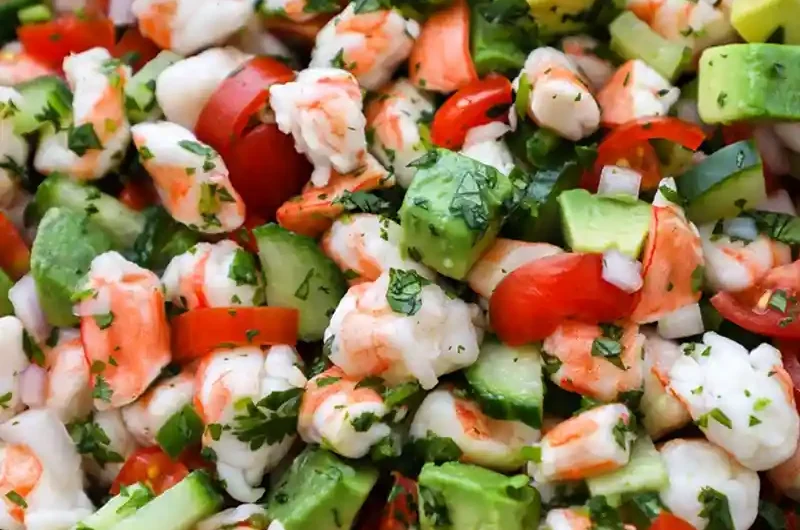
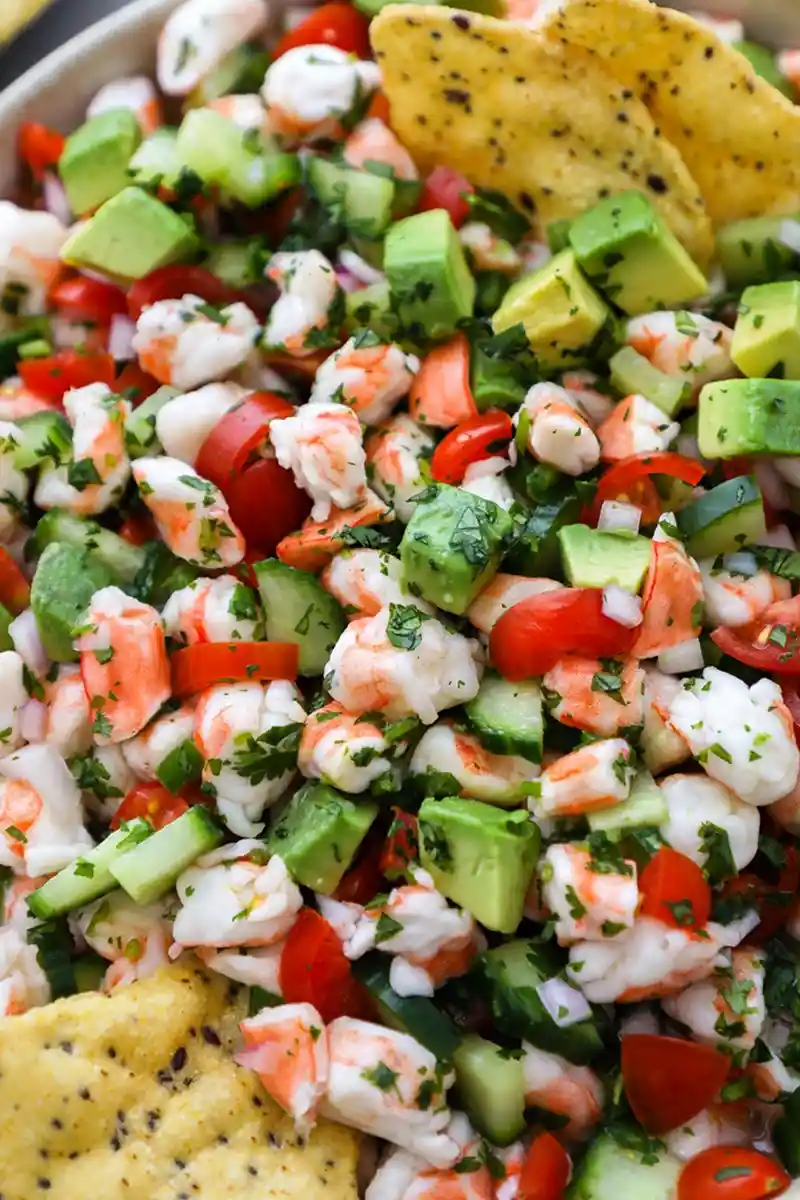
This refreshing shrimp ceviche uses a citric acid curing process to prepare raw seafood without heat. It is a bright, healthy dish that pairs perfectly with crunchy tortilla chips or tostada shells.
List of ingredients
- 1¼ lb. raw shrimp, peeled and deveined – cut into bite-sized pieces.
- 1 cup tomatoes, chopped – cherry or grape tomatoes are recommended for better texture.
- ½ cup English cucumber, chopped – Persian cucumbers are also a great alternative.
- ¼ cup red onion, chopped – provides a sharp, crisp flavor.
- 1 jalapeno, deseeded & finely chopped – use only the flesh for mild heat.
- ¼ cup cilantro, chopped – include both leaves and stems for maximum flavor.
- 1 cup fresh lime juice – approximately 8-12 limes, enough to fully cover the shrimp.
- 1-2 avocados, diced or mashed – used as a creamy accompaniment for serving.
step-by-step instructions
- Prepare the Shrimp: Chop the raw shrimp into bite-sized pieces and spread them evenly in a 9×13 inch baking pan.
- Start the Marination: Pour the fresh lime juice over the shrimp until they are completely submerged and cover the pan tightly with plastic wrap.
- Timed Curing: Leave the pan at room temperature for 1 hour, then transfer it to the refrigerator to continue curing for another 1-2 hours.
- Prep the Vegetables: While the shrimp is marinating, chop the tomatoes, cucumber, red onion, jalapeno, and cilantro, keeping them chilled in the fridge.
- Combine Ingredients: Once the shrimp has turned opaque and firm, stir in all the chopped vegetables.
- Serve: Serve the mixture with diced or mashed avocado and accompany with tortilla chips or spoon it over tostada shells.
Expert Ingredient Selection
Select Medium to Large Shrimp
Choose shrimp with a 21-25 count for the best results. These larger shrimp maintain a firm, meaty texture after curing, whereas smaller bay shrimp can become too soft or have an inconsistent flavor profile.
Use Persian or English Cucumbers
These varieties are preferred because they have thinner skins and fewer seeds than standard garden cucumbers. This ensures the ceviche remains crisp and prevents excess water from diluting the lime marinade.
Choose Ripe Limes for Maximum Juice
Select limes that feel heavy for their size and have smooth, thin skin. These are typically the juiciest and will provide the high volume of citric acid needed to cure the shrimp efficiently.
Incorporate Fresh Cilantro Stems
Do not discard the stems of the cilantro bunch. The stems contain a concentrated amount of flavor that complements the acidity of the lime and the sweetness of the shrimp.
Use Red Onions for Sharpness
Red onions provide a necessary pungent contrast to the creamy avocado and citrus juice. Ensure they are finely chopped so that no single piece overwhelms the other fresh ingredients.
Select Firm but Yielding Avocados
The avocados should be ripe enough to mash but firm enough to hold a dice. Adding them at the very end prevents them from breaking down too much during the mixing process.
Understanding the Curing Process
The Role of Citric Acid
Ceviche does not use heat to cook the seafood. Instead, the citric acid in the lime juice denatures the proteins in the raw shrimp, changing the texture from translucent to opaque and firm.
Why a Baking Pan is Better Than a Bowl
Using a 9×13 inch pan increases the surface area of the shrimp. This allows the lime juice to surround every piece evenly, which speeds up the curing process and ensures consistency.
The Importance of Complete Submersion
If the shrimp are not fully submerged in lime juice, the curing process will be uneven. Any piece exposed to air may not cure properly, which can affect both the texture and food safety.
The Purpose of the Room Temperature Phase
Allowing the shrimp to sit at room temperature for the first hour accelerates the initial chemical reaction. This jumpstarts the curing process before the temperature is lowered for a slower, more controlled finish.
The Purpose of the Refrigeration Phase
Moving the pan to the fridge for the final 1-2 hours ensures the seafood stays cold and safe. It also prevents the shrimp from over-curing, which can make the texture rubbery if left in acid too long.
Identifying the Finished Texture
The shrimp are ready when they shift from a dark grey color to an opaque, pinkish hue. They should feel firm to the touch, similar to the texture of poached shrimp.
Flavor Adjustments and Variations
Switching to Serrano Peppers
If you prefer a more intense heat than jalapenos provide, substitute them with serrano peppers. Serrano peppers have a higher Scoville rating and add a sharper spicy kick to the dish.
Adding Diced Mango for Sweetness
For a tropical twist, stir in half a cup of diced ripe mango. The sweetness of the mango balances the tartness of the lime juice and adds a vibrant yellow color to the mix.
Incorporating Diced Pineapple
Fresh pineapple is another excellent addition that provides a sweet and tangy contrast. The enzymes in pineapple also complement the citrus marinade, enhancing the overall freshness.
Using Lemon Juice as a Substitute
If you run out of limes, you can use fresh lemon juice. To maintain the traditional flavor, ensure that the majority of the liquid is lime juice and use lemon only to top off the volume.
Adding a Pinch of Salt and Pepper
While not in the basic list, a small amount of sea salt and cracked black pepper can enhance the natural flavors. Salt helps draw out the juices from the vegetables and seasons the shrimp.
Best Ways to Serve Ceviche
Tostada Shell Assembly
For a complete meal, spread a thick layer of mashed avocado or guacamole onto a fried tostada shell. Spoon the shrimp ceviche on top to create a crunchy, layered appetizer.
Classic Tortilla Chip Pairing
Serving the ceviche in a chilled bowl with a side of corn tortilla chips is the most traditional method. This allows guests to scoop the mixture and enjoy the contrast of hot chips and cold seafood.
Serving in Lettuce Cups
For a low-carb or gluten-free alternative, use sturdy romaine or butter lettuce leaves. The crispness of the lettuce provides a fresh base that doesn’t distract from the citrus flavors.
Adding a Side of Guacamole
While diced avocado is great, a side of seasoned guacamole adds extra depth. Mixing in garlic, lime, and salt into the avocado provides a richer accompaniment to the light shrimp.
Food Safety and Storage
Proper Refrigeration Guidelines
Ceviche should be kept chilled at all times once the vegetables are added. Use a cold serving bowl or place the bowl inside a larger container filled with ice during parties.
Maximum Storage Duration
This dish is best consumed within 24 to 48 hours of preparation. Because the shrimp are cured in acid, they will continue to firm up over time and may eventually become too tough.
Managing the Raw Shrimp Curing Time
Avoid leaving the shrimp in the lime juice for more than 4 hours total. Over-marinating can result in a texture that is overly chewy and a flavor that is too acidic.
Identifying Spoilage
Fresh ceviche should have a bright, citrusy aroma. If you notice any sour smells beyond the lime or see a slimy texture on the shrimp, discard the dish immediately.
Troubleshooting Common Issues
Dealing with Grey Shrimp
If some shrimp pieces are still grey after the allotted time, they need more curing. Leave them in the lime juice for an additional 20-30 minutes or add a bit more fresh juice.
Fixing an Overly Acidic Flavor
If the dish tastes too tart, you can drain some of the excess lime juice before serving. Adding more avocado or diced cucumber can also help neutralize the strong acidity.
Preventing a Watery Mixture
To avoid a watery consistency, ensure you use English or Persian cucumbers. If using standard cucumbers, scoop out the seeds with a spoon before chopping the flesh.
Correcting a Lack of Saltiness
If the flavors feel muted, a small squeeze of extra lime or a pinch of salt usually fixes the issue. The acid needs salt to really make the vegetable flavors pop.
Frequently Asked Questions
Can I use cooked shrimp instead?
Yes, you can use pre-cooked or poached shrimp. In this case, skip the long marination process and let the chopped cooked shrimp sit in lime juice for 30 to 60 minutes just to absorb the flavor.
How many limes do I actually need?
Depending on the juiciness of the fruit, you will typically need between 8 and 12 limes. The key is to ensure the shrimp are completely covered by the liquid.
Can this be made a day in advance?
Yes, you can prepare the shrimp and vegetable mixture a day ahead. However, wait to add the avocado until just before serving to prevent it from browning.
Can I freeze shrimp ceviche?
No, ceviche should not be frozen. Freezing ruins the delicate texture of the cured shrimp and causes the fresh vegetables to become mushy upon thawing.
Print
Zesty Citrus-Cured Shrimp Ceviche
- Total Time: 3 hours 20 minutes
- Yield: 4 servings 1x
- Diet: Seafood
Description
This shrimp ceviche is the perfect summer meal! Featuring citrus marinated shrimp, lots of fresh veggies, & creamy avocado! Serve it as an appetizer with chips or top it over tostada shells for an easy dinner!
Ingredients
- 1¼ lb. raw shrimp, peeled and deveined
- 1 cup tomatoes, chopped
- ½ cup English cucumber, chopped
- ¼ cup red onion, chopped
- 1 jalapeno, deseeded & finely chopped
- ¼ cup cilantro, chopped
- 1 cup fresh lime juice
- 1–2 avocados, diced or mashed
Instructions
- Marinate Shrimp: Chop the shrimp into bite-sized pieces and place them in a 9×13 inch pan. Pour your lime juice over the shrimp and cover the pan with saran wrap. Let it sit out at room temperature for 1 hour, then place the pan in the fridge to continue “cooking” for 1-2 more hours.
- Prep Vegetables: While the shrimp is “cooking”, cut your tomatoes, cucumber, onion, jalapeno and cilantro. Keep them stored in the fridge until the shrimp is done.
- Mix: Once the shrimp is done “cooking”, stir in the rest of your ingredients.
- Serve: Serve with avocado (if desired) and your favorite tortilla chips or spooned over tostada shells.
Notes
Use a large baking dish instead of a bowl to allow ingredients to spread out and marinate faster. Ensure the shrimp are completely submerged in lime juice to cook properly.
- Prep Time: 20 minutes
- Cook Time: 3 hours
- Category: Appetizer
- Method: Marinating
- Cuisine: Peruvian
Nutrition
- Serving Size: 1 serving
- Calories: 240 kcal
- Sugar: 6 g
- Sodium: 420 mg
- Fat: 8 g
- Saturated Fat: 1.5 g
- Unsaturated Fat: 6.5 g
- Trans Fat: 0 g
- Carbohydrates: 15 g
- Fiber: 4 g
- Protein: 26 g
- Cholesterol: 180 mg
Keywords: ceviche, shrimp ceviche, Peruvian cuisine, seafood appetizer