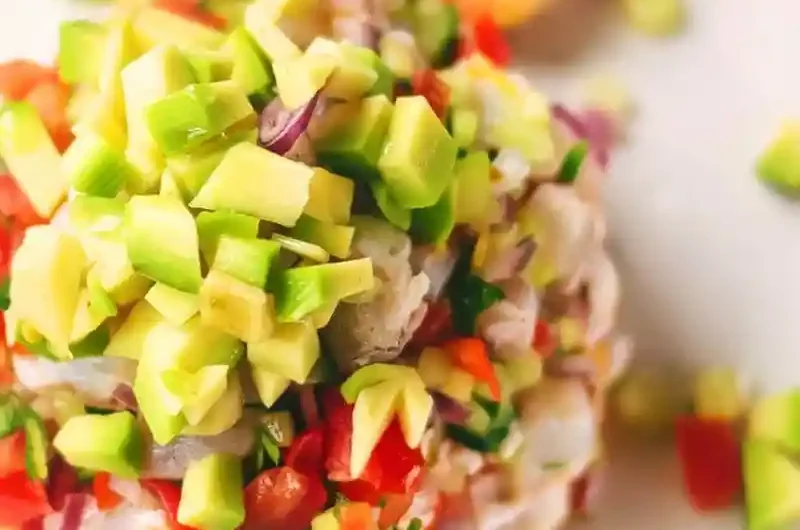
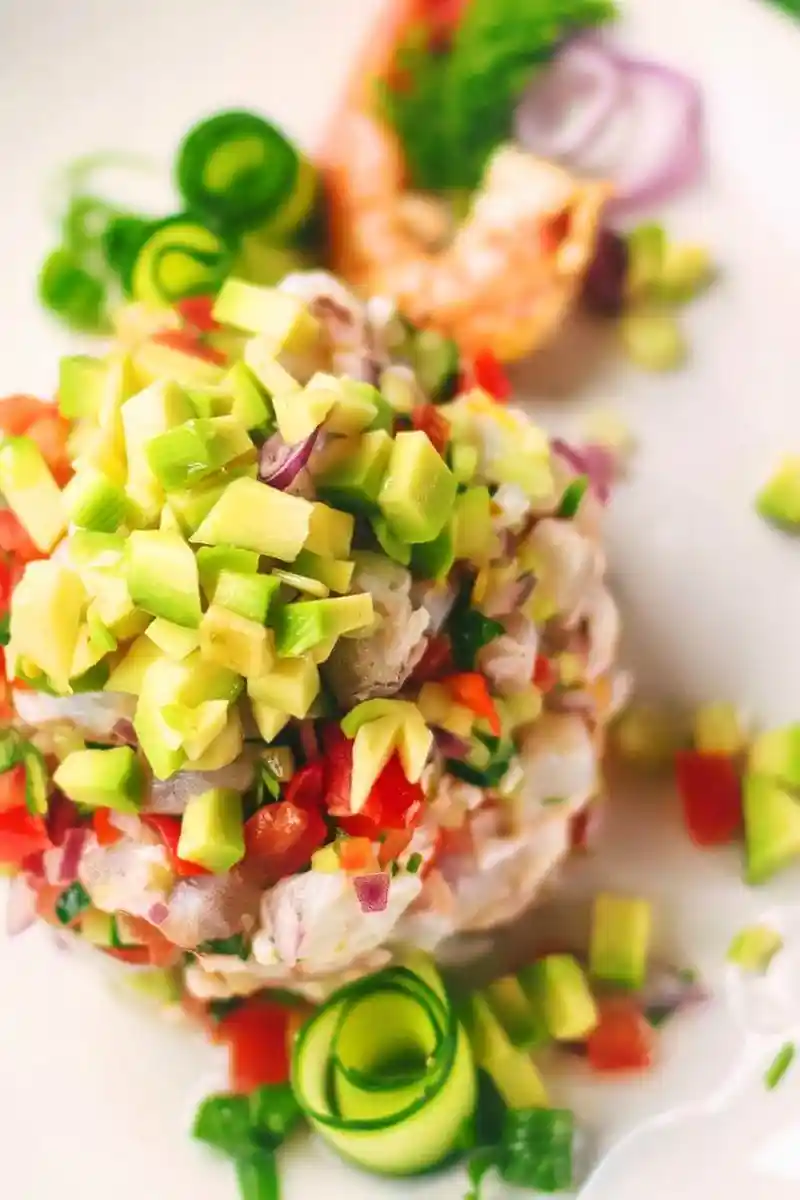
This refreshing shrimp ceviche combines succulent seafood with bright citrus juices and crisp garden vegetables. It is a light, nutrient-dense dish that works perfectly as an appetizer or a healthy summer meal.
List of ingredients
- 1 pound large shrimp – peeled, deveined, and tails removed.
- Juice of 2 limes – freshly squeezed for maximum acidity.
- Juice of 2 lemons – provides a balanced citrus profile.
- 1/2 red onion – finely chopped for sharp flavor.
- 1-2 jalapeños – minced with veins and seeds removed to control heat.
- 2 medium tomatoes – seeds removed and diced to prevent excess water.
- 1 cup cucumber – peeled, seeds removed, and diced.
- 1/2 cup chopped cilantro – use fresh leaves and tender stems.
- Salt – added to taste for flavor enhancement.
- Avocado – diced fresh for serving.
step-by-step instructions
- Prep the Shrimp: Chop the raw shrimp into half-inch pieces to ensure even marination. Place the pieces in a non-reactive bowl such as glass or stainless steel.
- Marinate: Whisk together the lime and lemon juices in a separate bowl. Pour the juice over the shrimp until they are fully submerged, cover the bowl, and refrigerate for 20-30 minutes until the shrimp turn opaque and pink.
- Prepare Vegetables: While the shrimp are marinating, combine the chopped red onion, minced jalapeños, diced tomatoes, diced cucumber, and chopped cilantro in a mixing bowl. Season the vegetable mix with salt to taste.
- Combine: Gently fold the marinated shrimp into the vegetable mixture. Taste the dish and add more salt or citrus juice if needed to balance the flavors.
- Chill: Place the combined mixture back in the refrigerator for at least 30 minutes. This step allows the flavors to meld and ensures the dish is served at the ideal temperature.
- Serve: Portion the ceviche into bowls or onto plates and garnish each serving with fresh diced avocado.
Professional Preparation Tips
Selecting the Freshest Shrimp
Choose shrimp that have a translucent appearance and a mild, salty scent of the ocean. Avoid any shrimp that have a strong ammonia smell or a grayish discoloration on the shell or flesh. If using frozen shrimp, thaw them completely in the refrigerator overnight before prepping.
Maintaining Uniform Shrimp Pieces
Cutting the shrimp into consistent half-inch pieces is critical for food safety and texture. Uniform pieces ensure that the citrus acid penetrates the seafood at the same rate. This prevents some pieces from being under-cured while others become rubbery from over-exposure to acid.
Using Non-Reactive Containers
Always use glass, ceramic, or high-grade stainless steel bowls when marinating with citrus juices. Avoid aluminum or uncoated metal bowls, as the citric acid can react with the metal. This reaction can leach a metallic taste into the seafood and potentially discolor the food.
Controlling the Heat Level
The spiciness of the dish depends on the jalapeño preparation. For a mild flavor, remove all seeds and the internal white membranes entirely. For more heat, leave a few seeds in the mix or substitute the jalapeño with a serrano pepper, which is generally hotter.
Optimizing the Chilling Process
Chilling the ceviche for at least 30 minutes after mixing is a necessary step. Cold temperatures help the proteins set and keep the vegetables crisp. It also prevents the avocado from warming up too quickly when added at the end.
Ingredient Substitutions and Variations
Alternative Seafood Options
You can replace shrimp with firm white fish such as sea bass, red snapper, or halibut. When using fish, adjust the marination time based on the thickness of the cuts. Fish generally requires a similar curing time to shrimp, but the texture will be flakier.
Adding Colorful Vegetable Mix-Ins
To increase the visual appeal and nutritional value, add finely diced red or orange bell peppers. Diced radishes provide an extra peppery crunch that complements the citrus. You can also add thinly sliced carrots for added sweetness and texture.
Customizing the Citrus Blend
While lime and lemon are standard, adding a splash of fresh orange juice can introduce a subtle sweetness. This balances the sharp acidity and creates a more complex flavor profile. Use a ratio of two parts lime to one part orange for a balanced taste.
Incorporating Tropical Fruits
Diced mango or pineapple can be folded into the ceviche for a sweet and savory contrast. This is particularly effective when using a higher amount of jalapeño, as the sugar in the fruit offsets the capsaicin. Add the fruit during the final combination step.
Serving and Presentation Ideas
Ideal Crunchy Accompaniments
Serve shrimp ceviche with thick, salted corn tortilla chips for a traditional experience. Plantain chips offer a slightly sweeter, sturdier alternative that is naturally gluten-free. Tostada shells provide a larger platform for the ceviche, turning the appetizer into a full meal.
Plating for Maximum Appeal
Present the ceviche in chilled glass bowls or martini glasses for an elegant look. Place the diced avocado on top just before serving to prevent it from sinking or breaking apart. A sprinkle of extra cilantro or a lime wedge on the side adds a professional finishing touch.
Pairing with Side Dishes
This dish pairs exceptionally well with a side of homemade guacamole or a fresh pico de gallo. For a more filling meal, serve it alongside grilled corn on the cob seasoned with chili powder. A light side of black beans and rice also complements the zesty flavors.
Storage and Food Safety
Refrigeration Guidelines
Store leftover ceviche in an airtight glass container in the coldest part of your refrigerator. It is best consumed within 24 to 48 hours. Because the acid continues to cure the shrimp, the texture may become firmer and tougher the longer it sits.
Freezing Considerations
Ceviche should not be frozen. Freezing alters the cellular structure of the raw vegetables, causing them to become mushy upon thawing. Additionally, the citrus-cured shrimp will lose its characteristic texture and may develop an off-flavor.
Safe Handling of Raw Seafood
Maintain a strict cold chain by keeping the shrimp refrigerated until the moment you are ready to chop. Wash all cutting boards and utensils with hot, soapy water immediately after they touch raw seafood. Use a separate cutting board for the vegetables to avoid cross-contamination.
Identifying Seafood Freshness
If the shrimp feel slimy or have a dull, matte appearance, they may no longer be fresh enough for ceviche. Always check the expiration date on pre-packaged seafood. When in doubt, use pre-cooked shrimp, though the marination time should be significantly reduced.
Troubleshooting Common Issues
Preventing a Watery Texture
Wateriness usually occurs if the tomatoes and cucumbers are not properly seeded. Use a spoon to scoop out the watery centers of the vegetables before dicing. You can also lightly pat the diced vegetables with a paper towel to remove surface moisture before mixing.
Correcting Over-Acidification
If the dish tastes too sour, you can balance the acidity by adding a small amount of olive oil. A pinch of extra salt or a few pieces of diced avocado can also help mellow the sharp citrus notes. Avoid adding sugar, as it can clash with the savory seafood.
Fixing Bland Flavors
If the ceviche lacks punch, increase the amount of salt or add another squeeze of fresh lime. Freshly ground black pepper can also add a layer of depth. Ensure the red onion is chopped finely so its flavor distributes evenly throughout the mix.
Managing Rubbery Shrimp Texture
Rubbery shrimp are usually the result of over-marinating. To prevent this, remove the shrimp from the citrus juice as soon as they turn opaque. If you are preparing the dish in advance, marinate the shrimp separately and mix them with vegetables only shortly before serving.
Frequently Asked Questions
Can pregnant women eat shrimp ceviche?
It is generally not recommended for pregnant women to consume raw or citrus-cured seafood due to the risk of foodborne illness. Those who wish to enjoy the flavors should use fully cooked shrimp and skip the raw marination process.
What if I don’t have fresh shrimp?
You can use pre-cooked shrimp as a substitute. Since they are already cooked, you only need to marinate them for 10-15 minutes to absorb the citrus flavors rather than 30 minutes for curing.
Is shrimp ceviche safe to eat?
Ceviche is generally safe if prepared with high-quality, fresh seafood and proper hygiene. While citric acid reduces some bacteria, it does not eliminate all pathogens, so following food safety guidelines is essential.
Can I make ceviche with other types of seafood?
Yes, high-quality white fish like sea bass, snapper, or scallops work very well. Ensure the seafood is sushi-grade or extremely fresh when using the citrus-curing method.
What can I serve with shrimp ceviche?
The best accompaniments are crunchy items like tortilla chips, plantain chips, or tostadas. It also pairs well with a side of sliced avocado or a fresh cucumber salad.
Print
Zesty Fresh Shrimp Ceviche
- Total Time: 50 minutes
- Yield: 4 servings 1x
- Diet: Gluten-Free
Description
Enjoy the zesty flavors of this shrimp ceviche, where succulent shrimp meets fresh citrus juices and crisp vegetables.
Ingredients
- 1 pound large shrimp (peeled, deveined, and tails removed)
- Juice of 2 limes
- Juice of 2 lemons
- 1/2 red onion (finely chopped)
- 1–2 jalapeños (veins and seeds removed, minced)
- 2 medium tomatoes (seeds removed and diced)
- 1 cup diced cucumber (peeled and seeds removed)
- 1/2 cup chopped cilantro (leaves and tender stems)
- Salt (to taste)
- Avocado (diced)
Instructions
- Prep the Shrimp: Chop the shrimp into half-inch pieces for even marination. Place them in a non-reactive bowl.
- Marinate: Mix lime and lemon juices in a bowl. Pour over the shrimp, ensuring they’re fully submerged. Cover and refrigerate for about 20-30 minutes until the shrimp turn opaque and pink.
- Prepare Vegetables: While the shrimp marinate, combine red onion, jalapeños, tomatoes, cucumber, and cilantro in another bowl. Season with salt to taste.
- Combine: Mix the marinated shrimp with the vegetable mixture. Adjust seasoning with additional salt or citrus juice as needed.
- Chill: Refrigerate the ceviche for at least 30 minutes to allow flavors to meld.
- Serve: Serve chilled, garnished with diced avocado.
Notes
Use fresh raw shrimp for best flavor; chop shrimp into uniform pieces for even marination; use a glass or stainless steel bowl to avoid reaction with citrus juices; adjust jalapeños for desired heat level; chill for at least 30 minutes before serving.
- Prep Time: 20 minutes
- Cook Time: 0 minutes
- Category: Appetizer
- Method: Marinating
- Cuisine: Mexican
Nutrition
- Serving Size: 1 serving
- Calories: 103 kcal
- Sugar: 3 g
- Sodium: 710 mg
- Fat: 1 g
- Saturated Fat: 0.2 g
- Unsaturated Fat: 0.8 g
- Trans Fat: 0.01 g
- Carbohydrates: 6 g
- Fiber: 1 g
- Protein: 16 g
- Cholesterol: 143 mg
Keywords: shrimp ceviche, Mexican seafood, gluten-free appetizer, fresh ceviche