
This hearty vegetarian soup is a bright and creamy take on the traditional Greek avgolemono. It uses a clever egg-and-lemon emulsion to achieve a silky texture without the need for heavy dairy.
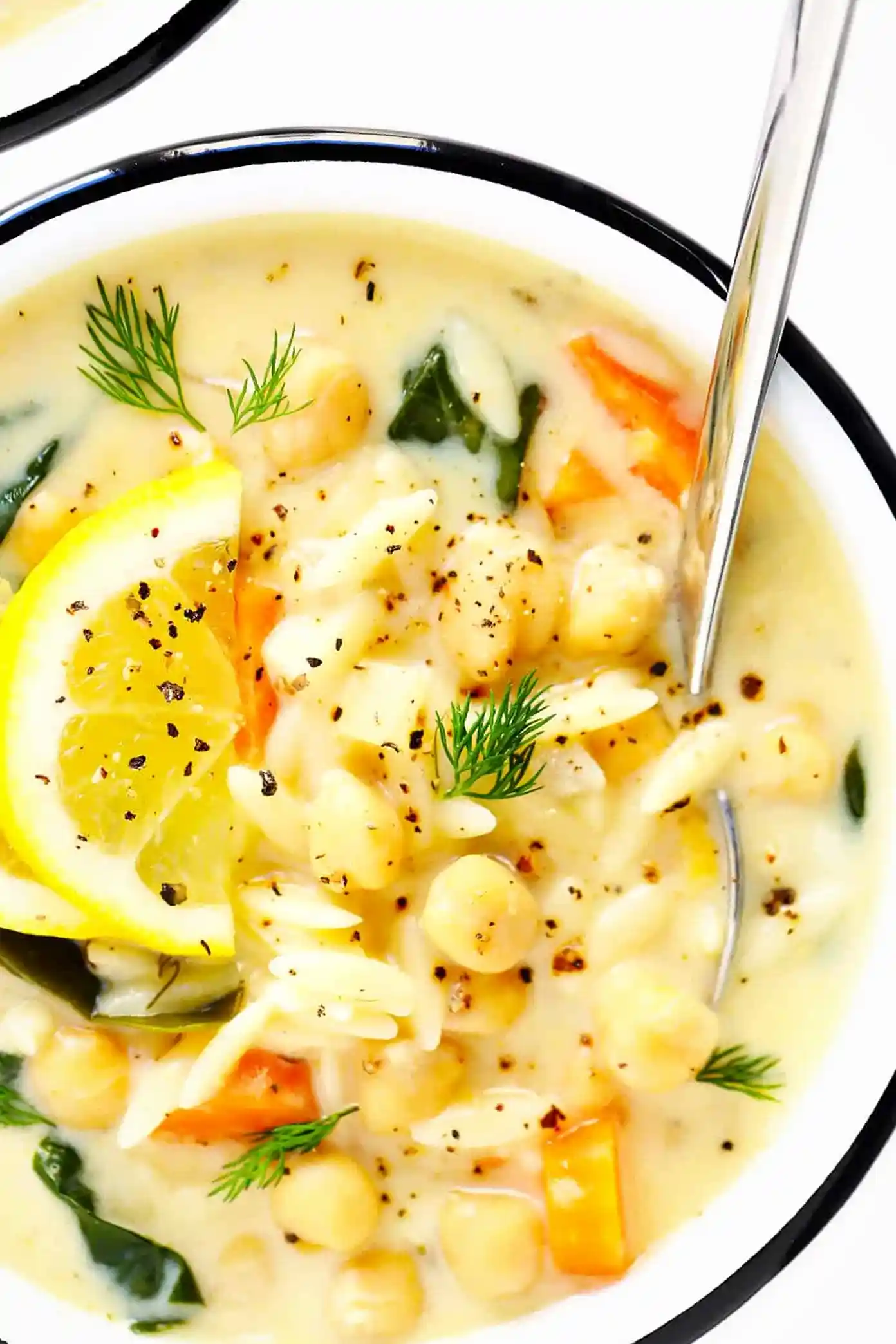
List of ingredients
- 1 tablespoon olive oil – used for sautéing the aromatic vegetables.
- 1 small white onion, peeled and diced – provides a savory base.
- 3 medium carrots, diced – adds natural sweetness and color.
- 5 cloves garlic, minced – enhances the aromatic profile.
- 10 cups vegetable stock – the liquid foundation of the soup.
- 2 (15-ounce) cans chickpeas, rinsed and drained – provides plant-based protein and texture.
- 1 cup orzo – a small rice-shaped pasta that thickens the soup.
- 4 eggs – used to create the creamy emulsion.
- 1/2 cup freshly-squeezed lemon juice – provides the signature citrus brightness (plus extra slices for garnish).
- 2 large handfuls fresh baby spinach – adds nutrients and a pop of green.
- 1-3 tablespoons chopped fresh dill – adds a traditional Mediterranean herbal note.
- sea salt and freshly-cracked black pepper – used for final seasoning to taste.
step-by-step instructions
- Sauté the Aromatics: Heat the olive oil in a large stockpot over medium-high heat. Add the diced onion and sauté for approximately 3 minutes, stirring occasionally to prevent browning.
- Cook Vegetables: Stir in the diced carrots and minced garlic. Continue to sauté for another 5 minutes until the vegetables have softened.
- Simmer the Base: Pour in the vegetable stock and add the drained chickpeas. Bring the mixture to a simmer, then reduce the heat to medium or medium-low to maintain a steady, gentle simmer.
- Cook the Pasta: Stir in the orzo. Cook until the pasta is al dente, stirring frequently to ensure the orzo does not stick to the bottom of the pot.
- Prepare the Egg Emulsion: While the orzo cooks, whisk the eggs and lemon juice together in a separate bowl. Ladle 1 cup of hot broth into the egg mixture while whisking constantly and very slowly. Repeat this process with a second cup of hot broth to temper the eggs.
- Thicken the Soup: Remove the stockpot from the heat source. While stirring the soup continuously, very slowly drizzle the tempered egg mixture into the pot. If the eggs begin to look like they are scrambling, stop immediately and let the soup cool for a few minutes before continuing.
- Final Additions: Return the pot to low heat. Stir in the baby spinach and fresh dill for 1-2 minutes until the spinach has just wilted.
- Season and Serve: Taste the soup and add salt and black pepper as needed. Serve warm in bowls garnished with extra dill and fresh lemon wedges.
Mastering the Egg Tempering Technique
Preventing Protein Coagulation
Tempering is the process of gradually raising the temperature of the eggs so they do not scramble when added to the hot soup. By slowly adding small amounts of hot broth, the eggs warm up without reaching the boiling point where proteins solidify. This ensures the final texture is a smooth cream rather than egg drops.
The Importance of Constant Whisking
Continuous whisking during the tempering phase is critical for creating a stable emulsion. The rapid movement breaks down the egg proteins and incorporates the lemon juice and broth evenly. This prevents clumps from forming and ensures the thickening agent is distributed uniformly throughout the mixture.
Managing Heat During the Final Mix
Removing the pot from the heat before adding the egg mixture is a safety measure against curdling. The residual heat of the soup is usually sufficient to cook the eggs through without boiling them. If the soup is too hot, the eggs will cook too quickly and separate, ruining the silky consistency.
Ingredient Substitutions and Alternatives
Using Rice Instead of Orzo
For a gluten-free version or a different texture, you can replace the orzo with 3/4 cup of long-grain white rice. Rice takes longer to cook than orzo, so you will need to increase the simmering time. Be aware that rice releases different starches, which may slightly alter the thickness of the broth.
Alternative Legume Options
If chickpeas are unavailable, cannellini beans or Great Northern beans are excellent substitutes. These white beans have a creamier texture that blends well with the egg-lemon sauce. Ensure they are rinsed and drained thoroughly to avoid adding excess salt or starch to the pot.
Swapping Fresh Dill for Other Herbs
If you prefer a different flavor profile, fresh oregano or flat-leaf parsley can replace the dill. Oregano provides a more earthy, traditional Greek taste, while parsley offers a clean, peppery brightness. Use the same quantity as specified for the dill.
Selecting the Right Vegetable Stock
Low-sodium vegetable stock is recommended to allow for better control over the final seasoning. If using a homemade stock, ensure it is well-strained for a smoother consistency. For a richer flavor, a stock made with roasted root vegetables works best.
Customizing the Soup Profile
Incorporating Additional Root Vegetables
To increase the nutritional value, you can add diced celery, parsnips, or leeks to the initial sauté. These vegetables complement the carrots and onions well. Simply add them at the same time as the carrots and sauté until they are translucent.
Adding Different Leafy Greens
While baby spinach is the standard, kale or Swiss chard are great alternatives for a heartier texture. Since these greens are tougher than spinach, add them a few minutes earlier in the process. This ensures they are tender and fully incorporated into the broth.
Adding Lean Proteins
For a non-vegetarian version, you can stir in shredded cooked chicken breast during the final heating stage. The chicken should be pre-cooked and shredded to match the size of the chickpeas. This turns the soup into a traditional chicken avgolemono variant.
Adjusting Citrus Intensity
The amount of lemon juice can be adjusted based on personal preference. For a sharper, more acidic taste, add an extra tablespoon of juice at the very end. If the soup feels too tart, a small pinch of sugar can help balance the acidity without altering the flavor.
Optimal Serving Suggestions
Pairing with Traditional Salads
A crisp Greek salad featuring cucumbers, tomatoes, Kalamata olives, and feta cheese balances the creaminess of the soup. The acidity of the salad dressing cuts through the richness of the egg emulsion. This combination provides a complete and balanced Mediterranean meal.
Choosing the Right Bread
Warm, crusty sourdough or toasted pita bread is ideal for serving alongside this soup. Sourdough provides a tangy contrast to the lemon, while pita can be used to scoop up the chickpeas. Lightly brushing the bread with olive oil and garlic adds extra flavor.
Effective Garnishing Methods
Garnishing with a fresh sprig of dill and a wedge of lemon allows the diner to customize the brightness of their bowl. A light sprinkle of paprika or cracked black pepper on top adds visual contrast. Serve in wide bowls to keep the soup warm for longer.
Storage and Preservation Guidelines
Refrigeration Limits and Safety
Store leftover soup in airtight glass containers in the refrigerator for up to 3 to 4 days. Ensure the soup is cooled slightly before sealing the lid to prevent excessive condensation. Keep the containers in the coldest part of the fridge to maintain freshness.
Managing Pasta Absorption
Orzo continues to absorb liquid even after the soup has cooled, which can make the leftovers very thick. To remedy this, add a splash of vegetable broth or water when reheating. This restores the original soup-to-pasta ratio and prevents the dish from becoming a porridge.
Freezing Considerations
Egg-thickened soups do not freeze and thaw as well as standard broths, as the emulsion may break. If you plan to freeze the soup, it is better to freeze the base (vegetables, chickpeas, and stock) without the egg mixture. Add the tempered eggs and fresh greens only after reheating the base.
Proper Reheating Instructions
Stovetop Reheating Method
The best way to reheat this soup is on the stove over low to medium-low heat. Stir gently and constantly to redistribute the heat and avoid scorching the bottom. Avoid bringing the soup to a rolling boil, as this can cause the egg emulsion to separate.
Microwave Reheating Precautions
When using a microwave, heat the soup in short 1-minute intervals. Stir the soup thoroughly between each interval to ensure there are no hot spots. Use a medium power setting to prevent the eggs from overheating and curdling.
Preventing Sauce Separation
If you notice the soup starting to separate during reheating, whisk in a tablespoon of warm water or broth. Stirring in a circular motion with a whisk can help re-emulsify the fats and liquids. Keep the temperature low to maintain the silky texture.
Make-Ahead Preparation Strategies
Advance Vegetable Prep
You can dice the onions, carrots, and garlic up to 24 hours in advance. Store them in a sealed container or bag in the refrigerator. This significantly reduces the active prep time on the day of cooking.
Preparing the Citrus Base
Freshly squeezed lemon juice is best, but you can squeeze the lemons a few hours ahead of time. Store the juice in a small jar in the fridge. Keep the lemon slices for garnish in a separate container with a damp paper towel to prevent drying.
Cooking Pasta Separately
For those who make this soup for meal prep, cook the orzo separately and store it in a container with a bit of oil. Add a portion of cooked pasta to each bowl before pouring in the hot soup. This prevents the pasta from overcooking and absorbing all the broth over several days.
Troubleshooting Common Issues
Fixing a Curdled Texture
If the eggs scramble despite tempering, you can try to smooth the soup using an immersion blender on a very low setting. Be careful not to over-blend, as this will pulverize the chickpeas and orzo. Alternatively, pass the soup through a coarse strainer to remove the larger egg clumps.
Addressing Mushy Orzo
Mushy pasta usually occurs when the orzo is cooked past the al dente stage. To avoid this, set a timer for the specific pasta package instructions. If the pasta is already too soft, add a bit more broth to thin out the overall consistency.
Balancing Excessive Acidity
If the lemon flavor is overpowering, you can balance it by adding a small amount of unsalted butter or more vegetable stock. The fat in butter helps mellow the sharpness of the citric acid. A pinch of salt can also help neutralize the perception of extreme sourness.
Frequently Asked Questions
Can I make this soup vegan?
Yes, you can replace the eggs with a slurry of cornstarch and water or a small amount of cashew cream. Whisk 2 tablespoons of cornstarch into 1/4 cup of cold water and stir it into the simmering soup to achieve a similar thickness. Use a plant-based butter for added richness.
Which type of chickpeas are best?
Canned chickpeas are the most convenient and provide a consistent texture. If using dried chickpeas, soak them overnight and boil them until tender before adding them to the soup. Ensure they are fully cooked before the sautéing process begins.
Is this soup suitable for meal prep?
Yes, it is excellent for meal prep if you follow the pasta storage tip. Because the soup is nutrient-dense and filling, it works well as a healthy lunch throughout the week. Just remember to reheat it gently to preserve the creaminess.
Print
Zesty Lemon Orzo and Chickpea Soup
- Total Time: 45 minutes
- Yield: 8–10 servings 1x
- Diet: Vegetarian
Description
This Lemony Orzo Chickpea Soup recipe is a vegetarian spin on Greek avgolemono soup. It’s cozy yet light, brightened up with lots of lemon juice and fresh herbs, and made extra creamy by folding a few eggs into the broth instead of cream.
Ingredients
- 1 tablespoon olive oil
- 1 small white onion, peeled and diced
- 3 medium carrots, diced
- 5 cloves garlic, minced
- 10 cups vegetable stock
- 2 (15-ounce) cans chickpeas, rinsed and drained
- 1 cup orzo
- 4 eggs
- 1/2 cup freshly-squeezed lemon juice
- 2 large handfuls fresh baby spinach
- 1–3 tablespoons chopped fresh dill
- sea salt
- freshly-cracked black pepper
Instructions
- Sauté: Heat oil in a large stockpot over medium-high heat. Add onion and sauté for 3 minutes, stirring occasionally. Add carrots and garlic and sauté for 5 more minutes, stirring occasionally.
- Simmer: Add stock and chickpeas, and stir to combine. Continue cooking until the soup reaches a simmer. Then reduce heat to medium (or medium-low), whatever works to maintain a steady low simmer.
- Cook Orzo: Add orzo and stir to combine. Continue cooking until the orzo is al dente, stirring occasionally so that the orzo doesn’t stick to the bottom of the pan.
- Temper Eggs: Meanwhile, as the orzo is cooking, whisk together the eggs and lemon juice in a separate mixing bowl or measuring cup until combined. Ladle out 1 cup of the hot soup broth, and while whisking the egg mixture with one hand continuously, very very slowly drizzle the broth into the eggs until combined. Repeat with 1 more cup of hot broth.
- Emulsify: Once the orzo is ready to go, remove the stockpot from the heat. Then while stirring the entire soup with one hand continuously, very very slowly drizzle the egg mixture into the soup until combined.
- Finish: Return the soup to low heat. Stir in the spinach and dill and stir for 1-2 minutes until the spinach has wilted. Then taste and season the soup with a few pinches of salt and black pepper, as needed.
- Serve: Serve warm, garnished with extra dill and lemon wedges.
Notes
Substitute 3/4 cup rice for orzo for a gluten-free option. If you prefer, replace dill with fresh or dried oregano or fresh basil.
- Prep Time: 15 minutes
- Cook Time: 30 minutes
- Category: Soup
- Method: Simmering
- Cuisine: Mediterranean
Nutrition
- Serving Size: 1 serving
- Calories: 280 kcal
- Sugar: 6 g
- Sodium: 720 mg
- Fat: 9 g
- Saturated Fat: 2 g
- Unsaturated Fat: 7 g
- Trans Fat: 0 g
- Carbohydrates: 35 g
- Fiber: 8 g
- Protein: 14 g
- Cholesterol: 110 mg
Keywords: Lemony Orzo Chickpea Soup, vegetarian avgolemono, Mediterranean soup, Greek-inspired, healthy creamy soup