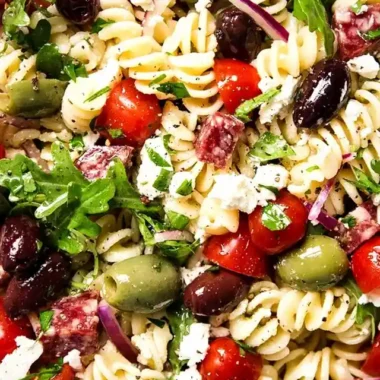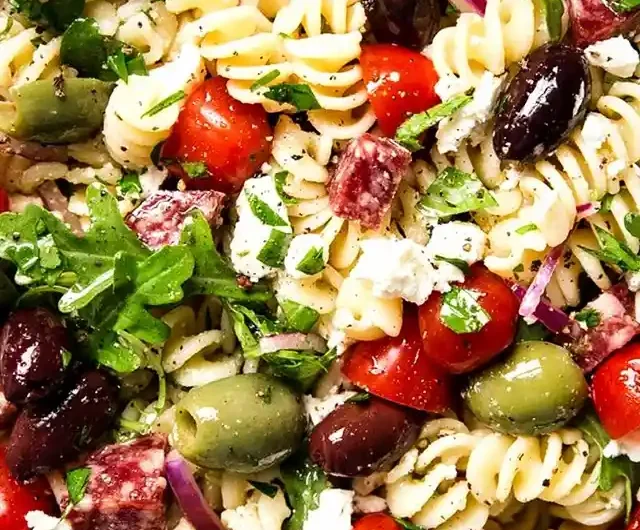
This vibrant pasta salad brings together fresh garden vegetables, briny olives, and tangy feta cheese for a perfect, mayo-free dish. It serves as an ideal centerpiece for outdoor gatherings or as a convenient, refreshing weekday lunch option. The balanced dressing provides a bright, acidic finish that ties every component together harmoniously.
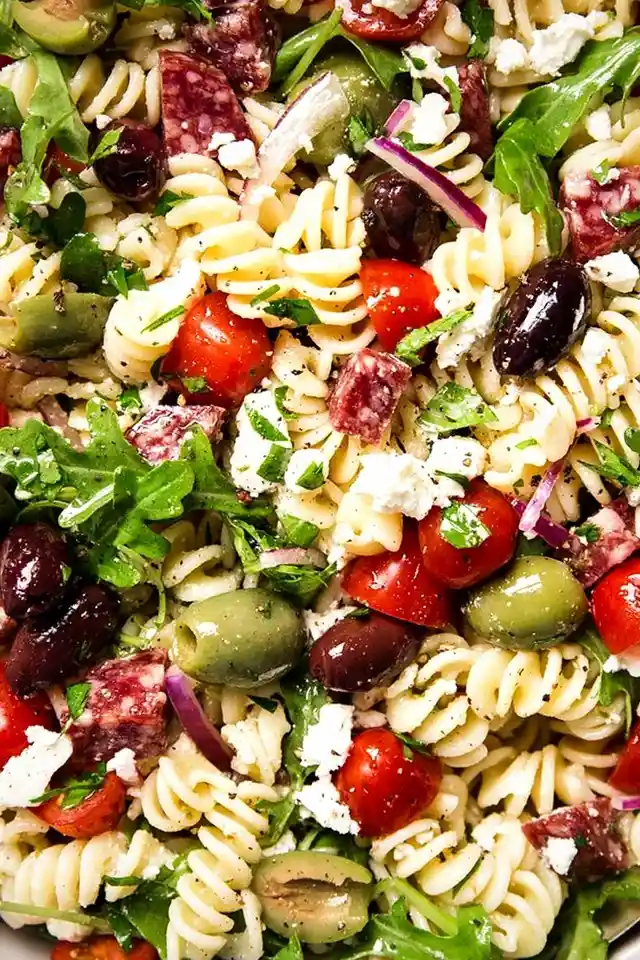
List of ingredients
- 1 pound pasta, cooked al dente according to package directions, cooled
- 1 cup mixed Greek olives, pitted
- 2 cups arugula
- ½ cup chopped flat leaf parsley
- ¼ red onion, thinly sliced, then roughly chopped
- 4 ounces crumbled feta
- 1 pint cherry tomatoes, halved
- 1 cup diced cucumbers
- 1 cup diced plant-based protein bits
- 1 teaspoon garlic powder
- 1 teaspoon dried oregano
- 1 teaspoon dried basil
- ½ teaspoon sea salt
- ½ cup extra-virgin olive oil
- 2 tablespoons red grape vinegar
step-by-step instructions
- Step: In a large bowl, whisk together the garlic powder, oregano, basil, salt, olive oil and red grape vinegar.
- Step: Add the pasta, olives, arugula, parsley, onion, feta, tomatoes, cucumbers and plant-based protein bits, toss to combine.
- Step: Serve immediately, or for the best results, cover and refrigerate at least 1 hour.
Flavor Balance and Textural Tips
Cooling Pasta Properly
To ensure your salad has the perfect texture, run the cooked pasta under cool running water immediately after draining. This stops the cooking process and prevents the starches from sticking together into a gummy mass. Once cooled, pat the pasta dry with a clean kitchen towel to ensure the dressing adheres perfectly.
Maximizing Herb Distribution
When chopping your flat leaf parsley, ensure the pieces are fine enough to distribute evenly throughout the bowl. A uniform distribution of herbs ensures that every forkful contains a bright, grassy flavor that balances the saltiness of the feta and the richness of the olive oil. Use a sharp chef’s knife to slice through the leaves cleanly rather than bruising them with a dull blade.
Balancing the Salt Content
Because olives and feta are naturally salty, you should taste your dressing before adding the pasta to the bowl. If you find the flavor profile leans too heavily toward the salty side, add a small splash of extra grape vinegar or a teaspoon of fresh lemon juice to brighten the overall composition. Adjusting the acidity at this stage allows for a more rounded and nuanced flavor profile.
Customization and Recipe Modifications
Vegetable Substitutions
You can easily rotate the vegetables in this dish to suit what is currently in season or available in your refrigerator. Finely chopped bell peppers add a delightful sweetness, while blanched green beans provide an extra snap that contrasts well with the soft pasta. Always dice secondary additions into small, bite-sized pieces so that they mirror the size of your cherry tomatoes and olives.
Alternative Protein Additions
If you prefer a more protein-dense meal, consider adding chickpeas or white beans to the mix. These legumes soak up the dressing beautifully and provide a neutral, earthy base that complements the Mediterranean profile. For a heartier experience, incorporate toasted pine nuts or sunflower seeds just before serving to provide an essential crunch that elevates the dish.
Refreshing The Dressing Profile
If you want to move away from the traditional herb blend, try adding a tablespoon of lemon zest to the dressing. The essential oils found in the skin of the lemon provide a perfume-like quality that makes the entire salad feel more sophisticated. You could also stir in a teaspoon of honey if you prefer a subtle touch of sweetness to offset the vinegar.
Serving and Preservation Methods
Optimal Temperature for Serving
While this dish can be served at room temperature, it truly shines when chilled slightly. Preparing the dish at least one hour in advance allows the pasta to soak up the vinaigrette, which softens the sharpness of the red onion and infuses the tomatoes with savory notes. If the salad has been sitting in the refrigerator for several hours, give it a quick stir and a taste test to see if it requires a final dash of olive oil or salt before being set out on the table.
Short-Term Storage Solutions
When storing leftovers, use an airtight container to keep the greens and vegetables as fresh as possible. The ingredients will hold up well for up to three days, but keep in mind that the arugula may wilt slightly over time. If you know you will be eating this over several days, consider storing the dressing separately and tossing the salad in smaller batches to keep the individual components crisp.
Managing Prep for Large Groups
When preparing this for a large party, cook the pasta just until it reaches the early stages of al dente. Because the pasta will sit in the dressing, it will naturally soften over time. By starting with a firmer noodle, you guarantee that it maintains its structure even after several hours of being dressed.
Addressing Common Cooking Concerns
Why does the dressing pool at the bottom?
It is perfectly normal for some oil and vinegar to settle at the base of the serving bowl. Before serving, use a large spoon or salad tongs to lift the ingredients from the bottom, effectively re-coating the pasta and vegetables. If the bottom of the bowl looks particularly dry, add a small drizzle of fresh oil to restore the sheen of the dish.
Can I use different types of pasta?
While rotini or fusilli are the best choices due to their ability to hold dressing, other short-cut pasta shapes work effectively as well. Penne, farfalle, or even macaroni provide excellent structure and bite. Avoid long, thin noodles like spaghetti, as they are difficult to toss with chunky ingredients like olives and cherry tomatoes.
How to handle moisture from cucumbers?
Cucumbers have a high water content, which can sometimes dilute your dressing. To mitigate this, slice your cucumbers in half lengthwise and use a small spoon to scoop out the seedy, watery center before dicing. This leaves you with only the crisp, firm part of the vegetable, ensuring your salad stays delicious for longer.
Print
Zesty Mediterranean Garden Pasta Salad
- Total Time: PT25M
- Yield: 10 1x
- Diet: Vegetarian
Description
With briny olives, juicy cherry tomatoes, spicy arugula, purple pops of red onion, and creamy feta crumbled throughout, this Mediterranean pasta salad is as bright and sunny as a warm summer day.
Ingredients
- 1 pound pasta, cooked al dente according to package directions, cooled
- 1 cup mixed Greek olives, pitted
- 2 cups arugula
- ½ cup chopped flat leaf parsley
- ¼ red onion, thinly sliced, then roughly chopped
- 4 ounces crumbled feta
- 1 pint cherry tomatoes, halved
- 1 cup diced cucumbers
- 1 cup diced plant-based protein bits
- 1 teaspoon garlic powder
- 1 teaspoon dried oregano
- 1 teaspoon dried basil
- ½ teaspoon sea salt
- ½ cup extra-virgin olive oil
- 2 tablespoons red grape vinegar
Instructions
- Step: In a large bowl, whisk together the garlic powder, oregano, basil, salt, olive oil and red grape vinegar.
- Step: Add the pasta, olives, arugula, parsley, onion, feta, tomatoes, cucumbers and plant-based protein bits, toss to combine.
- Step: Serve immediately, or for the best results, cover and refrigerate at least 1 hour.
Notes
If making ahead of time, omit the arugula and add it just before serving.
- Prep Time: PT10M
- Cook Time: PT15M
- Category: lunch, dinner, salads, 30-minute-meals, kid-friendly
- Method: Tossing
- Cuisine: Mediterranean
Nutrition
- Serving Size: 1/10th of recipe
- Calories: 321 kcal
- Sugar: 3 g
- Sodium: 357 mg
- Fat: 16 g
- Saturated Fat: 4 g
- Unsaturated Fat: 11 g
- Trans Fat: 0 g
- Carbohydrates: 37 g
- Fiber: 3 g
- Protein: 8 g
- Cholesterol: 10 mg
Keywords: Mediterranean, pasta salad, vegetarian, lunch, dinner, summer, cold salad