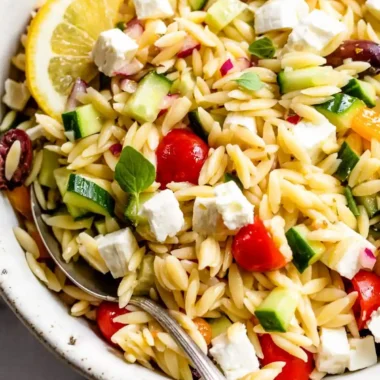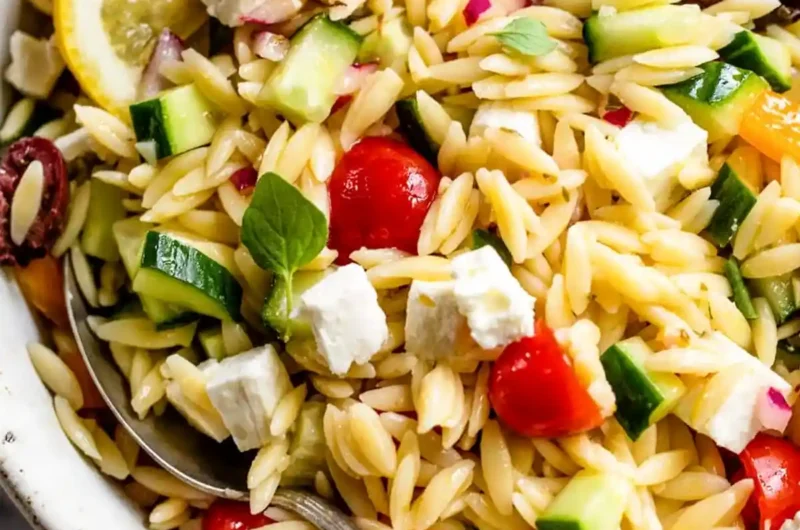
This refreshing pasta salad combines rice-shaped orzo with crisp vegetables and a tangy vinaigrette. It is an ideal side dish for grilled meats or a standalone light lunch.
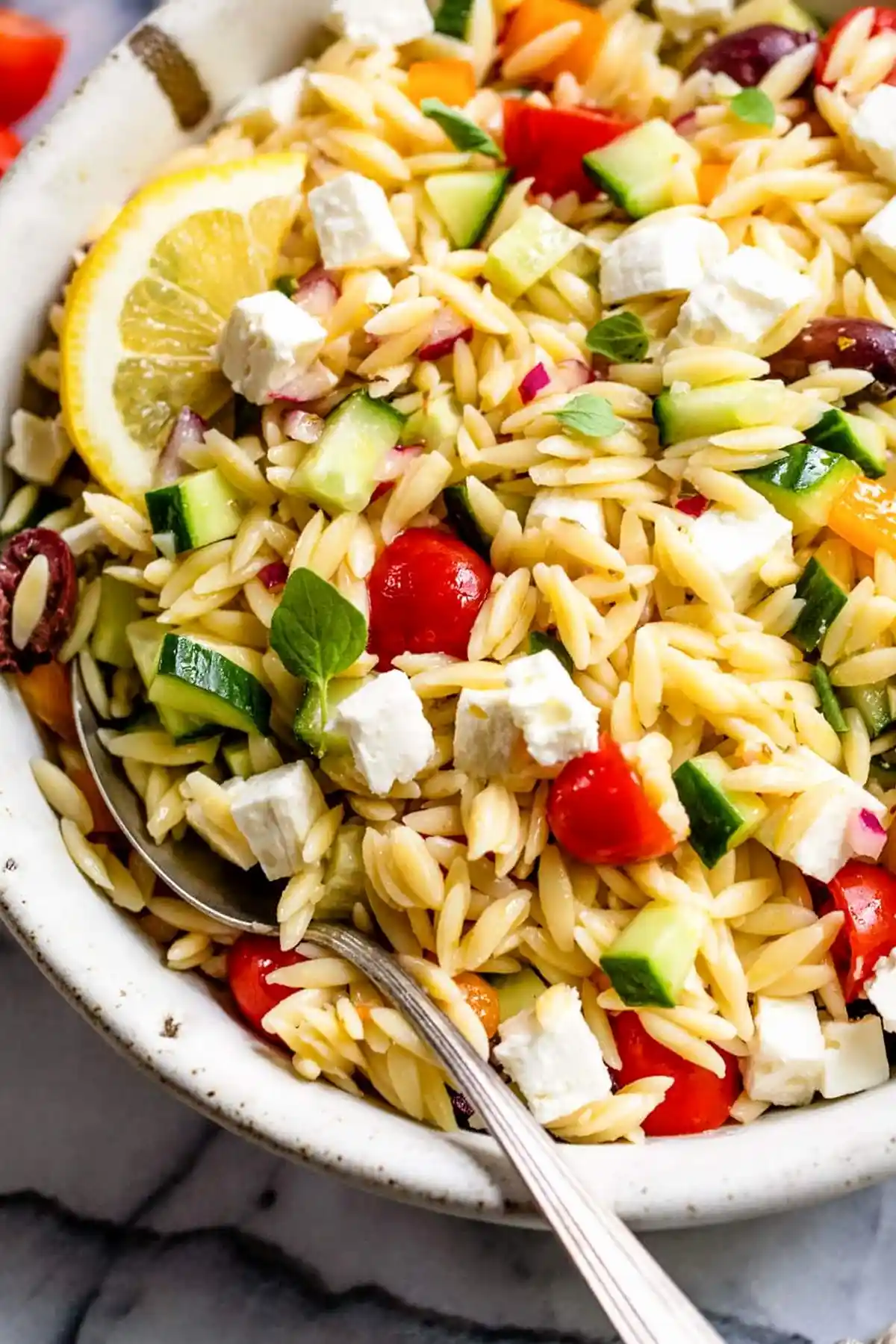
List of ingredients
- 3 tbsp red wine vinegar – provides the primary acidic base.
- 2 tbsp fresh lemon juice – adds a bright, citrusy note.
- 1/3 cup olive oil – emulsifies the dressing and adds richness.
- 1/2 tsp garlic powder – provides a subtle, savory depth.
- 1 tsp dried oregano – adds traditional Mediterranean flavor.
- 1/2 tsp kosher salt – enhances all other flavors.
- 16 oz orzo pasta (wheat or gluten-free) – the small, rice-like pasta base.
- 1/2 cup halved pitted kalamata olives, plus 2 tablespoons brine – adds a briny, salty punch.
- 1/3 cup red onion, diced small – provides a sharp, crisp contrast.
- 3 cups from 1 large English cucumber, diced small – ensures a refreshing crunch.
- 1 pint grape tomatoes, halved – adds sweetness and juiciness.
- 1 orange bell pepper, diced – contributes color and mild sweetness.
- 1/2 cup feta cheese (cubed, microbial-rennet), – adds creamy, salty texture.
- fresh oregano (optional garnish) – adds a final burst of herbal freshness.
step-by-step instructions
- Cook the pasta: Bring a large pot of salted water to a rolling boil. Add the orzo and cook according to package directions for al dente, but add one extra minute of cooking time to ensure the pasta doesn’t harden too much when chilled.
- Cool the pasta: Drain the orzo and rinse it thoroughly under cold water to stop the cooking process and remove excess starch, then drain again.
- Prepare the dressing: In a large mixing bowl, whisk together the red wine vinegar, lemon juice, olive oil, garlic powder, dried oregano, and salt.
- Add aromatics: Mix the halved kalamata olives, diced red onion, and two tablespoons of olive brine into the dressing bowl.
- Combine ingredients: Stir in the cooled orzo, diced cucumber, halved grape tomatoes, and diced bell pepper. Toss everything well to ensure the pasta is evenly coated.
- Final seasoning: Taste the salad for salt and adjust the seasoning as needed based on the saltiness of your olives and feta.
- Finish and serve: Gently fold in the cubed feta cheese just before serving to keep the cubes intact and creamy.
Professional Preparation Tips
Ensure Correct Orzo Texture
Cooking orzo slightly past the al dente stage is critical for cold salads. Cold temperatures cause pasta starches to firm up, which can make undercooked pasta feel hard or grainy. Adding an extra minute of boiling time ensures a pleasant, tender bite after refrigeration.
Properly Rinse the Pasta
Rinsing orzo under cold water is essential to prevent the noodles from clumping together. The cold water washes away the surface starch that typically acts as a glue. This step keeps the grains separate and prevents the salad from becoming a sticky mass.
Dice Vegetables Uniformly
Aim for a small, consistent dice for the cucumber, onion, and bell pepper. Since orzo is very small, larger vegetable chunks will dominate the texture. Small, uniform pieces allow you to get a bit of every ingredient in a single spoonful.
Control Cucumber Moisture
English cucumbers are preferred because they have thinner skins and fewer seeds. If you use a standard garden cucumber, peel the skin and scoop out the watery center with a spoon before dicing to prevent the salad from becoming watery over time.
Ingredient Substitutions and Modifications
Alternative Pasta Shapes
If orzo is unavailable, use ditalini or acini di pepe. These small pasta shapes mimic the size of orzo and will integrate well with the finely diced vegetables and dressing.
Vinegar Variations
White wine vinegar can be used as a direct substitute for red wine vinegar. It offers a slightly milder, cleaner acidity that still complements the Mediterranean flavor profile without changing the overall structure of the dish.
Using Different Olives
While Kalamata olives provide the traditional salty-tart flavor, Castelvetrano olives are a great alternative. They offer a buttery, milder taste and a vibrant green color that contrasts well with the orange peppers.
Vegan Adjustments
To make this recipe vegan, simply omit the feta cheese. You can replace it with cubed extra-firm tofu marinated in lemon juice and salt, or use a plant-based feta alternative to maintain the creamy texture.
Gluten-Free Options
Use a certified gluten-free orzo made from corn, rice, or quinoa. Be mindful that gluten-free pastas can overcook more quickly than wheat-based versions, so monitor the texture closely during the boiling process.
Protein Pairing Options
Adding Grilled Chicken
Marinate chicken breast in lemon, garlic, and oregano before grilling. Slice the chicken into thin strips or cubes and stir them into the salad for a more filling main course.
Integrating Sautéed Shrimp
Sauté shrimp with olive oil and a pinch of paprika until pink. Let the shrimp cool completely before adding them to the salad to prevent the vegetables from wilting.
Plant-Based Protein Boost
Stir in a drained and rinsed can of chickpeas for a vegetarian protein source. Chickpeas add an earthy flavor and a hearty texture that pairs perfectly with the briny olives.
Using Grilled Salmon
Flake grilled salmon over the top of the salad rather than mixing it in. This prevents the delicate fish from breaking apart and keeps the presentation clean while adding healthy omega-3 fatty acids.
Serving and Presentation Ideas
Platter Arrangement
For parties, spread the salad on a wide, shallow platter rather than a deep bowl. This prevents the ingredients from being crushed and allows the colorful vegetables to be visible.
Garnishing for Visual Appeal
Use fresh oregano leaves, chopped parsley, or fresh dill to add a pop of green. A sprinkle of paprika or a few extra lemon wedges on the side can enhance the professional look of the dish.
Ideal Side Dish Pairings
This salad pairs exceptionally well with grilled proteins like lamb skewers, turkey burgers, or white fish. It also works as a companion to grilled zucchini or vegetable kabobs.
Individual Portioning
For meal prep or catered events, serve the salad in small clear cups or mason jars. Layer the dressing at the bottom and the feta at the top to maintain freshness until the moment of consumption.
Storage and Preservation Guide
Optimal Refrigeration
Store the salad in an airtight container in the refrigerator for up to four days. Keep the container tightly sealed to prevent the salad from absorbing other food odors in the fridge.
Managing Dressing Absorption
Pasta tends to absorb the dressing as it sits, which can leave the salad tasting dry. If this happens, toss the salad with an extra tablespoon of olive oil and a squeeze of fresh lemon juice before serving.
Maintaining Feta Freshness
If you plan to store the salad for several days, consider adding the feta cheese only to the portion you are about to eat. This keeps the cheese from softening too much and prevents it from clouding the dressing.
Avoid Freezing
Do not freeze this pasta salad. The cucumber and tomatoes will lose their cellular structure and become mushy upon thawing, and the dressing will separate completely.
Troubleshooting Common Issues
Fixing Over-Salted Salad
If the olive brine and feta make the salad too salty, add more diced cucumber or a splash of unsalted water. Increasing the volume of fresh vegetables helps dilute the salt concentration.
Preventing Dressing Separation
The vinaigrette may separate while the salad is refrigerated. Give the salad a thorough toss with a spoon right before serving to re-emulsify the oil and vinegar.
Correcting a Bland Taste
If the flavors seem muted, increase the acidity. A small addition of fresh lemon juice or an extra teaspoon of red wine vinegar often wakes up the other ingredients.
Preventing Soggy Vegetables
Ensure the pasta is completely cooled and drained before mixing it with the vegetables. Adding hot pasta to raw cucumbers and tomatoes will cause the vegetables to release water and lose their crunch.
Frequently Asked Questions
Can I use a different type of bell pepper?
Yes, red or yellow bell peppers are excellent substitutes for orange. They provide similar sweetness and crunch, and the color change is purely aesthetic.
What is the best way to dice an English cucumber?
Cut the cucumber into long quarters lengthwise, then slice the quarters into thin planks, and finally dice those planks into small cubes. This ensures uniform size.
Can I make this salad a day in advance?
Yes, making the salad a day early allows the flavors to meld and deepen. Just remember to add the feta cheese and fresh garnish immediately before serving.
How do I substitute the red wine vinegar?
Use apple cider vinegar for a slightly sweeter profile or white wine vinegar for a neutral, crisp acidity. Both are suitable 1:1 replacements.
Is there a substitute for kalamata olives?
Green olives or black canned olives can be used. If using black olives, be mindful that they are often less salty than Kalamatas, so you may need a pinch more salt in the dressing.
Print
Zesty Mediterranean Orzo Pasta Salad
- Total Time: 30 minutes
- Yield: 16 servings 1x
- Diet: Vegetarian
Description
Greek Orzo Salad is a light and refreshing pasta salad made with orzo, feta, lemon, and crisp veggies. Perfect as a summer side dish or light lunch, and great with anything off the grill.
Ingredients
- 3 tbsp apple cider vinegar
- 2 tbsp fresh lemon juice
- 1/3 cup olive oil
- 1/2 tsp garlic powder
- 1 tsp dried oregano
- 1/2 tsp kosher salt
- 16 oz orzo pasta (wheat or gluten-free)
- 1/2 cup halved pitted kalamata olives (plus 2 tablespoons brine)
- 1/3 cup red onion (diced small)
- 3 cups English cucumber (diced small)
- 1 pint grape tomatoes (halved)
- 1 orange bell pepper (diced)
- 1/2 cup microbial-rennet feta cheese (cubed)
- fresh oregano (optional garnish)
Instructions
- Step: Bring a large pot of salted water to a rolling boil. Add the orzo and cook according to package directions for al dente, adding an extra minute.
- Step: Drain and rinse under cold water, drain.
- Step: In a large bowl, combine the dressing ingredients. Add the olives, red onion and brine from the olives and mix to combine.
- Step: Stir in the pasta with the cucumber, tomatoes and bell pepper and toss well. Taste for salt and adjust as needed.
- Step: Add the cheese just before ready to serve.
Notes
Pasta salad is best chilled for at least an hour before eating to allow flavors to meld. If it seems dry after refrigerating, toss it with a little more dressing before serving.
- Prep Time: 15 minutes
- Cook Time: 15 minutes
- Category: Pasta Salad
- Method: Boiling, Mixing
- Cuisine: Greek
Nutrition
- Serving Size: 3/4 cup
- Calories: 173 kcal
- Sugar: 2 g
- Sodium: 112 mg
- Fat: 6 g
- Saturated Fat: 1 g
- Unsaturated Fat: 5 g
- Trans Fat: 0 g
- Carbohydrates: 24 g
- Fiber: 1.5 g
- Protein: 5 g
- Cholesterol: 4 mg
Keywords: Greek orzo salad, pasta salad, Mediterranean, summer side dish, meal prep