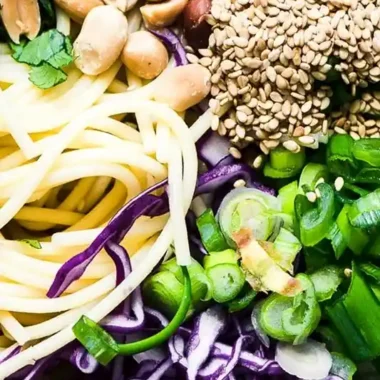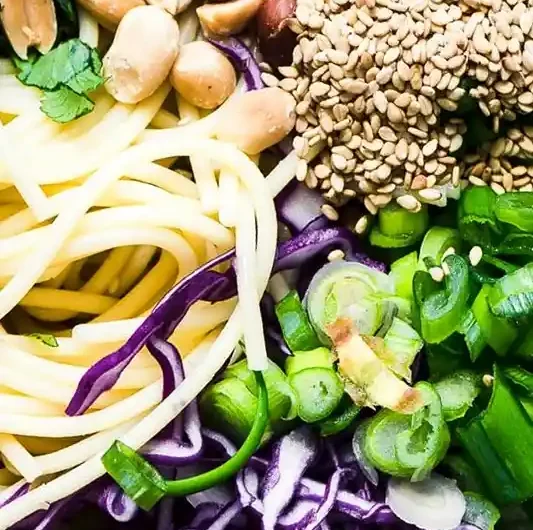
This refreshing cold pasta dish combines American potluck traditions with bold Southeast Asian flavors. It is a colorful, nutrient-dense salad that is quick to assemble and perfect for warm weather. The creamy peanut dressing ties together crisp vegetables and tender spaghetti for a balanced meal.
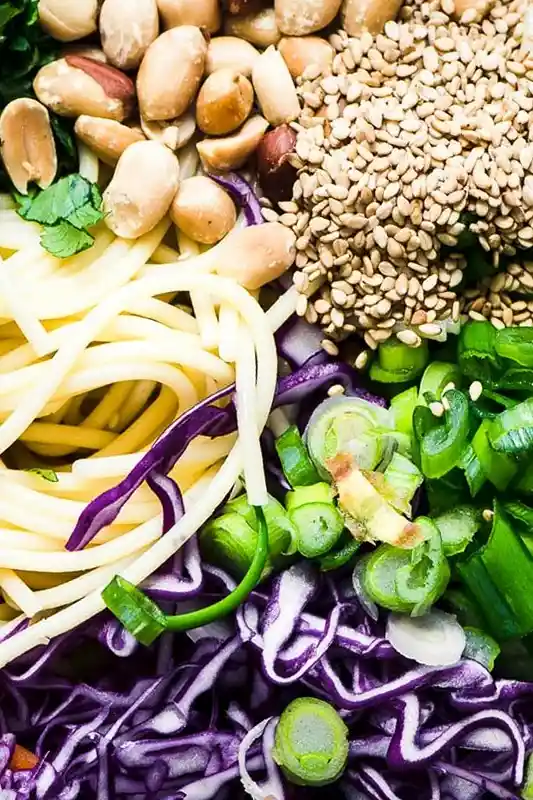
List of ingredients
- 8 ounces spaghetti – broken in half, cooked al dente in salted water and rinsed with cold water.
- 1 cup red cabbage – thinly shredded for a crisp texture.
- 1 cup carrots – finely shredded.
- 1 bunch green onions – approximately 6 to 8 stalks, thinly sliced.
- 1/2 cup roasted peanuts – adds a salty crunch.
- 2 Tbsp sesame seeds – for added nuttiness and visual appeal.
- 1 handful cilantro leaves – freshly chopped.
- 1 handful basil leaves – thinly sliced, preferably Thai basil for authenticity.
- 1/4 cup rice vinegar – provides a mild, tangy acidity.
- 2 Tbsp vegetable oil – helps emulsify the dressing.
- 2 Tbsp smooth peanut butter – a heaping measure for creaminess.
- 1 clove garlic – finely minced.
- 1/2 tsp cayenne pepper – adds a subtle spicy kick.
- Salt – added to taste for seasoning.
step-by-step instructions
- Prepare the Dressing: Combine the rice vinegar, vegetable oil, peanut butter, minced garlic, cayenne pepper, and salt in a small bowl. Use an immersion blender to process the ingredients until the dressing is smooth and fully emulsified. If the consistency is too thick, thin it out with a small amount of additional oil or vinegar.
- Prepare the Pasta: Ensure your cooked spaghetti is well-drained and not dripping wet to avoid watering down the sauce. Place the pasta in a large mixing bowl and toss it with a small portion of the prepared peanut dressing.
- Combine Salad Components: Add the shredded red cabbage, shredded carrots, sliced green onions, roasted peanuts, sesame seeds, chopped cilantro, and sliced basil to the bowl. Pour over the remaining dressing and toss everything together thoroughly until evenly coated.
- Chill and Serve: Place the salad in the refrigerator until you are ready to serve. This allows the flavors to meld and the pasta to cool completely. Just before serving, garnish the dish with a few extra roasted peanuts and fresh herbs.
Optimizing Your Preparation Techniques
Using a Food Processor for Carrots
To achieve the best texture, use a food processor fitted with the shredding blade for your carrots. A standard box grater often presses too hard against the vegetable, resulting in wet, mushy shreds. The processor ensures clean, consistent strips that maintain their crunch.
Mandoline Slicing for Red Cabbage
A mandoline set to 1/8 inch is the ideal tool for slicing red cabbage. This produces fine, crisp shreds that distribute evenly throughout the spaghetti. If the resulting shreds are too long for easy eating, simply slice them in half across the grain.
Selecting the Correct Pasta Gauge
Standard spaghetti is recommended over thin or thick varieties for this specific recipe. Thin spaghetti can break down and become mushy after absorbing the dressing. Thicker pasta can feel too starchy and may overpower the delicate crunch of the fresh vegetables.
Cooking for the Perfect Al Dente Texture
It is critical to cook the spaghetti only until it reaches the al dente stage. Because the pasta continues to soften slightly as it sits in the acidic dressing and chills in the fridge, overcooking it initially will lead to a soggy salad. Rinse with cold water immediately after draining to stop the cooking process.
Ingredient Substitutions and Alternatives
Gluten-Free Pasta Options
This recipe works well with high-quality gluten-free pasta alternatives. Brown rice pasta or corn-based spaghetti are excellent choices that hold their shape well. Ensure you follow the package instructions carefully to avoid overcooking the gluten-free noodles.
Nut-Free Dressing Variations
For those with peanut allergies, you can replace the peanut butter with sunflower seed butter or tahini. Sunflower butter provides a similar creamy consistency and mild sweetness. Tahini offers a more savory, earthy flavor that still complements the rice vinegar and garlic.
Substituting Thai Basil
While Thai basil provides a distinct anise-like flavor, regular Italian sweet basil is a suitable replacement. If you cannot find either, a mix of fresh mint and flat-leaf parsley can mimic the brightness of the original. Avoid using dried basil as it lacks the necessary aromatic punch.
Adding Extra Protein for a Main Meal
To transform this side dish into a full dinner, incorporate additional lean proteins. Shredded rotisserie chicken or grilled shrimp blend seamlessly with the peanut dressing. For a plant-based protein boost, add cubed firm tofu or shelled edamame.
Serving and Storage Guidelines
Maximizing Flavor Through Chilling
This salad is significantly better when allowed to rest in the refrigerator. The rice vinegar and salt penetrate the vegetables and pasta, deepening the overall flavor profile. Aim to chill the salad for at least one to two hours before serving.
Refrigeration and Shelf Life
Store the salad in an airtight container in the refrigerator for up to three to four days. Because it does not contain mayonnaise, it is more stable than traditional pasta salads. Stir the salad gently before serving to redistribute any settled dressing.
Outdoor Serving Safety
This recipe is an excellent choice for outdoor gatherings because it lacks dairy or egg-based dressings that spoil quickly in heat. However, keep the bowl in a shaded area or nestled in a larger bowl of ice to maintain the crispness of the vegetables. This ensures the herbs stay vibrant and the pasta remains refreshing.
Effective Reheating Advice
This dish is designed to be eaten cold and should not be reheated. Heating the salad will wilt the fresh cilantro and basil and cause the cabbage to lose its crunch. If the salad becomes too cold and the peanut butter firms up, let it sit at room temperature for 10 minutes before serving.
Flavor Enhancement Tips
Balancing Heat and Acidity
Adjust the amount of cayenne pepper based on your preference for spice. If the salad feels too spicy, add a small amount of honey or maple syrup to balance the heat. Conversely, if the salad lacks brightness, a splash of extra rice vinegar can wake up the flavors.
Incorporating Fresh Lime Juice
Adding a squeeze of fresh lime juice just before serving adds a citrusy layer that complements the peanut butter. The acidity of the lime helps cut through the richness of the oil and nuts. This is a common technique in authentic Southeast Asian noodle salads.
Increasing the Crunch Factor
For additional texture, consider adding toasted slivered almonds or water chestnuts. These additions provide a different type of crunch than the peanuts and sesame seeds. Ensure any added nuts are toasted to bring out their natural oils.
Managing Herb Freshness
To keep the cilantro and basil from bruising, fold them in gently at the very end of the mixing process. Avoid over-mixing once the delicate leaves are added. This preserves the bright green color and the essential oils of the herbs.
Planning for Large Groups
Scaling the Recipe for Crowds
When scaling this recipe for 50 or more people, increase the ingredients proportionally but be cautious with the cayenne pepper. Spice levels can intensify in larger batches, so start with slightly less and adjust after tasting. Use a very large mixing tub to ensure all ingredients are coated evenly.
Efficient Bulk Prep Strategies
Prepare the dressing in a large blender or food processor ahead of time and store it in a jar. Shred the cabbage and carrots in large batches using a food processor to save time. Store the prepped vegetables in separate containers and combine them with the pasta and dressing shortly before the event.
Transporting the Salad Safely
Transport the salad in a sealed container with a tight-fitting lid to prevent leaks. If traveling a long distance, keep the dressing in a separate container and toss it with the salad upon arrival. This keeps the vegetables from softening too much during transit.
Frequently Asked Questions
Why is my dressing too thick?
Peanut butter varies in consistency by brand and temperature. If your dressing is too thick to pour, whisk in one teaspoon of warm water or extra rice vinegar at a time until it reaches a smooth, pourable consistency.
Can I use a different vinegar?
Rice vinegar is preferred for its mild sweetness, but apple cider vinegar is a good substitute. Avoid using distilled white vinegar as it is too harsh and may overpower the other flavors in the salad.
How do I prevent the pasta from clumping?
Rinsing the pasta thoroughly with cold water removes excess surface starch. Additionally, tossing the noodles with a small amount of dressing immediately after draining prevents them from sticking together as they cool.
Can I make this without cayenne?
Yes, you can omit the cayenne pepper if you prefer a mild salad. For a different kind of heat, you could use a small amount of red pepper flakes or a teaspoon of Sriracha for a more complex flavor.
Print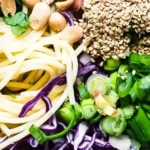
Zesty Peanut Thai Spaghetti Salad
- Total Time: 20 minutes
- Yield: 10 servings 1x
- Diet: Vegetarian
Description
This yummy Thai Spaghetti Salad is a delicious twist on a potluck classic ~ quick to prepare using common ingredients, the Asian flavors in this colorful pasta salad really pop.
Ingredients
- 8 ounces spaghetti, cooked al dente and rinsed well with cold water
- 1 cup shredded red cabbage
- 1 cup shredded carrots
- 1 bunch (about 6–8) green onions, thinly sliced
- 1/2 cup roasted peanuts
- 2 Tbsp sesame seeds
- 1 handful cilantro leaves, chopped
- 1 handful basil leaves, thinly sliced
- 1/4 cup rice vinegar
- 2 Tbsp vegetable oil
- 2 Tbsp smooth peanut butter
- 1 clove garlic, minced
- 1/2 tsp cayenne pepper
- salt to taste
Instructions
- Make the dressing: Put all the dressing ingredients in a small bowl and use an immersion blender to process into an emulsified dressing. Thin with more oil or vinegar, if necessary. Taste to adjust any of the flavors.
- Make the salad: Make sure your pasta is fairly dry and add to a large bowl. Toss with a little of the dressing. Then add the rest of the salad ingredients and toss well with more dressing. Refrigerate until ready to serve. Garnish with extra peanuts and fresh herbs.
Notes
For a gluten free salad you can use a good gluten free pasta, cooked to al dente.
- Prep Time: 20 minutes
- Cook Time: 0 minutes
- Category: Salad
- Method: Mixing
- Cuisine: Thai/American
Nutrition
- Serving Size: 1 serving
- Calories: 189 kcal
- Sugar: 2 g
- Sodium: 59 mg
- Fat: 9 g
- Saturated Fat: 3 g
- Unsaturated Fat: 6 g
- Trans Fat: 0 g
- Carbohydrates: 21 g
- Fiber: 2 g
- Protein: 6 g
- Cholesterol: 0 mg
Keywords: noodles, potluck, salad, side dish, summer, Thai