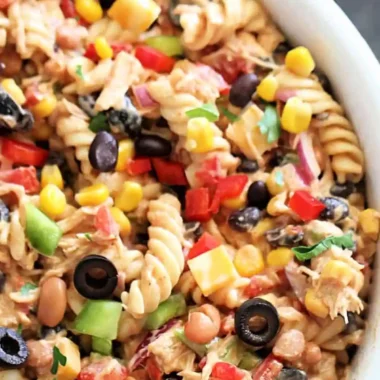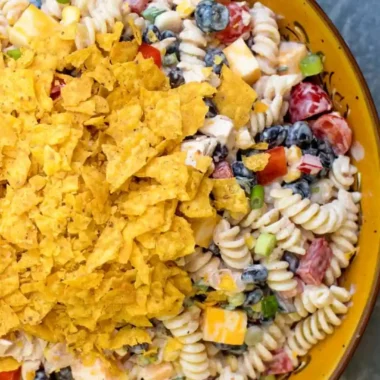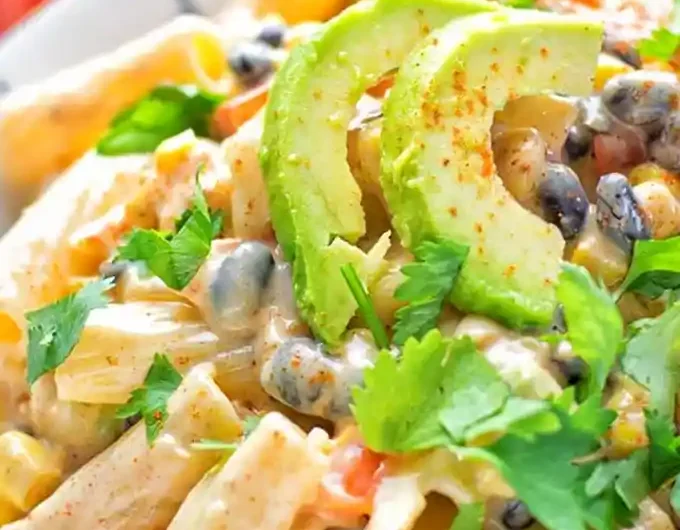
This hearty Southwest pasta salad is a plant-based dish featuring a zesty garlic dressing and colorful vegetables. It is designed for efficiency, making it ideal for meal prep or gathering-style events.
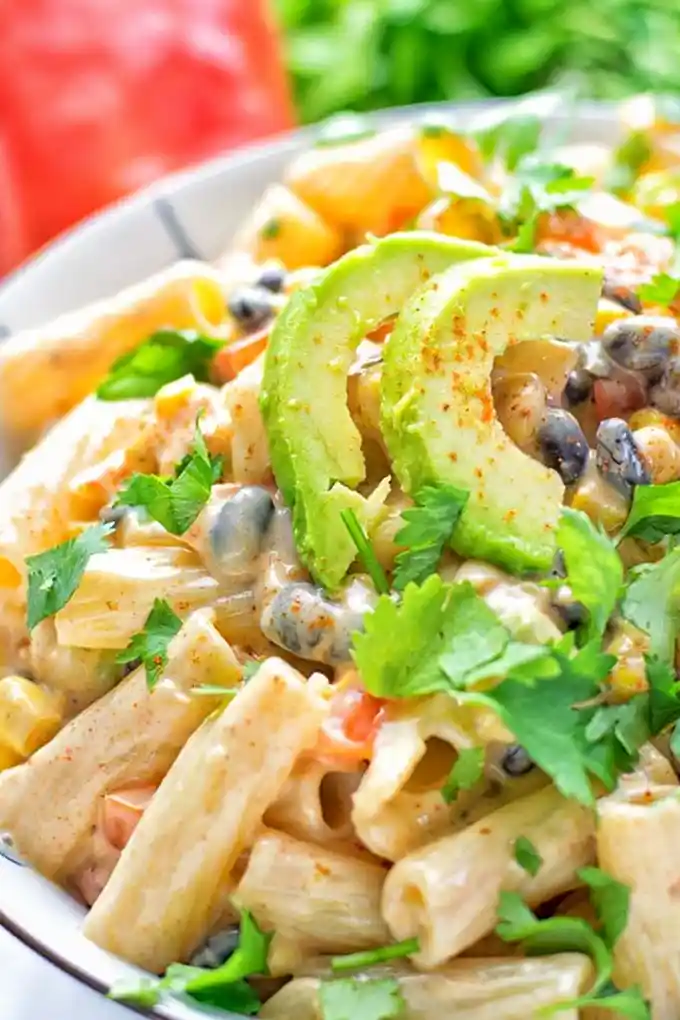
List of ingredients
- 1 lb gluten-free pasta – rotini or fusilli are recommended for better sauce adhesion.
- 3 cloves garlic, pressed – provides a sharp, aromatic base for the dressing.
- 1 1/4 cup vegenaise – serves as the creamy, plant-based emulsion for the sauce.
- 1 cup cooked black beans – rinsed and drained to remove excess sodium.
- 3/4 cup corn – canned, frozen, or fresh kernels.
- 1/2 cup onions, diced – adds a crisp texture and pungent flavor.
- 3/4 bell pepper, chopped – adds sweetness and bright color.
- Salt and pepper – used for final seasoning to taste.
- Southwest Seasoning mix – a combination of chili powder, paprika, cumin, and garlic powder.
step-by-step instructions
- Cook the pasta: Boil the gluten-free pasta in salted water according to the package directions until it reaches an al dente texture.
- Prepare the vegetable base: While the pasta boils, combine the cooked black beans, corn, diced onions, and chopped bell pepper in a large mixing bowl.
- Cool the pasta: Drain the cooked pasta and rinse it immediately under cold running water to stop the cooking process and remove excess surface starch.
- Assemble the salad: Add the cooled pasta to the vegetable bowl, stir in the vegenaise, pressed garlic, and southwest seasoning, then season with salt and pepper before serving.
Optimizing Your Southwest Seasoning
Balancing the Heat with Chili Powder
Chili powder is typically a blend of ground chilies, oregano, and cumin. To increase the spice, you can substitute a portion of the chili powder with cayenne pepper or crushed red pepper flakes.
Adding Depth with Smoked Paprika
Using smoked paprika instead of sweet paprika adds a woody, charcoal-like depth to the dressing. This mimics the flavor of grilled vegetables and enhances the overall southwest profile of the dish.
Controlling Earthiness with Cumin
Cumin provides the signature earthy aroma associated with regional cuisine. If the flavor feels too heavy, reduce the cumin by half or replace it with a small amount of ground coriander for a lighter, citrusy note.
Integrating Garlic Powder for Consistency
While fresh garlic provides a sharp bite, garlic powder ensures the seasoning is evenly distributed throughout the creamy dressing. Using both fresh pressed garlic and powder creates layers of flavor intensity.
Pasta Selection and Texture Management
Choosing the Right Gluten-Free Pasta
Brown rice pasta typically holds its shape well and maintains a firm bite. Corn-based pastas tend to be softer, while chickpea pastas provide additional protein but can have a grainier texture.
Preventing Mushy Pasta Results
Gluten-free pasta can overcook quickly, turning gummy if left too long in boiling water. Aim to drain the pasta one minute before the package’s suggested time to ensure it stays firm when mixed with the dressing.
The Technical Role of the Cold Rinse
Rinsing pasta with cold water removes the excess starch that usually helps sauces cling to wheat pasta. In cold salads, this starch can make the pasta sticky and cause the vegetables to wilt from residual heat.
Recommended Pasta Shapes for Dressing
Spiral shapes like rotini or corkscrews are ideal because the grooves trap the creamy garlic dressing. Bowtie or penne also work well, providing a substantial bite that stands up to the heavy beans and corn.
Vegetable Enhancements and Substitutions
Selecting the Best Bell Peppers
Red, orange, and yellow bell peppers provide the most sweetness and visual appeal. Green bell peppers offer a more bitter, grassy flavor that can change the taste profile of the creamy dressing.
Swapping Black Beans for Alternatives
Pinto beans or kidney beans can be used as a substitute for black beans. Pinto beans offer a creamier texture, while kidney beans provide a firmer bite and a similar nutritional profile.
Using Fresh versus Frozen Corn
Frozen corn should be thawed and patted dry to prevent adding excess water to the salad. Fresh corn cut from the cob provides a higher sugar content and a more crisp snap.
Incorporating Fresh Herbs
Finely chopped cilantro or flat-leaf parsley added at the end provides a fresh, herbaceous contrast to the heavy creaminess of the vegenaise. Fold these in gently to avoid bruising the leaves.
Advanced Dressing Variations
Reducing Calories with Yogurt Substitutes
To create a lighter version of the dressing, replace half of the vegenaise with a plain, unsweetened vegan Greek-style yogurt. This increases the tanginess and reduces the overall fat content of the salad.
Adding Acidity with Lime Juice
A tablespoon of fresh lime juice stirred into the dressing cuts through the richness of the vegenaise. The citric acid brightens the flavors of the black beans and corn.
Balancing Flavor with Maple Syrup
A small pinch of maple syrup or agave nectar can balance the heat of the chili powder. This doesn’t make the salad sweet but rounds out the sharp edges of the garlic and spices.
Utilizing Avocado Oil Mayo
If vegenaise is unavailable, an avocado oil-based mayonnaise is an excellent substitute. It provides a similar creamy consistency and a neutral flavor profile that allows the southwest spices to shine.
Storage and Freshness Guidelines
Choosing the Right Storage Container
Store the salad in an airtight glass container to prevent the pasta from absorbing odors from the refrigerator. Glass is preferable to plastic as it maintains a more consistent cold temperature.
Managing Dressing Absorption
Pasta tends to absorb moisture over time, which can leave the salad looking dry by the second day. Keep a small amount of extra dressing on the side to stir in just before serving leftovers.
Determining Maximum Shelf Life
This salad is best consumed within four days when kept under refrigeration. After this period, the vegetables may lose their crunch and the pasta may begin to soften excessively.
Preventing Vegetable Oxidation
The acidity in the dressing helps slow down the oxidation of the bell peppers and onions. Ensure the vegetables are thoroughly coated in the sauce to keep them looking vibrant.
Serving and Pairing Ideas
Pairing with Plant-Based Proteins
Serve the pasta salad alongside grilled tofu skewers or marinated tempeh. The creaminess of the salad complements the charred edges of grilled plant proteins.
Using the Salad as a Filling
This mixture works well as a filling for corn tortillas or large flour wraps. Simply scoop the salad into the wrap and add sliced avocado for a complete meal.
Serving as a BBQ Side Dish
The southwest flavors make this an ideal accompaniment to grilled corn on the cob or vegan burgers. Its cool temperature provides a refreshing contrast to hot, smoky grilled foods.
Adding Texture with Toasted Seeds
Top the finished salad with toasted pepitas or sunflower seeds. This adds a nutty flavor and a necessary crunch that contrasts with the soft pasta and beans.
Troubleshooting Common Issues
Fixing a Bland Flavor Profile
If the salad tastes flat, increase the salt or add a splash of apple cider vinegar. Salt enhances the existing spices, while acid wakes up the flavors of the vegetables.
Resolving Watery Salad Texture
Wateriness usually occurs if the beans and corn were not drained properly. To fix this, you can stir in a small amount of additional vegenaise or a teaspoon of cornstarch slurry to thicken the sauce.
Correcting Overcooked Pasta
If the pasta is too soft, avoid stirring it vigorously, as this will break the noodles. Serve the salad immediately rather than storing it, as overcooked pasta degrades faster in the fridge.
Balancing Intense Garlic Flavor
If the pressed garlic is too overpowering, add more vegenaise or a bit of corn. The fats in the mayo and the sweetness of the corn help neutralize the sharp sulfur compounds in the garlic.
Frequently Asked Questions
Can I use regular wheat pasta instead of gluten-free?
Yes, you can use any pasta shape. Just ensure you follow the same rinsing process to prevent the wheat starch from making the salad too sticky.
Is this salad suitable for freezing?
No, this salad is not freezer-friendly. The vegenaise will separate upon thawing, and the fresh vegetables will lose their cellular structure and become mushy.
Can I make this recipe without onions?
Yes, onions are optional. You can replace them with chopped celery for a similar crunch or simply omit them entirely without affecting the overall structure of the dish.
How do I keep the salad from getting dry?
Store the dressing separately and mix it in just before serving, or add a teaspoon of olive oil to the mix to create a moisture barrier around the pasta.
Can I use fresh corn from the cob?
Yes, fresh corn is highly recommended. Simply blanch the kernels for two minutes or use them raw for extra crunch.
Do I have to press the garlic?
Pressing the garlic releases more oils than chopping, which creates a stronger flavor. However, finely minced garlic is an acceptable alternative.
Can I add jalapeños for more heat?
Absolutely. Diced fresh jalapeños or pickled jalapeños can be folded into the vegetable mix for an extra spicy kick.
Print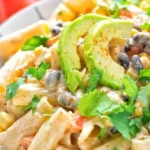
Zesty Southwest Pasta Salad with Creamy Garlic Dressing
- Total Time: 25 minutes
- Yield: 6 servings 1x
- Diet: Vegan, Gluten Free
Description
This Southwest Pasta Salad with Spicy Garlic Dressing is naturally vegan and gluten free. Super easy to make, packed with so many amazing flavors coming straight from a homemade southwest seasoning.
Ingredients
- 1 lb gluten free pasta
- 3 cloves garlic, pressed
- 1 1/4 cup vegenaise
- 1 cup cooked black beans
- 3/4 cup corn
- salt to taste
- pepper to taste
- 1/2 cup onions, diced
- 3/4 bell pepper, chopped
Instructions
- Step: Cook your pasta according the package directions.
- Step: While the pasta is cooking, combine black beans, corn, and the optional add ons like chopped onions and bell pepper in a bowl.
- Step: When the pasta is done, drain and wash it with cold water.
- Step: Combine the cold pasta with the veggies in the bowl. Mix with the dressing, season with salt and pepper and divide into bowls or plates.
Notes
For the homemade southwest seasoning used in the dressing, combine chili powder, paprika, cumin, and garlic powder with a pinch of salt and pepper.
- Prep Time: 10 minutes
- Cook Time: 15 minutes
- Category: Salad
- Method: Boiling
- Cuisine: American
Nutrition
- Serving Size: 2.5 cups
- Calories: 478 kcal
- Sugar: 2 g
- Sodium: 257 mg
- Fat: 14 g
- Saturated Fat: 4 g
- Unsaturated Fat: 8 g
- Trans Fat: 0 g
- Carbohydrates: 73 g
- Fiber: 6 g
- Protein: 17 g
- Cholesterol: 0 mg
Keywords: Southwest Pasta Salad, vegan, gluten free, spicy garlic dressing, pasta salad