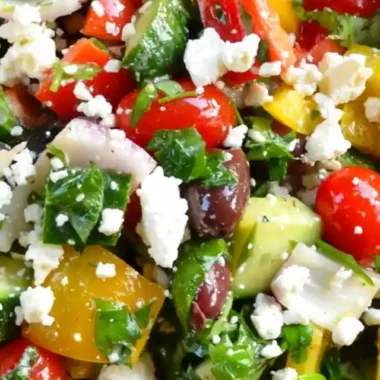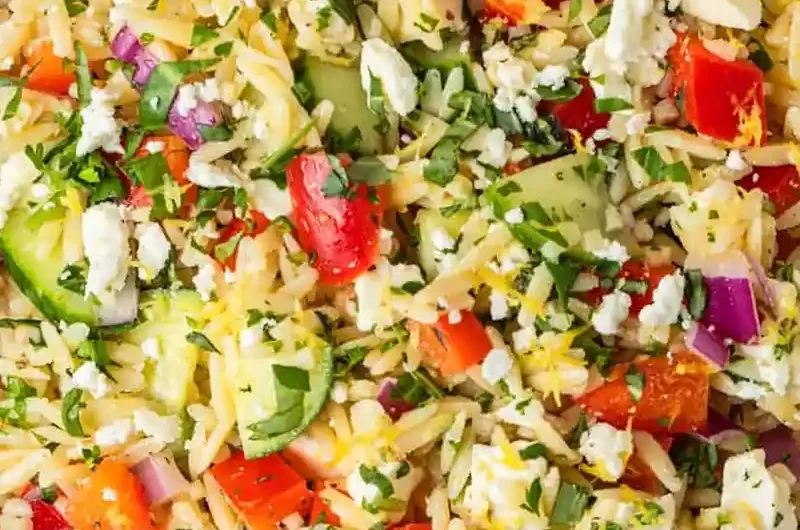
This refreshing pasta salad combines zesty lemon and salty feta for a bright flavor profile. It is an ideal side dish for grilled proteins or a light standalone lunch during warmer months.
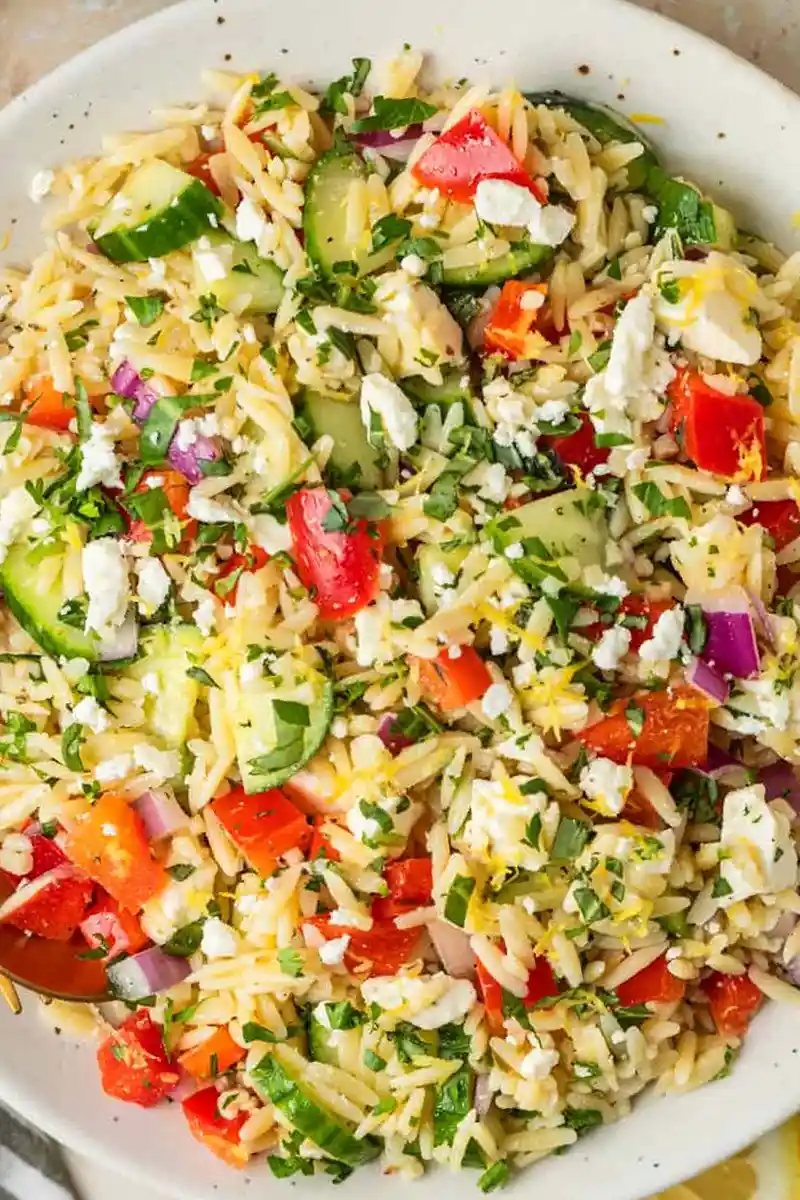
List of ingredients
- 1 ½ – 2 cups orzo, uncooked – the base pasta for the salad.
- 1 red bell pepper, chopped – adds sweetness and color.
- 1 English cucumber, chopped – provides a crisp texture.
- 1/2 red onion, small diced – adds a sharp, savory note.
- 6 oz. feta cheese, crumbled – provides a salty, tangy finish.
- 2-3 garlic cloves, minced – enhances the dressing flavor.
- 1/4 c fresh parsley, chopped – adds earthy freshness.
- ¼ c fresh basil, chopped – brings a sweet, peppery aroma.
- Juice and zest of 1 lemon (1.5-2 oz juice) – the primary acid for the dressing.
- 1/2 cup extra virgin olive oil – the fat source for a smooth emulsion.
- 1 Tbsp honey – balances the lemon acidity.
- 1/2 tsp sea salt – enhances all flavors.
- ½ tsp cracked pepper – provides a subtle spicy bite.
step-by-step instructions
- Cook the Pasta: Cook the orzo according to the package instructions until it reaches an al dente texture. While the pasta boils, chop all the vegetables and mince the garlic to save time.
- Cool the Orzo: Drain the cooked pasta and immediately pour cold water over it to stop the cooking process. Ensure you drain the water completely so the dressing is not diluted.
- Combine Base Ingredients: Place the cooled orzo and all other ingredients except the feta into a large mixing bowl. You may wait to add the honey until after the first toss to better judge the sweetness.
- Toss and Season: Toss the salad thoroughly to coat the pasta and vegetables. Add more olive oil if the mixture seems dry and adjust the salt and pepper to your preference.
- Incorporate Cheese: Gently fold the crumbled feta cheese into the mixed salad to avoid over-mashing the crumbles.
- Chill and Serve: Refrigerate the salad until you are ready to serve. Toss it one last time before plating and add an extra drizzle of olive oil if needed.
Ingredient Substitutions and Swaps
Using Gluten-Free Orzo Alternatives
If you require a gluten-free option, many brands offer brown rice or corn-based orzo. Be careful not to overcook gluten-free pasta, as it can become mushy more quickly than wheat-based pasta. Always rinse it thoroughly with cold water to remove excess starch.
Substituting Feta with Goat Cheese
For a creamier and slightly tangier flavor, crumbled goat cheese is an excellent substitute for feta. While feta provides distinct salty chunks, goat cheese tends to soften and blend more into the pasta. Use the same 6 oz quantity to maintain the correct balance.
Selecting Different Bell Pepper Colors
While red bell peppers are preferred for their sweetness, orange or yellow peppers work equally well. These colors maintain the bright aesthetic and sweet flavor profile of the salad. Avoid green bell peppers as they have a more bitter taste that may clash with the honey.
Choosing the Best Cucumber Variety
English cucumbers are ideal because they have thinner skins and smaller seeds. If using a standard garden cucumber, peel the skin and scoop out the seeds with a spoon before chopping. This prevents the salad from becoming too watery over time.
Replacing Honey with Other Sweeteners
If you prefer a different sweetener, maple syrup or agave nectar can be used in the same 1 tablespoon measurement. These alternatives provide a similar viscosity and sweetness to balance the lemon juice. You can also omit the sweetener entirely if you prefer a more tart salad.
Adjusting Garlic Quantities for Flavor
The recipe calls for 2-3 cloves, but you can increase this if you prefer a punchier dressing. For a milder taste, reduce the amount to one clove or use garlic powder. Fresh minced garlic provides the most vibrant flavor for raw preparations.
Flavor and Texture Variations
Incorporating Cherry or Grape Tomatoes
Adding halved cherry or grape tomatoes introduces a juicy, sweet element to the salad. They pair perfectly with the feta and lemon profiles. Be sure to remove the seeds from larger tomatoes to avoid excess liquid in the bowl.
Adding Briny Kalamata Olives
Sliced Kalamata olives add a salty, Mediterranean depth to the dish. They complement the feta and red onion particularly well. Since olives are naturally salty, you may want to reduce the added sea salt in the dressing.
Using Additional Fresh Herbs
While parsley and basil are the staples, adding chopped fresh dill or mint can elevate the flavor. Dill adds a classic lemony companion note, while mint provides a cooling sensation. Use about two tablespoons of any additional herb.
Adding Grilled Protein for a Main Course
Transform this side dish into a full meal by topping it with grilled chicken strips or steak kabobs. The acidity of the lemon dressing cuts through the richness of the meat. Shrimp is another excellent option that mirrors the lightness of the salad.
Adding Toasted Pine Nuts for Crunch
Toasted pine nuts provide a buttery crunch that contrasts the soft pasta and crisp cucumbers. Toast them in a dry pan over medium heat for 2-3 minutes until golden brown. Add them just before serving to keep them from softening.
Including Chickpeas for Plant-Based Protein
Canned chickpeas, rinsed and drained, add heartiness and a boost of plant-based protein. They absorb the lemon dressing well and add a pleasant, nutty texture. One 15 oz can is sufficient for this recipe size.
Mixing in Baby Spinach or Arugula
For more greens, fold in a handful of baby spinach or arugula. Arugula adds a peppery bite that works well with the feta. Add the greens right before chilling to prevent them from wilting too quickly.
Preparation and Quality Tips
Cooking Pasta to Al Dente Texture
Cooking the orzo to al dente is crucial because the pasta will continue to soften slightly as it absorbs the dressing. Overcooked pasta can break apart during tossing and lose its structural integrity. Check the pasta two minutes before the package suggests.
Quickly Cooling the Orzo
Rinsing the pasta under cold water immediately after draining is essential for a pasta salad. This process stops the carry-over cooking and removes surface starch. Removing the starch prevents the orzo from clumping together in the refrigerator.
Allowing the Salad to Marinate
While the salad can be eaten immediately, chilling it for 30 to 60 minutes allows the flavors to meld. The pasta absorbs the lemon and garlic, resulting in a more cohesive taste. Cover the bowl tightly to prevent the salad from absorbing fridge odors.
Refreshing the Dressing Before Serving
Pasta tends to absorb oil and acid as it sits. If the salad looks dry after a few hours in the fridge, add another tablespoon of extra virgin olive oil. This restores the glossy appearance and smooth mouthfeel.
Folding in Feta Gently
To keep the feta in distinct crumbles, fold it in using a spatula rather than stirring vigorously. This prevents the cheese from breaking down into a paste and streaking the salad. It ensures every bite has a visible piece of cheese.
Storage and Preservation
Storing in Airtight Containers
Use a glass or high-quality plastic airtight container to store the leftovers. This keeps the vegetables crisp and prevents the olive oil from oxidizing. Ensure there is enough room in the container to toss the salad without crushing the ingredients.
Managing Refrigeration Time
This salad stays fresh and safe to eat for up to 5 days when properly refrigerated. The flavors often improve on the second day as the herbs infuse into the pasta. If you notice the vegetables softening, consume the salad sooner.
Adjusting Serving Temperature
Cold olive oil can solidify slightly in the refrigerator, making the salad feel heavy. Take the container out of the fridge about 10 to 15 minutes before serving. This allows the fats to return to a liquid state for a better texture.
Avoiding the Freezer
Do not freeze this salad, as the high water content in the cucumbers and peppers will cause them to become icy. Upon thawing, the vegetables will lose their structure and become watery. The feta cheese may also change texture and become grainy.
Common Questions
Can I use dried herbs instead of fresh?
You can use dried parsley and basil, but the flavor will be less vibrant. Use a 1:3 ratio, meaning one tablespoon of dried herbs for every three tablespoons of fresh. Add dried herbs to the dressing first to let them rehydrate.
How do I prevent a dry salad?
The most common cause of dryness is the pasta absorbing the dressing. To prevent this, ensure you use a high-quality olive oil and don’t be afraid to add an extra drizzle just before serving. Adding a splash of extra lemon juice can also help.
How to make this recipe vegan?
To make the salad vegan, replace the feta cheese with a plant-based feta alternative or firm tofu cubes marinated in lemon and salt. Ensure your honey is replaced with agave or maple syrup. The rest of the ingredients are naturally vegan.
Is bottled lemon juice acceptable?
While bottled juice works in a pinch, fresh lemon juice and zest provide a much brighter and more authentic flavor. Bottled juices often contain preservatives that can alter the taste of the fresh herbs. Fresh lemons are highly recommended for this specific recipe.
Print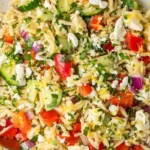
Easy Lemon Orzo Salad with Feta
- Total Time: 25 minutes
- Yield: 8 servings 1x
- Diet: Vegetarian
Description
Simple to prep and so flavorful, this Lemon Orzo Salad is so quick to toss together and a perfect side dish for any meal. Loaded with fresh herbs, cucumbers, peppers and lots of feta. Lemon zest and juice give the salad a vibrant and fresh flavor everyone will love!
Ingredients
- 1 ½ – 2 cups orzo (uncooked)
- 1 red bell pepper, chopped
- 1 English cucumber, chopped
- 1/2 red onion, small diced
- 6 oz. feta cheese, crumbled
- 2–3 garlic cloves, minced
- 1/4 c fresh parsley, chopped
- ¼ c fresh basil, chopped
- Juice and zest of 1 lemon
- 1/2 cup extra virgin olive oil
- 1 Tbsp honey
- 1/2 tsp sea salt
- ½ tsp cracked pepper
Instructions
- Step: Cook orzo according to package instructions. Chop and prep all veggies.
- Step: When orzo is cooked al dente, drain the water and then pour cold water over the orzo to cool it off. Drain the water completely.
- Step: Add the orzo and all other ingredients except the feta into a large bowl (you can wait to add the honey until after tossing.) Toss the salad well. Add more olive oil if desired and adjust salt and pepper to taste.
- Step: Fold the feta cheese into the mixed salad.
- Step: Chill until ready to serve. Toss just before serving and add an extra drizzle of olive oil if desired. Refrigerate in a sealed container for about 5 days.
Notes
Using 1 1/2 cups uncooked orzo provides a better balance between pasta and vegetables. For best results, chill for about 30 minutes before serving to allow flavors to meld. If the salad has been chilling for several hours, toss with an extra drizzle of olive oil before serving.
- Prep Time: 15 minutes
- Cook Time: 7 minutes
- Category: Salad
- Method: Boiling, Mixing
- Cuisine: American
Nutrition
- Serving Size: 1 serving
- Calories: 338 kcal
- Sugar: 6 g
- Sodium: 388 mg
- Fat: 19 g
- Saturated Fat: 5 g
- Unsaturated Fat: 14 g
- Trans Fat: 0 g
- Carbohydrates: 34 g
- Fiber: 2 g
- Protein: 9 g
- Cholesterol: 19 mg
Keywords: lemon orzo salad, feta pasta salad, summer side dish, mediterranean salad