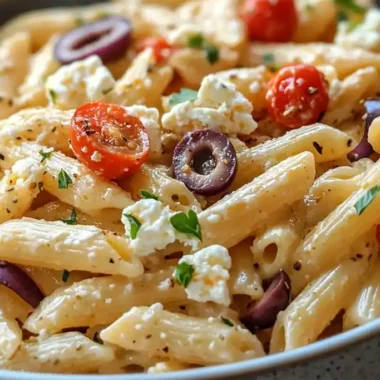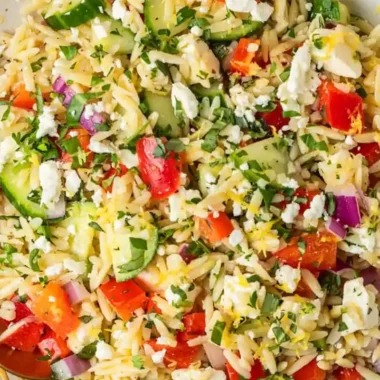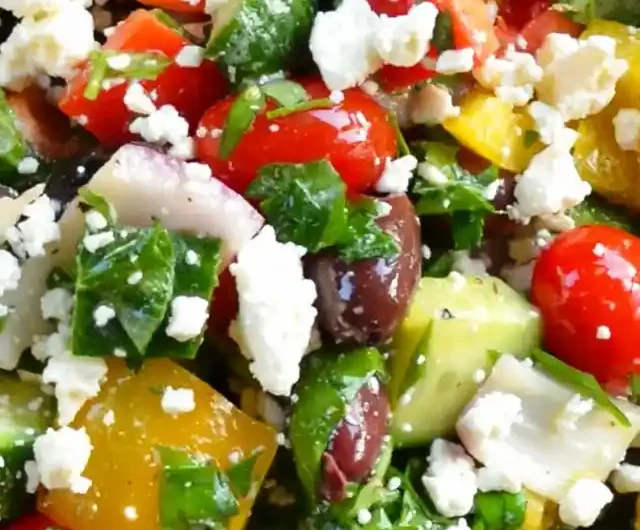
This refreshing Greek salad features a crisp blend of garden vegetables and a zesty homemade vinaigrette. It is a versatile side dish that works perfectly for outdoor gatherings or healthy weekday lunches.
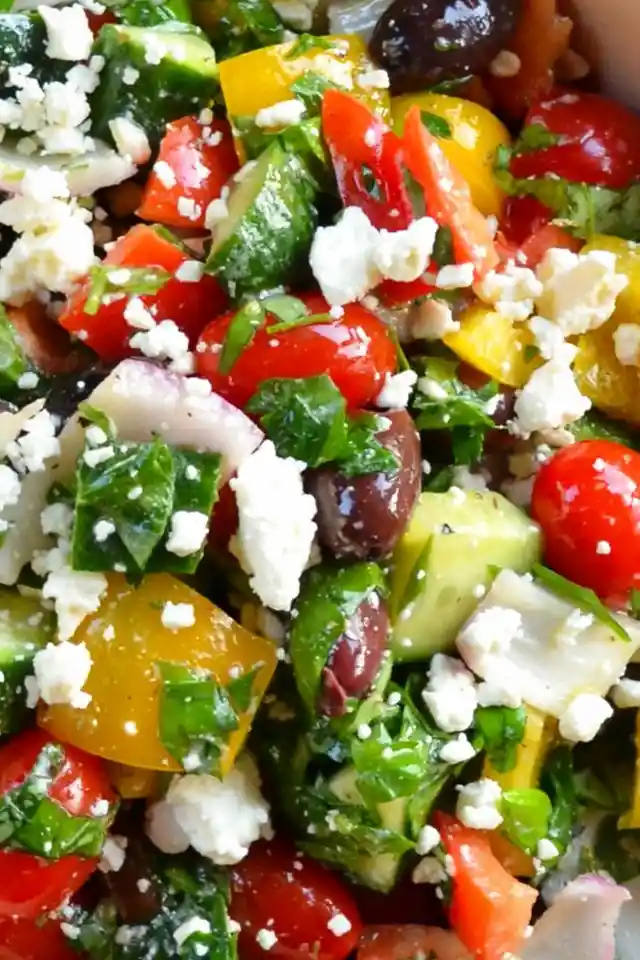
List of ingredients
- 1/3 cup Red Wine Vinegar – provides the acidic base for the dressing.
- 1/3 cup Extra Virgin Olive Oil – adds richness and a fruity Mediterranean flavor.
- 2 tablespoons Water – helps balance the overall intensity of the vinaigrette.
- 1 teaspoon Italian Seasoning – blends classic herbs like oregano and basil.
- 1/2 teaspoon Salt – enhances all the natural flavors of the fresh produce.
- 1/2 teaspoon Pepper – adds a subtle spicy kick to the dressing.
- 1 pint Sweet Cherry Tomatoes – adds juicy pops of color and sweetness.
- 1 whole Red Bell Pepper, Seeded and Chopped – provides a crunchy texture.
- 1 whole Yellow Bell Pepper, Seeded and Chopped – complements the red pepper for visual appeal.
- 1/2 whole Red Onion, Roughly Chopped – gives a sharp, pungent bite to the mix.
- 1 whole Cucumber, Chopped – adds coolness and essential hydration.
- 1 handful Parsley, Chopped Fine – offers a fresh, grassy aromatic note.
- 1/4 cup Fresh Basil – adds sweet, peppery depth to the salad.
- 1 cup Kalamata Olives – contributes a salty, briny element to every bite.
- 2/3 cup Crumbled Feta Cheese – adds a creamy, tangy finish; ensure you use a microbial-rennet variety.
step-by-step instructions
- Prepare the Vinaigrette: In a small bowl, whisk together the red wine vinegar, olive oil, water, Italian seasoning, salt, and pepper.
- Emulsify the Dressing: Mix the ingredients continuously until the dressing is well combined and the oil and vinegar have emulsified.
- Combine Vegetables: In a large mixing bowl, combine the cherry tomatoes, bell peppers, red onion, cucumber, parsley, basil, Kalamata olives, and feta cheese.
- Toss the Salad: Drizzle the prepared vinaigrette over the top of the vegetables and toss gently until every piece is evenly coated.
- Chill and Serve: Serve the salad immediately, or refrigerate for a few hours or overnight to allow the flavors to develop fully.
Vegetable Preparation Techniques
Salt and Drain Cucumbers to Prevent Wateriness
Cucumbers have a high water content that can dilute your dressing over time. To prevent the salad from becoming soggy, slice the cucumbers and sprinkle them with a bit of salt. Let them sit for ten minutes, then pat them dry with a paper towel before adding them to the bowl.
Soak Red Onions to Reduce Sharpness
If you find raw red onions too pungent, soak the chopped pieces in ice water for about fifteen minutes. This process removes the harsh sulfur compounds while keeping the crunch. Drain and pat dry before adding them to the vegetable mix.
Squeeze Excess Moisture from Fresh Herbs
After washing your parsley and basil, make sure they are completely dry before chopping. Excess water on the leaves can cause the herbs to clump together and prevent the dressing from adhering. Use a salad spinner or a clean kitchen towel to dry them thoroughly.
Dice Vegetables Uniformly for Balanced Bites
Aim to chop your bell peppers and cucumbers into sizes similar to the cherry tomatoes. This ensures that you get a bit of every ingredient in a single forkful. Uniform cutting also helps the dressing coat the surfaces more evenly.
Use a Sharp Knife for Clean Cuts
Using a dull knife can bruise the delicate vegetables and cause them to release juices prematurely. A sharp chef’s knife ensures clean slices through the cucumber and peppers. This keeps the vegetables crisper for a longer period of time.
Customizing the Greek Vinaigrette
Adjust the Acidity Balance
Depending on your preference, you may want a more tart or a more mellow dressing. If it is too acidic, add a teaspoon more of olive oil to soften the edge. For a brighter taste, add a splash of fresh lemon juice to the red wine vinegar.
Use Different Oils for Flavor
While extra virgin olive oil is traditional, you can use avocado oil for a more neutral flavor profile. This allows the taste of the fresh herbs and feta to stand out more prominently. Ensure the oil is high quality to avoid a greasy aftertaste.
Add Minced Garlic for Depth
To increase the savory profile of the salad, stir in one clove of finely minced garlic. This adds a pungent aroma that pairs exceptionally well with the Kalamata olives. Let the garlic sit in the vinegar for five minutes before adding the oil to mellow the raw bite.
Include a Pinch of Sugar to Balance Acid
If the red wine vinegar feels too sharp, a small pinch of sugar or a drizzle of honey can balance the acidity. This does not make the salad sweet but rather rounds out the flavor profile. It creates a more professional, balanced taste similar to restaurant dressings.
Whisk Thoroughly for Proper Emulsification
Vinaigrettes naturally separate over time because oil and water do not mix. Whisking vigorously creates a temporary emulsion that helps the dressing cling to the vegetables. If you have a small jar, shaking it intensely is an even more effective method.
Ingredient Substitutions and Alternatives
Swap Feta for Halloumi for a Firmer Texture
If you prefer a firmer cheese, you can use cubed Halloumi instead of crumbled feta. For the best results, lightly sear the Halloumi in a pan before adding it to the salad. This adds a warm, salty contrast to the cold vegetables.
Use Green Olives for a Milder Brine
Kalamata olives are bold and fruity, but green olives offer a saltier, more buttery flavor. You can use a mix of both to provide a variety of tastes and colors. Ensure they are pitted and sliced for easier consumption.
Add Avocado for Extra Creaminess
Adding cubed avocado provides a rich, buttery texture that contrasts with the sharp feta. Add the avocado at the very end and toss gently to avoid mashing the fruit. This also increases the healthy fat content of the dish.
Substitute Basil with Mint for a Cooler Taste
While basil is traditional, fresh mint leaves can give the salad a refreshing twist. This is particularly effective during hot summer months when a cooling sensation is desired. Use a ratio of half basil and half mint for a balanced herbal profile.
Incorporate Chickpeas for Added Protein
To turn this side salad into a more filling meal, add a can of rinsed chickpeas. This introduces a nutty flavor and increases the protein and fiber content. It makes the salad hearty enough to serve as a main course.
Serving Ideas and Pairings
Serve with Warm Toasted Pita Bread
Pairing this salad with warm pita bread allows you to scoop up the vegetables and feta. Lightly brush the pita with olive oil and toast it in the oven for a few minutes. The contrast between the warm bread and cold salad is excellent.
Pair with Grilled Proteins
This salad works perfectly alongside grilled chicken breasts or skewers of grilled shrimp. The acidity of the vinaigrette cuts through the richness of the grilled meat. It provides a fresh balance to the plate.
Use the Salad as a Topping
Instead of a side dish, heap the Greek salad on top of a grilled piece of salmon or a burger patty. The juices from the tomatoes and cucumbers act as a secondary sauce. This adds texture and brightness to a heavy protein.
Store in Mason Jars for Portable Lunches
For a meal-prep option, layer the ingredients in a mason jar with the dressing at the bottom. Place the heaviest vegetables like cucumbers and olives next, followed by tomatoes and peppers, then the feta and herbs on top. Shake the jar just before eating to distribute the dressing.
Serve with Hummus for Added Texture
A dollop of creamy hummus on the plate alongside the salad adds another layer of Mediterranean flavor. The smoothness of the hummus complements the crunch of the bell peppers. It creates a complete mezze-style platter.
Storage and Freshness Guidelines
Store in Airtight Glass Containers
Glass containers are preferable to plastic because they do not absorb odors or stains from the vinaigrette. Ensure the lid is airtight to prevent the salad from picking up other smells from the refrigerator. This keeps the flavors pure and fresh.
Maximum Storage Duration
This salad is best consumed within two to three days of preparation. Over time, the salt in the dressing will draw more water out of the vegetables, making the salad watery. The feta may also soften and lose its distinct texture.
Prevent Wilted Herbs by Adding Dressing Later
If you are preparing the salad for a party hours in advance, store the vegetables and dressing separately. Toss the salad just before serving to ensure the parsley and basil remain vibrant and crisp. This prevents the leaves from darkening due to the acid in the vinegar.
Toss Gently to Avoid Breaking Feta
When mixing the salad or reviving it after refrigeration, use a large spoon or your hands to toss gently. Over-mixing can break the feta crumbles into a paste that clouds the dressing. Gentle folding preserves the distinct chunks of cheese.
Avoid Freezing the Prepared Salad
Freezing this salad will ruin the cellular structure of the fresh vegetables and the creamy texture of the feta. Once thawed, the cucumbers and tomatoes will become mushy and lose all their appeal. Always keep this dish refrigerated and fresh.
Troubleshooting Common Issues
Why is my salad too watery?
Wateriness usually happens because the cucumbers and tomatoes released their juices after being salted. To fix this, you can drain some of the excess liquid from the bottom of the bowl. Next time, try the salting and draining method for the cucumbers before mixing.
How to fix a dressing that is too salty?
If the dressing tastes overly salty, add a tablespoon of water or an extra tablespoon of olive oil. This dilutes the salt concentration without significantly changing the flavor. A squeeze of lemon juice can also help mask excess saltiness.
My feta cheese is too salty, what should I do?
Some brands of feta are stored in very salty brines. If the cheese is overpowering, rinse the feta crumbles under cold running water before adding them to the salad. Pat them dry with a paper towel to ensure the dressing still sticks.
How to keep the colors vibrant?
Keep the salad chilled until the moment you serve it. Heat causes the vegetables to soften and the colors to fade. Using a chilled serving bowl can also help maintain the crispness of the bell peppers and onions.
The dressing separated, is that normal?
Yes, it is completely normal for a vinaigrette to separate because it is a temporary emulsion. Simply give the salad a quick toss or shake the dressing bottle again. This reintegrates the oil and vinegar for a consistent taste.
Frequently Asked Questions
Can I use a food processor for the dressing?
Yes, using a food processor or blender will create a more stable emulsion. The high-speed blades break the oil into smaller droplets, resulting in a creamier dressing that stays mixed longer. Just pulse the ingredients until smooth.
Which cucumber is best for Greek salad?
English or Persian cucumbers are the best choices because they have thinner skins and smaller seeds. This eliminates the need for peeling and prevents the salad from becoming too watery. They provide a more consistent crunch.
Can I make this salad without onions?
Yes, you can omit the red onions if you dislike their taste. As a substitute, you can use chopped chives or green onions for a milder onion flavor. Alternatively, adding extra parsley can help fill the aromatic gap.
Is this salad gluten-free?
Yes, this recipe is naturally gluten-free as it contains no flour or grain-based ingredients. Ensure your Italian seasoning is certified gluten-free if you have a severe sensitivity. It is a safe and healthy option for various dietary needs.
Can I use dried basil instead of fresh?
While you can use dried basil, the flavor is much more concentrated and less sweet than fresh. Use only one-third of the amount of dried basil compared to fresh. However, fresh basil is highly recommended for the authentic Greek taste.
Print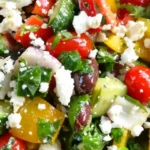
Easy Greek Salad with Homemade Vinaigrette
- Total Time: 10 minutes
- Yield: 6 servings 1x
- Diet: Vegetarian
Description
Easy Greek Salad with homemade Greek salad dressing recipe from Serena Bakes Simply From Scratch.
Ingredients
- 1/3 cup apple cider vinegar
- 1/3 cup extra virgin olive oil
- 2 tablespoons water
- 1 teaspoon Italian seasoning
- 1/2 teaspoon salt
- 1/2 teaspoon pepper
- 1 pint sweet cherry tomatoes
- 1 red bell pepper, seeded and chopped
- 1 yellow bell pepper, seeded and chopped
- 1/2 red onion, roughly chopped
- 1 cucumber, chopped
- 1 handful parsley, chopped fine
- 1/4 cup fresh basil
- 1 cup kalamata olives
- 2/3 cup crumbled feta cheese
Instructions
- Whisk: In a small bowl whisk together apple cider vinegar, olive oil, water, italian seasoning, salt and pepper.
- Combine: Mix until well combined.
- Assemble: In a large bowl mix together cherry tomatoes, bell peppers, red onion, cucumber, parsley, basil, kalamata olives, and feta cheese.
- Toss: Drizzle vinaigrette over the top of the vegetables, and toss until well combined.
Notes
Greek Salad can be served immediately, but the flavor does develop if allowed to refrigerate for a few hours or overnight.
- Prep Time: 10 minutes
- Cook Time: 0 minutes
- Category: Greek Salad
- Method: Mixing
- Cuisine: Greek
Nutrition
- Serving Size: 1 serving
- Calories: 210 kcal
- Sugar: 6 g
- Sodium: 520 mg
- Fat: 18 g
- Saturated Fat: 3 g
- Unsaturated Fat: 15 g
- Trans Fat: 0 g
- Carbohydrates: 11 g
- Fiber: 3 g
- Protein: 4 g
- Cholesterol: 12 mg
Keywords: Greek Salad, Salad Recipe, Picnic Salad, Potluck Salad, Side Salad