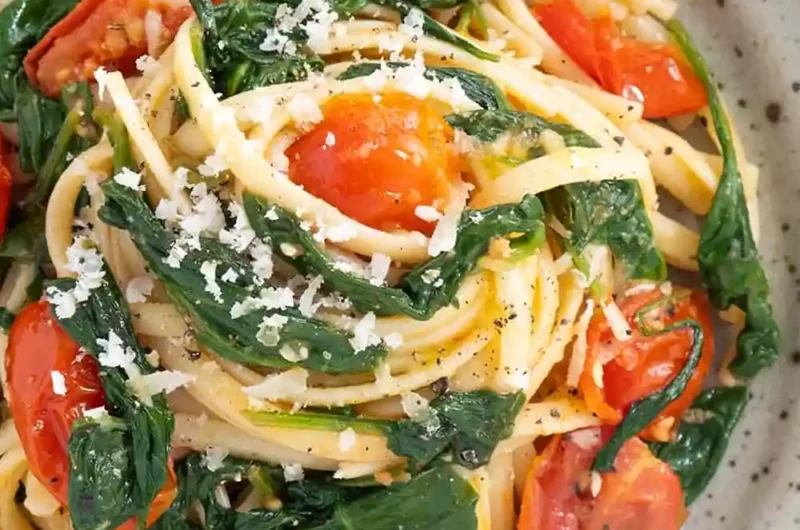
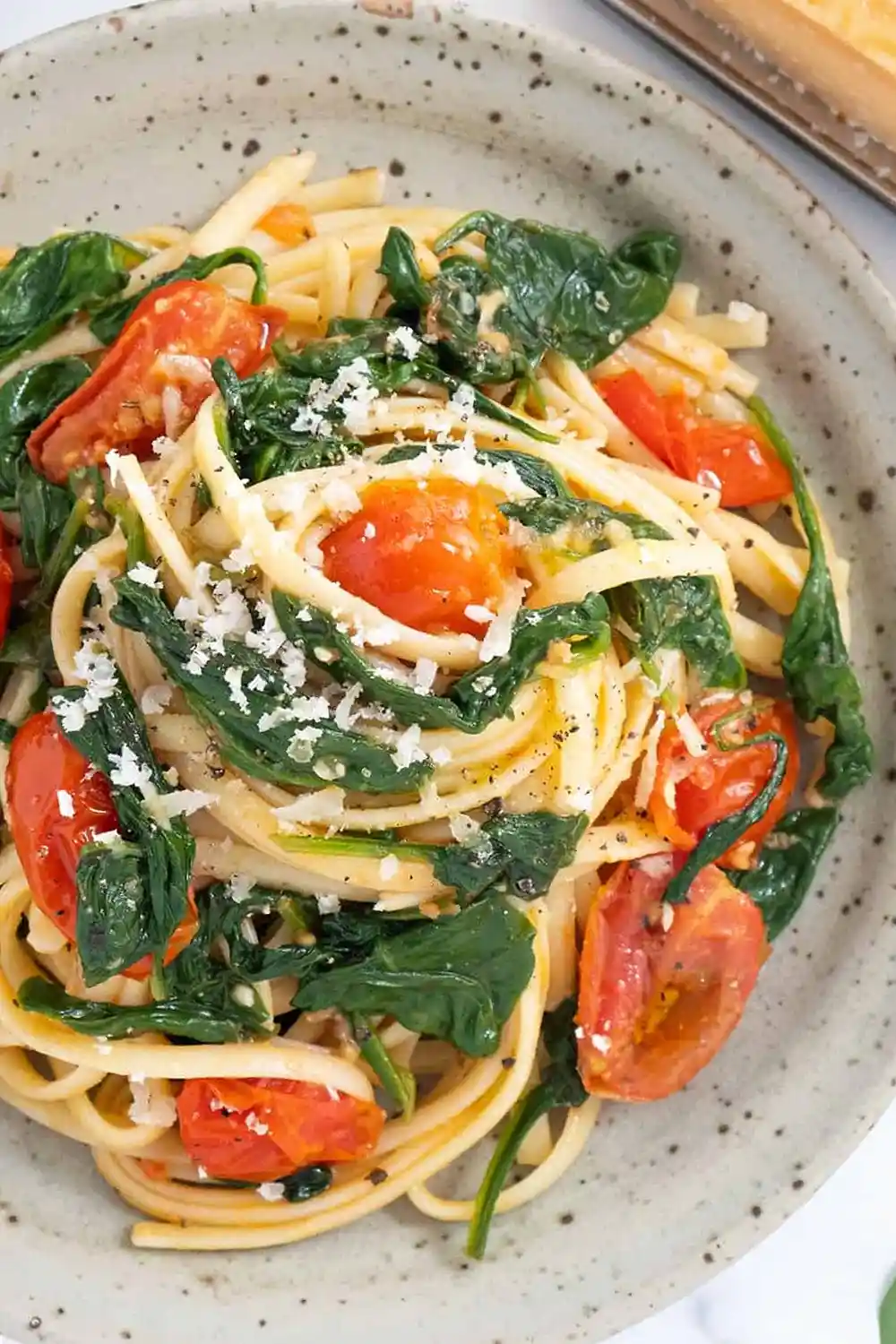
This efficient pasta dish combines fresh cherry tomatoes and baby spinach for a nutritious meal ready in under 20 minutes. It features a light, garlicky sauce that coats the pasta perfectly without being heavy.
List of ingredients
- 8oz (220 grams) pasta – such as linguine, spaghetti, or penne.
- 1 Tbsp olive oil or extra virgin olive oil – for sautéing.
- 3 garlic cloves, minced – for a pungent aromatic base.
- 9oz (250 grams) cherry tomatoes, cut into halves – to create the natural sauce.
- ½ tsp dried basil – for herbal depth.
- ¼ tsp fine salt, plus more to taste – to enhance flavors.
- ⅛ tsp freshly cracked black pepper – for a hint of spice.
- 5oz (150 grams) baby spinach – for color and nutrients.
- ¼ heaped cup (30 grams) grated microbial-rennet parmesan cheese – for savory richness.
- Extra grated parmesan cheese – for serving.
- Extra freshly cracked pepper – for serving.
- Extra virgin olive oil – for the final drizzle.
step-by-step instructions
- Boil the pasta: Fill a large pot with water and bring it to a boil over high heat. Add the pasta and cook until al dente according to the package directions. Reserve about ½ cup of the cooking water before draining the pasta.
- Sauté the garlic: While the water is heating, warm the olive oil in a large skillet over medium-low heat. Add the minced garlic and sauté for 45-60 seconds until fragrant, ensuring it does not brown.
- Cook the tomatoes: Add the halved cherry tomatoes, dried basil, salt, and black pepper to the skillet. Sauté over medium-low heat, stirring occasionally, until the tomato skins burst and they release their juices.
- Wilt the spinach: Once the tomatoes break down, add the baby spinach one large handful at a time. Stir constantly for a couple of minutes until the spinach is wilted but remains bright green.
- Adjust seasoning: At this stage, the tomatoes will have formed a light sauce. Taste the mixture and add more salt or pepper if needed.
- Combine components: Add the cooked, drained pasta to the skillet along with the microbial-rennet parmesan cheese. Pour in a small amount of the reserved pasta water and toss until the pasta is evenly coated in a moist, sticky sauce.
- Final plating: Serve the pasta immediately. Top with additional grated parmesan, freshly cracked black pepper, and a drizzle of extra virgin olive oil.
Selecting the Ideal Pasta Base
Long Pasta Options
Linguine and spaghetti are excellent choices for this recipe because their surface area allows the light tomato and garlic sauce to cling evenly. These shapes provide a classic Italian feel and are easy to toss with the spinach leaves.
Short Pasta Options
Penne, rigatoni, or fusilli work well if you prefer a heartier bite. The hollow centers of penne and rigatoni can trap small pieces of spinach and bits of burst tomato, ensuring every forkful is flavorful.
Whole Grain and Alternative Pastas
Whole grain pasta is a great alternative for increasing fiber and micronutrient intake. For those avoiding gluten, corn or brown rice pasta can be used, though they should be monitored closely to avoid overcooking, as they can soften faster than wheat pasta.
Optimizing Vegetable Ingredients
Choosing the Best Cherry Tomatoes
Select cherry tomatoes that are firm but slightly soft to the touch, indicating ripeness. Deep red tomatoes generally have a higher sugar content, which helps create a richer, sweeter sauce when they burst in the pan.
Using Large Tomatoes as a Substitute
If cherry tomatoes are unavailable, use ripe plum or beefsteak tomatoes. Dice them into small, uniform pieces and remove excess seeds and watery pulp to prevent the sauce from becoming too thin.
Substituting Canned Tomatoes
Canned diced tomatoes can be used during the off-season. Because they contain more liquid than fresh cherry tomatoes, allow them to simmer for a few extra minutes to reduce the volume and concentrate the flavor.
Managing Fresh Baby Spinach
Baby spinach is preferred for its tender texture and mild flavor. Adding it in batches prevents the pan from overcrowding, which ensures the leaves wilt evenly without becoming mushy.
Using Frozen Spinach
Frozen chopped spinach can be substituted if fresh is unavailable. Thaw the spinach completely and squeeze out as much excess water as possible using a kitchen towel or sieve before adding it to the skillet.
Substituting Kale or Chard
Kale or Swiss chard can replace spinach for a more robust texture. Since these greens are tougher, tear them into small pieces and sauté them for several minutes longer than you would for spinach.
Cheese and Flavor Enhancements
Using Microbial-Rennet Parmesan
Using a parmesan made with microbial rennet ensures the cheese is suitable for various dietary needs while maintaining the sharp, salty profile characteristic of authentic Italian hard cheeses.
Grana Padano as an Alternative
Grana Padano is a similar hard cheese that is often slightly milder and more affordable than parmesan. It melts well into the pasta water to create a creamy emulsion.
Using Feta or Goat Cheese
For a tangier flavor profile, replace the parmesan with crumbled feta or goat cheese. These cheeses do not melt into the sauce as completely, providing creamy pockets of flavor instead.
Dairy-Free and Vegan Options
To make this dish vegan, omit the parmesan and use nutritional yeast or a store-bought vegan parmesan alternative. These options provide a similar nutty, salty taste without the dairy.
Fresh Herb Substitutions
While dried basil is convenient, fresh basil leaves added at the very end provide a brighter, more aromatic flavor. Freshly chopped parsley is another excellent substitute that adds a clean, peppery note.
Mastering the Cooking Process
Preventing Garlic from Burning
Garlic burns quickly over high heat, which can make the entire dish taste bitter. Keep the heat at medium-low and move the garlic constantly to ensure it only becomes fragrant and translucent.
Achieving the Al Dente Texture
Cook the pasta for one minute less than the package instructions suggest. The pasta will continue to cook slightly when tossed in the hot skillet with the sauce, resulting in a perfect al dente bite.
The Role of Reserved Pasta Water
Pasta water contains released starches that act as an emulsifier. When mixed with the cheese and olive oil, it creates a cohesive, glossy sauce that sticks to the noodles rather than pooling at the bottom.
Controlling Spinach Wilt
The goal is to wilt the spinach until it is soft but still retains a vibrant green color. Overcooking the spinach will turn it a dull olive brown and cause it to lose its structural integrity.
Serving and Presentation Ideas
Pairing with Crusty Breads
Serve this pasta with toasted focaccia or a warm panini. The bread is perfect for soaking up the remaining garlic-infused tomato juices left on the plate.
Adding Side Salads
A simple cannellini bean salad with lemon and parsley adds extra protein and a refreshing contrast to the warm pasta. A light arugula salad with a balsamic glaze also complements the flavors well.
Final Garnish Touches
A final drizzle of high-quality extra virgin olive oil adds a peppery finish and a professional sheen. Adding an extra pinch of cracked black pepper provides a sharp contrast to the sweetness of the tomatoes.
Storage and Maintenance
Refrigeration Guidelines
Store leftovers in an airtight container in the refrigerator for up to three days. Keep the pasta and sauce well-mixed to prevent the noodles from sticking together during storage.
Best Reheating Methods
Reheat the pasta in a non-stick skillet over medium-low heat. Adding a tablespoon of water or olive oil helps loosen the pasta and restores the creamy consistency of the sauce.
Preventing Pasta from Drying Out
Pasta tends to absorb moisture as it sits. When reheating, avoid the microwave if possible, as it can dry out the spinach; a stovetop method is superior for maintaining texture.
Troubleshooting Common Issues
Dealing with a Watery Sauce
If the sauce seems too thin, increase the heat to medium for two minutes to allow the tomato juices to reduce. Alternatively, add an extra tablespoon of parmesan cheese to thicken the emulsion.
Fixing Overcooked Spinach
If the spinach overcooks, it may release excess water and lose color. To prevent this in the future, remove the pan from the heat the moment the leaves collapse.
Addressing Bland Flavor
If the dish tastes flat, add a pinch more salt or a small squeeze of fresh lemon juice. The acidity of the lemon enhances the natural brightness of the tomatoes and spinach.
Frequently Asked Questions
Can I make this recipe gluten-free?
Yes, you can use any gluten-free pasta alternative. Ensure you follow the specific boiling instructions for the brand you use, as gluten-free pasta often has a narrower window between undercooked and overcooked.
How do I store the leftovers?
Place the pasta in a sealed glass or plastic container and refrigerate immediately after cooling. It stays fresh for 72 hours, though the spinach may lose some of its brightness.
Which olive oil is best for this dish?
Use a standard olive oil for the initial sautéing of garlic to avoid burning. For the final drizzle and serving, use a high-quality extra virgin olive oil for its superior flavor and aroma.
Print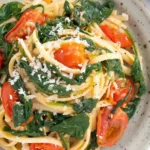
Quick Garlic Pasta with Cherry Tomatoes and Spinach
- Total Time: 18 minutes
- Yield: 4 servings 1x
- Diet: vegetarian
Description
This lovely pasta with tomatoes and spinach is ready in less than 20 minutes and it’s packed with fresh spinach and cherry tomatoes. It’s delicious, juicy, garlicky and makes a great meatless meal.
Ingredients
- 8oz (220 grams) pasta
- 1 Tbsp olive oil or extra virgin olive oil
- 3 garlic cloves, minced
- 9oz (250 grams) cherry tomatoes, cut into halves
- ½ tsp dried basil
- ¼ tsp fine salt, plus more to taste
- ⅛ tsp freshly cracked black pepper
- 5oz (150 grams) baby spinach
- ¼ heaped cup (30 grams) grated parmesan cheese (microbial-rennet)
- Grated parmesan cheese for serving
- Freshly cracked pepper for serving
- Extra virgin olive oil for serving
Instructions
- Step: Fill a large pot with water and place over high heat to bring it to a boil. Once boiling, add the pasta and cook until al dente according to the package directions. Reserve about ½ cup of cooking water, and drain the pasta.
- Step: While you’re waiting for the water to boil, heat the olive oil in a large skillet over medium-low heat. Add the garlic and sauté until fragrant (about 45-60 seconds).
- Step: Add the tomatoes, basil, salt and a freshly cracked pepper. Sauté the tomatoes until the skins burst and the tomatoes begin to release their juices. Keep the heat to medium-low, stir and make sure the garlic doesn’t burn.
- Step: Once the tomatoes begin to break down add the spinach, a large handful at a time, and stir it into the tomatoes until the spinach is wilted but still bright green.
- Step: Taste and adjust the seasoning if needed.
- Step: Add the cooked and drained pasta to the pan, the parmesan cheese and a touch of pasta cooking water. Toss until the pasta is coated in the sticky sauce and everything is combined.
- Step: Serve with some grated parmesan cheese, some freshly cracked black pepper, and a drizzle of extra virgin olive oil.
Notes
Substitutions: Any short or long pasta (spaghetti, penne, fusilli) works. For frozen spinach, defrost and squeeze excess water. Canned diced tomatoes can be used as a substitute for fresh. Fresh parsley or basil can replace dried basil. Grana Padano is a good alternative to Parmesan. Storage: Keeps in the fridge in an airtight container for up to 3 days; reheat in a non-stick pan with olive oil.
- Prep Time: 5 minutes
- Cook Time: 13 minutes
- Category: pasta
- Method: stovetop
- Cuisine: Italian
Nutrition
- Serving Size: 1 serving
- Calories: 291 kcal
- Sugar: 3 g
- Sodium: 446 mg
- Fat: 7 g
- Saturated Fat: 2 g
- Unsaturated Fat: 5 g
- Trans Fat: 0 g
- Carbohydrates: 46 g
- Fiber: 3 g
- Protein: 12 g
- Cholesterol: 7 mg
Keywords: Pasta with tomatoes and spinach