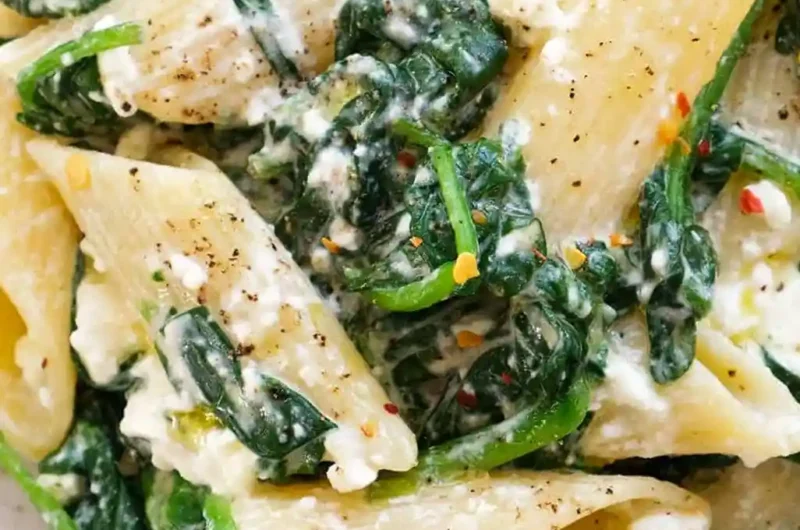
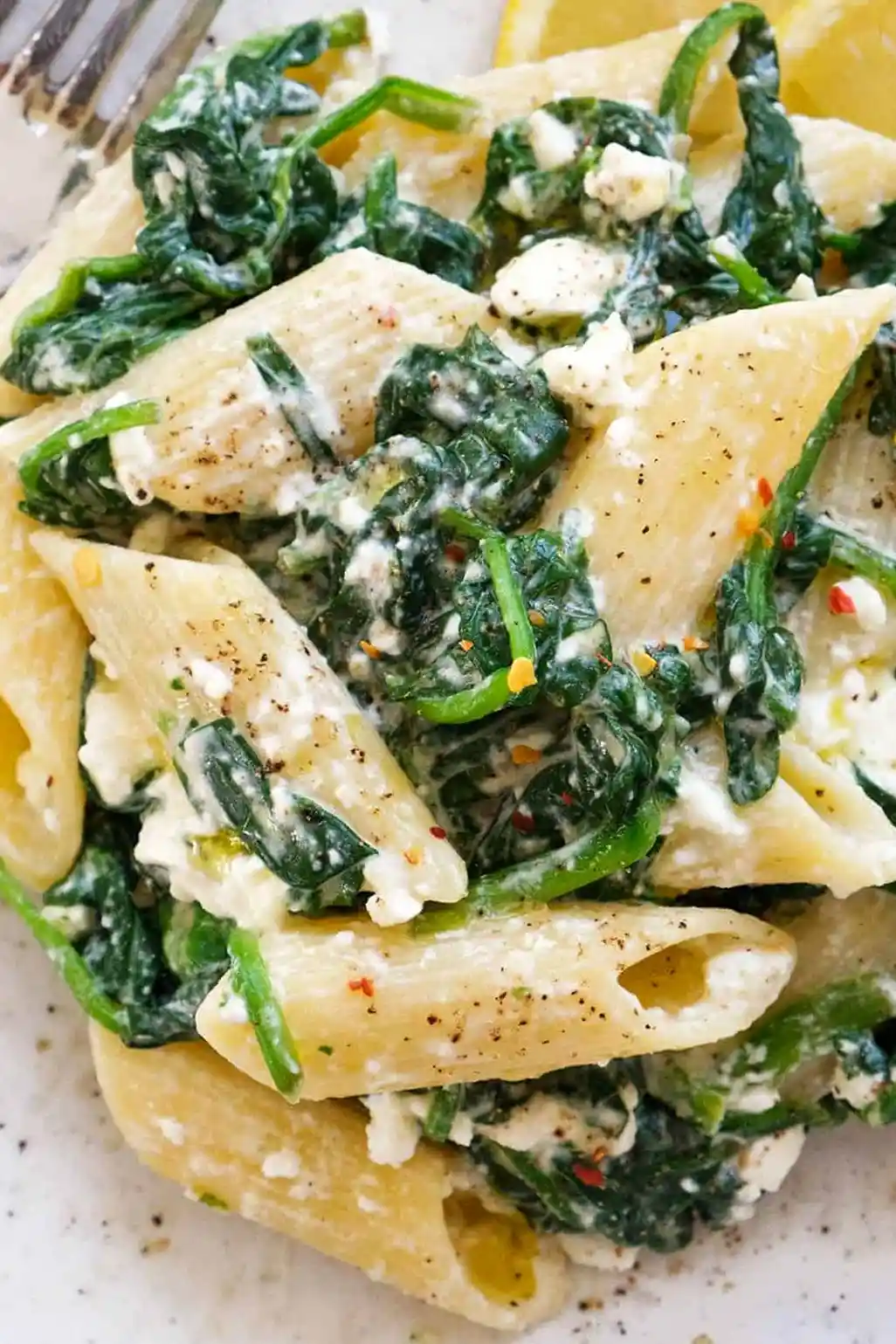
This quick spinach and feta pasta is a nutritious, vegetarian meal that comes together in just 15 minutes. It is perfect for busy weeknights when you need a satisfying dinner with minimal cleanup.
List of ingredients
- 8 oz (220 grams) Penne (or similar pasta shape) – provides a hearty base for the sauce.
- 1 tablespoon extra virgin olive oil – used for sautéing garlic and wilting spinach.
- 3 garlic cloves, minced or sliced – adds a sharp, aromatic depth.
- 1/4 teaspoon chilli flakes, or more to taste – introduces a subtle heat to the dish.
- 10 oz (300 grams) spinach, washed – the primary vegetable for color and nutrients.
- 7 oz (200 grams) block of feta – provides creamy texture and salty flavor.
- 1 tablespoon lemon juice, or more to taste – cuts through the richness of the cheese.
step-by-step instructions
- Cook the pasta: Bring a large pot of water to the boil, add salt and pasta, and cook until al dente according to the package instructions. Reserve about 1/2 cup of hot pasta water before draining the pasta.
- Cook the spinach: Heat the olive oil in a large skillet over medium heat. Stir in the garlic and chili flakes, and cook until fragrant (about 60 seconds). Add the spinach, a handful at a time, stirring until wilted (it takes a few minutes).
- Add the feta cheese: Using your hands, break the block of feta into crumbles and add it to the skillet. Turn the heat off.
- Assemble: Drain and add the pasta to the skillet along with the lemon juice and 1/4 cup of the reserved pasta cooking water. Toss until well combined and coated, taste, and make sure you’re happy with the overall flavor (you might need more salt or lemon juice).
- Serve: Serve immediately with a drizzle of extra virgin olive oil, chili flakes for extra heat, and freshly grated parmesan cheese if desired.
Pasta Selection and Alternatives
Penne and Rigatoni for Texture
Penne and rigatoni are ideal because their tubular shape captures the wilted spinach and melted feta inside the pasta. This ensures that every bite contains a balanced amount of sauce and vegetable. These shapes also hold up well during the tossing process without breaking.
Fusilli for Maximum Sauce Capture
Fusilli is another excellent choice because its spirals act as a trap for the creamy feta crumbles. The twists allow the lemon-infused oil and pasta water to cling to the surface more effectively than smooth pastas. This results in a more consistent flavor distribution across the dish.
Gluten-Free Pasta Options
You can easily substitute traditional wheat pasta with your favorite gluten-free alternative, such as brown rice or chickpea pasta. Ensure you follow the specific boiling instructions for the gluten-free brand to avoid mushiness. Reserve the starchy cooking water as usual to help emulsify the feta sauce.
Optimizing Your Ingredients
The Advantage of Block Feta
Using a whole block of feta is preferable to pre-crumbled varieties because it often contains fewer anti-caking agents. Block feta tends to have a creamier consistency and a more authentic, salty punch. Crumbling it by hand allows you to control the size of the pieces for varied texture.
Handling Fresh Spinach
Fresh spinach is the best choice for this recipe because it retains a slight bite and bright color. While it looks like a massive volume initially, it wilts down significantly within minutes. Wash the leaves thoroughly and pat them dry to prevent excess water from thinning the sauce.
Using Frozen Spinach as a Substitute
If you only have frozen spinach, thaw it completely before adding it to the skillet. Squeeze out as much excess moisture as possible using a fine-mesh strainer or a clean kitchen towel. Add the squeezed spinach at the same stage as the fresh spinach to avoid a watery consistency.
The Role of Fresh Lemon Juice
Freshly squeezed lemon juice is essential for brightening the overall flavor profile of the dish. The acidity balances the high fat content of the feta cheese and the earthy notes of the spinach. Add it at the very end to preserve the fresh, zesty quality of the citrus.
Protein and Texture Enhancements
Adding Grilled Chicken or Salmon
To add more protein, you can stir in sliced grilled chicken breast or flaked cooked salmon. Cook the protein separately in a pan with salt and pepper before adding it to the final assembly. This prevents the proteins from overcooking while the spinach wilts.
Incorporating Seafood like Shrimp
Cooked shrimp is a fantastic addition that complements the Mediterranean flavor profile. Sauté the shrimp in the skillet after the garlic is fragrant but before adding the spinach. Once the shrimp are pink and opaque, remove them and set aside, adding them back in at the final toss.
Vegetarian Protein with White Beans
For a hearty meatless version, add a can of drained and rinsed cannellini beans or chickpeas. These legumes add creaminess and fiber to the meal without changing the flavor balance. Toss them in with the pasta and lemon juice during the final assembly step.
Adding Crunch with Toasted Walnuts
Toasted walnuts provide a contrasting crunch to the soft pasta and wilted greens. Toast the walnuts in a dry skillet over medium heat until they become aromatic and golden brown. Sprinkle them over the plated pasta just before serving to maintain their crispness.
Adding Texture with Sliced Almonds
Slivered almonds offer a lighter, nuttier crunch that pairs well with the saltiness of the feta. Like the walnuts, toast them lightly before adding them as a garnish. This adds another layer of complexity to the mouthfeel of the dish.
Serving Suggestions and Pairings
Pairing with a Fresh Carrot Salad
A crisp carrot salad with a light vinaigrette provides a sweet and crunchy contrast to the creamy pasta. The freshness of raw carrots cleanses the palate between bites of rich feta. Use a simple dressing of olive oil, lemon, and a pinch of salt.
Complementing with a Lettuce Salad
A simple mixed greens salad with a balsamic glaze is a light way to balance the meal. The bitterness of arugula or romaine complements the savory notes of the garlic and cheese. Keep the dressing light to ensure the pasta remains the star of the show.
Adding a Side of Chickpea Salad
A Mediterranean chickpea salad with cucumbers, tomatoes, and red onions adds more nutrients and variety. This side dish reinforces the regional flavor profile of the main pasta. It also adds a refreshing temperature contrast if served chilled.
Serving with Cannellini Bean Salad
A cannellini bean salad tossed with parsley and red wine vinegar provides an additional source of plant-based protein. The creamy texture of the beans mirrors the feta in the pasta. This pairing makes the meal feel more complete and filling.
Accompanying with a Quick Frittata
A small arugula frittata can serve as a side for those wanting a higher protein intake. The eggs and peppery greens complement the spinach and feta perfectly. Bake the frittata in a small pan and slice it into wedges for an elegant presentation.
Storage and Reheating Guidelines
Storing Leftovers in the Fridge
Place the leftover pasta in an airtight container and refrigerate it for up to three days. Because the pasta continues to absorb moisture from the sauce, the dish may become thicker over time. Ensure the container is sealed tightly to prevent the pasta from drying out.
Reheating Pasta to Maintain Texture
When reheating, avoid the microwave if possible to prevent the feta from becoming oily. Instead, heat the pasta in a skillet over low heat with a splash of water or vegetable broth. This helps re-emulsify the sauce and brings back the creamy consistency.
Preventing the Spinach from Overcooking
During the reheating process, keep the heat low to avoid overcooking the spinach. Overheated spinach can turn a dull olive color and lose its nutritional value. Heat only until the dish is warmed through, then remove it from the stove immediately.
Troubleshooting Common Issues
Fixing a Watery Sauce
If the sauce appears too watery, it is usually due to excess moisture from the spinach or too much pasta water. Simmer the sauce for an extra minute over medium heat to reduce the liquid. Alternatively, stir in a small amount of grated parmesan cheese to thicken the mixture.
Balancing Excessive Saltiness
Since feta is naturally salty, it is easy to over-season the dish. If the pasta tastes too salty, increase the amount of lemon juice to cut through the salt. You can also add a handful of fresh parsley or a dollop of ricotta cheese to mellow the flavor.
Managing Garlic Burn
Garlic burns quickly and can turn bitter, which ruins the delicate flavor of the spinach. Ensure you sauté the garlic for no more than 60 seconds before adding the spinach. If the garlic starts to brown too quickly, immediately add the spinach to lower the temperature of the pan.
Frequently Asked Questions
Can I use a different cheese?
While feta is traditional, you can use goat cheese for a tangier and creamier result. Halloumi is another option, though it should be cubed and browned first as it does not melt as easily as feta. Ricotta can be used for a milder, creamier sauce.
How do I store this dish?
Store the pasta in a sealed container in the refrigerator for up to 3 days. To keep it fresh, avoid freezing the dish as the spinach and feta can change texture significantly upon thawing.
Can I make this ahead of time?
You can prep the ingredients, such as mincing garlic and washing spinach, in advance. However, the dish is best enjoyed immediately after assembly to ensure the pasta is al dente and the spinach is vibrant.
Is this recipe suitable for kids?
Yes, this recipe is generally kid-friendly. If your children are sensitive to spice, simply omit the chili flakes or reduce the amount. The creamy feta and pasta are usually well-received by younger eaters.
Print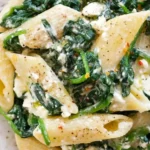
Spinach Feta Pasta
- Total Time: 15 minutes
- Yield: 4 servings 1x
- Diet: Vegetarian
Description
You’ll love this scrumptious spinach feta pasta that is a breeze to whip in a skillet. It’s a weeknight dream that comes together in 15 minutes with just 6 ingredients!
Ingredients
- 8 oz (220 grams) Penne (or similar pasta shape)
- 1 tablespoon extra virgin olive oil
- 3 garlic cloves, minced or sliced
- ¼ teaspoon chilli flakes
- 10 oz (300 grams) spinach, washed
- 7 oz (200 grams) block of feta
- 1 tablespoon lemon juice
Instructions
- Cook the pasta: Bring a large pot of water to the boil, add salt and pasta, and cook until al dente according to the package instructions. Reserve about ½ cup of hot pasta water before draining the pasta.
- Cook the spinach: Heat the olive oil in a large skillet over medium heat. Stir in the garlic and chili flakes, and cook until fragrant (about 60 seconds). Add the spinach, a handful at a time, stirring until wilted (it takes a few minutes).
- Add the feta cheese: Using your hands, break the block of feta into crumbles and add it to the skillet. Turn the heat off.
- Assemble: Drain and add the pasta to the skillet along with the lemon juice and ¼ cup of the reserved pasta cooking water. Toss until well combined and coated, taste, and make sure you’re happy with the overall flavor (you might need more salt or lemon juice).
- Serve: Serve immediately with a drizzle of extra virgin olive oil, chili flakes for extra heat, and freshly grated parmesan cheese if desired. Enjoy!
Notes
If using frozen spinach, thaw it completely, then squeeze out as much extra moisture as possible. Add the squeezed frozen spinach at the same point the fresh spinach is added in the recipe.
- Prep Time: 5 minutes
- Cook Time: 10 minutes
- Category: pasta
- Method: Skillet
- Cuisine: Mediterranean
Nutrition
- Serving Size: 1 serving
- Calories: 389 kcal
- Sugar: 2 g
- Sodium: 633 mg
- Fat: 15 g
- Saturated Fat: 7 g
- Unsaturated Fat: 8 g
- Trans Fat: 0 g
- Carbohydrates: 47 g
- Fiber: 3 g
- Protein: 17 g
- Cholesterol: 45 mg
Keywords: Spinach feta pasta