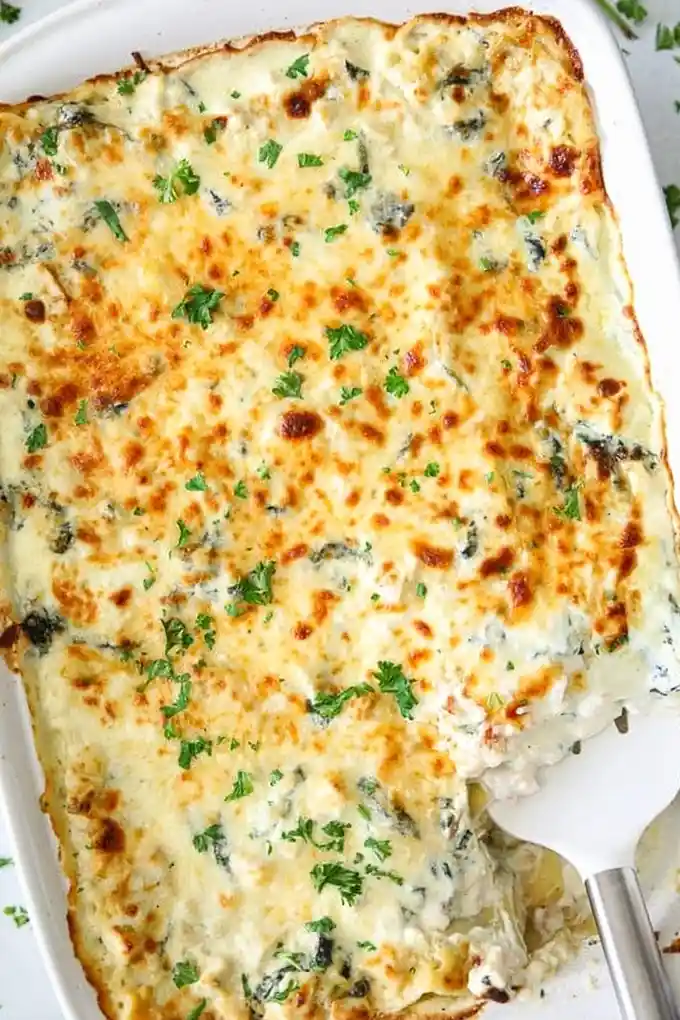
This creamy chicken alfredo lasagna uses rotisserie chicken to reduce preparation time. It combines a rich white sauce with layers of melted mozzarella and baby spinach for a hearty meal.
List of ingredients
- 2 tablespoons unsalted butter – used for sautéing the aromatic base.
- 2 garlic cloves, minced – provides a sharp, savory flavor.
- 1 cup onion, chopped – adds sweetness and depth to the sauce.
- 10 ounces fresh baby spinach – adds nutrients and a pop of color.
- 4 cups heavy cream – the primary base for the creamy alfredo.
- 1.5 cups grated parmesan cheese – adds a salty, nutty punch.
- 15 ounces ricotta cheese – gives the filling a thick, creamy consistency.
- 1/4 teaspoons black pepper – basic seasoning for balance.
- 1 1/2 teaspoons salt – enhances all other ingredient flavors.
- 3 cups shredded rotisserie chicken – a convenient, pre-cooked protein.
- 15 cooked lasagna noodles – the structural layers of the dish.
- 3 cups shredded mozzarella cheese – used for melting and browning on top.
step-by-step instructions
- Sauté aromatics: Heat a large skillet over medium-high heat. Melt 2 tablespoons of butter, then add 2 minced garlic cloves and 1 cup of chopped onion, cooking until the onion is translucent.
- Wilt the spinach: Add 10 ounces of fresh baby spinach to the skillet. Stir continuously until the spinach has completely wilted.
- Create the sauce filling: Stir in 4 cups of heavy cream, 1.5 cups of grated Parmesan, 15 ounces of ricotta cheese, 1/4 teaspoon of black pepper, 1.5 teaspoons of salt, and 3 cups of shredded rotisserie chicken. Heat until the mixture reaches a slight simmer, then remove the skillet from the heat.
- Prepare the base: In a 9 x 13 inch deep baking dish, spread a large spoonful of the chicken alfredo mixture over the bottom to prevent the noodles from sticking.
- First noodle layer: Arrange cooked lasagna noodles over the base sauce, fitting approximately 5 noodles to cover the area.
- First filling layer: Spread a generous amount of the chicken alfredo mixture over the noodles and sprinkle with one-third of the shredded mozzarella cheese.
- Repeat layering: Continue the pattern of lasagna noodles, chicken alfredo mixture, and mozzarella cheese until all 15 noodles are used, ending with a final layer of mozzarella.
- Bake: Cover the baking dish tightly with aluminum foil. Bake at 350 degrees Fahrenheit for 30-35 minutes.
- Brown the top: Remove the foil and broil the lasagna uncovered for 2-3 minutes until the cheese is golden brown.
Optimizing Lasagna Texture
Preventing Pasta from Sticking Together
After boiling the lasagna noodles, rinse them briefly with cool water to remove excess starch. Drizzling a small amount of olive oil over the cooked noodles helps them remain separate during the layering process. Ensure the noodles are laid flat to prevent curling during baking.
Maintaining Sauce Thickness
To avoid a runny lasagna, ensure the alfredo mixture reaches a simmer before removing it from the heat. The ricotta cheese acts as a stabilizer, but overheating the cream can cause it to separate. Remove the sauce from the stove as soon as small bubbles form at the edges.
Achieving the Ideal Cheese Melt
Use a block of mozzarella and grate it yourself rather than using pre-shredded bags. Pre-shredded cheeses are coated in cellulose or potato starch to prevent clumping, which can hinder a smooth melt. Freshly grated cheese provides a creamier stretch and better browning under the broiler.
Ingredient Substitutions and Alternatives
Replacing Rotisserie Chicken
If rotisserie chicken is unavailable, use poached or grilled chicken breasts. Shred the meat finely to ensure it distributes evenly throughout the alfredo sauce. Ensure the replacement meat is fully cooked and seasoned with salt and pepper before adding it to the skillet.
Low-Fat Dairy Options
For a lighter version, replace heavy cream with a mixture of half-and-half and a small amount of cornstarch slurry. While the texture will be less rich, it reduces the overall fat content. Use a low-fat ricotta blend to further decrease the calorie count without sacrificing the structure.
Alternative Leafy Greens
If baby spinach is not preferred, chopped kale or Swiss chard can be used as a substitute. Kale requires a slightly longer sauté time in the butter and garlic to soften its tougher fibers. Ensure the greens are squeezed dry if using frozen alternatives to avoid adding excess water to the sauce.
Creative Flavor Variations
Adding Sautéed Mushrooms
Incorporate sliced cremini or button mushrooms by sautéing them with the onions and garlic. Mushrooms add an earthy depth that complements the creaminess of the alfredo sauce. Ensure the mushrooms are browned and their moisture has evaporated before adding the cream.
Incorporating Sun-Dried Tomatoes
Fold in chopped sun-dried tomatoes for a hit of acidity and tanginess. These concentrate the flavor and provide a visual contrast to the white sauce. Use tomatoes packed in oil for a richer taste, but drain them slightly to avoid oil pooling in the lasagna.
Adding a Spicy Element
Introduce red pepper flakes or a pinch of cayenne pepper during the sautéing phase for a subtle heat. For a stronger kick, stir in diced canned jalapeños or chopped chipotle peppers in adobo. The creaminess of the cheese and alfredo sauce helps balance the spice level.
Recommended Serving Suggestions
Fresh Green Side Salads
Pair the rich lasagna with a crisp garden salad featuring a light vinaigrette. A Caesar salad with romaine lettuce and lemon-based dressing provides a sharp contrast to the heavy dairy. Avoid creamy dressings to keep the meal from feeling overly saturated.
Homemade Garlic Bread
Serve the dish with toasted baguette slices topped with garlic butter and parsley. The crunch of the bread complements the soft texture of the lasagna layers. Broil the bread for 2 minutes just before serving to ensure it is warm and crisp.
Roasted Vegetable Accompaniments
Roasted broccoli or asparagus provides a healthy, fiber-rich side that cuts through the richness of the cheese. Toss the vegetables in olive oil and salt, then roast at 400 degrees Fahrenheit until tender. This adds a necessary nutritional balance to the plate.
Storage and Reheating Guide
Refrigeration Best Practices
Store leftover lasagna in an airtight container or wrap the baking dish tightly with plastic wrap. Keep it in the refrigerator for up to 3 to 4 days. Ensure the dish has cooled slightly before sealing to prevent excessive condensation from forming on the surface.
Freezing Unbaked Lasagna
Assemble the lasagna in a disposable aluminum pan and cover it tightly with two layers of foil. Freeze immediately for up to 4 months. Thaw the lasagna in the refrigerator overnight before baking, and increase the covered baking time by 10-15 minutes.
Freezing Already Baked Lasagna
Let the baked lasagna cool completely before slicing into portions. Wrap individual slices in freezer-safe wrap and place them in a freezer bag. This allows for convenient single-serving reheating without wasting energy on a full pan.
Safe Reheating Techniques
Reheat slices in the oven at 325 degrees Fahrenheit, covered with foil to retain moisture. If using a microwave, add a teaspoon of water to the plate and cover with a damp paper towel. Heat in 1-minute intervals to avoid overcooking the edges while the center remains cold.
Troubleshooting Common Issues
Fixing a Watery Sauce
If the alfredo mixture appears too thin, simmer it for an additional 2-3 minutes to reduce the liquid. You can also stir in an extra tablespoon of parmesan cheese or a teaspoon of cornstarch dissolved in water. This thickens the sauce and ensures it holds the noodle layers in place.
Managing Overcooked Noodles
If the lasagna noodles become mushy, it is usually due to overboiling before assembly. Cook noodles until they are just under al dente, as they will continue to cook in the oven. If this happens, increase the amount of cheese on top to provide more structural support.
Preventing Cheese from Burning
If the mozzarella browns too quickly under the broiler, move the oven rack to a lower position. Keep a close eye on the cheese, as the transition from golden brown to burnt happens in seconds. Use aluminum foil to loosely tent the top if the cheese is browning before the center is hot.
Frequently Asked Questions
Can I use oven-ready noodles?
Yes, you can use no-boil noodles, but you must increase the amount of liquid in the sauce. Oven-ready noodles absorb more moisture from the cream and ricotta than pre-cooked noodles. Add an extra half-cup of heavy cream or water to ensure the pasta cooks through.
How long does it stay fresh in the fridge?
When stored in an airtight container, the lasagna remains fresh for 3 to 4 days. Beyond this window, the dairy components may begin to degrade in quality. Always check for off-smells or changes in texture before reheating older leftovers.
Can I make this recipe gluten-free?
This recipe can be made gluten-free by substituting the standard lasagna noodles with gluten-free corn or brown rice pasta. Ensure the gluten-free noodles are not overcooked, as they tend to break more easily than wheat pasta. The sauce and cheese are naturally gluten-free.
Print
Creamy Chicken Alfredo Lasagna
- Total Time: 55 minutes
- Yield: 12 servings 1x
- Diet: General
Description
This easy Chicken Alfredo Lasagna is made with rotisserie chicken, alfredo sauce, and mozzarella cheese. This recipe will please any of your family or friends.
Ingredients
- 2 tablespoons unsalted butter
- 2 garlic cloves, minced
- 1 cup onion, chopped
- 10 ounces fresh baby spinach
- 4 cups heavy cream
- 1.5 cups grated parmesan cheese
- 15 ounces ricotta cheese
- 1/4 teaspoons black pepper
- 1 1/2 teaspoons salt
- 3 cups shredded rotisserie chicken
- 15 cooked lasagna noodles
- 3 cups shredded mozzarella cheese
Instructions
- Step 1: Heat a large skillet to medium-high and add 2 tablespoons of butter along with 2 minced garlic cloves and 1 cup of chopped onion. Cook the onion until it becomes translucent.
- Step 2: Now add 10 ounces of fresh spinach and stir until the spinach wilts.
- Step 3: Then add in 4 cups of heavy cream, 1 ½ cup of grated Parmesan, 15 ounces ricotta cheese, ¼ teaspoons black pepper, 1 ½ teaspoons salt, and 3 cups of shredded rotisserie chicken.
- Step 4: Once the heavy cream comes to a slight simmer, remove it from the heat.
- Step 5: In a 9 x 13 inch deep baking dish add a large spoonful of the chicken Alfredo mixture to coat the bottom of the pan then begin adding in your cooked lasagna noodles.
- Step 6: Now add a generous amount of your chicken Alfredo mixture on top of the lasagna noodles and sprinkle on one-third of the shredded mozzarella cheese.
- Step 7: Repeat layering the lasagna noodles, chicken Alfredo, and shredded mozzarella until all 15 of your lasagna noodles are assembled.
- Step 8: Now cover the lasagna with foil and bake at 350 degrees Fahrenheit for 30-35 minutes.
- Step 9: Then broil uncovered for 2-3 minutes to brown the cheese.
Notes
You can use oven-ready lasagna noodles, but you may want to add more liquid to the sauce as they absorb more. The lasagna can be frozen both baked and unbaked for up to 4 months.
- Prep Time: 20 minutes
- Cook Time: 35 minutes
- Category: Dinner
- Method: Baking
- Cuisine: Italian
Nutrition
- Serving Size: 1 serving
- Calories: 672 kcal
- Sugar: 2 g
- Sodium: 836 mg
- Fat: 49 g
- Saturated Fat: 29 g
- Unsaturated Fat: 20 g
- Trans Fat: 0 g
- Carbohydrates: 30 g
- Fiber: 2 g
- Protein: 30 g
- Cholesterol: 192 mg
Keywords: Chicken alfredo Lasagna