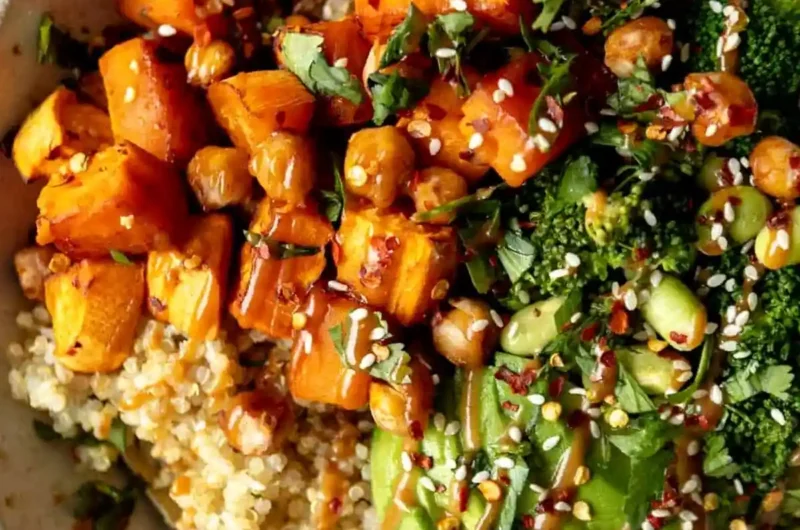
These nutrient-dense bowls combine roasted root vegetables and crisp legumes with a creamy nut-based dressing. They are ideal for healthy meal preparation and provide a balanced mix of plant-based proteins and complex carbohydrates.
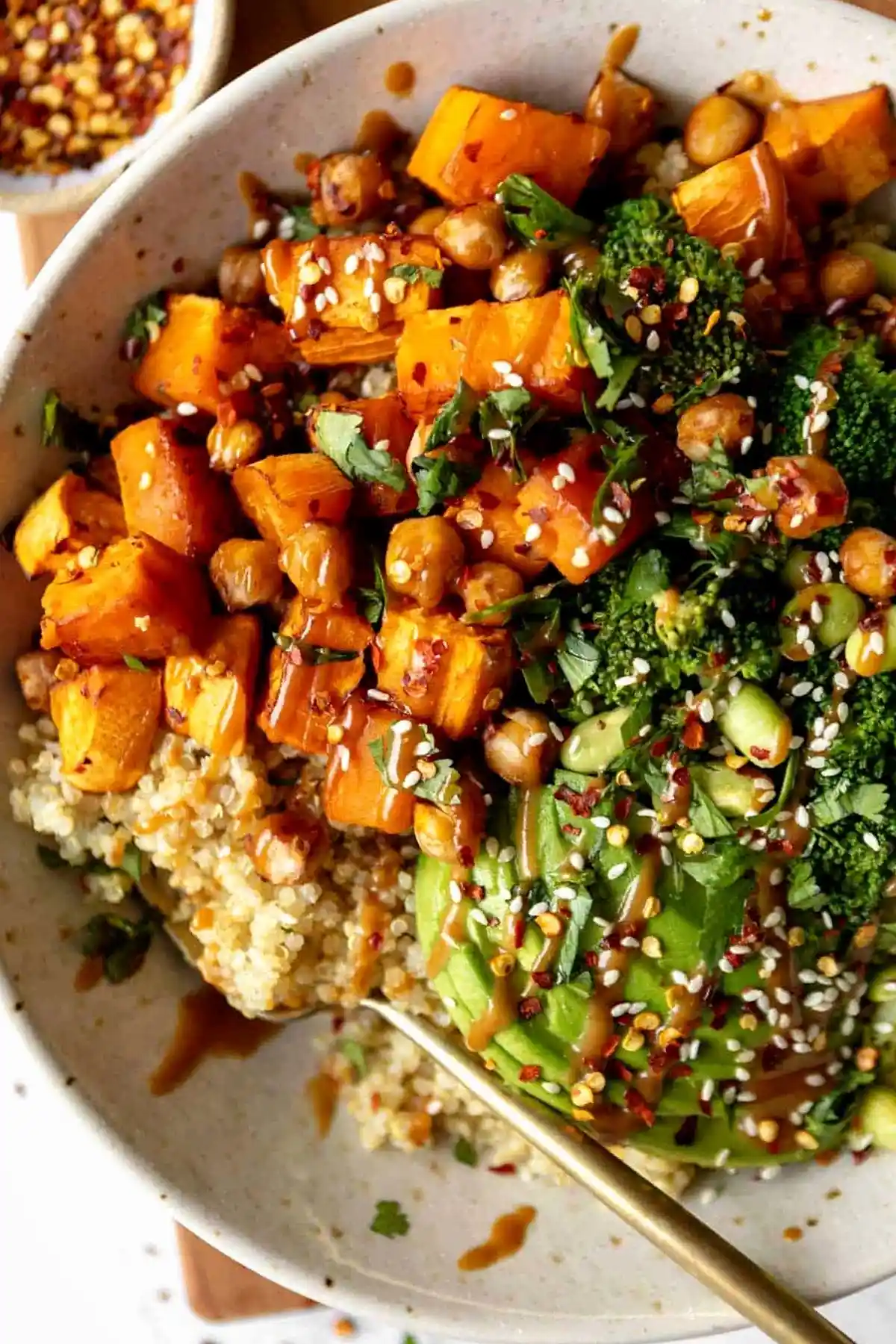
List of ingredients
- 4 cups peeled and cubed sweet potato (about 2 medium potatoes) – cut into uniform pieces for even roasting.
- 1 can chickpeas (drained and rinsed) – pat dry to ensure maximum crispiness.
- 2 tablespoons oil (avocado oil recommended) – used for roasting the vegetables.
- 1 tablespoon soy sauce or tamari – provides a salty, umami base.
- 1 tablespoon maple syrup – adds a touch of sweetness to balance the heat.
- 1-2 tablespoons sriracha – adjust based on your preferred spice level.
- 2 teaspoons minced garlic – adds aromatic depth to the roast.
- 1/2 teaspoon red pepper flakes – for an additional layer of spice.
- 1 cup uncooked grain of choice (quinoa, rice, or millet) – the foundation of the bowl.
- 1 head broccoli (chopped) – cut into small, bite-sized florets.
- 1 1/2 cup shelled edamame – provides additional plant protein.
- 1 avocado – sliced or cubed for creaminess.
- 1/2 batch peanut sauce – the primary dressing for the bowl.
- 1/2 cup chopped peanuts – adds a crunchy texture.
- 1/2 cup chopped cilantro – used for a fresh, herbal finish.
step-by-step instructions
- Prepare the Oven: Preheat your oven to 400 degrees Fahrenheit to ensure it reaches the correct temperature for roasting.
- Season the Vegetables: In a large mixing bowl, combine the cubed sweet potatoes and rinsed chickpeas. Toss them with the oil, soy sauce, maple syrup, sriracha, minced garlic, and red pepper flakes until every piece is evenly coated.
- Roast: Spread the seasoned mixture onto a baking sheet lined with parchment paper. Bake for 30-35 minutes, or until the sweet potatoes are tender and can be easily pierced with a fork.
- Cook the Grains: Prepare your chosen grain according to the package directions. For increased flavor, substitute the cooking water with vegetable broth.
- Steam the Greens: Place the chopped broccoli and shelled edamame in a pot with approximately one inch of water. Steam over medium heat for 5-7 minutes until the broccoli is barely fork-tender, then drain the excess water.
- Assemble the Bowls: Start with a base of cooked grains in each bowl. Arrange the steamed broccoli, edamame, roasted sweet potatoes, and chickpeas on top. Add fresh avocado slices.
- Final Garnish: Drizzle a generous amount of peanut sauce over the ingredients. Top with chopped peanuts, fresh cilantro, and extra red pepper flakes if more heat is desired.
Optimal Grain Selection
Using Quinoa for Maximum Protein
Quinoa is an excellent choice for these bowls because it is a complete protein. To prepare it, rinse the quinoa in a fine-mesh strainer to remove saponins, which can taste bitter. Simmer one part quinoa with two parts vegetable broth for about 15 minutes until the water is absorbed.
Substituting Brown or White Rice
Rice provides a neutral flavor profile that allows the peanut sauce to stand out. Brown rice offers more fiber and a chewier texture, while white jasmine rice provides a softer, more fragrant base. Always rinse rice thoroughly before cooking to remove excess surface starch.
Preparing Millet for a Nutty Texture
Millet is a gluten-free grain with a mild, nutty flavor and a texture similar to couscous. It typically cooks in about 20 minutes when simmered in water or broth. If you have Celiac disease, ensure you purchase certified gluten-free millet to avoid cross-contamination during processing.
Customizing Your Vegetables
Swapping Broccoli for Sautéed Kale
If you prefer a heartier green, replace the steamed broccoli with sautéed kale. Remove the tough stems from the kale and sauté the leaves in a pan with a small amount of oil and salt. Cook until the leaves are wilted and slightly tender.
Using Asparagus for a Seasonal Twist
Asparagus is a great alternative to broccoli and can be prepared in two ways. You can steam it alongside the edamame for 3-5 minutes, or you can roast it on the baking sheet with the sweet potatoes for the last 10 minutes of cooking.
Adding Fresh Spinach for Raw Crunch
Adding a handful of raw baby spinach to the bottom of the bowl before adding the hot grains is a practical option. The heat from the quinoa or rice will slightly wilt the spinach without overcooking it. This adds a fresh, iron-rich element to the meal.
Nut Butter Alternatives for the Sauce
Substituting Almond Butter
Almond butter is a direct substitute for peanut butter and offers a slightly sweeter, more subtle flavor. Ensure you use a creamy, unsweetened almond butter to maintain the savory balance of the Thai sauce. The consistency remains almost identical to the original peanut sauce.
Using Cashew Butter for Added Creaminess
Cashew butter creates a richer, more velvety texture compared to peanut butter. Because cashews have a more neutral taste, you may want to add an extra teaspoon of sriracha or lime juice to the sauce to maintain the boldness of the dressing.
Sunflower Seed Butter for Nut-Free Needs
For those with nut allergies, sunflower seed butter is a viable alternative. It has a distinct earthy flavor that pairs well with the sweet potato and sriracha. Adjust the amount of water in the sauce carefully, as sunflower butter can sometimes be thicker than peanut butter.
Meal Prep and Storage Guidelines
Refrigerating Components Separately
To maintain the best texture, store the roasted vegetables, cooked grains, and steamed greens in separate airtight containers. This prevents the grains from absorbing too much moisture from the vegetables. The peanut sauce should be kept in a small, separate jar.
Maintaining Avocado Freshness
Avocados brown quickly once sliced and exposed to air. To prevent this, store the avocado whole until the day you intend to eat the bowl. If you must pre-slice it, toss the pieces in a small amount of lemon or lime juice to slow the oxidation process.
Storing the Peanut Sauce
The peanut sauce can be stored in the refrigerator for up to one week. Because the nut butter can thicken when cold, you may need to whisk in a teaspoon of warm water or lime juice to bring it back to a pourable consistency before serving.
Reheating Instructions
Microwave Method for Quick Warming
Place the grains and roasted vegetables in a microwave-safe container. Heat on medium-high for 1 to 2 minutes, stirring halfway through to ensure even heating. Add the fresh avocado and cold peanut sauce only after the other components are warmed.
Stovetop Method for Better Texture
To regain some of the crispness of the chickpeas and sweet potatoes, reheat them in a skillet over medium heat with a teaspoon of oil. Once the vegetables are hot, serve them over the grains, which can be warmed separately with a splash of water.
Troubleshooting Common Issues
Preventing Soggy Roasted Vegetables
Sogginess usually occurs when the oven is not fully preheated or the baking sheet is overcrowded. Give the vegetables plenty of space on the pan to allow air to circulate. Avoid stirring the vegetables too frequently, as this can lower the surface temperature and prevent browning.
Fixing a Sauce That Is Too Thick
If your peanut sauce is too thick to drizzle, add warm water one tablespoon at a time. Whisk vigorously after each addition until the sauce reaches a smooth, pourable consistency. Adding a bit of lime juice can also help thin the sauce while adding brightness.
Avoiding Overcooked Broccoli
Broccoli can quickly turn mushy if steamed for too long. Start checking the texture at the 4-minute mark. The broccoli is done when it is bright green and just barely tender when pierced with a fork; it should still have a slight snap.
Frequently Asked Questions
Can I make this recipe oil-free?
Yes, you can roast the sweet potatoes and chickpeas using a small amount of vegetable broth or a splash of water to prevent sticking. Use a high-quality non-stick baking sheet or a silicone mat to ensure the vegetables do not adhere to the pan.
How do I store the bowls for the week?
Divide the grains, roasted vegetables, and steamed broccoli into four glass containers. Keep the peanut sauce in a separate condiment container. Assemble the bowls daily by adding fresh avocado and the dressing just before consumption.
What is the best way to cube sweet potatoes evenly?
Use a sharp chef’s knife to cut the potato into thick planks, then turn those planks into strips, and finally cut the strips into cubes. Aim for 1-inch cubes to ensure they cook at the same rate as the chickpeas.
Can I use frozen edamame?
Yes, frozen shelled edamame works perfectly. You can add them directly to the steaming pot with the broccoli. If they are frozen, they may require an extra 1-2 minutes of steaming time to heat through completely.
Print
Thai-Inspired Peanut Sweet Potato and Chickpea Bowls
- Total Time: 40 minutes
- Yield: 4 servings 1x
- Diet: Vegan
Description
With spicy roasted sweet potato, crispy chickpeas, fluffy quinoa and drizzled in my Thai Peanut Sauce, this is one of my favorite buddha bowls to date! It’s vegan, gluten free and perfect for meal prep.
Ingredients
- 4 cups peeled and cubed sweet potato
- 1 can chickpeas (drained and rinsed)
- 2 tablespoons avocado oil
- 1 tablespoon soy sauce or tamari
- 1 tablespoon maple syrup
- 1–2 tablespoon sriracha
- 2 teaspoon minced garlic
- 1/2 teaspoon red pepper flakes
- 1 cup uncooked grain of choice (quinoa, rice or millet)
- 1 head broccoli (chopped)
- 1 1/2 cup shelled edamame
- 1 avocado
- 1/2 batch peanut sauce
- 1/2 cup chopped peanuts
- 1/2 cup chopped cilantro
Instructions
- Preheat: Preheat the oven to 400 degrees Fahrenheit.
- Toss: Add the cubed sweet potato and rinsed chickpeas in a bowl and toss with all spices/seasonings until well combined.
- Bake: Add to a baking sheet lined with parchment paper and bake for 30-35 minutes or until the sweet potato can be easily pierced with a fork.
- Cook Grain: Cook your grain according to package instructions. Cook the grain in veggie broth for a little extra flavor!
- Steam: Add the edamame and broccoli to a pot with 1 inch of water and steam for 5-7 minutes or until the broccoli is just barely fork tender. Drain off the excess water.
- Assemble: Assemble the bowls with a base of your grain of choice, then add the steamed veggies, sweet potato/chickpeas, avocado and top with a generous serving of peanut sauce, chopped cilantro and crushed peanuts.
Notes
In place of broccoli you can use sautéed kale or asparagus. You can easily use almond butter in place of peanut butter if you prefer.
- Prep Time: 10 minutes
- Cook Time: 30 minutes
- Category: Dinner
- Method: Baking
- Cuisine: Thai
Nutrition
- Serving Size: 1 bowl
- Calories: 482 kcal
- Sugar: 10 g
- Sodium: 450 mg
- Fat: 19 g
- Saturated Fat: 2 g
- Unsaturated Fat: 17 g
- Trans Fat: 0 g
- Carbohydrates: 58 g
- Fiber: 16 g
- Protein: 21 g
- Cholesterol: 0 mg
Keywords: Thai peanut sweet potato bowls, buddha bowl, vegan, gluten free, meal prep, quinoa