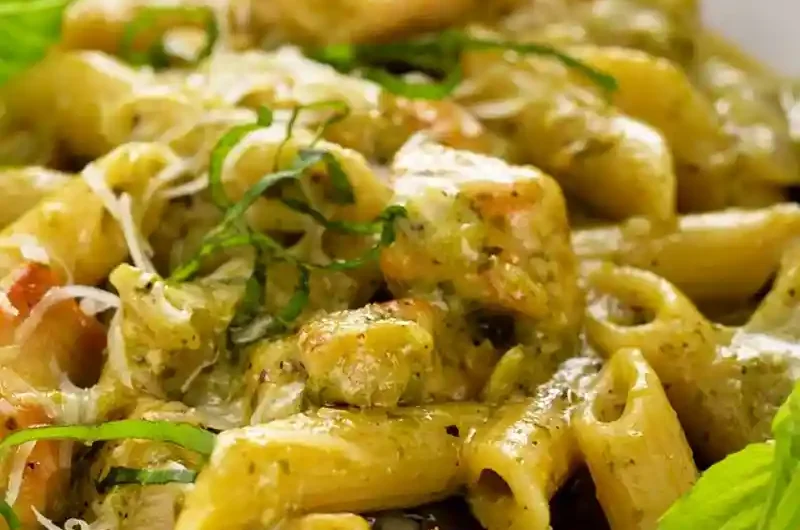
This rich and creamy chicken pesto pasta is a satisfying dinner that comes together in just 30 minutes. It utilizes simple pantry staples to create a restaurant-quality meal that is perfect for busy weeknights.
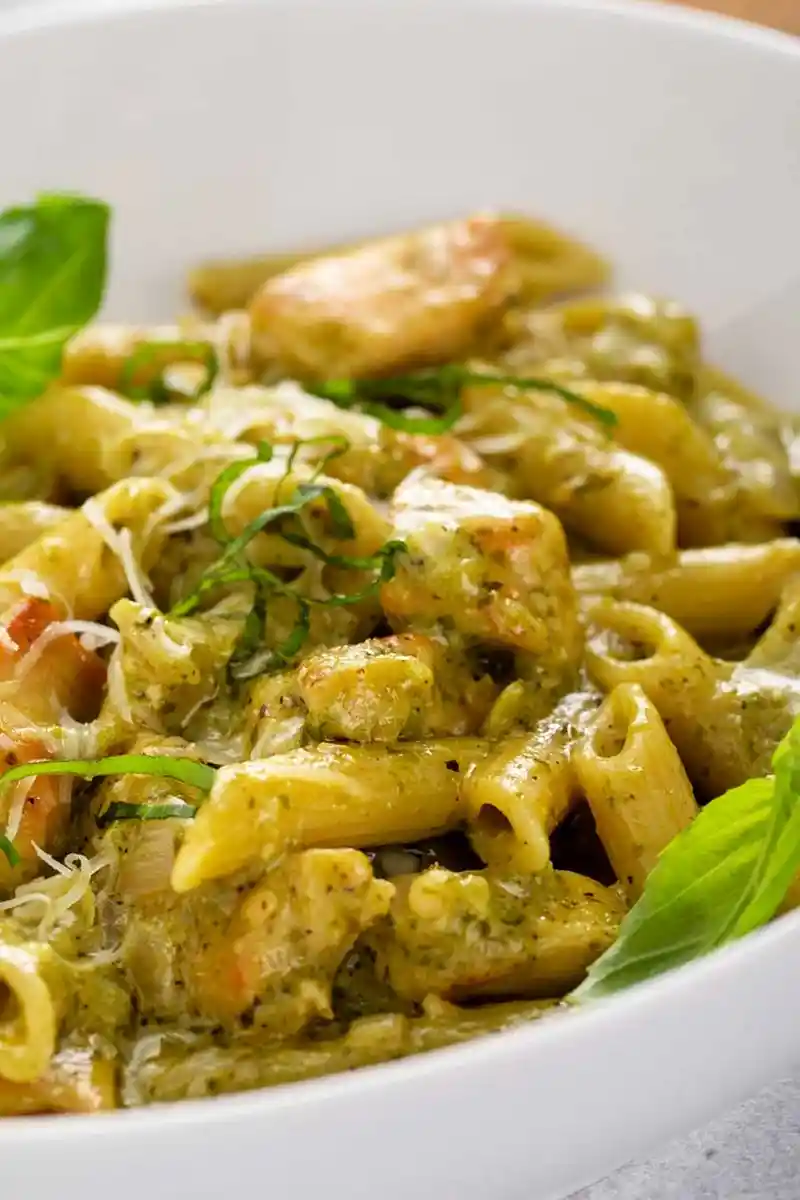
List of ingredients
- 1 pound boneless, skinless chicken breast, cut into bite sized pieces – ensures quick and even cooking.
- Salt and ground black pepper to taste – basic seasoning for the protein.
- 1/2 teaspoon Italian seasoning – adds a blend of traditional herbs.
- 1 tablespoon all-purpose flour – helps brown the chicken and thickens the sauce.
- 1 tablespoon olive oil – used for searing the chicken.
- 1 tablespoon butter – adds richness to the sautéed aromatics.
- 1 small onion, chopped – provides a savory flavor base.
- 4 garlic cloves, minced – adds pungent depth to the sauce.
- 1 cup chicken broth – used for deglazing the pan.
- 12 ounces basil pesto – the primary flavor component.
- 1/2 cup half and half – creates a silky, creamy texture.
- 1/2 teaspoon garlic powder – reinforces the savory garlic notes.
- 1/2 cup Parmesan cheese – adds saltiness and umami.
- 8 ounces pasta – use penne, rigatoni, or fettuccine.
- Chopped basil for garnish (optional) – adds a fresh finish.
step-by-step instructions
- Cook the pasta: Bring a large pot of salted water to a boil. Add the pasta and cook according to package directions. Reserve 1/2 cup of the cooking water before draining the pasta.
- Prepare the chicken: Season the chicken pieces with salt, pepper, and Italian seasoning. Toss the meat with flour until evenly coated to help with browning.
- Sear the meat: Heat olive oil in a large skillet over medium-high heat. Add the chicken and cook for 5-7 minutes, stirring occasionally until browned. Remove the chicken from the skillet and set it aside.
- Sauté aromatics: In the same skillet, melt the butter. Sauté the chopped onions for 3-4 minutes until translucent, then add the minced garlic and cook for one more minute.
- Build the sauce: Pour in the chicken broth and scrape the bottom of the pan to release the browned bits. Bring the liquid to a boil, stir in the pesto, and lower the heat. Mix in the half and half and garlic powder, then simmer for 2-3 minutes.
- Combine protein: Return the cooked chicken and its accumulated juices to the skillet. Toss to coat and simmer for an additional 3-4 minutes. Stir in the Parmesan cheese until well blended.
- Final toss: Add the cooked pasta to the skillet and toss gently. If the sauce is too thick, stir in some of the reserved pasta water until the desired consistency is reached. Serve warm with optional chopped basil.
Optimal Pasta Selection for Pesto Sauce
Penne Rigate for Maximum Grip
Penne with ridges, known as rigate, is an excellent choice for this recipe. The ridges and the hollow center allow the creamy pesto sauce to cling to the pasta. This ensures every bite is fully coated in sauce.
Fusilli and Rotini for Pockets of Flavor
Spiral-shaped pastas like fusilli or rotini are highly effective at trapping small bits of garlic and pesto. The twists create more surface area for the sauce to adhere to. These are ideal for those who prefer a more intense flavor distribution.
Fettuccine for a Traditional Texture
Fettuccine provides a classic Italian feel and a smooth mouthfeel. While it does not trap sauce as well as ridged pasta, it creates a luxurious experience when paired with cream. Use a pair of tongs to ensure the long strands are thoroughly coated.
Ingredient Substitutions and Alternatives
Using Chicken Thighs for Extra Moisture
Boneless, skinless chicken thighs are a great alternative to chicken breasts. Thighs have a higher fat content, which makes them more resistant to overcooking and keeps them juicier. Cook them using the same method and timing as the breasts.
Adjusting the Cream Component
If you do not have half and half, whole milk can be used, though the sauce will be thinner. For an even richer and thicker sauce, substitute heavy cream. If using milk, you may need to simmer the sauce slightly longer to reach the desired thickness.
Alternative Protein Options
This recipe works well with other proteins such as shrimp or sliced Italian-style chicken sausage. Shrimp should be sautéed quickly for 2-3 minutes per side to avoid toughness. Tofu cubes can be used for a meat-free version, though they should be pressed and browned thoroughly.
Store-Bought vs. Homemade Pesto
High-quality store-bought pesto is convenient and consistent for quick meals. Homemade pesto, made with fresh basil, pine nuts, garlic, olive oil, and Parmesan, offers a brighter flavor. Regardless of the source, ensure the pesto is well-stirred before adding it to the pan.
Dairy-Free Cheese Options
For a dairy-free version, replace the Parmesan with a plant-based Parmesan alternative or nutritional yeast. Use a coconut-based cream or cashew cream instead of half and half. Be mindful that some plant-based cheeses have different melting points.
Professional Cooking Techniques
The Importance of Salting Pasta Water
Adding a generous amount of salt to the boiling water is the only chance to season the pasta itself. This prevents the noodles from tasting bland once they are mixed with the sauce. Aim for water that tastes like the sea for the best results.
Using Reserved Pasta Water to Emulsify
Pasta water contains starch released from the noodles during cooking. Adding a splash of this water back into the sauce helps bind the fat from the cream and pesto. This creates a glossy, cohesive emulsion that prevents the sauce from separating.
Maintaining Low Heat for Dairy
Avoid bringing the sauce to a rolling boil after adding the half and half and Parmesan. Excessive heat can cause the proteins in the dairy to clump or the fats to separate. Keep the sauce at a gentle simmer to maintain a smooth consistency.
Flouring Chicken for Fond Development
Coating the chicken in flour serves two purposes: it creates a golden crust and thickens the pan drippings. These browned bits, known as the fond, provide deep flavor. Deglazing with broth lifts these bits into the sauce for added complexity.
Creative Flavor Variations
Incorporating Sun-Dried Tomatoes
Adding chopped sun-dried tomatoes introduces a concentrated tartness that cuts through the richness of the cream. Stir them in during the onion and garlic sauté phase. This adds both a flavor contrast and a pop of color to the dish.
Adding Fresh Baby Spinach
Stirring in two handfuls of fresh baby spinach at the very end allows the leaves to wilt from the residual heat. Spinach adds nutritional value and a fresh, earthy taste. It pairs exceptionally well with the basil in the pesto.
Adding Sautéed Mushrooms
Mushrooms such as cremini or button mushrooms add a meaty texture and earthy depth. Sauté them in the butter along with the onions until they are browned. This makes the dish feel heartier and more complex.
Increasing Heat with Red Pepper Flakes
For those who enjoy a spicy kick, add a pinch of crushed red pepper flakes during the garlic sauté. This provides a subtle heat that balances the creamy elements of the sauce. Adjust the amount based on your heat tolerance.
Serving and Pairing Suggestions
Complementing with Garlic Bread
Warm, buttery garlic bread is the perfect accompaniment for soaking up the leftover pesto sauce. Use a French baguette or Italian loaf sliced lengthwise. Toast it in the oven with melted butter and fresh garlic.
Pairing with a Crisp Green Salad
Because the pasta is rich and creamy, a light salad provides a necessary balance. A mix of arugula or romaine with a lemon-vinaigrette dressing works best. The acidity of the lemon helps cleanse the palate between bites.
Serving with Steamed Vegetables
Steamed broccoli, sautéed green beans, or roasted asparagus make this a complete meal. These vegetables add a crunch and brightness to the plate. Toss them in a little olive oil and salt for a simple side.
Storage and Reheating Instructions
Refrigerating Leftovers Properly
Store leftovers in an airtight container in the refrigerator for up to 2-3 days. Ensure the pasta is completely cooled before sealing the lid to prevent excess moisture. Keep the container tightly sealed to avoid odors from the fridge.
Reheating to Maintain Texture
Dairy-based sauces tend to thicken or separate when cooled. When reheating on the stove, add a splash of milk, chicken broth, or water to loosen the sauce. Warm gently over low to medium heat, stirring frequently.
Why Freezing is Not Recommended
Freezing is not advised for this specific recipe due to the cream and cheese. Upon thawing, the dairy components often separate, resulting in a grainy or oily texture. For the best quality, consume the meal within a few days of cooking.
Make-Ahead Strategies
Prepping Ingredients in Advance
To save time on the day of cooking, chop the onions and mince the garlic ahead of time. You can also cut the chicken into bite-sized pieces and store them in a sealed container. This reduces the actual cooking time to about 20 minutes.
Preparing the Pesto Sauce Base
You can prepare the sauce base by sautéing the aromatics and mixing in the pesto and broth. Store this base in the fridge and simply add the cream and cheese when you are ready to assemble. This allows the flavors to meld together more deeply.
Troubleshooting Common Issues
Fixing a Sauce that is Too Thick
If the sauce becomes too thick after adding the cheese, do not add more cream immediately. Instead, stir in small amounts of reserved pasta water. This thins the sauce while maintaining the original flavor profile.
Preventing Sauce Separation
If you notice the sauce starting to break or look oily, lower the heat immediately. Whisk in a small amount of cold water or a tablespoon of heavy cream to help re-emulsify the mixture. Stirring constantly over low heat usually resolves this issue.
Correcting Overcooked Pasta
If the pasta is slightly overcooked, avoid over-tossing it in the skillet. Gently fold the pasta into the sauce just before serving to prevent it from breaking apart. Serve immediately to ensure the best possible texture.
Frequently Asked Questions
Can I use rotisserie chicken?
Yes, rotisserie chicken is a great time-saver. Simply shred the pre-cooked chicken and stir it into the sauce during the final step when adding the pasta. This reduces the total cooking time significantly.
How do I make this dish lighter?
To reduce the richness, replace the half and half with whole milk or a splash of unsweetened almond milk. You can also reduce the amount of Parmesan cheese or use a smaller portion of pesto. Increasing the ratio of vegetables to pasta also lightens the meal.
What is the best way to store this?
The best way to store this dish is in a shallow, airtight glass container. This keeps the pasta from being crushed and prevents the sauce from oxidizing. Always reheat slowly to avoid breaking the sauce.
Can I use a different type of pesto?
While basil pesto is traditional, sun-dried tomato pesto or kale pesto can be used. Be aware that these have different flavor profiles and may require adjustments to the seasonings. Tomato pesto will change the color of the sauce to an orange hue.
Do I have to use flour on the chicken?
The flour is optional but highly recommended for texture and sauce thickness. If you prefer to avoid flour, you can sear the chicken plain. However, you may find the sauce is slightly thinner and the chicken less browned.
Print
Creamy Chicken Pesto Pasta
- Total Time: 30 minutes
- Yield: 6 servings 1x
- Diet: General
Description
This creamy Chicken Pesto Pasta recipe is made with tasty chicken and tender pasta smothered in a luscious cream and basil pesto sauce. This easy chicken pesto pasta recipe is made with pantry staples and comes together in 30 minutes.
Ingredients
- 1 pound boneless, skinless chicken breast, cut into bite sized pieces
- Salt and ground black pepper to taste
- 1/2 teaspoon Italian seasoning
- 1 tablespoon all-purpose flour
- 1 tablespoon olive oil
- 1 tablespoon butter
- 1 small onion, chopped
- 4 garlic cloves, minced
- 1 cup chicken broth
- 12 ounces basil pesto
- 1/2 cup half and half
- 1/2 teaspoon garlic powder
- 1/2 cup microbial-rennet Parmesan cheese
- 8 ounces pasta
- Chopped basil for garnish (optional)
Instructions
- Step 1: Bring a large pot of salted water to a boil. Add the pasta and cook according to package directions. Reserve 1/2 cup cooking water, then drain.
- Step 2: While the pasta is cooking, season the chicken with salt, pepper and Italian seasoning. Add the flour and toss to coat.
- Step 3: Heat the oil in a large skillet over medium-high heat. Add the chicken and cook, stirring occasionally, for about 5-7 minutes or until browned, Add extra oil, if needed. Remove from the skillet and reserve.
- Step 4: To the same skillet, add the butter and saute the onions for about 3 – 4 minutes or until they become translucent. Add the garlic and cook for a minute.
- Step 5: Deglaze the skillet by adding the chicken broth. Scrape the bottom of the pan to remove the brown bits. Bring to a boil. Stir in the pesto and lower the heat. Add the half and half and garlic powder. Simmer for about 2-3 minutes.
- Step 6: Return the chicken and any collected juices to the skillet and toss to coat. Simmer for 3-4 minutes. Stir in the Parmesan cheese and mix well.
- Step 7: Add the cooked pasta and toss gently. Add some of the cooking water only if a creamier consistency is desired. Serve warm garnished with chopped basil (optional).
Notes
When cooking this creamy pasta recipe, make sure the sauce doesn’t boil as it can separate. Pasta dishes are best served immediately after tossing the pasta with the sauce. If your pasta gets too dry, add additional pasta cooking water to make the pasta creamier again.
- Prep Time: 10 minutes
- Cook Time: 20 minutes
- Category: Dinner
- Method: Stove-top
- Cuisine: Italian
Nutrition
- Serving Size: 1 serving
- Calories: 557 kcal
- Sugar: 3 g
- Sodium: 922 mg
- Fat: 32 g
- Saturated Fat: 8 g
- Unsaturated Fat: 24 g
- Trans Fat: 0 g
- Carbohydrates: 37 g
- Fiber: 2 g
- Protein: 27 g
- Cholesterol: 71 mg
Keywords: chicken pesto pasta, creamy pasta, 30-minute dinner, Italian dinner, easy chicken recipe