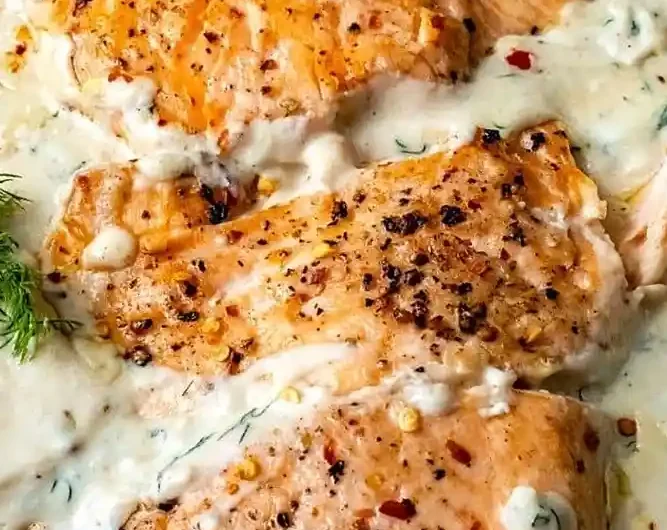
This gourmet salmon dish features a rich, zesty cream sauce that elevates simple fillets into a restaurant-quality meal. It is a practical choice for a sophisticated dinner that comes together in about 40 minutes.
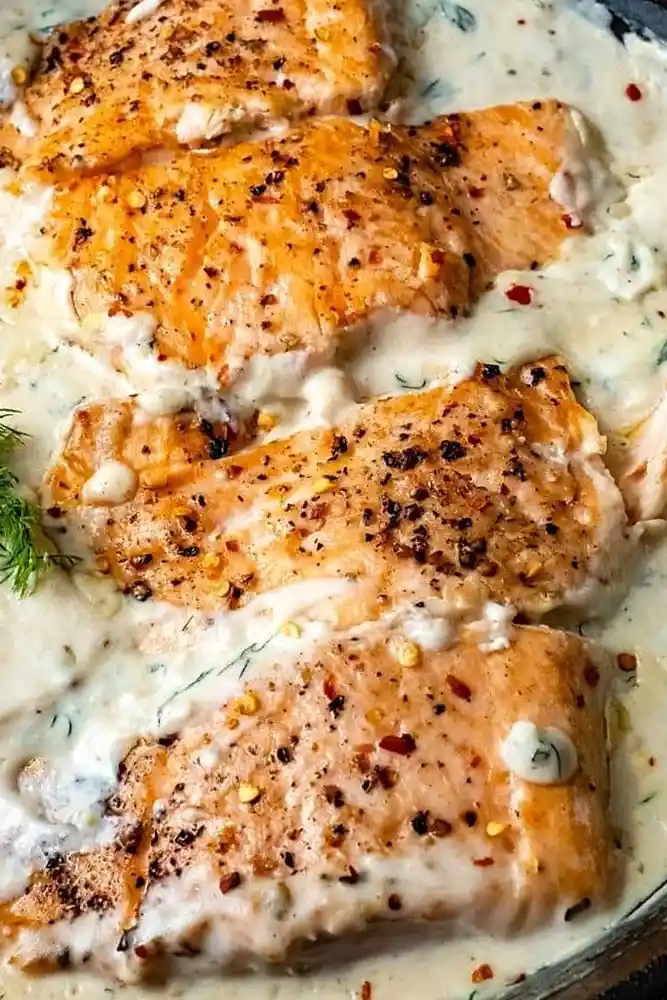
List of ingredients
- 4 (6 oz) salmon fillets – skin-on preferred for texture.
- Kosher salt – for seasoning.
- Freshly ground black pepper – for seasoning.
- 1 tablespoon extra-virgin olive oil – used for searing.
- 1 tablespoon butter – for the roux and sautéing garlic.
- 3 garlic cloves, minced – provides a pungent base.
- 1 tablespoon all-purpose flour – used to thicken the sauce.
- 1 ¼ cups heavy cream – creates a rich, velvety texture.
- Juice and zest of 1 lemon – adds essential acidity and brightness.
- 2 tablespoons chopped dill – adds a fresh, herbal finish.
- Crushed red pepper flakes – for a hint of heat.
step-by-step instructions
- Season the fish: Apply salt and freshly ground pepper to all sides of the salmon fillets.
- Sear the salmon: Heat olive oil in a large skillet over medium-high heat. Place fillets skin side up and sear until golden brown (about 5 minutes), then flip and cook skin side down until crispy and golden (another 5 minutes).
- Rest the fillets: Remove the salmon from the skillet and transfer them to a plate to keep them warm.
- Sauté garlic: Reduce the skillet heat to medium-low and melt the butter. Add minced garlic and sauté for approximately 30 seconds.
- Create the roux: Stir in the flour and cook for about one minute to remove the raw flour taste.
- Thicken the sauce: Whisk in the heavy cream and simmer until the sauce thickens. Stir in the lemon zest, lemon juice, and chopped dill, then season with salt and black pepper.
- Final combine: Return the salmon fillets to the skillet and simmer in the sauce for about 2 minutes.
- Garnish: Serve immediately with a sprinkle of crushed red pepper flakes on top.
Professional Searing Techniques
Ensure the Pan is Fully Preheated
Wait until the olive oil is shimmering or slightly smoking before adding the salmon. A hot pan creates an immediate sear, which prevents the fish from sticking and ensures a golden-brown crust. If the pan is too cool, the fish will steam rather than sear, resulting in a pale color and soft texture.
Avoid Frequent Movement
Once the salmon hits the pan, leave it undisturbed for the full five minutes. Moving the fish too early prevents the Maillard reaction from completing, which is what creates the flavorful crust. Use a flexible fish spatula to gently flip the fillets only once.
Manage the Heat Level
Maintain medium-high heat for the initial sear to lock in juices and achieve color. However, when you transition to the sauce, lowering the heat to medium-low is critical. This prevents the butter from burning and keeps the cream from separating or curdling.
Ingredient Substitutions and Alternatives
Adjusting the Cream for Lower Calories
If you prefer a lighter sauce, replace a portion of the heavy cream with whole milk. A common ratio is ¾ cup of heavy cream and ½ cup of milk. If the sauce remains too thin, whisk in an additional teaspoon of flour or simmer it for a few extra minutes to reduce the liquid.
Alternative Herbal Options
While dill is the traditional pairing for salmon, fresh parsley or chives also work well. Parsley provides a cleaner, grasseier note, while chives add a subtle onion-like depth. Use the same quantity as the dill to maintain the flavor balance.
Using Different Citrus Fruits
Lime juice and zest can be substituted for lemon to provide a more tropical, sharp acidity. If using lime, consider adding a pinch of sugar to balance the tartness. Orange zest can also be added for a sweeter, aromatic profile that pairs well with the richness of the cream.
Enhanced Flavor Variations
Adding Fresh Leafy Greens
Stir in two cups of fresh baby spinach or chopped kale during the final two minutes of sauce simmering. The heat from the cream will wilt the greens quickly, adding color and nutritional value to the plate. This transforms the dish into a more complete one-pan meal.
Incorporating Briny Elements
Add one tablespoon of drained capers to the sauce along with the lemon juice. The saltiness of the capers cuts through the richness of the heavy cream and complements the fatty acids in the salmon. This creates a flavor profile similar to a Piccata sauce.
Using Dried Herbs for Convenience
If fresh dill is unavailable, use dried dill in a 1:3 ratio (one teaspoon of dried for every tablespoon of fresh). Add dried herbs earlier in the sauce-making process so they have time to rehydrate and release their oils.
Optimal Side Dish Pairings
Grains and Starches
Wild rice or a fluffy rice pilaf are excellent choices as they soak up the excess lemon cream sauce. Quinoa or roasted baby potatoes also provide a hearty base that balances the lightness of the fish. For a lower-carb option, cauliflower rice works well.
Roasted Vegetable Accompaniments
Roasted Brussels sprouts or honey-glazed carrots add a sweetness that contrasts with the tart lemon sauce. Steamed asparagus or sautéed broccolini are also classic pairings that maintain the Mediterranean feel of the dish. Ensure the vegetables are seasoned simply with salt and pepper.
Light Fresh Salads
A crisp arugula salad with a light vinaigrette can refresh the palate between bites of the rich cream sauce. Cucumber salads with a touch of vinegar and onion also pair well. These acidic sides help cut through the decadence of the butter and cream.
Storage and Reheating Guidelines
Refrigeration Basics
Store leftover salmon and sauce in an airtight container in the refrigerator for up to two days. Keep the fish and sauce together so the salmon stays moist during storage. Ensure the food is cooled slightly before sealing the lid to prevent excess condensation.
Gentle Reheating Methods
Avoid the microwave if possible, as it can make salmon rubbery and cause the cream sauce to break. Instead, place the salmon and sauce in a small skillet over low heat. Add a tablespoon of water or milk to loosen the sauce and cover the pan with a lid to steam the fish gently.
Freezing Considerations
It is not recommended to freeze this dish once the sauce is added. Cream-based sauces often separate and become grainy upon thawing, and the texture of the cooked salmon degrades. Only freeze raw, vacuum-sealed fillets for later use.
Advance Preparation Advice
Preparing the Mise en Place
Mince the garlic, chop the dill, and zest the lemon before starting the stove. Having these ingredients ready prevents the garlic from burning while you are searching for the lemon. This organization is key to maintaining the timing of the roux.
Pre-Seasoning the Fish
You can season the salmon fillets with salt and pepper up to an hour before cooking and keep them in the fridge. This allows the salt to penetrate the flesh slightly, enhancing the flavor of the fish. Pat the fillets dry with a paper towel immediately before searing to ensure a better crust.
Making the Sauce Base
The roux (butter and flour) can be prepared in advance, although it is easier to make it in the same pan used for the fish. If you make it separately, remember to whisk the cream in slowly to avoid lumps. Store the thickened base in the fridge and reheat it before adding the lemon and dill.
Cooking Troubleshooting
Fixing a Sauce That Is Too Thin
If the sauce does not thicken enough, simmer it for another two to three minutes without a lid to allow the liquid to reduce. Alternatively, create a small slurry with one teaspoon of cornstarch and a teaspoon of water, whisk it into the boiling sauce, and stir until thickened.
Preventing Sauce Separation
Cream sauces can separate if they are boiled too vigorously or if the temperature changes too abruptly. Keep the heat at a steady medium-low and whisk constantly. If the sauce begins to separate, whisk in a teaspoon of cold water or a small knob of cold butter to emulsify it.
Handling Stuck Fish Skin
If the salmon skin sticks to the pan, it is usually because the fish was flipped too early. Wait for the fish to naturally release from the surface as the crust forms. If it still sticks, use a thin metal spatula to carefully loosen the edges before lifting.
Frequently Asked Questions
Can I use frozen salmon fillets?
Yes, but they must be completely thawed and patted dry before cooking. Frozen fillets often release more moisture, which can prevent the fish from searing properly and result in a steamed texture.
Do I have to keep the skin on?
The skin is optional, but it protects the delicate flesh from the direct heat of the pan and adds a crispy texture. If you prefer it off, simply remove the skin before seasoning and sear as directed.
What is the best way to tell when salmon is done?
The fish should be opaque and flake easily with a fork. For precise results, use an instant-read thermometer to check for an internal temperature of 145°F (63°C).
Can I make this sauce dairy-free?
You can replace the butter with a plant-based butter substitute and the heavy cream with full-fat coconut milk or a cashew-based cream. Note that the flavor will shift slightly toward the substitute used.
Print
Pan-Seared Salmon with Creamy Lemon Garlic Sauce
- Total Time: 40 minutes
- Yield: 4 servings 1x
- Diet: General
Description
This is a fancy, gourmet-style salmon recipe worthy of a 5-star restaurant!
Ingredients
- 4 (6 oz) salmon fillets
- Kosher salt
- Freshly ground black pepper
- 1 tablespoon extra-virgin olive oil
- 1 tablespoon butter
- 3 garlic cloves, minced
- 1 tablespoon all-purpose flour
- 1 ¼ cups heavy cream
- Juice and zest of 1 lemon
- 2 tablespoons chopped dill
- Crushed red pepper flakes
Instructions
- Season: Season the salmon fillets with salt and freshly ground pepper
- Sear: Heat the oil in a large skillet over medium-high heat, sear the salmon fillets skin side up until golden brown (about 5 mins), and then flip and cook skin side down until the skin is crispy and golden (another 5 mins)
- Sauté: Remove the salmon fillets from the skillet and transfer them to a plate. Reduce the heat to medium-low and add the butter. Saute the garlic in the melted butter for about 30 seconds
- Thicken: Mix in the flour and cook for about a minute
- Sauce: Whisk in the cream and cook until thickened. Add the lemon zest, lemon juice, and chopped dill. Mix well and season with salt and freshly ground pepper
- Finish: Return salmon fillets to skillet and cook with the sauce for about 2 minutes. Serve with crushed red pepper flakes on top.
Notes
Be careful when flipping the salmon fillets as they can break apart easily. Ensure the skillet is very hot before adding the fillets to ensure proper browning. Do not burn the garlic as it will make the sauce bitter.
- Prep Time: 10 minutes
- Cook Time: 30 minutes
- Category: Dinner
- Method: Pan-Searing
- Cuisine: Italian, Mediterranean
Nutrition
- Serving Size: 1 fillet
- Calories: 579 kcal
- Sugar: 4 g
- Sodium: 580 mg
- Fat: 43 g
- Saturated Fat: 22 g
- Unsaturated Fat: 21 g
- Trans Fat: 0 g
- Carbohydrates: 4 g
- Fiber: 1 g
- Protein: 41 g
- Cholesterol: 185 mg
Keywords: salmon, lemon cream sauce, gourmet dinner, seafood, Italian, Mediterranean