
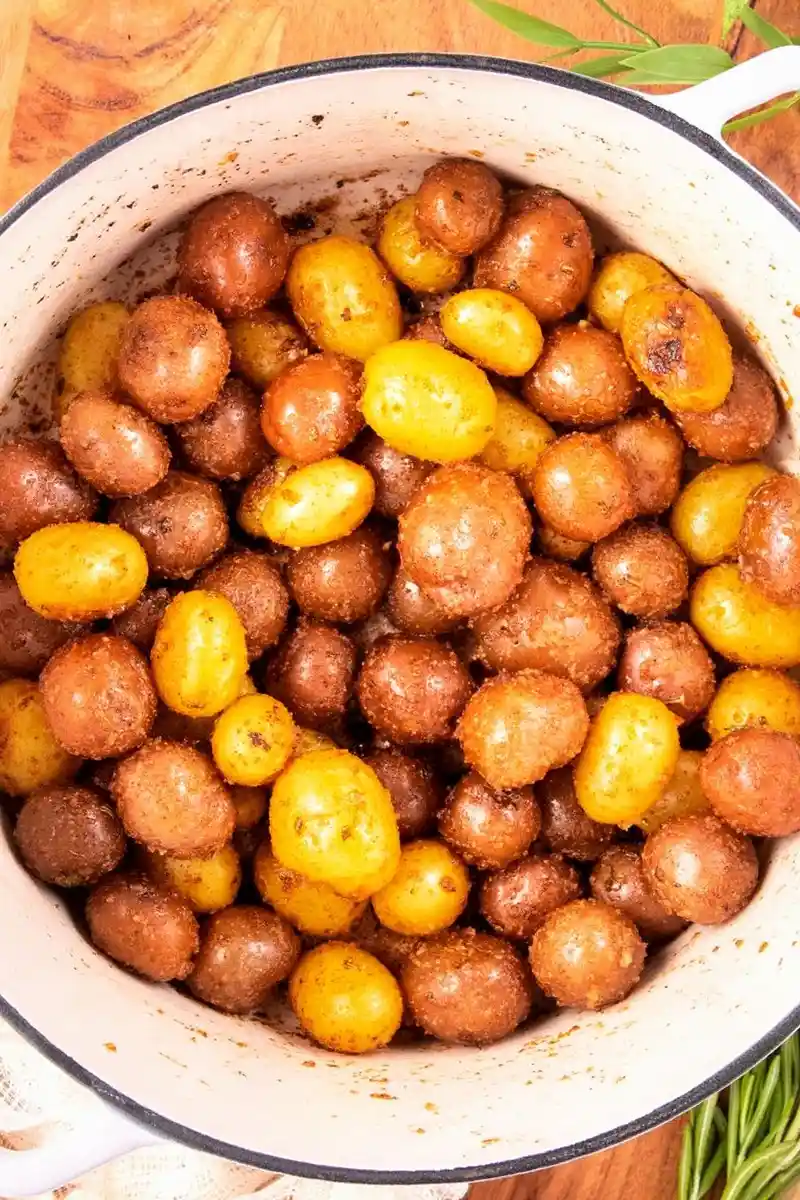
These roasted Dutch oven potatoes are a reliable, low-effort side dish that delivers consistent results every time you crave something savory and filling. By using the steady heat retention of a Dutch oven, you create a steaming environment that leaves the baby potatoes tender on the inside while absorbing the rich, buttery, and aromatic seasonings. This simple technique transforms minimal ingredients into a comforting staple that pairs beautifully with a wide range of main courses, making it an essential addition to your weekly cooking routine.
List of ingredients
- 1/4 cup unsalted butter
- 2 lbs baby potatoes
- 1 tbsp garlic powder
- 2 tsp fresh minced rosemary
- 1 tsp onion powder
- 3/4 tsp salt
step-by-step instructions
- Step: Preheat the oven to 400 degrees.
- Step: Place your butter in the Dutch oven and heat over medium heat on the stove until melted.
- Step: Add the potatoes, garlic powder, rosemary, onion powder, and salt to the Dutch oven and stir until the potatoes are well coated.
- Step: Cover the Dutch oven, and place in the oven for 35-40 minutes until potatoes are fork tender and cooked through. Serve!
Refining your roasting technique
Selecting the correct potato variety
The success of this dish relies on selecting waxy potatoes such as Red Bliss, fingerlings, or yellow baby potatoes. Unlike starchy russet potatoes, which are designed to fluff up and crumble, waxy potatoes have a high moisture content and thin skin that remains intact and creamy during the roasting process. This ensures that the potatoes do not turn into a mushy consistency when cooked inside a covered pot.
Ensuring consistent oven temperatures
Oven thermostats often drift over time, causing your actual internal temperature to be significantly higher or lower than the dial setting. For reliable results, use an independent oven-safe thermometer to verify that your oven is hitting exactly 400 degrees. This consistency ensures that the potatoes cook within the suggested 35-40 minute window, preventing them from being undercooked in the center or accidentally burnt on the bottom.
Managing the fat-to-potato ratio
The quarter cup of butter is calibrated to lightly coat two pounds of potatoes, providing a glossy finish without making the dish greasy. If you find your potatoes look dry after stirring, you can add an additional teaspoon of butter, but do not go overboard. You want the seasoning to adhere to the skin, not have the potatoes swimming in a pool of hot fat, which can lead to soggy rather than tender results.
Effective ingredient adjustments
Herb and seasoning modifications
While rosemary offers a classic pine-like fragrance, you can experiment with other sturdy, woody herbs if you want to shift the flavor profile. Thyme is an excellent alternative that adds a subtle, earthy citrus note, while oregano can provide a more robust, slightly spicy undertone. If using dried herbs instead of fresh, always reduce the amount by half, as dried herbs have a much higher concentration of volatile oils that can become overwhelming.
Substituting the base fat
If you prefer to move away from butter, high-quality extra virgin olive oil works exceptionally well for roasting potatoes. It provides a distinct, slightly fruity flavor and contains healthy monounsaturated fats. For a more neutral profile that still mimics the richness of butter, you can use refined avocado oil, which has a high smoke point and a very subtle flavor that lets the garlic and rosemary take center stage.
Utilizing garlic alternatives
If you prefer a sharp, fresh bite, you can supplement the garlic powder with fresh minced garlic cloves added during the final ten minutes of roasting. Do not add fresh garlic at the start of the process, as the long roasting time combined with the heat of the Dutch oven will likely turn fresh garlic bitter or charcoal-black. Stick to garlic powder for the primary roasting phase to ensure a consistently savory, sweet garlic flavor throughout.
Strategic serving and presentation
Pairing with complementary proteins
These potatoes act as a neutral yet flavorful canvas that pairs perfectly with hearty proteins. Consider serving them alongside slow-roasted beef or pan-seared chicken. The richness of the buttery potatoes helps balance out the lean texture of white meat or the deep, savory intensity of red meat, creating a well-rounded and satisfying meal that feels elevated despite its simplicity.
Creating a balanced plate
Because potatoes are a dense carbohydrate, they are best served with a generous helping of vibrant, acidic greens or roasted vegetables. A side of sautéed kale with a squeeze of lemon or steamed green beans with sliced almonds creates a visual and nutritional contrast that prevents the meal from feeling too heavy. The acidity of the vegetables cuts through the richness of the herb butter.
Temperature considerations for serving
Potatoes have a tendency to lose heat quickly once they are exposed to the air. To ensure they remain pleasant to eat throughout your meal, serve them directly from the Dutch oven if possible. If you must transfer them to a serving dish, briefly warm the serving bowl in the oven or under warm water before adding the potatoes. This simple step prevents the cold ceramic or glass from sapping the heat away from your finished side dish.
Managing leftovers and storage
Optimizing the refrigerator shelf life
Leftover potatoes should be stored in an airtight container within two hours of cooking to ensure safety and quality. They will retain their best texture for up to four days when kept in the coldest part of your refrigerator. Avoid leaving them in the Dutch oven for long-term storage, as the metal can sometimes impart a metallic taste to the food if left for multiple days in the fridge.
Reheating techniques for optimal texture
To reheat, avoid the microwave if you want to maintain the integrity of the skin, as it can often turn the exterior gummy. Instead, place the potatoes on a parchment-lined baking sheet and reheat them in a 350-degree oven for about 10-12 minutes. This brief second heating allows the butter to re-melt slightly, reviving the herbs and ensuring the interiors remain creamy rather than drying out.
Repurposing into new dishes
If you have a significant amount of leftovers, transform them into a completely different meal the next day. A popular method is to gently smash the potatoes with the base of a heavy glass, drizzle them with a tiny bit more oil, and roast them in a hot oven until the edges become crunchy and crispy. This changes the texture entirely, providing a crisp, roasted alternative to the original tender, steamed preparation.
Common inquiries
Why should I use a Dutch oven instead of a standard sheet pan?
The Dutch oven provides a heavy-walled, conductive environment that traps steam and heat. Unlike a sheet pan, which allows moisture to evaporate rapidly, the Dutch oven creates a micro-climate where the potatoes steam and roast simultaneously. This dual-action process results in a superior, consistent tenderness that is much harder to achieve on a flat, open baking sheet.
Can I add root vegetables to this pot?
Yes, you can include hearty root vegetables like carrots, parsnips, or small chunks of sweet potato. Ensure that you cut these additions into sizes that are proportional to your baby potatoes so that they all reach a state of doneness at the same time. Note that root vegetables with high sugar content may brown faster, so monitor them during the final ten minutes of the roasting cycle.
Is it necessary to wash the potatoes even if they look clean?
Yes, always wash your potatoes thoroughly under cool running water even if they appear pre-washed. Dirt and grit can hide in the crevices of baby potatoes, and scrubbing them with a vegetable brush ensures a pleasant texture when you bite into the skin. Dry them completely with a clean towel before adding them to the melted butter, as excess water on the surface can prevent the seasonings from sticking effectively.
Print
Dutch Oven Potatoes
- Total Time: 40 minutes
- Yield: 6 servings 1x
- Diet: Vegetarian
Description
Buttery, tender, and deliciously comforting, this simple 6-ingredient recipe for Dutch Oven Potatoes is a perfect, easy side dish for any occasion.
Ingredients
- 1/4 cup unsalted butter
- 2 lbs baby potatoes
- 1 tbsp garlic powder
- 2 tsp fresh minced rosemary
- 1 tsp onion powder
- 3/4 tsp salt
Instructions
- Step: Preheat the oven to 400 degrees.
- Step: Place your butter in the Dutch oven and heat over medium heat on the stove until melted.
- Step: Add the potatoes, garlic powder, rosemary, onion powder, and salt to the Dutch oven and stir until the potatoes are well coated.
- Step: Cover the Dutch oven, and place in the oven for 35-40 minutes until potatoes are fork tender and cooked through. Serve!
Notes
If you prefer crispy skins, remove the Dutch oven lid after the potatoes are fork-tender and return the uncovered pot to the 400-425F oven for 5-6 minutes. Leftovers can be stored in the refrigerator for up to 4 days.
- Prep Time: 5 minutes
- Cook Time: 35 minutes
- Category: Side Dish
- Method: Roasting
- Cuisine: American
Nutrition
- Serving Size: 0.5 cup
- Calories: 171 kcal
- Sugar: 1 g
- Sodium: 297 mg
- Fat: 8 g
- Saturated Fat: 5 g
- Unsaturated Fat: 3 g
- Trans Fat: 0 g
- Carbohydrates: 22 g
- Fiber: 3 g
- Protein: 3 g
- Cholesterol: 20 mg
Keywords: Dutch oven potatoes, roasted potatoes, side dish, easy side dish