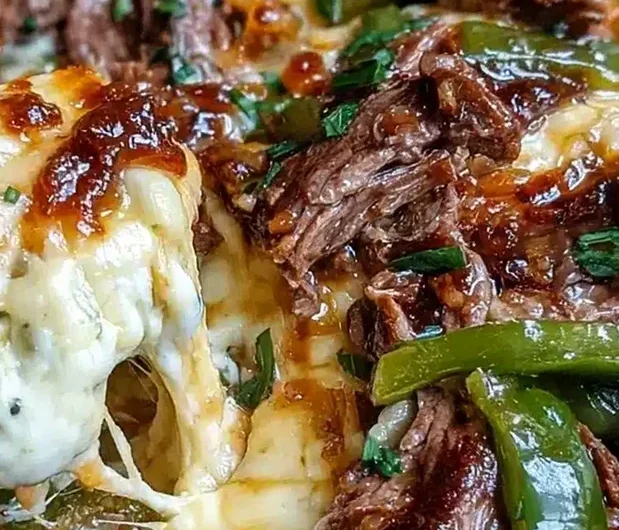
This low-carb skillet meal delivers the classic flavors of a Philadelphia cheesesteak without the bread. It combines tender sliced beef with a rich cheese sauce and sautéed vegetables for a quick weeknight dinner.
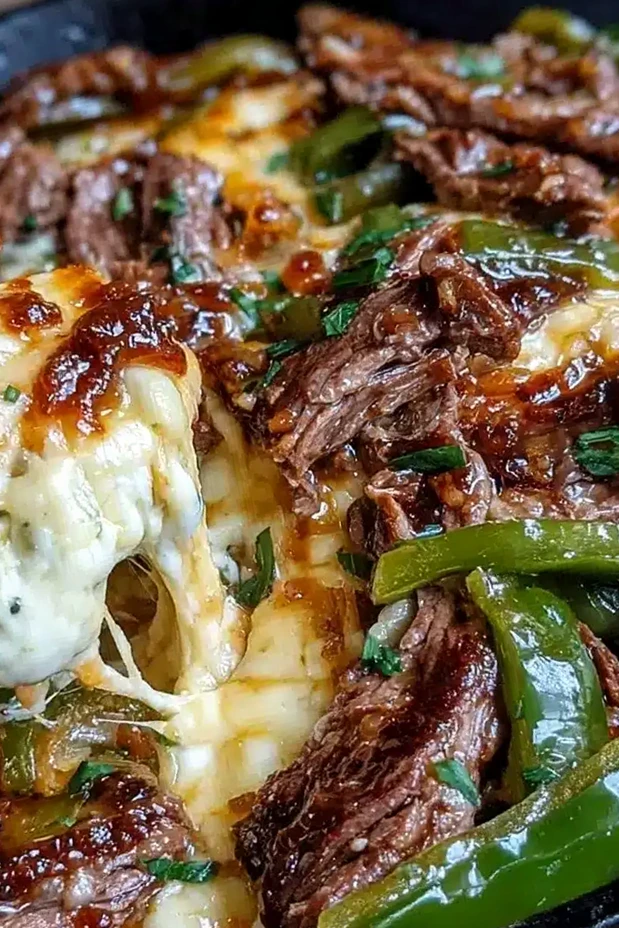
List of ingredients
- 1 lb (450 g) thinly sliced ribeye steak or sirloin – slice against the grain for maximum tenderness.
- 1 medium green bell pepper, thinly sliced – adds a fresh, slightly bitter contrast.
- 1 medium yellow onion, thinly sliced – provides a sweet, caramelized base.
- 2 cloves garlic, minced – use fresh garlic for a potent aromatic punch.
- 2 tbsp olive oil or avocado oil – divided for sautéing vegetables and searing meat.
- 4 oz (115 g) cream cheese, softened – ensures a smooth, lump-free sauce.
- ¼ cup (60 ml) heavy cream – adds richness and helps emulsify the cheese.
- 1 cup (100 g) shredded provolone cheese – chosen for its traditional Philly melt.
- Salt and freshly ground black pepper – adjust to your taste preference.
- ½ tsp smoked paprika (optional) – introduces a subtle woody depth.
- Fresh parsley, chopped (optional garnish) – adds a pop of color and brightness.
- Red pepper flakes (optional garnish) – provides a mild heat to the finished dish.
step-by-step instructions
- Prepare the ingredients: Thinly slice the ribeye steak against the grain to ensure it is tender. Slice the bell pepper and onion into thin strips and mince the garlic, keeping everything organized.
- Sauté the vegetables: Heat 1 tablespoon of oil in a skillet over medium heat. Cook the sliced peppers and onions, stirring occasionally, for 7-8 minutes until they are softened and caramelized. Stir in the minced garlic during the last minute to prevent burning, season with salt and pepper, and transfer the mixture to a plate.
- Sear the steak: Add the remaining 1 tablespoon of oil to the skillet and increase the heat to medium-high. Place the steak slices in a single layer and let them sear undisturbed for 2 minutes. Stir and cook for an additional 3-4 minutes until browned but juicy, being careful not to overcrowd the pan.
- Create the cheese sauce: Reduce the heat to medium-low and push the steak to one side of the skillet. Add the softened cream cheese and heavy cream to the empty side, stirring until the mixture is smooth. Gradually stir in the shredded provolone cheese until melted, then season with smoked paprika, salt, and pepper.
- Combine and finish: Fold the sautéed vegetables back into the skillet with the steak and cheese sauce. Cook for 1-2 minutes to ensure all components are thoroughly heated and the flavors are well blended.
- Garnish and serve: Sprinkle with fresh parsley and red pepper flakes if desired. Serve the dish immediately while the sauce is creamy and hot.
Cooking Mastery for Better Results
Freeze Steak for Easier Slicing
To achieve paper-thin slices of beef, place the steak in the freezer for 30 to 60 minutes before cutting. This firms up the muscle fibers, allowing the knife to glide through without the meat sliding on the cutting board. This technique is essential for getting the authentic cheesesteak texture.
Avoid Pan Overcrowding
Searing the meat in a single layer prevents the beef from releasing too much moisture and steaming. When the pan is overcrowded, the temperature drops, and the meat boils in its own juices rather than browning. Work in batches if your skillet is small to ensure a deep, savory crust.
Use Room Temperature Dairy
Let your cream cheese soften completely at room temperature before adding it to the pan. Cold cream cheese can cause the sauce to clump or break when it hits the hot skillet. Softened dairy integrates more quickly with the heavy cream for a velvety consistency.
Sauté Vegetables Slowly
Cooking the onions and peppers over medium heat allows the natural sugars to caramelize slowly. This process creates a deeper sweetness that balances the saltiness of the provolone cheese. Rushing this step with high heat may burn the exterior without softening the interior.
Customizing Your Low-Carb Skillet
Switch the Cut of Beef
While ribeye is traditional for its fat content and flavor, sirloin is a leaner alternative that works well. You can also use thinly sliced brisket if you prefer a meatier, more robust texture. Ensure any cut you choose is sliced as thinly as possible to keep the cooking time short.
Add Spicy Elements
For those who prefer more heat, dice fresh jalapeños and sauté them along with the bell peppers. You can also stir a pinch of cayenne pepper or a teaspoon of chipotle powder into the cheese sauce. These additions provide a smoky heat that cuts through the richness of the cream.
Incorporate Seasonal Vegetables
During the summer, add sliced zucchini or fresh cherry tomatoes during the final combining step for a lighter feel. In the winter, sautéed mushrooms or a handful of spinach can add earthiness and additional nutrients. These variations keep the dish interesting while remaining low-carb.
Swap the Melting Cheese
If provolone is unavailable, sharp cheddar provides a bolder, tangier flavor profile. Mozzarella is an option for a milder taste and a stretchier, gooier texture. Always choose a high-quality shredded cheese to ensure a smooth melt without excess anti-clumping agents.
Serving and Side Dish Ideas
Pair with Leafy Greens
A simple arugula or spinach salad with a lemon vinaigrette provides a bright contrast to the rich cheese sauce. The acidity of the dressing helps cleanse the palate between bites of the creamy beef. This keeps the meal feeling balanced and fresh.
Serve Over Cauliflower Rice
For a more filling experience, serve the cheesesteak mixture over a bed of sautéed cauliflower rice. This mimics the experience of a bowl-style meal and absorbs the excess cheese sauce. It is an excellent way to increase the volume of the meal without adding significant carbs.
Complement with Steamed Broccoli
Steamed or roasted broccoli florets are a perfect side due to their ability to hold onto the sauce. The crunch of the broccoli provides a textural contrast to the tender steak. Lightly seasoning the broccoli with garlic powder enhances the overall flavor profile.
Storage and Preservation Guide
Refrigerating Leftovers
Place any remaining cheesesteak in an airtight glass container once it has cooled slightly. Store it in the main part of the refrigerator, avoiding the door where temperature fluctuations are common. The dish will remain fresh and safe to eat for up to three days.
Freezing the Skillet Meal
To freeze, portion the meal into freezer-safe containers or vacuum-sealed bags to prevent freezer burn. Thaw the portions slowly in the refrigerator overnight before reheating. Note that the sauce may separate slightly during the freezing process, which is normal for dairy-based sauces.
Best Reheating Methods
Reheat the leftovers on the stovetop over low heat with a splash of water or heavy cream. This helps emulsify the cheese sauce and prevents it from becoming grainy. Avoid using high microwave settings, as this can overcook the steak and cause the cheese to oil off.
Common Preparation Troubleshooting
Preventing Sauce Separation
If the cheese sauce begins to look oily or separated, lower the heat immediately and stir in a tablespoon of heavy cream. This helps bring the fats and liquids back into an emulsion. Keeping the temperature medium-low is the best way to prevent the sauce from breaking.
Fixing a Sauce That is Too Thick
If the sauce becomes too dense, gradually add small amounts of beef broth or heavy cream while stirring. Add only one tablespoon at a time until the desired consistency is reached. This ensures the sauce remains creamy without becoming watery.
Ensuring Steak Stays Tender
Avoid cooking the steak for too long after it has browned, as ribeye and sirloin can toughen quickly. Remove the meat or move it to the side of the pan as soon as the desired color is achieved. The residual heat from the sauce will finish the cooking process gently.
Frequently Asked Questions
Can I use a different cut of beef?
Yes, you can use sirloin or thinly sliced brisket. The key is ensuring the meat is sliced very thin against the grain so that it cooks quickly and remains tender.
Is this recipe suitable for dairy-free diets?
It can be adapted by replacing the cream cheese and heavy cream with coconut-based alternatives. You can also use a dairy-free provolone substitute, though the melt and flavor will differ from the original.
How do I store leftovers properly?
Store them in an airtight container in the refrigerator for up to 3 days. When reheating, use a low heat setting and add a bit of cream to restore the sauce’s smoothness.
Can I make this recipe ahead of time?
You can prep the slicing of the meat and vegetables in advance. However, the final cooking and sauce integration should be done right before serving to maintain the best texture.
What can I serve with this skillet?
This dish pairs well with low-carb sides like steamed broccoli, cauliflower rice, or a crisp green salad. These options complement the richness of the steak and cheese.
Print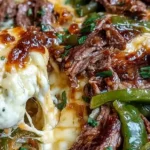
Creamy Keto Philly Cheesesteak Skillet
- Total Time: 30 minutes
- Yield: 4 servings 1x
- Diet: Keto
Description
A rich, satisfying low-carb dinner featuring thinly sliced steak, sautéed peppers and onions, and a creamy cheese sauce, perfect for keto lifestyles and quick weeknight meals.
Ingredients
- 1 lb (450 g) thinly sliced ribeye steak or sirloin
- 1 medium green bell pepper, thinly sliced
- 1 medium yellow onion, thinly sliced
- 2 cloves garlic, minced
- 2 tbsp olive oil or avocado oil
- 4 oz (115 g) cream cheese, softened
- ¼ cup (60 ml) heavy cream
- 1 cup (100 g) shredded provolone cheese
- Salt and freshly ground black pepper to taste
- ½ tsp smoked paprika (optional)
- Fresh parsley, chopped (optional garnish)
- Red pepper flakes (optional garnish)
Instructions
- Step: Thinly slice the ribeye steak against the grain. Slice the bell pepper and onion into thin strips. Mince the garlic and set aside.
- Step: Heat 1 tablespoon of oil in a skillet over medium heat. Add sliced peppers and onions and cook, stirring occasionally, until softened and slightly caramelized, about 7-8 minutes. Add minced garlic in the last minute, stirring to avoid burning. Season with salt and pepper. Transfer veggies to a plate.
- Step: Add remaining 1 tablespoon of oil to the skillet and increase heat to medium-high. Add steak slices in a single layer. Let sear undisturbed for 2 minutes, then stir and cook until browned but still juicy, about 3-4 more minutes. Avoid overcrowding.
- Step: Lower heat to medium-low. Push steak to one side of skillet. Add cream cheese and heavy cream to the empty side. Stir gently until cream cheese melts into a smooth sauce. Gradually stir in shredded provolone cheese, allowing it to melt. Season with smoked paprika, salt, and pepper.
- Step: Mix sautéed veggies back into the skillet and fold everything together gently. Cook for another 1-2 minutes to marry flavors.
- Step: Garnish with fresh parsley and red pepper flakes if desired. Serve immediately.
Notes
If cream sauce is too thick, add a splash more heavy cream or broth to loosen. Avoid overcooking steak to keep it tender and juicy. Use room temperature cream cheese to avoid lumps. Thinly slice steak for tenderness. Do not overcrowd pan to prevent steaming.
- Prep Time: 10 minutes
- Cook Time: 20 minutes
- Category: Main Course
- Method: Skillet
- Cuisine: American
Nutrition
- Serving Size: 1 serving
- Calories: 475 kcal
- Sugar: 3 g
- Sodium: 450 mg
- Fat: 32 g
- Saturated Fat: 15 g
- Unsaturated Fat: 17 g
- Trans Fat: 0 g
- Carbohydrates: 6 g
- Fiber: 2 g
- Protein: 38 g
- Cholesterol: 110 mg
Keywords: keto, low-carb, Philly cheesesteak, creamy, skillet, dinner, easy recipe, keto dinner, low-carb dinner