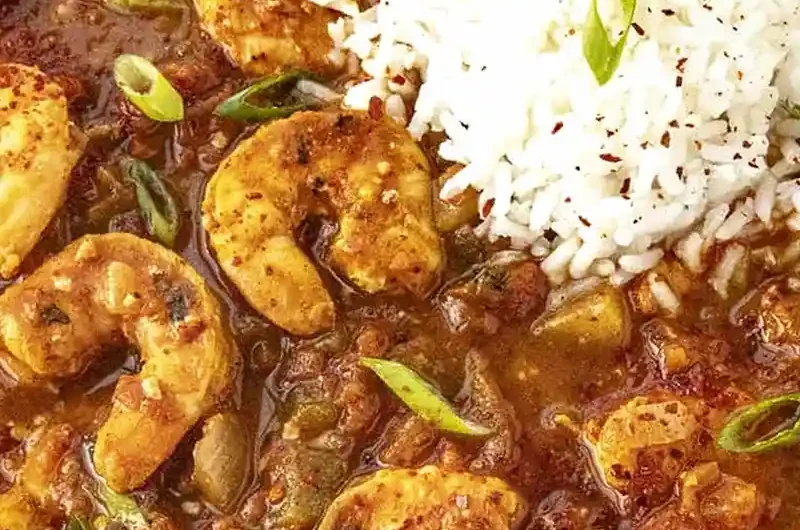
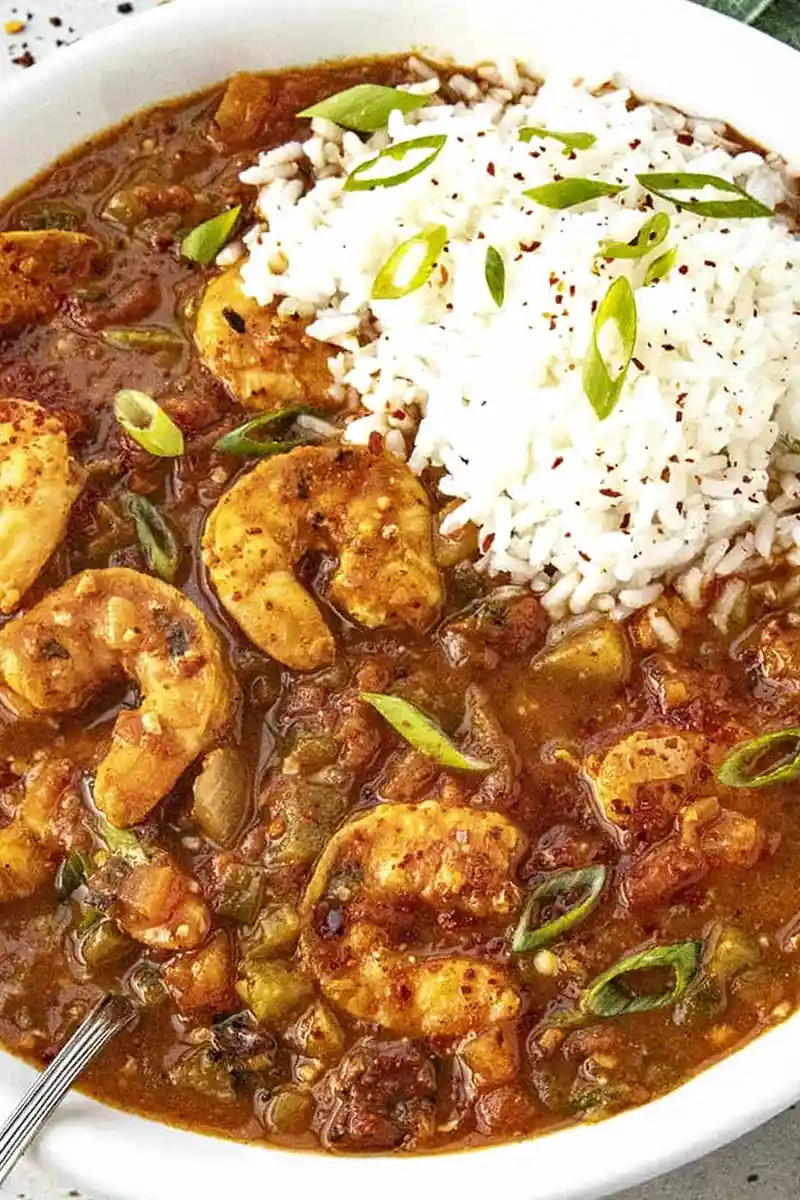
This rich and spicy Shrimp Etouffee brings the authentic flavors of Louisiana to your kitchen. It features succulent shrimp smothered in a savory Creole sauce and served over a fluffy bed of rice.
List of ingredients
- 3 tablespoons peanut or vegetable oil (plus more if needed) – used for the roux and searing shrimp.
- 3 tablespoons flour – combined with oil to thicken the stew.
- 1 green bell pepper, chopped (or use jalapenos for a spicier version) – part of the Cajun holy trinity.
- 1 medium onion, chopped (scraps reserved) – provides a sweet, savory base.
- 2 celery stalks, chopped (scraps reserved) – adds aromatic depth.
- 3 cloves garlic, chopped – for pungent, savory flavor.
- 2-1/2 cups chicken or seafood stock – the liquid base for the sauce.
- 15 ounces diced tomato (canned or fresh, with juices) – adds acidity and body for the Creole style.
- 1 tablespoon Creole seasonings + 1 teaspoon divided (or use Cajun Seasonings + extra as desired) – the primary spice blend.
- 1 teaspoon dried thyme (or use fresh) – adds an earthy, herbal note.
- 1 tablespoon Worcestershire sauce (optional) – enhances the savory umami profile.
- 1 tablespoon hot sauce (plus more to taste) – provides a vinegary kick and heat.
- Salt and pepper to taste – for final seasoning adjustment.
- 1 pound shrimp (peeled and deveined) – the main protein.
- 2 cups cooked white rice (or grits) – for serving.
- Fresh chopped parsley and spicy red chili flakes – for garnish and extra heat.
step-by-step instructions
- Prepare the Roux: Heat a large pot or large pan to medium heat. Add 3 tablespoons peanut or vegetable oil along with 3 tablespoons flour. Stir to form a paste.
- Brown the Roux: Stir the roux continuously for 10-12 minutes, until it darkens to a light brown color the color of peanut butter. Do not stop stirring or the roux can burn.
- Sauté the Trinity: Add the peppers, onion and celery. Stir and cook it down for 5 minutes to soften.
- Add Aromatics: Add the tomatoes and garlic and cook another minute.
- Simmer the Sauce: Stir in the stock, Creole seasonings, thyme, Worcestershire sauce, hot sauce, and salt and pepper. Bring to a boil, then reduce heat and simmer at least 20 minutes to let the flavors develop. You can simmer longer if you’d like.
- Cook the Shrimp: While the sauce is simmering, heat 1 tablespoon oil in a pan to medium heat. Lightly season the shrimp with salt and pepper, then cook them 2-3 minutes per side, or until cooked through. Alternatively, you can tuck the shrimp into the simmering sauce and let it cook in the sauce for 5 minutes.
- Assemble and Serve: Spoon the sauce over white rice (or grits) and top with shrimp. Garnish with parsley and chili flakes and serve.
Mastering the Roux Technique
Maintaining Constant Heat
The roux is the foundation of the etouffee, and temperature control is critical. Keep the heat at a steady medium to ensure the flour toasts evenly without scorching. If the mixture begins to bubble too aggressively, lower the heat slightly to maintain control.
Achieving the Peanut Butter Color
For this recipe, aim for a light brown color similar to creamy peanut butter. A blonde roux provides a thicker consistency, while a darker roux offers a deeper, nuttier flavor but less thickening power. Watch the color closely, as the transition from light brown to burnt can happen quickly.
Preventing Roux Burn
Continuous stirring is non-negotiable when making a roux. Use a whisk or a flat-edged wooden spoon to scrape the bottom and corners of the pot. If the roux burns, it will develop a bitter taste that cannot be removed, meaning you must start over with fresh oil and flour.
Optimizing Ingredient Selection
Selecting Quality Shrimp
Use large or jumbo shrimp for the best texture and presentation. Ensure they are peeled and deveined, but save the shells if you plan to make a homemade stock. Fresh shrimp are ideal, but thawed frozen shrimp work perfectly as long as they are patted dry before cooking.
The Importance of the Holy Trinity
The combination of onion, celery, and green bell pepper is essential for the authentic Southern flavor profile. Chop these vegetables into uniform, small pieces to ensure they soften at the same rate. This ensures a consistent texture throughout the sauce.
Choosing the Right Stock
While chicken stock is a convenient option, seafood stock provides a more intense oceanic flavor. For the best results, use a low-sodium stock so you can control the salt levels with your Creole seasonings. Homemade shrimp stock made from shells adds a professional layer of depth.
Tomato Varieties for Creole Style
Diced tomatoes are standard for the Creole version of etouffee, adding a slight tang and thickness. You can use canned fire-roasted tomatoes for a smokier flavor. If you prefer a Cajun style, you can omit the tomatoes and increase the stock quantity slightly.
Flavor Enhancement and Customization
Adjusting Heat Levels
The spice level depends heavily on your choice of Creole seasoning and hot sauce. For a milder version, use a low-sodium seasoning and omit the red chili flakes. To increase the heat, substitute the green bell pepper with jalapeños or add a pinch of cayenne pepper.
Fresh vs Dried Herbs
Dried thyme is convenient and provides a concentrated flavor that holds up well during the 20-minute simmer. If using fresh thyme, use three times the amount of dried herbs. Stir in fresh thyme leaves during the last five minutes of simmering for a brighter aroma.
Adding Umami Depth
Worcestershire sauce is an optional but recommended addition for its savory, salty profile. If you want more depth, a small amount of tomato paste can be stirred in with the garlic. This intensifies the color and adds a richer concentrated tomato taste.
Regional Variation Tips
To make a more traditional ‘smothered’ dish, cook the shrimp directly in the sauce rather than searing them separately. This allows the shrimp to absorb the flavors of the roux and stock. Searing separately, however, provides a better caramelized crust on the shrimp.
Serving and Pairing Suggestions
Rice and Grits Alternatives
Long-grain white rice is the classic pairing because its neutral flavor balances the spicy sauce. For a creamier experience, serve the etouffee over stone-ground grits. Quinoa or cauliflower rice can be used as healthier, modern alternatives.
Recommended Side Dishes
Pair this dish with crusty French bread or cornbread to soak up the extra sauce. A simple side of steamed green beans or a crisp garden salad provides a refreshing contrast to the rich, buttery flavors of the etouffee.
Professional Garnish Techniques
Finish the dish with a sprinkle of fresh chopped parsley for a pop of color and freshness. A few dashes of hot sauce and a pinch of red chili flakes added right before serving enhance the visual appeal. Serve in a shallow bowl to showcase the shrimp on top of the rice.
Storage and Reheating Guide
Refrigeration Best Practices
Store leftover shrimp etouffee in an airtight container in the refrigerator for up to five days. Keep the shrimp and the sauce in the same container, or store them separately if you prefer to control the reheating process. Ensure the food is cooled slightly before sealing.
Freezing the Sauce
The etouffee sauce freezes exceptionally well for up to three months. It is highly recommended to freeze the sauce without the shrimp, as seafood can become rubbery and lose quality when frozen and thawed in a sauce. Simply freeze the base and add fresh shrimp when reheating.
Proper Reheating Methods
The best way to reheat etouffee is on the stovetop over medium-low heat. Add a splash of water or stock to loosen the sauce, as the roux tends to thicken during refrigeration. Heat gently until simmering, then add the shrimp back in for just a minute to warm through.
Troubleshooting Common Issues
Fixing a Lumpy Sauce
Lumps usually occur if the flour wasn’t fully integrated into the oil or if the stock was added too quickly. If the sauce is lumpy, use a whisk to stir vigorously while the sauce is simmering. In extreme cases, you can pass the sauce through a fine-mesh strainer before adding the shrimp.
Correcting Over-Salted Stew
Creole seasonings often contain a high amount of salt. If the sauce tastes too salty, stir in a small amount of unsalted stock or a splash of water. Adding a pinch of sugar or a squeeze of lemon juice can also help balance the saltiness.
Managing Shrimp Texture
Overcooked shrimp become tough and curl into tight ‘O’ shapes. To prevent this, cook the shrimp only until they turn opaque and form a loose ‘C’ shape. If cooking in the sauce, remove them the moment they reach this stage to maintain tenderness.
Frequently Asked Questions
Can I use a different protein instead of shrimp?
Yes, this base sauce works excellently with crawfish, scallops, or chunks of firm white fish. You can even use chicken breast, although the cooking time for the protein will vary significantly.
What is the difference between Cajun and Creole etouffee?
The primary difference is the inclusion of tomatoes. Creole versions typically include tomatoes, reflecting a more diverse culinary influence, while Cajun versions usually omit them for a browner, more roux-focused flavor.
Do I have to use peanut oil?
No, any neutral oil with a high smoke point will work, such as vegetable oil, canola oil, or grapeseed oil. The goal is a fat that doesn’t add its own strong flavor to the roux.
How can I make this dish thicker?
If the sauce is too thin, let it simmer for an additional 10-15 minutes to reduce the liquid. Alternatively, you can whisk in a small amount of a cornstarch slurry (cornstarch mixed with water) at the very end.
Can I make this recipe in a slow cooker?
While the roux must be made on the stove to achieve the correct color and flavor, the simmer step can be done in a slow cooker. Combine the cooked roux, vegetables, and liquids in the crockpot on low for 4-6 hours, then add the shrimp during the last 30 minutes.
Print
Authentic Shrimp Etouffee Guide
- Total Time: 70 minutes
- Yield: 4 servings 1x
- Diet: General
Description
Succulent shrimp simmered in a rich, spicy Creole sauce, a perfectly comforting Southern meal, easy to make!
Ingredients
- 3 tablespoons peanut or vegetable oil
- 3 tablespoons flour
- 1 green bell pepper, chopped
- 1 medium onion, chopped
- 2 celery stalks, chopped
- 3 cloves garlic, chopped
- 2–1/2 cups chicken or seafood stock
- 15 ounces diced tomato
- 1 tablespoon Creole seasonings
- 1 teaspoon Creole seasonings
- 1 teaspoon dried thyme
- 1 tablespoon Worcestershire sauce
- 1 tablespoon hot sauce
- Salt and pepper to taste
- 1 pound shrimp, peeled and deveined
- 2 cups cooked white rice
- Fresh chopped parsley
- Spicy red chili flakes
Instructions
- Step: Heat a large pot or large pan to medium heat. Add 3 tablespoons peanut or vegetable oil along with 3 tablespoons flour. Stir to form a paste. This is your roux.
- Step: Stir the roux continuously for 10-12 minutes, until it darkens to a light brown color the color of peanut butter. Do not stop stirring or the roux can burn.
- Step: Add the peppers, onion and celery. Stir and cook it down for 5 minutes to soften.
- Step: Add the tomatoes and garlic and cook another minute.
- Step: Stir in the stock, Creole seasonings, thyme, Worcestershire sauce, hot sauce, and salt and pepper. Bring to a boil, then reduce heat and simmer at least 20 minutes to let the flavors develop. You can simmer longer if you’d like.
- Step: While the sauce is simmering, heat 1 tablespoon oil in a pan to medium heat. Lightly season the shrimp with salt and pepper, then cook them 2-3 minutes per side, or until cooked through. (Alternatively, you can tuck the shrimp into the simmering sauce and let it cook in the sauce for 5 minutes.)
- Step: Spoon the sauce over white rice (or grits) and top with shrimp. Garnish and serve.
Notes
For a traditional Cajun version, you can omit the tomatoes and use more stock. The roux should be stirred continuously to avoid burning.
- Prep Time: 10 minutes
- Cook Time: 60 minutes
- Category: Main Course
- Method: Stovetop
- Cuisine: American
Nutrition
- Serving Size: 1 serving
- Calories: 441 kcal
- Sugar: 5 g
- Sodium: 1254 mg
- Fat: 19 g
- Saturated Fat: 14 g
- Unsaturated Fat: 5 g
- Trans Fat: 0 g
- Carbohydrates: 38 g
- Fiber: 3 g
- Protein: 28 g
- Cholesterol: 285 mg
Keywords: cajun, creole, recipe, shrimp, spicy